Two members of punk-rock group Pussy Riot, who are being sought by Russian police, have fled the country, the band’s Twitter account says.
Three members of the group were jailed this month for staging an anti-Vladimir Putin protest in a Moscow cathedral.
The pair who fled has not been named but the husband of one of the jailed women said the duo had taken part in the cathedral protest in February.
Many in the West condemned the Pussy Riot sentences as disproportionate.
However, the Kremlin has rejected accusations by musicians and some governments that the case was politically motivated.
Two members of punk-rock group Pussy Riot, who are being sought by Russian police, have fled the country
Maria Alyokhina, Nadezhda Tolokonnikova and Yekaterina Samutsevich were found guilty of “hooliganism motivated by religious hatred” and jailed for two years.
The Twitter account called Pussy Riot Group said: “In regard to the pursuit, two of our members have successfully fled the country! They are recruiting foreign feminists to prepare new actions!”
Nadezhda Tolokonnikova’s husband, Pyotr Verzilov, told Reuters news agency: “Since the Moscow police said they are searching for them, they will keep a low profile for now. They are in a safe place beyond the reach of the Russian police.”
He suggested that this meant a country that had no extradition arrangement with Russia.
Pyotr Verzilov told Reuters: “Twelve or even 14 members who are still in Russia actively participate in the band’s work now, it’s a big collective.”
The jailed women are appealing against their sentences.
Following the verdict, Russian police said they were actively searching for other members of the group who had taken part in the cathedral protest.
But they gave no names and did not say how many were being sought.
The jailed women said their performance of a “punk prayer” on 21 February in the Christ the Saviour Cathedral had been to highlight the Russian Orthodox Church leader’s support for Vladimir Putin.
Their brief, obscenity-laced performance, which implored the Virgin Mary to “throw Putin out”, enraged the Orthodox Church.
Italian bank Unicredit has confirmed it is co-operating with a US investigation into a possible breach of sanctions.
The bank is thought to have broken sanctions against Iran, according to reports by the Financial Times and Reuters, although this has not been confirmed by Unicredit.
The probe centres on a German subsidiary, HypoVereinsbank, which the major Italian bank bought in 2005.
The news follows similar revelations about two UK banks.
Unicredit originally admitted in January as part of a regulatory filing that it was working with US authorities over a sanctions breach, but without naming the country involved.
“A member of the Unicredit group is currently responding to a third party witness subpoena from the New York County District Attorney’s Office in connection with an ongoing investigation regarding certain persons and/or entities believed to have engaged in sanctionable activities,” the January filing said.
Unicredit is thought to have broken sanctions against Iran, according to the Financial Times
According to Unicredit’s latest statement, which does not name Iran either, the investigation is also being conducted by the US Department of Justice.
Last month the US Senate released a report detailing how HSBC helped launder money for Iran, as well as for other US-sanctioned governments of Burma and North Korea and for Mexican drugs cartels.
Then, earlier this month, Standard Chartered Bank – which is headquartered in London, but mainly active in the Middle East, Africa and Asia – agreed to pay New York regulators $340 million to settle claims that it had concealed $250 billion in transactions with Iran.
Meanwhile, Royal Bank of Scotland is also understood to be facing investigations into whether it has broken sanctions against Iran.
The bank would not comment, but confirmed that it had voluntarily approached US and UK officials with information after an internal inquiry uncovered possible infringements.
Germany’s Commerzbank also warned last week that it may have to make a hefty payment to settle a US investigation into its own violations of sanctions on Iran and other countries.
Press reports earlier this month suggested that another German bank, Deutsche Bank, is also being investigated by the US Treasury’s Office of Foreign Assets Control, the Federal Reserve, the US Justice Department and Manhattan’s district attorney’s office for alleged infringements of US-Iran economic sanctions.
Deutsche Bank refused to comment on the reports.
Iran has been subject to US economic sanctions since 1979. The current system operates under the US Treasury Department’s Office of Foreign Assets Control.
The sanctions were toughened in 1997 by then-President Bill Clinton, who signed an order for sanctions that prohibited “virtually all trade and investment activities with Iran by US persons, wherever located”.
Under US criminal law, violations of the Iranian Transactions Regulations may result in a fine up to $1 million and/or jail for up to 20 years.
As part of the sanctions regime, until 2008, banks in the US in some circumstances were allowed to undertake so-called U-turn transactions with Iranian financial institutions.
Those U-turn transactions move money for Iranian clients among non-Iranian foreign banks, such as those in the UK and the Middle East. They are cleared through the US, but neither start nor end in Iran.
To ascertain whether these transactions are permitted, US clearing banks use the wire-transfer messages they get from banks, using the SWIFT payments system.
If the banks do not have enough information to make the call, they are supposed to freeze the assets.
The allegations involving Standard Chartered and HSBC both centred on U-turn transactions.
Standard Chartered was accused of stripping the messages of data that showed the clients were Iranian, replacing it with false entries.
The UK-based bank said that not only did “99.9% of the transactions” relating to Iran comply with U-turn regulations, but that the total value of transactions that did not comply was under $14 million – converse to the $250 billion worth of Iran transactions US regulators said it had hidden.
In July, a US Senate Committee found that HSBC carried out 25,000 transactions totalling $19 billion that were connected to Iran between 2001-07, which it suggested was evidence that the bank may have broken economic sanctions.
Syrian opposition activists say scores of bodies have been found in a town near the capital, Damascus, accusing government troops of a “massacre”.
Many of those killed in the town of Darayya were victims of execution-style killings, the activists said.
According to unconfirmed reports, 200 bodies were discovered in houses and basement shelters.
Without commenting on the activists’ claim, Syrian state TV said Darayya was being “cleansed of terrorist remnants”.
Meanwhile, Syrian Vice-President Farouq al-Shara has greeted an Iranian delegation in Damascus, quashing weeks of speculation that he had defected to the opposition.
President Bashar al-Assad, who also met the Iranian delegation, said Syria would continue its current policy “whatever the cost” and accused Western nations of a regional conspiracy.
The forces of President Bashar al-Assad launched an assault on Darayya on Saturday, after days of heavy bombardment.
Syrian opposition activists say scores of bodies have been found in a town near Damascus, accusing government troops of a "massacre
The attack was part of a wider campaign to reclaim the southern outskirts of Damascus, where rebels have been regrouping since being driven out a month ago.
Activists on the ground later posted unverified video footage on the internet, which shows rows of bodies side by side in the Abu Auleiman al-Darani mosque.
The activists say that many of the victims had gunshot wounds to the head and chest and were killed during house-to-house raids by government troops.
“Assad’s army has committed a massacre in Darayya,” an opposition member told Reuters.
The activist added that most of the victims had been killed at close range, and some died from sniper fire.
The opposition Local Coordination Committees group put the death toll for Saturday at 440 across Syria.
Another opposition group, the Syrian Observatory for Human Rights, says 320 people were killed in Darayya over five days, not on Saturday alone.
The claims by the activists have not been independently verified because of restrictions placed on foreign media across Syria.
The official Syrian state news agency said: “Our heroic armed forces cleansed Darayya from remnants of armed terrorist groups who committed crimes against the sons of the town and scared them and sabotaged and destroyed public and private property.”
Meanwhile Vice-President Farouq al-Shara was seen entering his office for a meeting with an Iranian delegation, following weeks of rumors that he had defected.
State media said a “fake” email had been sent out saying Farouq al-Shara had been sacked and that this was “completely wrong”.
After welcoming the Iranian team, President Bashar al-Assad accused some Western and regional countries of trying to “deviate Syria from its stance”.
State news agency Sana quoted him as saying: “Because Syria is the cornerstone, foreign powers are targeting it so their conspiracy succeeds across the entire region.”
Local activists say the type of mass killing reportedly carried out in Darayya, with dozens of bodies being discovered following government raids, has increased in recent months.
Human Rights Watch said it was not a new pattern, but was now happening in more areas and in greater numbers.
An earlier report from United Nations observers found that both sides had carried out massacres, but the Syrian army was responsible for a far greater number of deaths.
Fighting continued in other parts of Syria on Sunday, including in the second city of Aleppo, where fighter jets dropped bombs on rebel-held positions in what was described as the fiercest fighting there in the past week.
In a separate development, the head of the UN mission to Syria left the country after the mission had been wound up.
Senegalese Lt. Gen Babacar Gaye joined a UN convoy to Lebanon on Saturday.
Last week, the UN decided against extending the mission, which was originally part of a six-point peace plan for Syria.
However, the ceasefire mandated by the plan never took hold and rising violence forced the UN monitors to be confined to their hotels since June.
During the summer holidays, some Italians make for fashionable islands like Capri or the calm waters of Lake Garda.
But those who head to the Riviera Romagnola on the Adriatic coast, have a rather less serene experience.
With a mixture of pride and embarrassment – that is how locals tell you they are off on holiday to the Riviera Romagnola.
It is often preceded by “just” and invariably accompanied by a sheepish giggle, quickly followed by an explanation of the benefits. A sort of confession and justification.
What is unique about this coast, stretching 68 miles from Ravenna down to the south of Rimini, is its enormous popularity – in spite of the unanimous agreement that the sea is, well, just not very nice.
It is a turbid greenish-brown that makes you feel like you are swimming in a giant muddy puddle.
Most astonishing of all is that nobody cares. That is because bathing is not what coastal tourism here is about.
What is unique about Riviera Romagnola is its enormous popularity in spite of the unanimous agreement that the sea is just not very nice
One tourist said: “Romagnola invented the <<beach without sea>>.”
Camilla is from Bologna and has been coming every summer since she was a toddler. The Riviera Romagnola is, she says, in her DNA.
“From the age of five to 13, I spent June and July here with my grandparents.”
Her working parents would come down at the weekends.
“During the week the only people on the beaches are little kids and old people,” she grins.
But come the weekend, the entire demographic changes, and the coast is overrun by Italy’s 16-to-35-year-old beautiful people.
Incredible to think that not long ago this was mostly undeveloped, malaria-infested marshland.
It was the Italian dictator Benito Mussolini, born nearby, who really launched it as a tourist destination, promoting development, building large concrete holiday camps and spending his own summer holidays here in Riccione.
It became the seaside destination for the children of millions of north Italian factory workers.
Since then, the Riviera Romagnola has never looked back. Rimini with the legacy of its homegrown film director Federico Fellini, Cervia with its historic salt pans, Milano Marittima constructed last century by Milanese builders… all these resorts are now famous nationwide.
The appeal of the Riviera Romagnola today is all down to the shrewd charm of the Romagnoli. They have earned a reputation for unequalled seaside hospitality.
From push-chair to pensioner, the Riviera promises something for everyone, with the emphasis on fun and indulgence.
Hundreds of top quality seafood restaurants, thousands of piadina kiosks selling the famous local flatbread, millions of overflowing gelato cones. Every sport, health and shopping facility your heart desires.
As for evening entertainment, there are live bands playing waltzes for the old-timers, exclusive VIP beach parties for the new-timers and – most famous of all – Italy’s top nightclubs.
It is St Tropez meets Blackpool, Ibiza meets Bognor Regis – as tacky as it is chic, as trendy as it is kitsch.
But if you prefer unspoilt, deserted beaches, the Riviera Romagnola is not for you.
An aerial view would look like a vast washing-line of neatly-hung checked tea towels – some 140,000 beach umbrellas.
For about 15 euros ($19) a day, you can rent one with a couple of sun loungers and inhale the suntan lotion and cigarette smoke of those next to, behind and in front of you, while listening to a selection of conversations in surround-sound.
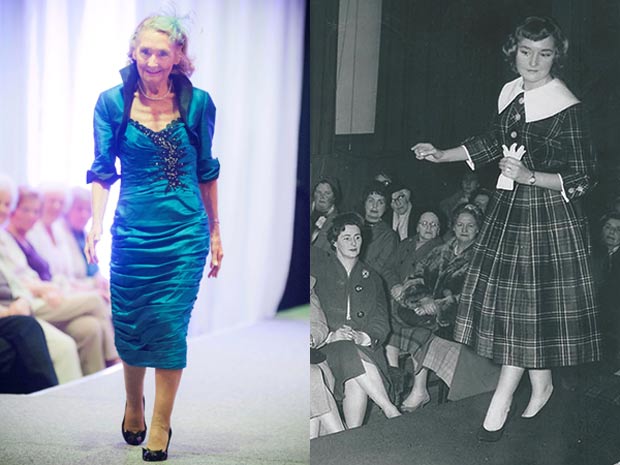
Most of your sun-kissed neighbours are probably neighbours back home. It is the city transposed to the sand. Beach clubs are known as “bagni” and these holidaymakers are as faithful to their bagno as a Yorkshire man to his local pub.
“It’s just like in the song,” laughs Camilla.
“Stessa spiaggia, stesso mare – same beach, same sea.”
“Ours was Bagno 146 at Miramare di Rimini. My grandparents’ umbrella was in the front row so we had an unobstructed sea view.”
She giggles and I notice it again – that mix of pride and embarrassment.
At the beach, the music starts at 4:00 p.m., clashing with the music from the bagno next-door. Even the sound of the sea cannot drown it out.
Whether your beach club favors chill-out or live DJ sets, you can never escape the annual “tormentone” – a tormenting summer hit you hear everywhere and cannot get out of your head until well into the autumn.
At 1:00 p.m. almost all the sun loungers are empty and, feeling like a seaside squatter.
President Hugo Chavez has ordered an urgent investigation to find the cause of a huge explosion at Venezuela’s biggest oil refinery.
The death toll after the blast at the Amuay plant in Falcon state, in the north-west of the country, has now risen to 39, with more than 80 others injured.
Hugo Chavez declared three days of national mourning.

Earlier, Energy Minister Rafael Ramirez said a gas leak had caused the blast.
Hugo Chavez said the tragedy had touched all families in the country.
The death toll after the blast at the Amuay plant in Falcon state, in the north-west of the country, has now risen to 39, with more than 80 others injured
“I want to send out to the families of those who died, civilians and military, all our pain, mine, that of all my family, everyone in the national government and the people of Venezuela,” he said.
“It has been decided to have three days of mourning, national mourning because this affects everyone in the big family of Venezuela.”
Venezuelan Vice-President Elias Jaua said 18 of the victims were members of the National Guard stationed at the plant.
Another 15 were civilians, and six bodies remain unidentified, he said.
Venezuelan authorities say the worst is over and the fire is now under control.
Amuay, on the Paraguana peninsula, is part of the Paraguana Refinery Complex, which also includes the Cardon refinery.
It is one of the biggest refinery complexes in the world with an overall capacity of 955,000 barrels per day, Reuters news agency notes.
The accident has halted operations at the refinery, but Rafael Ramirez said he expected production to be resumed by Monday.
Rafael Ramirez said that Venezuela had enough fuel supplies to guarantee continued exports and domestic supply.
The blast occurred at 01:11 on Saturday.
It unleashed a huge fire that destroyed two fuel tanks and stopped production at the plant.
“The gas cloud exploded, igniting at least two storage tanks and other facilities at the refinery,” the energy minister told state TV.
“It was a significant explosion, there is appreciable damage to infrastructure and to houses opposite the refinery,” said Rafael Ramirez.
Falcon State Governor Stella Lugo said nearby houses had been damaged by the blast.
Local resident Nelly da Lugo said it would be too dangerous for her family to remain in the area:
“PDVSA (Venezuela’s government-run oil company) should buy all of these houses and get us out of this community because we are at a very high risk here.”
Venezuela has the world’s biggest certified oil reserves.
But critics blame under investment by the state-controlled oil company for a decline in production and safety standards.
Refineries have suffered from a long list of problems including power failures and accidents.
Strong Typhoon Bolaven is heading toward the Japanese island of Okinawa.
Slow-moving Typhoon Bolaven is expected to hit later on Sunday, with forecasters saying it could develop into the strongest storm to strike the island in more than 50 years.
Residents have been told to stay indoors and protect themselves against the strong winds and heavy rains.
State broadcaster NHK said gusts could overturn cars, while waves around the island could reach 12 m (40ft).
Strong Typhoon Bolaven is heading toward the Japanese island of Okinawa
Japan’s meteorological agency estimated wind speeds near the storm’s centre at around 180 km/h (112 mph), while extremely strong gusts were reaching 252 km/h.
All domestic and international flights out of the island’s Naha Airport have been cancelled.
According to news agency AP, some 200 households are already without electricity and around 300 people have taken shelter in public buildings on the island.
Typhoon Bolaven has already affected parts of China and comes just after Typhoon Temblin, which caused widespread damage in Taiwan earlier this week.
The latest typhoon is the 15th destructive storm of the season in East Asia.
Louise Clarke, founder of Top of the Pops dance troupe Pan’s People, has died aged 63.
Louise Clarke died from heart failure at Ipswich Hospital in Suffolk, UK, on Saturday with members of her family at her side, her publicist Philip Day said.
Pan’s People first appeared in 1968 and spent eight years as the resident dancers on the weekly music show.
Louise Clarke, founder of Top of the Pops dance troupe Pan's People, has died aged 63
Louise Clarke is the second member of the group to pass away. Flick Colby died at the age of 65 in May last year.
Philip Day, who has been a publicist for Pan’s People for more than 40 years, said Louise Clarke “was a lovely, lovely lady, she was a real darling”.
“Of all the clients I have had the good fortune to represent during all of those years, they were perhaps the most fun to work with, certainly the easiest to work with, were loyal to a fault and the very best at what they did.”
The group’s final appearance on Top of the Pops was in April 1976, when they danced to Silver Star by The Four Seasons.
Samsung announces it will appeal against the US court ruling that the firm stole designs from Apple to make smartphones and computer tablets.
The jury in San Jose, California ordered Samsung to pay Apple $1.05 billion in damages.
In response, Samsung accused Apple of using US patent laws to try to dominate the smartphone market.
Analysts say the ruling is one of the most significant in a global battle over intellectual property.
In recent weeks, a court in South Korea ruled that both technology firms had copied each other, while a British court threw out claims by Apple that Samsung had infringed its copyright.
But the year-long US case has involved some of the biggest damages claims.
Samsung announces it will appeal against the US court ruling that the firm stole designs from Apple to make smartphones and computer tablets
Samsung described Friday’s decision as “a loss for the American consumer”.
“It will lead to fewer choices, less innovation, and potentially higher prices,” the firm said.
The statement added that it was “unfortunate that patent law can be manipulated to give one company a monopoly over rectangles with rounded corners”.
Apple, however, said it applauded the court “for finding Samsung’s behavior willful and for sending a loud and clear message that stealing isn’t right”.
It said it intended to seek injunctions to block US sales of Samsung products at a follow-up hearing on 20 September.
The two firms account for more than half of global smartphone and tablet computer sales.
The nine-person jury at the federal court in San Jose, California had to consider 700 questions about each side’s claim that its rival had infringed its intellectual property.
It deliberated for less than three days before coming to a unanimous decision, rejecting all of Samsung’s claims and upholding five of Apple’s allegations, including:
• Some of Samsung’s handsets, including its Galaxy S 4G model, infringed Apple’s design patents for the look of its iPhone including the system it uses to display text and icons
• All the disputed Samsung devices had copied Apple’s “bounce-back response”, which makes lists jump back as if yanked by a rubber band
• Several Samsung devices incorporated Apple’s facility allowing users to zoom into text with a tap of a finger
Apple had wanted $2.5 billion in damages. Samsung had sought $519 million.
It may also seek to use this ruling to block other devices powered by Google’s Android software that it believes replicate elements of its user-interface, including current models by Samsung as well as other firms.
TV presenter Ellen DeGeneres has made a $1million profit by selling her Malibu beach house just six months after buying it from Brad Pitt.
Ellen DeGeneres bought the luxury four-bedroom home from Brad Pitt for $12 million and has sold it to cosmestics mogul Victoria Jackson for $13 million.
The oceanside property has sweeping coastal views of the Pacific Ocean and Point Mugu State Park, a lap pool and a modern kitchen.
Ellen DeGeneres has made a $1million profit by selling her Malibu beach house just six months after buying it from Brad Pitt
Brad Pitt bought himself the 4,088 square-foot home on the Encinal Bluffs shortly after his divorce from Jennifer Aniston.
But despite being made up of two houses it was still not big enough for his rapidly expanding family with fiancée Angelina Jolie.
This is not the only change for Ellen DeGeneres.
Ellen DeGeneres and wife Portia de Rossi recently downsized from a palatial $49 million Beverly Hills compound to a more manageable $18 million 8500sq ft in the exclusive Trousdale Estates area of the city.
Their new home was designed by famed architect Hal Levitt and built in 1958 on an acre sized plot, which includes a swimming pool.
It features glass walls, soaring ceilings, several fireplaces, a library, four bedrooms and six bathrooms, along with views across Los Angeles.
The couple, who this week celebrate their fourth wedding anniversary, sold their previous home to American Idol host Ryan Seacrest.
That property was 2.87 acres, a whole city block, and boasted a main house comprising of 9,200 square foot, three adjacent guest-homes, and a selection of sprawling wildlife ponds.
Astronaut Neil Armstrong, the first man to set foot on the Moon, has died aged 82.
His family says he died from complications from heart surgery he had earlier this month.
Neil Armstrong walked on the Moon on 20 July 1969, famously describing the event as “one small step for [a] man, one giant leap for mankind”.
Last November Neil Armstrong received the Congressional Gold Medal, the highest US civilian award.
Astronaut Neil Armstrong, the first man to set foot on the Moon, has died aged 82
Neil Armstrong was the commander of the Apollo 11 spacecraft. He and fellow astronaut Edwin “Buzz” Aldrin spent nearly three hours walking on the moon.
The mission was his last space flight. He left the US space agency NASA to teach aeronautics in 1971.
Born in 1930 and raised in Ohio, Neil Armstrong took his first flight aged six with his father and formed a lifelong passion for flying.
He flew Navy fighter jets during the Korean War in the 1950s, and joined the US space programme in 1962.
Correspondents say Neil Armstrong remained modest and never allowed himself to be caught up in the glamour of space exploration.
“I am, and ever will be, a white-socks, pocket-protector, nerdy engineer,” he said in February 2000, in a rare public appearance.
In a statement, his family praised him as a “reluctant American hero” who had “served his nation proudly, as a navy fighter pilot, test pilot, and astronaut”.
French President Francois Hollande has urged Greece to prove it can pass reforms demanded by international creditors, after talks with PM Antonis Samaras.
Greek PM Antonis Samaras has been appealing for more time to introduce the reforms.
But Francois Hollande said no further decision could be taken until European ministers consider a major report on Greece’s finances, due in September.
Donors including the EU insist Greece has to make major spending cuts.
These are needed if Greece is to secure the next tranche of its bailout.
French President Francois Hollande has urged Greece to prove it can pass reforms demanded by international creditors, after talks with PM Antonis Samaras
The Greek government is under pressure to win concessions from Europe to placate the tired nation and lessen the likelihood of a destabilizing period of social unrest.
Antonis Samaras is seeking an extension of up to two years for the necessary reforms, in order to provide Greece with the growth needed to improve its public finances.
In talks with German Chancellor Angela Merkel earlier this week, he was told that the decision would depend on a report from the so-called troika – the International Monetary Fund (IMF), the European Central Bank (ECB) and the European Commission.
Francois Hollande also said Europe needed to consider the report before it could make any further decisions on Greece.
He said decisions on whether to grant Greece more time should be taken when European finance ministers meet in early October.
“We’ve been facing this question for two and a half years, there’s no time to lose, there are commitments to reaffirm on both sides, decisions to take, and the sooner the better,” he said.
Greece’s continued access to the bailout packages depends on a favorable report from the troika.
Athens is trying to finalize a package of 11.5 billion euros ($14.4 billion) of spending cuts over the next two years.
It is also being asked to put in place economic and structural reforms, including changes to the labor market and a renewed privatization drive.
The measures are needed to qualify for the next 33.5 billion-euro installment of its second 130bn-euro bailout.
Greece needs the funds to make repayments on its debt burden. A default could result in the country leaving the euro.
Justin Howard, also known as “Nordic Thunder”, has won the 17th annual Air Guitar World Championship in northern Finland.
Dressed in a leather Viking outfit, Justin Howard narrowly beat his rival “Aristotle”, or Matt Burns from New York.
Dutchman Theun de Jong finished third in the competition, which has been held in the Finnish city of Oulu since 1996.
The 18 finalists included competitors from Japan, Britain, Russia, Czech Republic and Estonia.
“Nordic Thunder” Justin Howard reportedly gave an “energetic” performance, sliding across the stage bare-legged, and won with a total of 34.6 points to Matt Burns’ 34.4.
Air guitarists will usually perform a 60-second solo performance with an imaginary guitar-like instrument.
They are marked on their technical prowess and stage presence, with competitors jumping, sliding and crowd diving to impress the judges.
Finland hosts a number of unusual events, including an international mobile phone throwing contest and wife carrying.
New York’s police chief has confirmed today that all nine people injured in Friday’s Empire State Building shooting were hurt as a result of police fire.
During the incident, which was captured by surveillance cameras, police officers shot dead a gunman who had just killed a former work colleague.
Commissioner Ray Kelly said bystanders had been hit by bullets or fragments of bullets striking objects.
They suffered minor injuries and all are expected to survive.
New York's police chief has confirmed today that all nine people injured in Friday's Empire State Building shooting were hurt as a result of police fire
Detectives are still trying to establish what drove the gunman, t-shirt designer Jeffrey Johnson, to ambush Steven Ercolino, vice-president of a clothing firm.
According to police, Jeffrey Johnson hid behind a car and killed Steven Ercolino with five shots as he arrived for work in Manhattan soon after 09:00 a.m.
“It appears that all nine of the victims were struck either by fragments or by bullets fired by police,” said Commissioner Ray Kelly.
Video released by police shows the moment when officers challenge Jeffrey Johnson and open fire as he appears to draw a gun in a busy street.
“We have on tape the perpetrator pulled his gun out and tried to shoot at the cops,” NY Mayor Michael Bloomberg said earlier.
“Whether he got off any bullets or not [is] to be determined.”
Jeffrey Johnson lost his job last year and is believed to have held a grudge against Steven Ercolino.
An appeals court in Washington has ruled that US government cannot force tobacco firms to put large graphic health warnings on cigarette packages.
It said the government’s plan undermined free speech in America.
The Food and Drug Administration (FDA) had wanted to put nine pictures of dead and diseased smokers to convey the dangers of cigarettes.
However, tobacco companies had argued that the images went beyond factual information and into anti-smoking advocacy.
The ruling comes as a number of other countries have ordered similar pictures to be placed on all cigarette packets.
An appeals court in Washington has ruled that US government cannot force tobacco firms to put large graphic health warnings on cigarette packages
Australia has gone a step further, banning even tobacco company logos from the cartons.
The US Court of Appeals affirmed an earlier lower court ruling in a 2-1 decision.
It said the case raised “novel questions about the scope of the government’s authority to force the manufacturer of a product to go beyond making purely factual and accurate commercial disclosures and undermine its own economic interest”.
The court said that in this case it was “by making every single pack of cigarettes in the country a mini billboard for the government’s anti-smoking message”.
It added that the FDA “has not provided a shred of evidence” that the images would directly advance its policy aimed at reducing the number of smokers in America.
The verdict was welcomed by tobacco companies, with Lorrilard Tobacco’s describing it as “a significant vindication of First Amendment principles”.
The FDA has so far made no public comment on whether it intends to appeal against the ruling in the US Supreme Court.
A tiger has mauled to death a female keeper at a zoo in the western German city of Cologne.
Police say the animal wandered through a gate that had apparently not been shut properly. It reached an adjacent storage building, where it attacked and killed the 43-year-old woman.
The tiger was then shot dead by the director of the zoo through a skylight, before it could get to public areas.
A tiger has mauled to death a female keeper at a zoo in the western German city of Cologne
Members of the public were ushered to safety, and the zoo was briefly closed.
It is not the first time this year animals have escaped from their enclosures in a German Zoo.
Last month five chimpanzees broke out of their pen in Hanover. In that case, however, they were recaptured before anyone was hurt.
The secret behind Angelina Jolie’s flawless face has been revealed as she is thought to be a fan of Dragon’s Blood, Rodial’s popular sculpting facial gel.
Dubbed the “Liquid Facelift”, Dragon’s Blood works by adding essential volume to hollow skin.
It claims to plump, sculpt and lift the complexion whilst protecting against ageing and reducing skin sagging.
Celebrity facialist Nuz Shugaa, who works with Rachel Weiz and Amanda Seyfried, as well as Angelina Jolie, says that the mother-of-six relies on the gel to maintain her youthful appearance.
“Angelina needs to keep her skin plump and hydrated to maintain the youthful radiance she is famed for,” says Nuz Shugaa.
“Lack of sleep, hectic lifestyle with extensive travelling all contribute to depleted levels of hyaluronic acid – which result in the skin looking tired, dry and dull.
“This incredibly ageing to all women in their thirties.
“I recommended the Dragon’s Blood’s sculpting gel to Angelina as it gives her a dewy complexion (for appearance of sleep!) with added volume which define her beautiful high cheek bones.”
Dubbed the “Liquid Facelift”, Dragon’s Blood works by adding essential volume to hollow skin
Angelina Jolie, who is currently preparing to marry long-term love Brad Pitt, has apparently been using the product since February.
Dragon’s Blood, which costs $115, is made from the red sap of the sangre de drago tree and sold-out within minutes when it first launched earlier this year.
It proved so popular that there were 20,000 eager customers on the waiting list before it went on sale, with Harvey Nichols reporting “queues out the door”.
It is considered a less-invasive alternative to fillers, creating a youthful complexion without the needless and avoiding the common problem known as “pillow face”, where the cheeks look “inflated”.
“With our new Dragon’s Blood serum, women including our celebrity fans, are able to regain the youthful fullness in their face,” says a spokesperson for Rodial.
“Age, environmental damage and demanding lifestyles all take their toll and age us prematurely, with wrinkles and sagging skin around the eyes and cheeks being some of the first signs.
“Before now the only way to counteract these unattractive symptoms, was to inject fillers into the cheek to restore the original plumpness of the face.”
Dragon’s Blood alleviates the need for such cosmetic work as it plumps facial hollows and “orbital troughs” under and around the eyes, as well as for cheek volume and contouring of the chin, forehead and nose.
Lady Gaga also uses cream and reportedly used it as she prepared for the Golden Globes earlier this year.
During independent trials, 92% of volunteers saw an increase in skin elasticity over three months, while 72% also experienced a reduction in skin sagging.
Results also showed that those who used Dragon’s Blood found their skin was dramatically defined and volumised with firmer skin and improved tonicity around the jaw line and cheek bones.
The first picture of Jeffrey Johnson, the man who shot his former boss to death in broad daylight near the Empire State Building and whose death at the hands of police was captured in shocking video footage, has emerged to media.
Jeffrey Johnson, 58, can be seen in the graphic footage wearing a smart grey suit and carrying a briefcase as members of the public run for cover after he shot his 41-year-old ex-boss Steven Ercolino.
Suddenly, Jeffrey Johnson appears to be hit presumably by police gunfire and drops to his knees before falling flat on his face on the sidewalk outside the iconic skyscraper.
At around 9:00 a.m. yesterday morning, the disgruntled employee hid behind a car and then pulled out a .45-caliber pistol in his ex-boss and fired at his head. After Steven Ercolino fell to the ground, Jeffrey Johnson stood over him and shot four more times, a witness told investigators.
The incident sparked early-morning chaos and multiple other injuries near the Empire State Building this morning.
However, Jeffrey Johnson, was scuppered in his plans to escape after a construction worker saw the killing, chased him down the street and alerted police, who shot the gunman dead.
In the rush-hour ruckus, nine passersby were injured. Two people – the gunman and his former boss – were killed.
Jeffrey Johnson shot his former boss to death in broad daylight near the Empire State Building
The deadly dispute horrified tourists and workers swarming around 34th street and Fifth Avenue, a sight-seeing area that is experiencing its busiest few weeks of the year.
Jeffrey Johnson had visited clothing retailers Hazan Imports, where he had been an accessories designer for six years before he was fired when it downsized last year.
He was dressed in a smart grey suit and was carrying a briefcase, the New York Daily News reported.
In security camera footage released by the police, Jeffrey Johnson can be seen walking calmly down the sidewalk after the shooting, distancing himself slightly from the other pedestrians, who appear to have no awareness that anything is wrong.
But he was followed a block north by a construction worker who had witnessed the deadly shooting and alerted two police officers on duty outside the Empire State Building.
When the two police officers approached in a hurry, Jeffrey Johnson turned and pulled a handgun from a bag, his arm cocked as if to fire.
The officers, who had been standing nearly close enough to shake hands with Johnson and had no opportunity to take cover, fired almost immediately.
“He tried to shoot at the cops,” said New York Mayor Michael Bloomberg.
Nine bystanders were wounded in the 16-shot volley, likely by stray or ricocheting police bullets. None of their injuries was life-threatening, police said. The seven men and two women were whisked away to nearby hospitals, where some are undergoing surgery.
Police Commissioner Ray Kelly said the officers who confronted Jeffrey Johnson had “a gun right in their face” and “responded quickly, and they responded appropriately”.
“These officers, having looked at the tape myself, had absolutely no choice,” he said.
A witness had told police that Jeffrey Johnson fired at the officers, but authorities say ballistics evidence doesn’t support that. Jeffrey Johnson’s gun held seven rounds, they said. He fired five times at Steven Ercolino, one round was still in the gun and one was ejected when officers secured it, authorities said.
Jeffrey Johnson was struck at least seven times, of which police said some may have been exit wounds.
When asked if the construction worker was the hero, Mayor Michael Bloomberg responded: “He did what he should have done. When he saw something, he said something and then turned it over to the professionals.”
Jeffrey Johnson legally bought the gun in Sarasota, Florida, in 1991, but he didn’t have a permit to possess it in New York City, authorities said. Early reports did not indicate he had a criminal record.
The victim, Steven Ercolino, was vice president of sales at Hazan Imports and had worked with the company for nearly seven years, according to his LinkedIn page.
Police investigating Jeffrey Johnson’s killing of Steven Ercolino were eyeing bad blood between them from when they worked together at Hazan Import, a garment district business where Ercolino was a vice president of sales.
Jeffrey Johnson and Steven Ercolino had traded harassment accusations when they worked together, police said, and when Johnson was laid off from the company a year ago he blamed Ercolino, saying he hadn’t aggressively marketed his new T-shirt line.
He has been described as a gregarious salesman, beloved by his nieces and nephews as the fun uncle who could talk with equal expertise about the New York Jets and the women’s fashion accessories he sold.
Katherine Jenkins took to her Twitter page to blast rumors that she had an affair with David Beckham.
Katherine Jenkins, 32, told her fans that she found the reports “hurtful and untrue”, and wanted to be the first to set the record straight.
It is unclear why the singer chose to refer to the revelations, but in doing so she drew many people’s attention to the rumors they had previously not been aware of.
In a series of posts made on her page yesterday, Katherine Jenkins said she had only ever met David Beckham twice.
She began: “Dear Twitter friends, I’ve read some horrible rumors on here & want u 2 know I absolutely deny I’ve had an affair with David Beckham.
“The rumors are very hurtful, untrue & my lawyers tell me actionable.”
Katherine Jenkins continued: “I’ve only met David twice: once at the Military Awards in 2010 & on a night out in the West End in Feb 2012.
“We were out in a group of friends & it was just a normal fun evening out. Just so we are clear I have never been on my own with him and never arranged to meet up.”
Katherine Jenkins took to her Twitter page to blast rumors that she had an affair with David Beckham
Meanwhile, a representative for David Beckham has said: “Unfortunately, we have to deal with this type of nonsense on Twitter.
“One minute David is dead… then a more scurrilous rumor, there is not one jot of truth to any of it.”
As well as the awards event in 2010, Katherine Jenkins and David Backham were both seen partying at the Arts Club in Mayfair alongside Prince Harry in early February.
The untrue rumors surrounding Katherine Jenkins and David Beckham first emerged when she moved to Los Angeles to appear on Dancing With The Stars earlier this year.
There were even extraordinary claims that a superinjuction had been applied for to prevent the story ever being made public.
Shortly after Katherine Jenkins’ tweets, Lily Cooper took to her Twitter page to poke fun at the revelations, denying an “affair” with Beyoncé’s husband Jay-Z.
Lily Cooper wrote: “I’m really upset at the hurtful rumors going round about me having an affair with Jay Z. My lawyers tell me they are actionable.
“I’ve met him twice, once at the spotted pig in New York and once at the wireless festival. We have never been alone together etc etc.”
Katherine Jenkins has been single since splitting from fiancé Gethin Jones in December 2011.
The singer started dating former Blue Peter presenter Gethin Jones in 2007 after meeting him on the set of Strictly Come Dancing.
They became engaged on holiday in Mexico in February 2011, but announced their split on December 30 on Twitter.
Katherine Jenkins later said her singing was helping her cope with her heartbreak, saying: “With every performance I have been able to put myself slowly together.
“Unfortunately all my songs are about love or heartbreak but I can just about cope with that now.”
Earlier this week, David Beckham was seen enjoying a family day out with wife Victoria and three of their children, Romeo, Cruz and baby Harper, at a shopping mall in Los Angeles.
David and Victoria Beckham have been married for 13 years and are worth an estimated $195 million as a power couple.
Victoria Beckham gave birth to the couple’s fourth child and only daughter Harper Seven last July.
A new research has found that modern Indo-European languages – which include English – originated in Turkey about 9,000 years ago.
Researchers’ findings differ from conventional theory that these languages originated 5,000 years ago in south-west Russia.
The New Zealand researchers used methods developed to study virus epidemics to create family trees of ancient and modern Indo-European tongues to pinpoint where and when the language family first arose.
Their study is reported in Science.
A language family is a group of languages that arose from a common ancestor, known as the proto-language.
Linguists identify these families by trawling through modern languages for words of similar sound that often describe the same thing, like water and wasser (German). These shared words – or cognates – represent our language inheritance.
A new research has found that modern Indo-European languages, which include English, originated in Turkey about 9,000 years ago
According to the Ethnologue database, more than 100 language families exist.
The Indo-European family is one of the largest families – more than 400 languages spoken in at least 60 countries – and its origins are unclear.
The Steppes, or Kurgan, theorists hold that the proto-language originated in the Steppes of Russia, north of the Caspian Sea, about 5,000 years ago.
The Anatolia hypothesis – first proposed in the late 1980s by Prof. Colin Renfrew (now Lord Renfrew) – suggests an origin in the Anatolian region of Turkey about 3,000 years earlier.
To determine which competing theory was the most likely, Dr. Quentin Atkinson from the University of Auckland and his team interrogated language evolution using phylogenetic analyses – more usually used to trace virus epidemics.
Phylogenetics reveals relatedness by assessing how much of the information stored in DNA is shared between organisms.
Chimpanzees and humans have a common ancestor and share about 98% of their DNA. Because of this shared ancestry, they cluster together on phylogenetic – or family – trees.
Like DNA, language is passed down, generation to generation.
Although language changes and evolves, some linguists have argued that cognates describing the fundamentals of life – kinship (mother, father), body parts (eye, hand), the natural world (fire, water) and basic verbs (to walk, to run) – resist change.
These conserved cognates are strongly linked to the proto-language of old.
Dr. Quentin Atkinson and his team built a database containing 207 cognate words present in 103 Indo‐European languages, which included 20 ancient tongues such as Latin and Greek.
Using phylogenetic analysis, they were able to reconstruct the evolutionary relatedness of these modern and ancient languages – the more words that are cognate, the more similar the languages are and the closer they group on the tree.
The trees could also predict when and where the ancestral language originated.
Looking back into the depths of the tree, Dr. Quentin Atkinson and his colleagues were able to confirm the Anatolian origin.
To test if the alternative hypothesis – of a Russian origin several years later – was possible, the team used competing models of evolution to pitch Steppes and Anatolian theory against each other.
In repeated tests, the Anatolian theory always came out on top.
However, the findings have not found universal acceptance. Prof. Petri Kallio from the University of Helsinki suggests that several cognate words describing technological inventions – such as the wheel – are evident across different languages.
He argues that the Indo-European proto-language diversified after the invention of the wheel, about 5,000 years ago.
On the phylogenetic methods used to date the proto-language, Prof. Petri Kallio added: “So why do I still remain skeptical? Unlike archaeological radiocarbon dating based on the fixed rate of decay of the carbon-14 isotope, there is simply no fixed rate of decay of basic vocabulary, which would allow us to date ancestral proto-languages.
“Instead of the quantity of the words, therefore, the trained Indo-Europeanists concentrate on the quality of the words.”
At least 19 people have been killed and more than 50 injured in an explosion at Amuay plant, Venezuela’s biggest oil refinery, local governor Stella Lugo says.
Stella Lugo said there was no risk of further explosions at the Amuay plant in the north of the country.
Officials earlier said a gas tank had blown up during the night, damaging the plant and nearby buildings.
The Amuay refinery is one of the biggest in the world, producing some 645,000 barrels a day.
Officials have been giving regular updates on the number of dead and injured.
At least 19 people have been killed and more than 50 injured in an explosion at Amuay plant, Venezuela's biggest oil refinery
Stella Lugo, governor of Falcon state, earlier said seven had died but later revised the figure to 19.
She also said more than 50 people had been injured and were being treated in local hospitals.
She said there was still a big fire at the plant, but the situation was under control.
Earlier, Energy Minister Rafael Ramirez blamed the explosion on a gas leak.
“It was a significant explosion, there is appreciable damage to infrastructure and houses opposite the refinery,” he said.
Analysts say refineries in Venezuela, South America’s biggest oil producer, have suffered from a long list of problems including power failures and accidents.
Super High-Vision 8K, a new high-resolution television format, has been approved by the UN’s communication standards setting agency.
Broadcasts in 8K will offer a resolution of 7,680 by 4,320 pixels – roughly the equivalent of a 32 megapixel photo.
That is 16 times as sharp as current HD TVs offering about 2MP resolutions.
Japanese broadcaster NHK showed off the technology in London during the Olympics, where audiences said it gave them a sense of being at the events.
Super High-Vision 8K television format has been approved by the UN's communication standards setting agency
NHK has developed three cameras that can captures the higher resolution – which it calls Super Hi-Vision – at 120 frames per second (fps).
“The experience of viewing and listening to live sports and entertainment coverage is dramatically enhanced by Super Hi-Vision, and Ovum envisages it representing the logical next step in TV transmission technology, following on from regular HD,” wrote the consultancies’ analyst Jonathan Doran in a report.
“In our view, it is a far more significant development than 3D, which offers a limited range of use-cases.”
The UN’s International Telecommunication Union (ITU) discussed the standard in May and offered broadcasters the opportunity to file objections. Because no-one did, it sent out letters at the end of last week confirming the format’s approval.
A press release from NHK said the specification would “reproduce the feeling of life and offer a sense of being present” in a way that had been impossible to do before. The news was first reported by Techworld.
NHK has used a 145-inch (3.7 metre) prototype display co-developed with Panasonic to show off its footage.
But it will be some time before such models become commercially available.
TV makers are currently focusing efforts on launching 4K enabled devices offering half the resolution. This is the format currently used by most digital cinema cameras.
LG unveiled the biggest 4K television set to date earlier this week – an 84 inch screen costing more than $22,000.
But manufacturers are likely to want to offer 8K screens by 2020 when NHK aims to begin its first experimental broadcasts in the standard.
One analyst said the displays would probably remain beyond most people’s budgets for more than a decade.
Greece’s Prime Minister Antonis Samaras is expected to repeat his plea for more time to implement reforms when he meets French President Francois Hollande.
The talks in Paris come a day after Antonis Samaras asked for his country to be given “breathing space” during talks with German Chancellor Angela Merkel.
Angela Merkel said she wanted Athens to remain in the eurozone but expected it to stick to the tough bailout terms.
The French leader is now likely to echo that message, correspondents say.
Angela Merkel and Francois Hollande met on Thursday to discuss Greece and urged Athens to stick with the tough reforms.
Greece’s Prime Minister Antonis Samaras is expected to repeat his plea for more time to implement reforms when he meets French President Francois Hollande
On Greece, the two leaders seem to be on the same page.
In Paris, Antonis Samaras is expected to call for more time to reduce the deficit, given the worse-than-expected recession and months lost this year due to elections, our correspondent says.
He adds that the Greek government is under pressure to win a concession from Europe so as to placate this tired nation and lessen the likelihood of a destabilizing period of social unrest.
After Friday’s talks with Angela Merkel in Berlin, Antonis Samaras said: “Greece will stick to its commitments and fulfill its obligations. In fact, this is already happening.
“We’re not asking for more money,” he said, adding that Greece needed “time to breathe”.
The International Monetary Fund (IMF), the European Central Bank (ECB) and the European Commission – the group of donor bodies known collectively as the “troika” – are examining whether Greece is making sufficient progress towards reforming its public finances.
Greece’s continued access to the bailout packages depends on a favorable report from the trio, and an official report is due to be released next month.
Greece is currently trying to finalize a package of 11.5 billion euros ($14.4 billion) of spending cuts over the next two years.
It is also being asked to put in place economic and structural reforms, including changes to the labor market and a renewed privatization drive.
The measures are needed to qualify for the next 33.5 billion-euro installment of its second 130 billion-euro bailout.
Greece needs the funds to make repayments on its debt burden. A default could result in the country leaving the euro.
Antonis Samaras is seeking an extension of up to two years for the necessary reforms, in order to provide Greece with the growth needed to improve its public finances.
High winds and driving rain are lashing the coast of Haiti as Tropical Storm Isaac moves closer to the shore.
The centre of the storm was last reported as being about 100 km from the Haitian capital, Port-au-Prince.
Aid groups warn that some 400,000 Haitians still living in makeshift camps after the deadly earthquake of 2010 are extremely vulnerable.
Forecasters say Isaac could cause life-threatening flash floods and mudslides in Haiti and the Dominican Republic.
The United States National Hurricane Centre (NHCi) predicts that the storm will move near or over Cuba later on Saturday and approach the Florida Keys on Sunday.
High winds and driving rain are lashing the coast of Haiti as Tropical Storm Isaac moves closer to the shore
The storm could pose a potential threat to Florida during the US Republican National Convention.
Tropical Storm Isaac is no longer expected to become a hurricane as it hits the island of Hispaniola – the island shared by Haiti and the Dominican Republic – but the near-hurricane strength winds and rain have the potential to cause great destruction, especially in Haiti.
“These rains could cause life-threatening flash floods and mudslides,” the NHC warned.
In Haiti, people living in the makeshift squatter camps were “amongst the more vulnerable, should the storm hit the city”, humanitarian group World Vision said.
“Without a stable sanitation system or permanent housing, heavy rain and wind can create much larger problems like disease from water contamination,” the group’s Haiti director Jean-Claude Mukadi was quoted as saying by the AFP news agency.
The country’s president, Michael Martelly, has toured some of the camp sites.
“It looks like the south coast is going to get hit, but again we’re so fragile here in Port-au-Prince that just some rain can cause a lot of damage,” Associated Press quoted him as saying afterwards.
Isaac is also expected to bring rain and wind to nearby Puerto Rico.
Several Cuban provinces are now on a state of alert, as are parts of the Bahamas and the Turks and Caicos islands.
Mass killer Anders Behring Breivik says he will not appeal against a Norway court ruling finding him sane and sentencing him to 21 years in jail.
Anders Behring Breivik said appealing would legitimize the court, which he rejects.
He admits killing 77 people in bomb and shooting attacks last year. He says this was necessary to prevent “Islamisation” and insists he is sane.
Prosecutors – who had sought an insanity ruling – also told the Oslo court they would not appeal.
Anders Breivik said he did not recognize the court, which he contended had “sided with the multicultural majority in parliament”, but added: “I cannot appeal against the judgement because by appealing I would legitimize the court.”
He went on to say: “I wish to apologize to all militant nationalists in Norway and Europe for not managing to kill more people” – but was cut off by the judge, who said this was not the time to address people outside the court.
Mass killer Anders Behring Breivik says he will not appeal against a Norway court ruling finding him sane and sentencing him to 21 years in jail
Delivering her verdict earlier on Friday, Judge Wenche Elisabeth Arntzen said the court considered Anders Behring Breivik to be suffering from “narcissistic personality characteristics” but not psychosis.
Anders Behring Breivik was convicted of terrorism and premeditated murder, and given the maximum sentence of 21 years’ imprisonment.
However, the judge said the jail term could be prolonged at a later date if he is deemed to remain a danger to society.
She set the minimum length of imprisonment to 10 years.
Court-appointed psychiatrists had disagreed on Anders Breivik’s sanity. A first team which examined him declared him to be a paranoid schizophrenic, but the second found he was sane.
He will serve his sentence at Oslo’s high-security Ila Prison, where he has been held in isolation for most of the time since his arrest.
“His goal was to be declared sane, so on that point he is satisfied,” Anders Breivik’s defense lawyer, Geir Lippestad, said.
Before the verdict, he had said psychiatric care would be “worse than death”.
On 22 July 2011, Anders Behring Breivik bombed government buildings in Oslo, killing eight people.
Later in the day, he boarded a boat to the Utoeya island, where the Labour Party was holding a youth camp.
Wearing a fake police uniform, he fired weapons and meticulously hunted his victims. A further 69 people were killed and dozens wounded.
Many of the survivors and relatives of his victims welcomed the verdict.
“I am very relieved and happy about the outcome,” Tore Sinding Bekkedal, who survived the Utoeya shooting, told the Associated Press news agency. “I believe he is mad, but it is political madness and not psychiatric madness.”
Unni Espeland Marcussen, who lost her 16-year-old daughter Andrine at Utoeya, said: “I feel happiness because he is a man who all the time knew what he has done.”
Anders Breivik’s attacks ignited a debate about the nature of tolerance and democracy in Norway.
A US court has ruled that Samsung should pay Apple $1.05 billion in damages in an intellectual property lawsuit.
It said several of Samsung’s devices had infringed iPhone-maker Apple’s software and design patents.
The jury rejected Samsung’s claims that several of its patents had been breached and awarded it no damages.
Apple may seek an import ban of some of its rival’s products, blocking them from the US market. Samsung has said it will appeal against the ruling.
“We will move immediately to file post-verdict motions to overturn this decision in this court and if we are not successful, we will appeal this decision to the Court of Appeals,” a statement from Samsung said.
A US court has ruled that Samsung should pay Apple $1.05 billion in damages in an intellectual property lawsuit
Apple and Samsung account for more than half of global smartphone and tablet computer sales.
The nine-person jury at the federal court in San Jose, California had to consider 700 questions about each side’s claim that its rival had infringed its intellectual property.
It deliberated for less than three days before coming to its unanimous decisions.
It rejected the South Korean firm’s claim that Apple’s intellectual properties were invalid. It added that Samsung was “wilful in its infringement” in many of the cases.
Not all of Apple’s claims were upheld – it had claimed a total of $2.5bn (£1.6bn) in damages. Samsung had sought $519m.
Apple said it applauded the court “for finding Samsung’s behaviour wilful and for sending a loud and clear message that stealing isn’t right.”
Samsung described the verdict as “a loss for the American consumer”.
“It will lead to fewer choices, less innovation, and potentially higher prices,” it added.
The jury ruled that some of Samsung’s handsets, including its Galaxy S 4G model, had infringed Apple’s design patents for the look of its iPhone including the system it uses to display text and icons.
However, it dismissed the allegation that the South Korean firm’s tablets had infringed the rectangular design used for Apple’s iPad.
It also found that all the disputed Samsung devices had copied the bounce-back response in the iOS system’s user interface, without paying a licence. This makes lists jump back as if yanked by a rubber band when pulled beyond their limit.
Another infringement involved use of Apple’s tap-to-zoom feature.
Samsung failed to convince the jury Apple owed it money for using technologies it claims to own including listening to music on a device in the background while carrying out another task; and integrating a phone, digital camera and email facility into a single device.
Michael Gartenburg, research director at Gartner, said the verdict could have major ramifications for the wider smart device sector.
“Apple patents being upheld will force the rest of the industry to both innovation and differentiation,” he said.
“That will be a good thing for consumers in the long run. Anyone who was even thinking about borrowing a technology or design from Apple will think twice about it now.
“Apple’s point was that it was possible to create an experience that doesn’t look like its designs and only Nokia and RIM Blackberry are really doing that right now.”
There has been a spate of lawsuits involving mobile-device makers, but this case had been viewed as one of the most significant to date.
This is because of the size of the damages involved, the likelihood it will influence the way future patent licenses are handled, and the insights it has given into both Apple and Samsung’s working practices.
Pictures of prototype iPhones and iPads that had never been seen before were released, and one of Samsung’s designers explained how she had created some of its app icon designs.
The offending Samsung models at the centre of the case have since been superseded by updates, reflecting the fast turnaround in product releases.
But Apple said it still intended to seek sales injunctions at a follow-up hearing on 20 September.
It may also seek to use this ruling to block other devices powered by Google’s Android software that it believes replicate elements of its user-interface, including current models by Samsung as well as other firms.
While Apple has scored a victory over Samsung, it remains one of the South Korean company’s biggest customers buying computer chips and, reportedly, screens from it to build the iOS mobile devices.