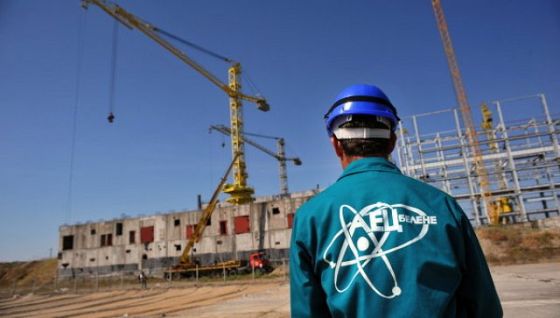
Bulgaria is set to vote in a referendum on whether a new nuclear power plant should be built.
The opposition Socialist party called the vote because it wants the government to reverse its decision not to build a new plant at Belene.
The first referendum in Bulgaria’s post-Communist history has polarized opinion and is seen as a precursor of general elections later this year.
The referendum would only be valid if at least 60% of the electorate votes.
The government says it supports the provision of nuclear power from an existing plant at Kozloduy, but that it does not have the 10 billion euros it says would be needed to build a new plant.
Prime Minister Boyko Borisov told local media that this would remain the case even if Bulgarians voted in favor of a new nuclear plant.
Bulgaria votes in Belene nuclear power plant referendum
Bulgaria had to close four of its old reactors at Kozloduy as a precondition for its 2007 EU membership.
The government froze plans to finish the plant at Belene last year, when work at the site on the southern bank of the River Danube was already well under way.
The Socialists are seen as closely linked to the Belene project, having granted a construction contract for the plant to Russian state company Atomstroyexport in 2008.
They say Belene would now cost 4-6 billion euros to complete, and would lower electricity costs for consumers.
Environmentalists had opposed the plant, which had first been proposed when Bulgaria was under communist rule.
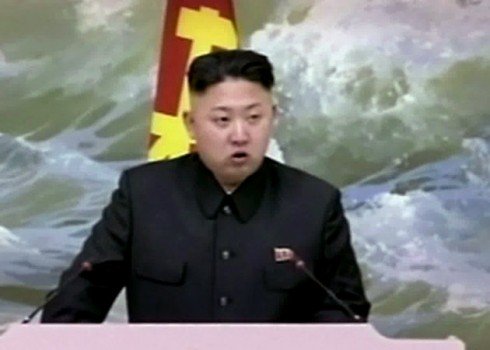
North Korea has warned of “substantial and high-profile important state measures”, days after announcing plans for a third nuclear test.
North Korean leader Kim Jong-un made the statement during a meeting with top security officials, state media said.
The reports did not give details of what the measures might entail.
North Korea has issued a series of warnings since the UN tightened sanctions against the country this week over a recent rocket test.
On Thursday, North Korea said it would proceed with a “high-level” nuclear test in a move aimed at the US, its “arch-enemy”.
A day later, it promised “physical counter-measures” against South Korea if it participated in the UN sanctions regime.
North Korea has warned of substantial and high-profile important state measures, days after announcing plans for a third nuclear test
North Korean state media reported on Sunday that Kim Jong-un had “advanced specific tasks to the officials concerned”.
The latest warning came after Rodong Sinmun, a state newspaper, carried an essay on Saturday saying that a nuclear test was “the demand of the people”.
“It is the people’s demand that we should do something, not just a nuclear test, but something even greater. The UN Security Council has left us no room for choice.”
North Korea has conducted two nuclear tests in the past, in 2006 and 2009. It has given no time-frame for its third test.
The UN resolution, passed on Tuesday, was proposed by the US and backed by China, North Korea’s closest ally and biggest trading partner.
It was a response to a rocket launch in December that the US, Japan and South Korea say was a test of banned long-range missile technology.
The three-stage rocket put a satellite into space in what was Pyongyang’s first successful test of such technology.
The UN resolution pledged “significant action” if North Korea carried out a third nuclear test.
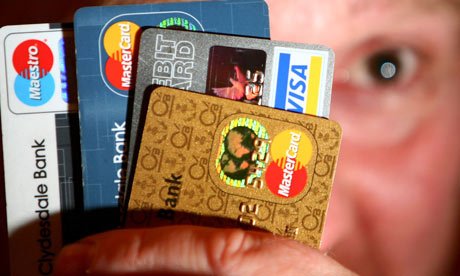
A new credit card rule going into effect Sunday, January 27, 2013, could cost you more when shopping with a credit card at some stores.
Visa and Mastercard have agreed to let merchants add a service charge equal to the cost of processing a credit transaction to the bottom line.
The cost of processing is usually 1.5 to 3%, and merchants are capped at a 4% fee under the agreement.
The rule change was made as part of settling an antitrust suit brought by retailers.
Merchants will still not be allowed to add a surcharge to debit card transactions.
However, few stores seem interested in raising their customer’s costs.
“We have discussed the settlement with many, many merchants, and not a single merchant we have spoken to plans to surcharge,” said Craig Sherman, spokesman for the National Retail Federation, which was not involved in the lawsuit.
Wal-Mart, Target, Sears and Home Depot all told NBC News that they had no plans to add a credit card surcharge.
California, Colorado, Connecticut, Florida, Kansas, Maine, Massachusetts, New York, Oklahoma and Texas all ban credit card surcharges.
Both Visa and MasterCard have rules requiring retailers to handle credit cards the same way in every store regardless of location, so if a chain has a store in a state where surcharges are banned then none of its locations would be allowed to have a surcharge.
Under the settlement terms, a merchant adding surcharges on Visa or MasterCard would have to do the same with American Express cards, but that company prohibits surcharge fees.
“The bottom line is that very few retailers would be able to surcharge under the settlement, and that the vast majority don’t want to surcharge even if they could,” Craig Sherman said.
“In the brick-and-mortar world, no one who does any sort of volume business is going to want to surcharge because it will drive their customer crazy and slow down transactions,” agreed Ed Mierzwinski, Director of Consumer Programs at U.S. PIRG.
With the exception of small retailers, credit surcharges are not a major issue for most businesses.
A new credit card rule going into effect Sunday, January 27, 2013, could cost you more when shopping with a credit card at some stores
Still, over time they could become popular as a way for stores to make extra money.
That’s because stores already factor in the cost of processing a credit care when they price their merchandise. Unless they dropped their prices, second charge would be double-dipping at the loss of the consumer.
“We shouldn’t have gotten to the point, but unfortunately because of the court settlement we have,” said Edgar Dworsky, founder of ConsumerWorld.org.
“There’s no one standing up for consumers and saying that this is really bad.”
He notes that in Australia, where surcharging originated in 2003, extra charges have boomed to the point where one-third of retailers charge extra to use a credit card.
Advocacy group Consumer Action warns shoppers to watch their receipts and argue any fees that don’t belong.
“Customers shouldn’t stand for it,” said Ruth Susswein, Consumer Action’s deputy director of national priorities.
“Our advice is to tell them you don’t like the fee and this makes you want to take your business elsewhere.”
If a retailer plans to add a surcharge they are require to post a notification at the store’s entrance.
The exact surcharge per cent needn’t be disclosed until the sale.
Online stores with a surcharge will not be required to have a notice until shoppers reach the page where credit cards are first mentioned, which is most often the final step of checkout.
“We’re not convinced this is going to be an issue,” Ruth Susswein said.
“They may never do it, but as individual consumers we need to be aware.”
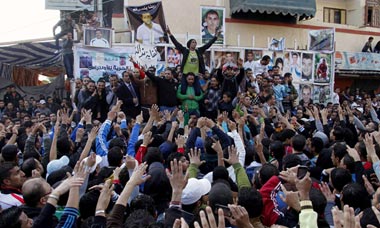
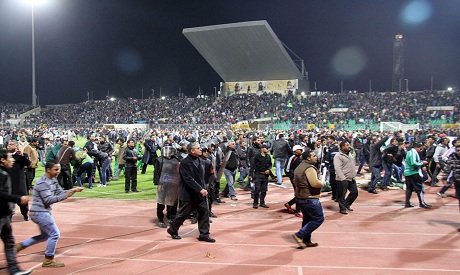
At least 30 people have died in today’s Port Said clashes sparked by the sentencing to death of 21 local people over football riots in Egypt.
Supporters of the defendants tried to storm the prison holding them and attacked police stations.
The 21 were sentenced over riots which killed 74 people after a football game at Port Said stadium last February.
Saturday’s violence follows a day of unrest on the second anniversary of the uprising that ousted Hosni Mubarak.
Egypt’s national defence council, which is headed by President Mohamed Morsi, has condemned the violence and called for dialogue, saying it would consider declaring a curfew in affected areas if necessary.
Thousands of people had taken to the streets on Friday to voice their opposition to the Islamist president, accusing him of betraying the revolution.
At least seven people were killed and more than 450 wounded in unrest across Egypt.
All 21 defendants sentenced to death on Saturday were fans of Port Said club al-Masry. When the verdicts were announced by a judge in the Cairo court, relatives of victims cheered.
However, the ruling caused supporters of the defendants to go on a rampage in Port Said. Two police officers were shot dead outside the city’s prison and the state security building was reportedly set on fire.
At least another 28 people were killed and about 300 were wounded in further clashes, officials said.
Two footballers were among those killed in Saturday’s clashes, state news agency Mena reported. They are former al-Masry goalkeeper Tamir al-Fahlah and Muhammad al-Dadhawi, a player for a lower-division Port Said club.
At least 30 people have died in today’s Port Said clashes sparked by the sentencing to death of 21 local people over football riots in Egypt
The violence continued despite the deployment of army units on the city’s streets.
Meanwhile, in Cairo, clashes also broke out between police and protesters near Egypt’s Interior Ministry. Police fired tear gas to try to prevent them from reaching the building.
Last year’s football riots led to the suspension of the league.
They began minutes after the game, when al-Masry fans invaded the pitch, hurling stones and fireworks at visiting supporters from Cairo club al-Ahly.
A section of al-Ahly supporters, known as the “ultras”, played a prominent role in the protests against ex-President Mubarak.
Some accused supporters of the toppled leader of instigating the Port Said violence. They also accused police of doing little to prevent the violence.
Seventy-three people, including nine policemen, were tried over the stadium clashes. None are al-Ahly fans.
The judge said he would announce verdicts for the remaining defendants on March 9.
Friday saw a big anti-government rally in Cairo’s Tahrir Square, with opposition supporters clashing with police.
There was also unrest in 12 out of 27 of Egypt’s provinces. At least six of the deaths occurred in Suez.
In Ismailia, protesters set fire to the headquarters of the Freedom and Justice Party, the political arm of the Muslim Brotherhood. The city’s governorate headquarters was later also stormed.
The liberal opposition accuses Mohamed Morsi of being autocratic and driving through a new constitution that does not protect adequately freedom of expression or religion.
The government is also being blamed for a deepening economic crisis.
One of the demonstrators at Cairo’s Tahrir Square, Momen Asour, said he had come to demand an end to President Mohamed Morsi’s rule.
“We have not seen anything. Neither freedom, nor social justice, or any solution to unemployment, or any investment,” he said.
“On the contrary, the economy has collapsed.”
President Mohamed Morsi and his allies have dismissed the claim, saying they have a democratic mandate following recent elections. The constitution, drawn up by an Islamist-dominated body, was approved by a referendum last month.
Port Said 2012 football deaths
74 people killed in Port Said stadium on February 2, 2012
Clashes broke out between rival fans of clubs al-Masry and al-Ahly
Fans flooded on to pitch attacking Ahly players and fans as match ended
Most died of concussion, cuts and suffocation
The largest death toll in Egypt’s football history
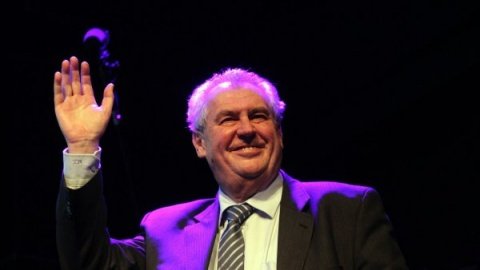
Former Czech Prime Minister Milos Zeman has won the presidential election – the first time the position has been decided by direct popular vote.
Milos Zeman won 55% of votes in the second-round poll, compared to Foreign Minister Karel Schwarzenberg’s 45%.
Voters had braved freezing conditions to turn out in what was being seen as a nail-bitingly close poll.
Milos Zeman is seen as a hard-drinking, chain-smoking politician, known for his witty put-downs of opponents.
As president, Milos Zeman will represent the Czech Republic abroad and appoint candidates to the constitutional court and the central bank, but the post does not carry much day-to-day power.
Milos Zeman will replace the euroskeptic Vaclav Klaus, who steps down in March after ten years in office.
Both presidential candidates support deeper integration of the European Union.
The result is a triumphant return for a man many thought was finished in politics.
Former Czech PM Milos Zeman has won the presidential election, the first time the position has been decided by direct popular vote
Ten years ago Milos Zeman was humiliated in his first attempt to become president – even members of his own party didn’t vote for him.
He has spent much of the last decade in retirement at his country cottage, but he returns now to political life with a vengeance.
He seems to have won the support of many poorer, older voters from areas of the country that have suffered in the economic downtown.
Milos Zeman won 24.2% in the first round poll, with Karel Schwarzenberg winning 23.4%.
Although Czechs are generally disillusioned with politics, they turned out in their droves to choose between the two very different candidates – Milos Zeman, the acerbic former Social Democrat prime minister, and Karel Schwarzenberg, the elderly, aristocratic foreign minister.
The urban elite voted en masse for Karel Schwarzenberg – who was supported by many in the media and had a strong Facebook following.
A titled prince, 75 years old but wildly popularly amongst young, urban voters, in the early 1990s, he worked as chancellor to the President Vaclav Havel, the leader of the Velvet Revolution that brought down Communist rule in 1989.
For Karel Schwarzenberg’s supporters, this is a bitter defeat.
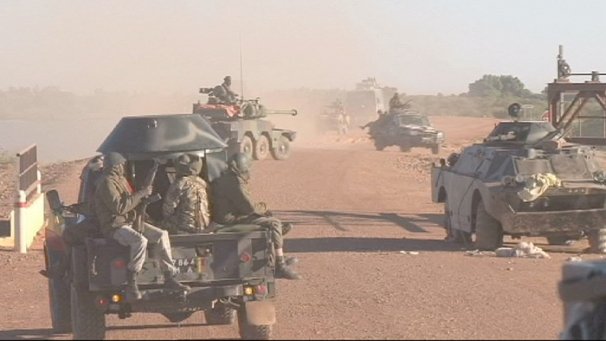
French-led troops in Mali have taken control of the northern town of Gao, France’s defence ministry has said.
Town of Gao was previously a stronghold of Islamist fighters after it was seized by an alliance of Tuareg rebels and Islamists last April.
French-led troops moved into Gao itself after earlier securing the airport and a strategic bridge to the south.
French officials said troops from neighboring Niger and Chad would now move into the town to help secure it.
They also suggested that government control was already being restored, with the mayor of Gao’s returning on Saturday after being ousted by the Islamist takeover.
There was no official death toll from the offensive, but the French army said “dozens” of Islamist fighters were killed in the overnight operations, without any casualties on the French and Malian side.
After a punishing series of air strikes on jihadist positions in Gao, Malian and French forces took first the airport and then the bridge over the river Niger, before being able to confirm they had taken control of the whole of the town.
Malian officials spoke of scenes of joy on the streets of Gao, but also of some looting.
Gao’s mayor, who has been in the capital Bamako since the town fell to the Islamists early last year, has been flown back in.
French-led troops in Mali have taken control of the northern town of Gao
Chadian and Nigerian forces, meanwhile, are poised to pushed up from the Nigerien border – about 200 km to the south – in order to reinforce the French and Malians.
French-led troops are also reported to be advancing on the town of Lere to the west.
It all appears to confirm a picture of rolling successes for the French and Malians, as they retake the main population centres of the north, says the BBC’s Hugh Schofield in Paris.
The fall of Gao, northern Mali’s most populous town, marks a significant advance for French and Malian troops.
Islamists seized a vast area of northern Mali last year and have imposed strict Sharia, or Islamic law, on its inhabitants.
France intervened militarily on January 11 to stop them advancing further south.
It has already deployed 2,500 soldiers on the ground in Mali as well as launching air strikes.
With the capture of Gao, the French are increasingly confident of pushing the Islamists out of all the major population centres in the north, says our correspondent.
The other major northern towns of Kidal and Timbuktu remain in Islamist hands. But, French Prime Minister Jean-Marc Ayrault said the historic town of Timbuktu – an important symbol which has also been under Islamist control for most of the last year – should also soon be retaken.
The French are confident that this phase of the campaign will soon be over, adds our correspondent, though of course the vast desert hinterland offers the Islamists endless opportunities to retreat and regroup.
The UN refugee agency says more than 7,000 civilians have fled to neighboring countries since 10 January to escape the fighting.
In a statement earlier, Defence Minister Jean-Yves Le Drian confirmed that 3,700 French troops were engaged in Operation Serval, 2,500 of them on Malian soil.
Gao was one of the first rebel-held areas to be targeted by air-strikes after France decided to intervene in its former colony, a decision which took many by surprise.
A UN-backed international force had not been expected in the west African state until the autumn.
Several African countries have pledged military aid to help the Malian government win back control of the north.
On Friday the African Union asked the UN Security Council to authorize immediate logistical help to allow the 6,000-strong force to deploy quickly.
It also recommended civilian observers to monitor the human rights situation in the areas which have come back under the control of the Malian government. Human rights groups have accused the Malian army of committing serious abuses.
Sci-fi director JJ Abrams will direct the seventh Star Wars film, Lucasfilm owner Walt Disney Co has announced.
Star Wars creator George Lucas said he was the “ideal choice” to direct the movie – due out in 2015 – adding “the legacy couldn’t be in better hands”.
It will be scripted by Oscar-winning writer Michael Arndt.
JJ Abrams, who co-created Lost and directed the Star Trek reboot, said he was “more grateful to George Lucas now than I was as a kid”.
In October, Disney announced it had bought Lucasfilm for $4.05 billion and was committed to three new films.
Former Lucasfilm president Kathleen Kennedy, who will produce the films, said JJ Abrams was “the perfect director to helm this”.
“Beyond having such great instincts as a filmmaker, he has an intuitive understanding of this franchise – he understands the essence of the Star Wars experience,” she said in a statement.
JJ Abrams will direct the seventh Star Wars film
JJ Abrams, who has also directed films including Mission: Impossible III and Super 8, said in a 2009 interview with the Los Angeles Times that, “as a kid, Star Wars was much more my thing than Star Trek was”.
The original Star Wars trilogy – which consists of the original film in 1977, 1980’s The Empire Strikes Back and 1983’s Return of the Jedi – was always envisioned by George Lucas as the central chunk of a nine-movie cycle.
The films followed the fortunes of young hero Luke Skywalker, cocky pilot Han Solo and the feisty Princess Leia as they battled against the Galactic Empire.
A trilogy of Star Wars prequels – 1999’s The Phantom Menace, 2002’s Attack of the Clones and 2005’s Revenge of the Sith – followed.
Disney has previously said George Lucas would remain as a creative consultant on the series.
In October, George Lucas revealed he had written story treatments for the seventh, eighth and ninth installments which he would hand over to Kathleen Kennedy.
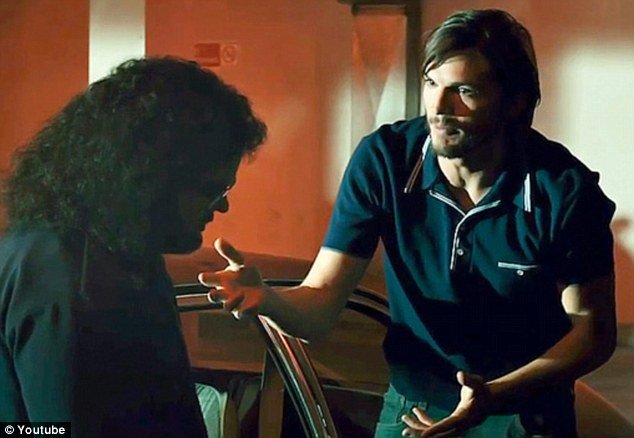
The Steve Jobs biopic jOBS had its debut at Eccles Center Theatre during the 2013 Sundance Film Festival on January 25, 2013, in Park City, Utah.
jOBS is directed by Joshua Michael Stern and stars Ashton Kutcher, Dermot Mulroney and James Woods.
The film presents the story of Steve Jobs’ (Ashton Kutcher) ascension from college dropout into one of the most revered creative entrepreneurs of the 20th century and it focuses on the early years of Apple was made without any involvement from the mega computer company.
This is the debut of jOBS. The film will be released into theaters in Friday, April 19 and will be released into theaters throughout the world up until the end of October.
jOBS is not yet rated and has a run-time of 2 hours and 2 minutes.
The Steve Jobs biopic jOBS had its debut at Eccles Center Theatre during the 2013 Sundance Film Festival on January 25, 2013, in Park City
Sarah Palin has left FOX News after her three-year run as a paid contributor to the conservative cable news channel.
“It’s my understanding that Gov. Palin was offered a contract by FOX, and she decided not to renew the arrangement,” the source told Real Clear Politics on Friday.
“She remains focused on broadening her message of common-sense conservatism across the country and will be expanding her voice in the national discussion.”
Bill Shine, an executive vice president at Fox, confirmed the news in a statement sent to the New York Times.
“We have thoroughly enjoyed our association with Governor Palin. We wish her the best in her future endeavors,” Bill Shine wrote.
It is unclear whether the parting was Sarah Palin’s choice. Multiple sources told the Times that the decision to end her contract was “amicable”.
The anonymous source who spoke with Real Clear Politics declined to say whether Sarah Palin would pursue a television contract with another news network.
SarahPalin became one of FOX’s leading political contributors, making frequent appearances across the news channel’s programming after she resigned from her role as Alaska’s governor in 2009.
Sarah Palin has left FOX News after her three-year run as a paid contributor to the conservative cable news channel
In 2010, FOX constructed a studio inside the Tea Party favorite’s home in Wasilla, Alaska, where her husband, Todd Palin, would occasionally take on the role of cameraman and producer during her live television appearances.
Sarah Palin’s relationship with the cable news channel owned by Rupert Murdoch’s News Corp. empire had seemingly taken several rocky turns in the past year, according to Real Clear Politics.
In a Facebook post during the Republican convention last August, Sarah Palin complained that FOX had cancelled “all her scheduled interviews tonight”.
Sarah Palin’s departure from the nation’s highest-rated cable news channel follows the departure of another former governor leaving a paid media gig.
Earlier this month, former New York governor Elliot Spitzer stepped down from his prime-time television gig at Current TV after the channel was acquired by Middle Eastern media giant Al Jazeera for $500 million.
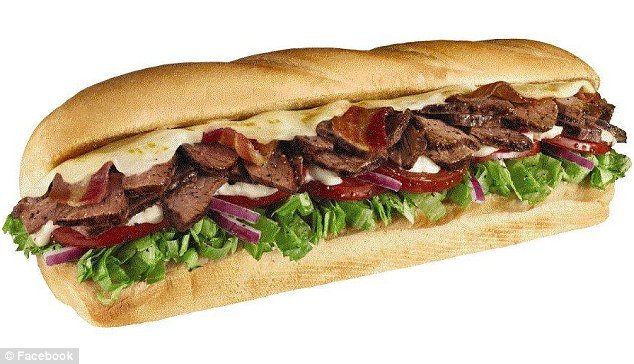
Days after two men filed a lawsuit contending Subway was skimping on its footlong sandwich size, the company said it regrets “any instance where we did not fully deliver on our promise to our customers”.
Subway will “ensure that every SUBWAY® Footlong sandwich is 12 inches at each location worldwide”, according to a statement released by the company.
Subway also told Eater.com it has “redoubled our efforts to ensure consistency and correct length in every sandwich we serve”.
The news comes as two New Jersey men sue the company for selling so-called footlong sandwiches that are closer to 11 inches in length rather than 12. John Farley, of Evesham, and Charles Noah Pendrack, of Ocean City – want compensatory damages and a change in Subway’s practices.
The suit, filed in Superior Court in Mount Holly, may be the first aimed at the sandwich shops after an embarrassment went viral last week when someone posted a photo of a footlong and a ruler on the company’s Facebook page to show that the sandwich was not as long as advertised.
At the time, the company issued a statement saying that sandwich lengths can vary a bit when franchises do not bake to the exact corporate standards.
But Stephen DeNittis, the lawyer for the plaintiffs, says that’s no excuse and the missing bite is worth about 45 cents per sandwich. He is seeking class-action status and is also preparing to file a similar suit in Pennsylvania state court in Philadelphia.
Stephen DeNittis said he’s had sandwiches from 17 shops measured – and every one came up short.
“The case is about holding companies to deliver what they’ve promised,” he said.
Even though the alleged short of a half-inch or so of bread is relatively small, it adds up, he said.
Subway promises a real Footlong sandwich after investigation revealed product came up short
Subway has 38,000 stores around the world, nearly all owned by franchisees and its $5 footlong specials have been a mainstay of the company’s ads for five years.
Stephen DeNittis said both John Farley and Charles Noah Pendrack came to him after reading last week about the short sandwiches.
Subway should either make sure its sandwiches measure a full foot or stop advertising them as such, he said.
He points to how McDonald’s quarter-pounders are advertised as being that weight before they are cooked.
Subway said it couldn’t comment on pending or ongoing legal action but the company responded to international criticism that their footlong sandwiches only appear to be 11 inches long shortly after the controversy arose.
But their reply didn’t win them any new fans, as they claimed that the word footlong is a “registered trademark as a descriptive name for the sub’ and ‘not intended to be a measurement of length”.
A man in Australia started uproar on January 15 when he posted a photo on the company’s Facebook page of one of its footlong subs next to a tape measure showing the sandwich as just 11 inches.
Countless lookalike pictures appeared all over the Internet and more than 100,000 people “liked” or commented on the original, which had the caption “Subway pls respond”.
Subway, the world’s largest fast food chain, did so with a comment on the original query, posted by Matt Corby from Perth, Australia.
The statement began: “Looking at the photo doing the rounds showing a slightly undersized sub, this bread is not baked to our standards.”
Then Subway went on the offensive, claiming that a footlong sub wasn’t necessarily meant to be exactly a foot long in the first place.
“With regards to the size of the bread and calling it a footlong, <<SUBWAY FOOTLONG>> is a registered trademark as a descriptive name for the sub sold in Subway® Restaurants and not intended to be a measurement of length.”
“The length of the bread baked in the restaurant cannot be assured each and every time as the proofing process may vary slightly each time in the restaurant.”
Subway have since removed the statement but, as Buzzfeed pointed out, this was at odds with previous Subway advertising.
The company has suggested in past promotional material that the footlong sub will measure a foot in length, such as a popular 2008 “Hula” advert.
Jennifer Lopez admits she is still struggling to deal with the collapse of her marriage to Marc Anthony after two years on Katie Couric show.
J-Lo opened up to Katie Couric on Friday, revealing she found it hard to get out of bed when her relationship broke down.
Despite having moved on since her split – Jennifer Lopez is dating her 25-year-old back up dancer Casper Smart – the 43-year-old said having her two twins, Max and Emme, ask questions about the divorce continues to make it difficult.
“I actually just wrote a song about it and just recorded it funnily enough, because I wanted to explain to them without out explaining it to them. It is a beautiful song.
“But there something inside of me that was struggling with that part of things.”
When asked what she says to her children, Jennifer Lopez said: “I feel like God gives me the words every time because every time they do it I get a rush of panic through my body and I’m like <<Oh my god, what do I say?>>
“Again it is learning process, like with Marc, and I said maybe we should do some things together.”
Jennifer Lopez admits she is still struggling to deal with the collapse of her marriage to Marc Anthony after two years on Katie Couric show
J-Lo was on the Katie Show to promote her new film Parker in which she plays a newly divorced woman. Filming as she went through her own divorce was cathartic, the singer said.
“It was kind of perfect to be honest, because I was very in touch with all the emotions,” Jennifer Lopez said.
“I play a character who is really literally at the worst point of her life. She’s divorced, she’s pushing forty and her work isn’t doing well and she is living with her mum.
“So she’s at the worst point of her life and at that moment when I was doing the movie, I felt the same way.
“It was the worst time of my life going through the divorce with the kids, so it was kind of a blessing – as these can be sometimes – to be able to use all those emotions and all those feelings and put them somewhere.
“As when you have kids and you have to get up every day – and it’s hard to get up when you feel that bad – and you have to hide it all day at work and hide in front of the kids, so to be able to use it in the scenes and really look how I felt was great.”
J-Lo, who was joined by her co-star Jason Statham, also revealed that she was terrified to do a scene where she had to strip down in front of Jason’s character Parker.
“It’s nerve racking you know it’s coming, it’s nerve racking and you just have to suck it up,” Jennifer Lopez said.
In order to look her best, J-Lo starved herself for “a few days” before the scene but had a bag of McDonald’s waiting for her.
“I saw you running down the stairs with a bag and I was like <<What’s in the bag?>> and you’re like <<Go away, go away>>,” Jason Statham said, realizing what his co-star was up to.
Despite talking about how hard she has found it since getting divorced, J-Lo did reveal that her boyfriend Casper Smart and her have taken the next step in their relationship – buying a dog together.
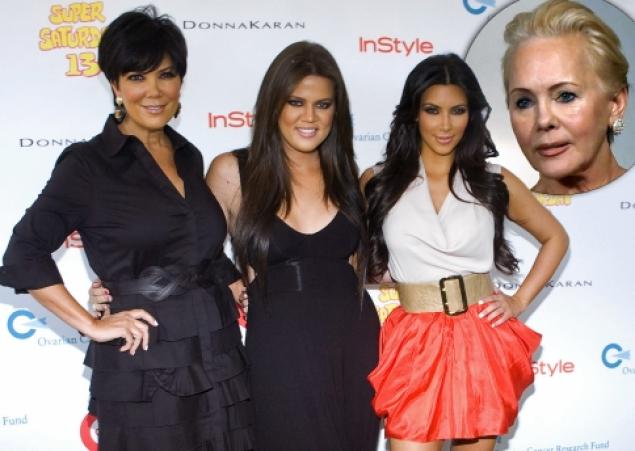
Ellen Kardashian, Robert Kardashian’s widow, has fired back at stepdaughters Kim and Khloe, accusing them attacking her online with vicious lies.
Ellen Kardashian has been labeled a “piece of trash” by the reality stars.
Robert Kardashian’s widow received volleys of insults from Kim and Khloe Kardashian after she leaked diaries she claimed were penned by the late lawyer, in which he says their mother Kris Jenner was guilty of physically abusing Kim.
In an interview with InTouch magazine, Ellen Kardashian said she was particularly enraged at claims made by Khloe that she had married her father “on his deathbed”, clarifying that she married him two months before he died of esophageal cancer in 2003.
“To say that is completely false and horrible. I was with Robert for almost five years total. I dated him for three years, and he proposed to me in 2001,” she said.
“We married two months prior to his passing in 2003 and planned a wedding. We didn’t just run right out and get married.
“In fact, I met with the girls just the week before to go over all our plans. We had a beautiful wedding with the girls and all of his family at our home.
“It’s sad they choose to lie when they know their father was so happy on that wonderful day.”
Ellen Kardashian also blasted the sisters for getting the number of years since their father’s death wrong and for saying she needs to get a job.
She added that the way Khloe Kardashian mocked her for going bankrupt was unfair, as she could not afford to pay home loans taken out by their father.
Ellen Kardashian went on: “Now that’s old news. When Robert died, he left me a big mortgage on both homes, and I had to pay.
“So when the real estate market went south, just like 50 per cent of all the rest of Americans, it wasn’t worth keeping. So at my lawyer’s advice, I didn’t.
“That was two years ago, and I let the bank take it back. To get out from underneath everything else, they filed bankruptcy at the same time. That’s true and a record anyone can pull up at the County Recorder.”
Ellen Kardashian, Robert Kardashian’s widow, has fired back at stepdaughters Kim and Khloe, accusing them attacking her online with vicious lies
In addition Ellen was unhappy at being labeled Robert Kardashian’s ex, and denied she was out to make money by selling the journals.
Ellen Kardashian exclaimed: “I am not his ex! I am his widow! I have nothing to hide. I have not belittled them or chastised them or said shameful things about them.
“If this was about money, I would have done this nine years ago, because I’m not the one who was left the insurance policy.”
Her remarks come after Kim and Khloe Kardashian attacked Ellen for the tabloid story which accuses Robert Kardashian’s former wife, Kris Jenner, of child abuse.
She provided Robert Kardashian’s alleged journal to In Touch, and in it he supposedly claims Kris Jenner, 57, kicked, beat and threatened to kill Kim as their 12-year marriage collapsed.
However, both Kim and Khloe Kardashian took to Twitter on Thursday to slam and discredit Ellen.
Khloe Kardashian tweeted: “How can such a piece of trash even mention my father’s name. You married him on his death bed when he was not even aware of his surroundings.
“You should be hiding in shame for all of the lies you sell to the tabloids.
“You have no right to even mention our names especially my mother’s! We don’t know you!!! How dare you spread such lies! You are a disgrace.
“10 years after my father’s passing & now that she has filed for bankruptcy…NOW she sells FALSE stories. Hope that money buys you water in hell.”
Kim Kardashian , 32, who is expecting her first child with Kanye West, also blasted Ellen, tweeting: “10 yrs since dad passed & this woman he married 4 wks before he died needs to get a job instead of trying to destroy my family w fake stories.”
Kourtney Kardashian’s fiance Scott Disick tried to add some levity to the situation after Ellen claimed Kris Jenner tried to beat and threatened Kim.
Scott Disick wrote: “She’s def threatened to kill me, but who hasn’t.”
Kris Jenner’s close bond with all of her children has been documented over the years on E! reality show Keeping Up With The Kardashians.
Kris Jenner also acts as a “momager” to her Kourtney, Kim, Khloe and Robert Kardashian as well as her two children with Bruce Jenner, Kendall and Kylie.
Ellen married Robert Kardashian, a lawyer who represented OJ Simpson, in 2003 just two months before his death, after dating for nearly six years.
Ellen Kardashian has previously claimed her late husband was not the biological father of Khloe Kardashian.
Czech voters have been casting their ballots in the presidential election, the first time the role has been elected by direct popular vote.
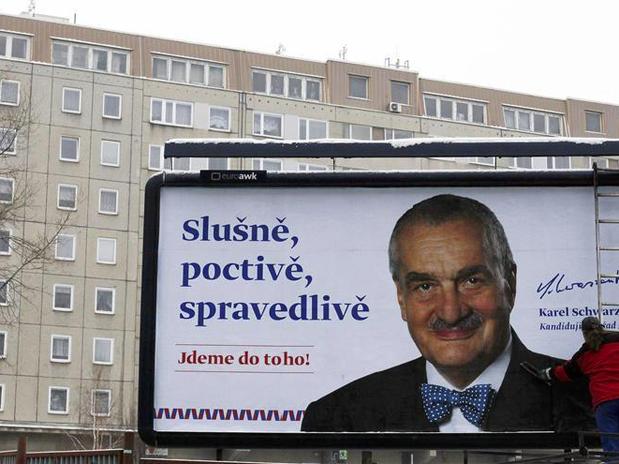
Former Czech Prime Minister Milos Zeman faces Foreign Minister Karel Schwarzenberg in the second round.
People have braved freezing conditions to vote in what is proving a nail-bitingly close election.
Milos Zeman gained 24.2% in the first round, with Karel Schwarzenberg 23.4%.
“It’ll be very tight,” Karel Schwarzenberg said after casting his ballot in the small village of Sykorice, south-west of Prague.
“I’m not nervous, far from it, I’m calm, we’ll see,” he added.
Former Czech Prime Minister Milos Zeman faces Foreign Minister Karel Schwarzenberg in the second round of presidential election
Milos Zeman said he had said all he wanted to say.
“Now it’s the turn of citizens,” he added.
Though Czechs are generally disillusioned with politics, they have been turning out in droves to chose the two very different candidates – Milos Zeman, the acerbic former Social Democrat prime minister, and Karel Schwarzenberg, the elderly, aristocratic foreign minister.
Milos Zeman is a hard-drinking, chain-smoking politician, known for his witty put-downs of his political opponents while Karel Schwarzenberg is a titled prince, 75 years of age but wildly popularly amongst young, urban voters, our correspondent says.
In the early 1990s, Karel Schwarzenberg worked as chancellor to the President Vaclav Havel, the leader of the Velvet Revolution that brought down Communist rule in 1989.
The vote is the first time the president is being directly elected by the public.
The new president will represent the Czech Republic abroad and appoint candidates to the constitutional court and the central bank, but does not carry much day-to-day power.
Belarusian Victoria Azarenka retained her Australian Open title and kept hold of the world number one spot with victory over Li Na in the Melbourne final.
Victoria Azarenka, 23, came back from a set down to win 4-6 6-4 6-3 on a cool and blustery evening on Rod Laver Arena.
In a scrappy match, Victoria Azarenka proved the stronger in the closing stages after Li Na rolled her ankle twice and hit her head in two heavy falls.
The victory brought Victoria Azarenka her second Grand Slam title after last year’s win at Melbourne Park, and ensured she will not be overtaken by Serena Williams in the next world rankings.
“I will always keep a very special memory of this court and you will be in my heart forever,” Victoria Azarenka told the crowd in her post-match on-court interview.
However, it was Li Na who carried most of the support throughout the final, due in part to Victoria Azarenka’s controversial medical timeout in her semi-final against Sloane Stephens.
Victoria Azarenka had been accused of gamesmanship, despite later insisting the timeout had been necessary because of breathing difficulties.
Either way, the negative attention she garnered in the build-up to the final only added to the support for the already popular Li Na.
The Chinese player had marginally the better of a desperately scrappy first set of 32 errors and 16 winners between the pair.
Li Na was much the more effective on the return and after recovering from 5-2 down to 5-4, Victoria Azarenka double-faulted on set point, summing up her evening to that point.
Victoria Azarenka retained her Australian Open title and kept hold of the world number one spot with victory over Li Na in the Melbourne final
A few calls from the boisterous Australia Day crowd probably did not help, although at times it appeared that Li was as distracted by her own vociferous supporters.
Victoria Azarenka made a strong start to the second set with a double break as Li Na’s famously unreliable radar went haywire, but the sixth seed was battling back when at 3-2 down when she suffered a fall.
She hobbled back to the chair and took a medical timeout of her own to get her left ankle taped, leaving Victoria Azarenka to don her tracksuit top and practise a few serves.
It looked as though the timeout had worked against Victoria Azarenka this time when Li Na came out firing with five points in a row, but the top seed clung on from 0-40 to stay ahead.
Li Na then offered up four errors in a row to give Victoria Azarenka the break at 5-4, and she closed out the set to force a decider.
After breaks were swapped at the start, Li Na looked to be regaining some sort of control at 2-1 up only to be interrupted for nine minutes by the annual Australia Day fireworks display.
Disaster struck on the resumption, when Li Na crashed to the ground during the first point and rolled the same ankle, before cracking her head on the court as she fell.
The sixth seed looked dazed, although she did manage a thin smile when her face appeared on the big screen, but she needed another timeout, and again Victoria Azarenka went through an unexpected practice routine.
Li Na resumed firing forehands but Victoria Azarenka held on to her serve at 2-2 and then got the decisive break in game five, hanging on to it when Li squandered a break point at 4-3 down.
After struggling to hold on to her serve in the early stages, Victoria Azarenka was now attacking her opponent’s with similar gusto.
The world number one avoided having to serve out when Li Na floated a forehand long on championship point, Victoria Azarenka dropping her racquet and burying her face in her hands in celebration.
Nicki Minaj has opened up on Jimmy Kimmel show about her reported American Idol feud with Mariah Carey.
The singers have been at loggerheads ever since they first started working together on American Idol.
Nicki Minaj wore a garish trouser suit for her appearance on the show, which Jimmy Kimmel immediately commented on.
“Where do you get stuff like this? Do you have to make it?”
“No! It’s Roberto Cavalli, you can buy it in stores,” she said.
Jimmy Kimmel went on to praise her judging skills on the talent show, saying that she seems solid and reasonable, which is the opposite of her public persona.
“A lot of people don’t like their co-workers at their offices, but your office is on television and so when you have skirmishes everyone sees them. And clearly, you and Mariah Carey do not like each other,” Jimmy Kimmel probed.
Nicki Minaj has opened up on Jimmy Kimmel show about her reported American Idol feud with Mariah Carey
“I wouldn’t say I don’t like her, I definitely don’t think she likes me,” Nicki Minaj replied, adding that despite this, she makes a fair bit of effort to be friendly.
“I try, as I looked up to her for a long time, so I don’t want to hate on this lady, but she had an issue from the beginning. We’re having fun though.
“I genuinely like going there, even Mariah and I, we really do have fun.”
But while she might be making waves on reality TV, Nicki Minaj was there to do what she does best – perform.
Nicki Minaj took to a special outdoor stage to perform Va Va Voom and Freedom in front of an overexcited audience.
Writhing and singing to the music of a live band, Nicki Minaj added a jaunty leopard print hat to her already clashing outfit.
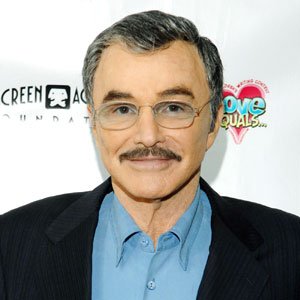
Actor Burt Reynolds is being treated in intensive care in Florida hospital after contracting a severe case of the flu.
Burt Reynolds, 76, has been battling the virus, which has swept across America this year, for the last few days.
However, the actor was hospitalized in Florida after the virus seemed to be getting much worse.
A representative for Burt Reynolds confirmed to TMZ that he was moved to ICU early on Friday morning because doctors realized he was “severely dehydrated”.
Medical experts are optimistic that the actor will make a full recovery from his illness.
A spokesperson told E! News: “He is doing better. They are taking care of him and his moustache.”
Burt Reynolds is being treated in intensive care in Florida hospital after contracting a severe case of the flu
Burt Reynolds had a quintuple heart bypass in 2010, a year after he entered a West Palm Beach, Florida, rehab clinic to help kick a prescription drug habit that stemmed from earlier back surgery.
At the time, his publicist denied Burt Reynolds was forced to have emergency surgery, saying that he “has a great motor with brand new pipes”.
In 2011, Burt Reynolds, who starred 40 years ago in Deliverance and films such as The Cannonball Run, faced having his Florida waterfront mansion repossessed after he reportedly fell $1.1 million behind on his mortgage.
At the time, Burt Reynolds’ friends revealed his finances were in a mess and claimed he owed millions.
But twice-married Burt Reynolds, who was romantically linked over the years with country singer Tammy Wynette, actress Sally Field, singers Dinah Shore and Lorna Luft and tennis champion Chris Evert, insisted his financial travails were all a misunderstanding.
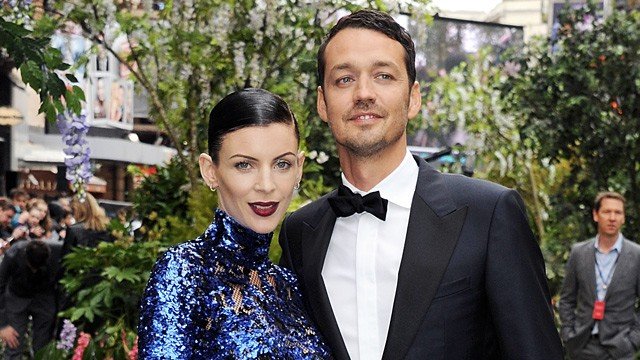
Liberty Ross finally filed for divorce from Rupert Sanders in Los Angeles County Superior Court Friday following highly-publicized cheating scandal with Kristen Stewart six months ago, according to TMZ.
Liberty Ross, 34, who is represented by lawyer Laura Wasser, has asked for spousal support and joint custody of their children – 7-year-old Sykla and 5-year-old Tennyson, TMZ reports.
Rupert Sanders, 41, represented by lawyer Lance Spiegel, has reportedly filed his response to the petition in which he also asks for joint custody.
The director has also requested that he and the British model split the court costs between them.
Liberty Ross and Rupert Sanders’ 9-year marriage has been under strain ever since his explosive fling with Snow White and the Huntsman starlet Kristen Stewart was exposed by Us Weekly in July 2012.
Liberty Ross finally filed for divorce from Rupert Sanders in Los Angeles County Superior Court Friday following highly-publicized cheating scandal with Kristen Stewart six months ago
Unlike Rupert Sanders, 22-year-old Kristen Stewart seems to have managed to patch things up with her boyfriend Robert Pattinson.
Liberty Ross was believed to have initially kicked the cheating director out of their home after his infidelity was revealed, but they began couples therapy in an attempt to save their marriage.
A source told RadarOnlinein September: “It was Rupert’s suggestion that he go to therapy with Liberty. He will do anything to save his marriage because he loves his wife and knows he screwed up.
“Rupert is willing to do absolutely anything and everything he can to save his marriage, he knows this is the worst mistake of his life, and he cannot believe he was so stupid.”
The source added: “The thought of losing his wife and children, who he loves more than anything in the world is killing him.”
Liberty Ross and Rupert Sanders have not been publicly seen since they went trick-or-treating together in Los Angeles for Halloween.
An Egyptian court has sentenced to death 21 defendants over clashes between rival football fans at Port Said stadium in which 74 people were killed last February.
The riots began after a league game at Port Said stadium between local side al-Masry and Cairo club al-Ahly.
The violence – Egypt’s worst football disaster – sparked riots in Cairo during which a further 16 people died.
The sentences came after a day of clashes between security forces and supporters of the secular opposition.
An Egyptian court has sentenced to death 21 defendants over clashes between rival football fans at Port Said stadium in which 74 people were killed last February
Hundreds of thousands took to the streets across Egypt to mark the second anniversary of the revolution that ousted ex-President Hosni Mubarak and voice their opposition to Islamist President Mohamed Morsi.
At least seven people were killed in Friday’s unrest.
Last year’s football riots led to the suspension of the league.
It began when al-Masry fans invaded the pitch, hurling stones and fireworks at the visitors.
At the time some fans – who said security forces appeared to do little to prevent the clashes – accused supporters of toppled President Hosni Mubarak of instigating the incident.
Seventy-three people, including policemen, were tried.
The judge said he would announce the verdict for the remaining 52 defendants on March 9.
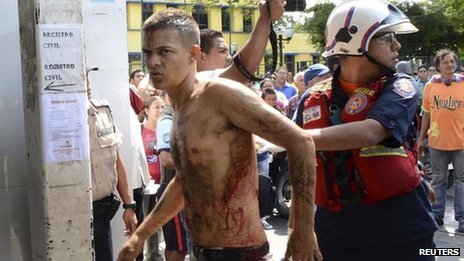
More than 50 people have been killed in Uribana prison riot in western Venezuela, hospital staff say.
The riot was triggered when local media broadcast news that soldiers had been sent to Uribana prison in Barquisimeto to search for weapons, Prisons Minister Iris Varela said.
Hospital director Ruy Medina told AFP news agency that some 90 people were injured, mostly from gunshot wounds.
The dead are thought to include inmates, guards and prison workers.
The director of Barquisimeto hospital, Ruy Medina, put the death toll at 54, Venezuela’s Clarin newspaper reported.
Venezuelan Human rights activist Carlos Nieto Palma said: “What should have been a normal procedure in any prison ended in a clash between National Guard [soldiers] and inmates.”
Carlos Nieto Palma added that Uribana prison was among the most dangerous in the country.
Urbina prison riot was triggered when local media broadcast news that soldiers had been sent to the prison in Barquisimeto to search for weapons
Opposition leader Henrique Capriles blamed the violence on “incompetent and irresponsible government”.
Venezuela’s prisons are blighted by overcrowding and the proliferation of weapons and drugs.
It appears that prisoners who had heard about the search in advance from news reports were waiting for the National Guard when they arrived.
It is thought that the search was aimed at disarming gangs within the prison and had been planned for some time, she reports.
There has been no official account of the incident or confirmation of the number of casualties, but the government says it will carry out a full investigation.
Tech giant Apple has lost its crown as the world’s most valuable publicly traded company after its shares continued to fall.
Oil company Exxon Mobil has regained the top slot after Apple shares fell 2.4%, following a 12% drop on Thursday.
Apple, which posted disappointing iPhone sales figures on Wednesday, has seen its shares fall 37% since their record high last September.
Exxon became number one in 2005, traded places with Apple during 2011, and had been number two since early 2012.
At the close on Wall Street, Apple had a market value of $413 billion, against Exxon’s of $418 billion.
Apple has been hit by fears over its future growth, despite record profits.
Although the firm said on Wednesday that it had sold more iPhones (47.8 million) and iPads (22.9 million) in the final three months of last year than in any previous quarter, investors and analysts had expected yet more.
On Thursday, about $50 billion was wiped off Apple’s value after the biggest daily drop in the firm’s stock in four years.
Exxon Mobil has regained the crown as world’s most valuable publicly traded company after Apple shares continued to fall
Apple is also facing fierce competition from rivals like Samsung, which accounted for one in four of all mobile phones shipped worldwide last year, according to Strategy Analytics.
Apple’s share price rose sharply following a revival under Steve Jobs, who died in 2011, which came about first in computers and then the iPod music player, and was then followed by the iPhone and iPad.
Apple’s shares were worth as little as $3.19 in 1997 when it faced the possibility of bankruptcy, and reached a record $702.1 on September 19.
SpaceLiner is a hypersonic capable of reaching 24 times the speed of sound and by 2050 could transport passengers from London to Sydney in just 90 minutes.
Although the finished article is still a long way off, Martin Sippel, project coordinator for SpaceLiner at the German Aerospace Center believes the project could attract private funding within a decade.
The current concept includes a rocket booster stage for launch and a separate orbiter stage to carry up to 50 passengers halfway around the world without ever making it to space.
A journey between Europe and the U.S. would be reduced to just over 60 minutes, providing passengers are happy to pay space travel prices, estimated to be in the region of several hundred thousand dollars per ticket.
Should it take off in both sense of the word, there is no reason why a fleet of SpaceLiners couldn’t make up to 15 flights a day, believes Martin Sippel.
“Maybe we can best characterize the SpaceLiner by saying it’s a kind of second-generation space shuttle, but with a completely different task,” Martin Sippel told TechNewsDaily.
SpaceLiner is a hypersonic capable of reaching 24 times the speed of sound and by 2050 could transport passengers from London to Sydney in just 90 minutes
The SpaceLiner would take approximately 8 minutes to climb to an altitude of some 50 miles where it reach the earth’s upper atmosphere before gliding back to Earth at hypersonic speeds of more than 15,000mph.
SpaceLiner engineers hope to use a liquid oxygen and hydrogen rocket fuel, leaving water vapor as waste.
Engineers predict that advances in materials could be combined with new cooling technologies and heat shielding to safeguard the SpaceLiner’s structures against the intense heat of hypersonic flight.
The SpaceLiner would likely require an isolated launch site and careful route planning to keep sonic booms from negatively affecting residential areas.
The empty rocket stage from SpaceLiner would return to Earth after launch so that it could be reused.
The plan would be for an aircraft to fly out and latch on to the rocket stage before towing it towards an airfield where it could glide in to land.
SpaceLiner’s eventually design could well be influenced by upcoming, EU-funded study FAST20XX (Future High-Altitude High-Speed Transport 20xx).
A close eye will also be on the success or failure of space ventures by the likes of Virgin Galactic. Should space travel capture the interest of travelers, Martin Sippel is confident a fleet of SpaceLiners could make up to 15 flights a day.
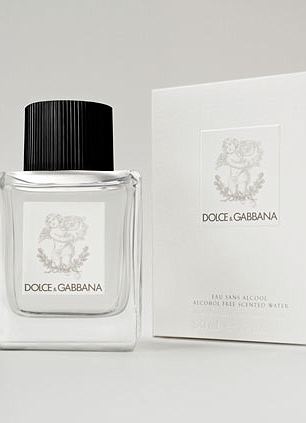
Italian fashion brand Dolce & Gabbana has unveiled its new perfume for babies.
A perfume for infants might sound far-fetched but Dolce & Gabbana are just the latest brand in a long list to introduce a fragrance for babies.
Dolce & Gabbana baby perfume is a unisex product packaged in a minimal black and white design in keeping with the brand’s chic Italian style.
According to Stefano Gabbana the new perfume is inspired by the smell of a baby and is “designed to cuddle and pamper every little boy and girl”.
Dolce & Gabbana baby perfume is a unisex product packaged in a minimal black and white design in keeping with the brand’s chic Italian style
Burberry’s baby fragrance, available in a regular or a non-alcohol version, contains “warm floral heart notes of cyclamen, orange blossom, lily of the valley and jasmine”.
Bvlgari’s Petits et Mamans is a fragrance “created for the shared pleasure of children and their mothers. An exclusive fragrance and bath collection designed to give joyful and precious moments” containing Sicilian Orange, Bergamot, Brazilian Rosewood.
While L’Occitane’s Body & Hair Mom and Baby water is designed for mother and babe to share.
Even baby-friendly brands like Johnson’s and Nivea offer a simple scent for mini-mes in Europe.
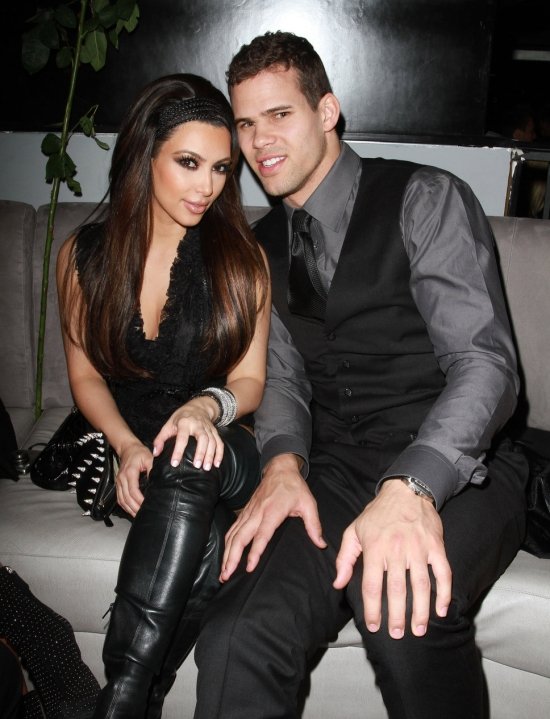
It seems Kim Kardashian and Kris Humphries divorce will take a little longer to end, as the basketball player has reportedly turned down a $10 million offer to settle their case.
According to RadarOnline.com, Kris Humphries, who is asking for an annulment on the basis of fraud, refused to accept the monetary payment in order to bring their lengthy divorce battle to an end.
A source close to proceedings told the website: “After Kim filed for divorce, she offered Kris a $10 million payoff, with the agreement that he would not continue to pursue an annulment to their marriage on the grounds of fraud.”
However, Kris Humphries is said to have turned down the offer because it has “never been about money”.
It seems Kim Kardashian and Kris Humphries divorce will take a little longer to end, as the basketball player has reportedly turned down a $10 million offer to settle their case
The source added: “He wants to be able to marry in a church again, with a clear conscience, when he finds someone special.
“Kris is deeply religious and he believes that the only way he can do that is if his marriage to Kim is annulled.”
A spokesperson for Kim Kardashian has denied that she made the offer.
Earlier reports suggested Kris Humphries had originally demanded a $10 million payment to grant her a divorce, but the source says this is fundamentally false: “Kris has given a sworn declaration that he has never asked Kim for a single dime.”
Because of Kris Humphries’ basketball commitments, the earliest their divorce trial can commence is the middle of June.
And this is where their bitter feud takes on a soap opera-like quality, for technically Kim Kardashian will still be married to Kris Humphries when she is due to give birth (in July) to current boyfriend, Kanye West‘s baby.
Kanye West has also been named as the adulterous figure in an alleged affair Kim Kardashian had during her relationship with NFL player Reggie Bush.
Rapper and music producer Consequence made the accusations while appearing on a radio show with his girlfriend Jen The Pen.
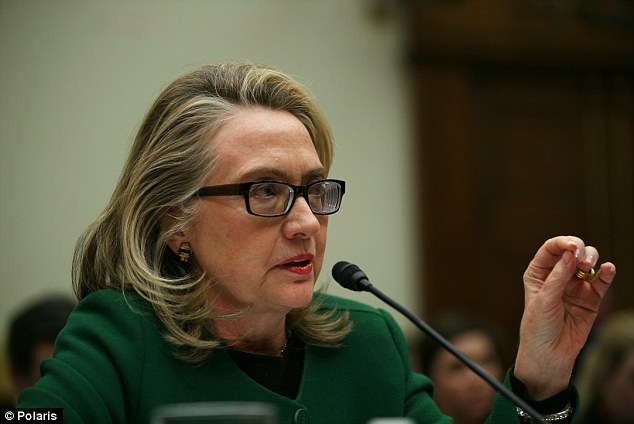
Tiny lines visible on Hillary Clinton’s glasses when she appeared before the Senate this week to give evidence on Benghazi attack indicate she may still be experiencing the after-effects following the blood clot she suffered last month.
It is thought Hillary Clinton, 65, was wearing a Fresnel prism on her spectacles – a stick-on panel often used to treat double vision.
The faint vertical lines are visible on the left lens of Hillary Clinton’s glasses in photographs taken during her testimony about the terrorist attack on the U.S. Consulate in Benghazi, Libya, on September 11, 2012, in which four Americans were killed.
Eye experts told the New York Daily News it is likely Hillary Clinton has had an adhesive Fresnel prism placed on her glasses.
“If she’s wearing a Fresnel prism, then she has double vision without it,” said Dr. Mark Fromer, medical director at Fromer Eye Centers.
He said the adhesive panel, which also aids muscle weakness, “helps bring images into focus”.
Hillary Clinton’s spokesperson confirmed she was wearing glasses as a result of the fall and concussion she experienced last month, but did not elaborate further.
The Secretary of State returned to work earlier this month following a month long absence, after initially falling ill with a stomach virus.
While at home recuperating from the bug, which forced her to cancel a planned visit to North Africa and the Middle East, Hillary Clinton suffered concussion after fainting and falling.
Doctors later discovered a blood clot between her skull and her brain during a follow-up exam on December 30, and she was admitted to New York-Presbyterian for treatment with blood thinners.
Hillary Clinton attended back-to-back hearings on the Benghazi attack before the Senate and the House on Wednesday.
It appears that Hillary Clinton was wearing a Fresnel prism on her spectacles during Benghazi attack hearing indicating she may still be experiencing the after-effects following the blood clot
What are Fresnel prisms?
Fresnel prisms are wafer-thin, transparent sheets of adhesive plastic.
One side is fixed to the lens of the wearer’s glasses, while the other has special grooves that alter the way light enters the eye.
The prisms, the strength of which can be adjusted depending on the patient’s needs, are often used to treat double vision.
The stick-on panels may be worn for several months. If they prove particularly successful, patients can have glasses made with built-in prisms.
Double vision can occur in one or both eyes. It can be caused by an irregularly shaped cornea or abnormalities of the cornea, dry eye, or abnormalities of the lens or retina.
At least one in five people, including half of schoolchildren, were infected with swine flu during the first year of the pandemic in 2009, according to data from 19 countries.
It is thought the virus killed 200,000 people around the world.
A World Health Organization-led study looked for evidence of the body’s immune system fighting the virus.
It showed large numbers of people had been infected, although not all would have developed full-blown flu.
The H1N1 virus first appeared in Mexico in 2009 and rapidly spread around the world.
At least one in five people, including half of schoolchildren, were infected with swine flu during the first year of the pandemic in 2009, according to data from 19 countries
An international group of researchers looked at more than 90,000 blood samples before and during the pandemic in countries including India, Australia and the UK.
They looked for antibodies which are produced when the body is infected with H1N1.
By comparing the figures before and during the pandemic, the researchers can determine how many people were infected as the virus spread around the world.
Approximately 24% of people had been infected overall, but half of school-age children showed signs of infection.
One of the researchers, Dr. Maria Van Kerkhove from Imperial College London, said fewer than two in every 10,000 people infected died during the pandemic.
“However, those that did die are much younger than in seasonal flu so the years of life lost will be much more,” she said.
“The figures drive home how incredibly infectious the virus is,” she said.
Many older people, who typically die during outbreaks of flu, were protected as they had been exposed to the virus decades before.