In a major escalation of its probe into the government’s handling of the Jeffrey Epstein investigation, the House Oversight and Accountability Committee has issued a subpoena to the disgraced financier’s estate, demanding access to a trove of documents, including the infamous “birthday book.” The move, which comes amid mounting public pressure for transparency, is aimed at shedding light on Epstein’s high-powered social network and whether powerful individuals were complicit in his crimes.
The subpoena, signed by Committee Chairman James Comer, seeks “all entries contained within the reported leather-bound book compiled by Ms. Ghislaine Maxwell.” The book, which was reportedly created for Epstein’s 50th birthday in 2003, has been at the center of a media firestorm since The Wall Street Journal reported last month that it contains a “bawdy” letter and drawing from then-real estate magnate Donald Trump.
While the President has vehemently denied the report and filed a defamation lawsuit against the Journal, the book’s contents are seen by lawmakers as a crucial piece of the puzzle. According to the subpoena, the book is “relevant for ongoing congressional oversight of the Department of Justice’s handling of the Epstein investigation and prosecution.” It also seeks to determine whether any of Epstein’s associates were involved in his trafficking network.
The request for the book is part of a broader push for documents from the Epstein estate, including non-disclosure agreements, his will, and any records that could be “reasonably construed to be a potential list of clients involved in sex, sex acts, or sex trafficking.” While both the Department of Justice and convicted sex trafficker Ghislaine Maxwell have denied the existence of a “client list,” the committee appears determined to leave no stone unturned.
The committee’s subpoena follows weeks of pressure from both Republicans and Democrats who have called for the full release of all government documents related to the Epstein case. While the Justice Department has begun to hand over a limited number of files, lawmakers say the “limitation of the documents raises more questions than answers.”
For their part, lawyers for the Epstein estate have confirmed receipt of the subpoena and stated they will “comply with all lawful process in this matter.” The deadline for the documents to be turned over is September 8, setting the stage for a new and potentially explosive chapter in the saga. As the public clamors for accountability and victims’ families seek justice, the congressional investigation and the fate of the “birthday book” hang in the balance.
An Israeli strike on a hospital in southern Gaza has killed at least 20 people, including five journalists, according to health officials. The attack, which Gaza officials described as a “double-tap” strike, has drawn international condemnation and further intensified fears for the safety of civilians, healthcare workers, and media personnel in the besieged enclave.
According to the Gaza Health Ministry and eyewitness accounts, the initial strike hit the fourth floor of a building at Nasser Hospital in Khan Younis. Moments later, as rescue workers and journalists rushed to the scene to aid the wounded, a second missile struck the same location. The second blast killed at least 17 people, including those who had arrived to help.
Among the dead were journalists from international news agencies, who had been documenting the ongoing conflict. The Committee to Protect Journalists (CPJ) stated that this incident brings the number of journalists killed in Gaza to nearly 200 since the beginning of the war. Those identified as killed include:
Hussam al-Masri, a cameraman for Reuters
Mariam Abu Dagga, a freelance journalist who worked with The Associated Press
Mohammed Salam, a photographer for Al Jazeera
Moaz Abu Taha, a freelance photojournalist
Ahmad Abu Aziz, from Quds Feed
The Israel Defense Forces (IDF) confirmed that it carried out a strike in the area of Nasser Hospital and said it would conduct an investigation into the incident. An IDF spokesperson stated that the military “regrets any harm to uninvolved individuals and does not target journalists as such.” However, rights groups and journalistic bodies have repeatedly accused Israel of recklessly endangering civilians and media workers, a claim Israel denies.
The strike on Nasser Hospital is the latest in a series of attacks on medical facilities, which have been overwhelmed by the humanitarian crisis and a critical shortage of supplies. Israel has consistently claimed that Hamas uses hospitals and other civilian infrastructure for military purposes, an assertion that has been denied by Hamas and medical staff. The attack on a site of medical refuge and the targeting of those providing aid has sparked outrage and renewed calls for an immediate ceasefire.
In a powerful and destructive show of force, Typhoon Kajiki, the most powerful storm to hit Vietnam this year, has made landfall on the central coast, unleashing torrential rains and winds that have forced the evacuation of over half a million people. The storm, which comes on the heels of several other destructive typhoons, has shut down airports, closed schools, and triggered a massive, government-led emergency response.
Kajiki, which had been building strength over the South China Sea, struck the coast of Nghe An and Ha Tinh provinces with wind speeds of up to 133 km/h (82 mph). While the winds have since begun to taper off, the threat is far from over. Vietnam’s weather agency has warned that rainfall could reach 500mm (nearly 20 inches) in some areas, a forecast that has prompted fears of widespread flooding and deadly landslides.
“It’s terrifying,” said Dang Xuan Phuong, a resident of the coastal town of Cua Lo, who described seeing waves “as tall as 2 meters” and roads completely submerged in water.
In a dramatic and coordinated effort, the Vietnamese government had ordered the evacuation of more than 586,000 people from central provinces. Prime Minister Pham Minh Chinh issued an urgent directive, calling for the immediate relocation of residents from dangerous coastal areas. In preparation for the storm’s arrival, more than 16,500 soldiers and 107,000 paramilitary personnel were mobilized to assist in the evacuation and stand by for search and rescue operations.
The storm’s impact has been immediate and severe. State media reports indicate that power has been cut in several areas, roofs have been blown off homes, and floating fish farms have been washed away. Two airports in Thanh Hoa and Quang Binh provinces were shut down, and both Vietnam Airlines and Vietjet canceled dozens of flights to and from the region.
The current typhoon is the fifth to hit the country this year, and government officials have warned that it could be as powerful as Typhoon Yagi, which last year killed hundreds and caused billions of dollars in damage. For a nation that is no stranger to destructive storms, the constant onslaught of severe weather has put a tremendous strain on its infrastructure and its people.
As Kajiki moves inland and weakens over Laos and northern Thailand, the focus for Vietnamese authorities will shift to the aftermath: providing aid to the displaced, restoring power and essential services, and preventing further casualties from the risk of floods and landslides. For the thousands of families now in temporary shelters, the long and difficult road to recovery has just begun.
The tumultuous saga of Kilmar Ábrego García, the Salvadoran national whose wrongful deportation became a symbol of the Trump administration’s hardline immigration policies, has taken a dramatic new turn. After a brief period of freedom, Ábrego García was detained by U.S. immigration authorities today, just minutes after he arrived for a scheduled check-in at an ICE office in Baltimore. His lawyers say the detention is a “vindictive” act aimed at a second, immediate deportation to Uganda, a country he has never set foot in.
The detention comes after Ábrego García was released from a Tennessee jail on Friday, where he had been held on human smuggling charges. The release, which was ordered by a judge, was meant to allow him to await his trial, but his lawyers warned that the administration would attempt to immediately deport him again. That fear became a reality this morning when, after an emotional reunion with his family, he was taken into custody by ICE.
“God is with us, and God will never leave us,” Ábrego García said to a crowd of supporters outside the ICE office, just before surrendering. “God will bring justice to all the injustice we are suffering.”
The latest development in this high-stakes legal battle comes after Ábrego García rejected a plea deal that would have seen him deported to Costa Rica in exchange for pleading guilty to the smuggling charges. His lawyers said that after he declined the offer, they were notified that immigration officials intended to deport him to Uganda instead, under a recent migration deal with the country.
The Trump administration, for its part, has been unyielding in its stance. Homeland Security Secretary Kristi Noem has repeatedly labeled Ábrego García an MS-13 gang member and a “child predator,” claims his legal team has vehemently denied. “Today, ICE law enforcement arrested Kilmar Abrego Garcia and are processing him for deportation,” Noem wrote in a social media post, adding, “President Trump is not going to allow this illegal alien … to terrorize American citizens any longer.”
Ábrego García’s case first made headlines in March when he was mistakenly deported to El Salvador, a country he fled years ago to escape gang violence. His deportation violated a 2019 court order that had granted him protected status in the U.S. and was later deemed an “administrative error” by the government. He was returned to the U.S. in June, only to be immediately charged with human smuggling.
His lawyers have now filed a new federal lawsuit in Maryland, challenging his detention and seeking to block any attempt at a second deportation. The case has raised serious questions about due process and the administration’s use of deportation as a tool to punish and intimidate. As one of his attorneys, Simon Sandoval-Moshenberg, put it, Ábrego García is being “made an example of” for daring to challenge the government’s authority. For now, the fight for his freedom has shifted from the streets of Baltimore to the halls of justice, with his future hanging precariously in the balance.
The tumultuous saga of Kilmar Ábrego García, the Salvadoran national whose wrongful deportation became a symbol of the Trump administration’s hardline immigration policies, has taken a dramatic new turn. After a brief period of freedom, Ábrego García was detained by U.S. immigration authorities today, just minutes after he arrived for a scheduled check-in at an ICE office in Baltimore. His lawyers say the detention is a “vindictive” act aimed at a second, immediate deportation to Uganda, a country he has never set foot in.
The detention comes after Ábrego García was released from a Tennessee jail on Friday, where he had been held on human smuggling charges. The release, which was ordered by a judge, was meant to allow him to await his trial, but his lawyers warned that the administration would attempt to immediately deport him again. That fear became a reality this morning when, after an emotional reunion with his family, he was taken into custody by ICE.
“God is with us, and God will never leave us,” Ábrego García said to a crowd of supporters outside the ICE office, just before surrendering. “God will bring justice to all the injustice we are suffering.”
The latest development in this high-stakes legal battle comes after Ábrego García rejected a plea deal that would have seen him deported to Costa Rica in exchange for pleading guilty to the smuggling charges. His lawyers said that after he declined the offer, they were notified that immigration officials intended to deport him to Uganda instead, under a recent migration deal with the country.
The Trump administration, for its part, has been unyielding in its stance. Homeland Security Secretary Kristi Noem has repeatedly labeled Ábrego García an MS-13 gang member and a “child predator,” claims his legal team has vehemently denied. “Today, ICE law enforcement arrested Kilmar Abrego Garcia and are processing him for deportation,” Noem wrote in a social media post, adding, “President Trump is not going to allow this illegal alien … to terrorize American citizens any longer.”
Ábrego García’s case first made headlines in March when he was mistakenly deported to El Salvador, a country he fled years ago to escape gang violence. His deportation violated a 2019 court order that had granted him protected status in the U.S. and was later deemed an “administrative error” by the government. He was returned to the U.S. in June, only to be immediately charged with human smuggling.
His lawyers have now filed a new federal lawsuit in Maryland, challenging his detention and seeking to block any attempt at a second deportation. The case has raised serious questions about due process and the administration’s use of deportation as a tool to punish and intimidate. As one of his attorneys, Simon Sandoval-Moshenberg, put it, Ábrego García is being “made an example of” for daring to challenge the government’s authority. For now, the fight for his freedom has shifted from the streets of Baltimore to the halls of justice, with his future hanging precariously in the balance.
In a day meant for celebration and solemn remembrance, Ukraine marked its 34th anniversary of independence from the Soviet Union today under a cloud of renewed tension, as Russia accused Kyiv of a drone attack on a nuclear power plant. The dramatic claim from Moscow, which Ukraine has not yet commented on, adds a new, perilous layer to a conflict that has already put nuclear safety in the crosshairs.
Russian officials reported that air defenses shot down a Ukrainian drone near the Kursk Nuclear Power Plant in western Russia. The drone’s detonation upon impact caused a fire and damaged a transformer, but authorities quickly extinguished the blaze and affirmed that radiation levels remained normal. The incident, while not a catastrophe, is a stark reminder of the risks posed by the war, which the UN’s International Atomic Energy Agency (IAEA) has repeatedly warned against.
The accusation against Ukraine comes as Kyiv marks its Independence Day, an occasion that has been celebrated with fierce resolve and defiance since the 2022 full-scale invasion. While martial law has suspended large-scale parades, Ukrainians across the country and in occupied territories are finding ways to commemorate the day, from quiet acts of resistance to defiant social media posts. The president’s office said that the day is a reminder that “Ukraine will never again be forced into the shame Russia calls compromise.”
The alleged attack on the nuclear site also coincides with a delicate period of international diplomacy. The accusation from Moscow follows a meeting in Washington between President Donald Trump, Ukrainian President Volodymyr Zelensky, and key European leaders, who discussed a path to peace that would include security guarantees for Ukraine. The Kremlin, for its part, has largely played down the Washington talks, reiterating that a peace deal is only possible through direct negotiations between Russian and Ukrainian delegations.
While the Russian drone claim remains unverified, the timing is deeply symbolic. By accusing Ukraine of attacking a nuclear site on its independence day, Russia is attempting to cast its adversary as a reckless and dangerous actor, even as Ukraine celebrates its sovereignty and its ongoing resistance to Russian aggression. For many, the incident is a clear sign that Russia is not serious about a negotiated peace and is willing to escalate on the battlefield, no matter the risk.
As Ukrainians continue to celebrate their hard-won freedom, the reality of the war is never far from their minds. The latest attack, whether intentional or not, is a chilling reminder of the nuclear risks that have haunted this conflict from the start, leaving a somber note on a day that was meant to be one of triumph.
The specter of a federal military presence on the streets of Chicago has ignited a fierce political showdown, with Illinois Governor J.B. Pritzker accusing President Donald Trump of “manufacturing a crisis” and “abusing his power” with his reported plan to deploy troops to the city. The governor’s scathing rebuke comes after a report from The Washington Post revealed that the Pentagon is drafting plans to mobilize thousands of National Guard members and potentially active-duty forces to Chicago as early as September.
The military intervention, a key pillar of the Trump administration’s “law-and-order” agenda, would mirror the recent deployment of federal troops to Washington, D.C., where the president has declared a “crime emergency.” However, unlike the District of Columbia, which is under federal jurisdiction, Chicago is under state control, and both Governor Pritzker and Mayor Brandon Johnson have said any unilateral federal deployment would be illegal and unconstitutional.
“The State of Illinois at this time has received no requests or outreach from the federal government asking if we need assistance, and we have made no requests for federal intervention,” Pritzker stated in a press release and on social media. “The safety of the people of Illinois is always my top priority. There is no emergency that warrants the President of the United States federalizing the Illinois National Guard, deploying the National Guard from other states, or sending active duty military within our own borders.”
The governor’s strong words are a direct response to President Trump’s recent public statements, where he called Chicago a “mess” and hinted that he would “straighten that one out probably next.” The president has also claimed that residents are “screaming for us to come,” a sentiment that has been widely refuted by local leaders.
Mayor Johnson has also condemned the plan, calling the president’s approach “uncoordinated, uncalled for, and unsound.” He points to city data showing that homicides in Chicago have fallen by more than 30% in the last year, with shootings down nearly 40%. “Unlawfully deploying the National Guard to Chicago has the potential to inflame tensions between residents and law enforcement when we know that trust between police and residents is foundational to building safer communities,” Johnson said.
The potential federal action has sparked a broader debate over what constitutes effective crime reduction. While the Trump administration argues that a show of force is necessary to restore order, Chicago officials and community leaders stress that the city’s progress is the result of local, community-based initiatives and investments in housing, education, and mental healthcare.
For now, the standoff continues, with the president making his intentions clear and the state’s governor vowing to “stand up for the sovereignty of our state, and protect Illinoisans.” The stage is set for a high-stakes constitutional battle over who has the authority to police America’s cities.
In a spectacular and fiery display, Hawai’i’s Kīlauea volcano has roared back to life, shooting arcs of molten lava high into the sky from its summit crater. The eruption, the 31st such episode since December, began with a steady spattering from a northern vent before surging into towering lava fountains that reached heights of up to 325 feet (100 meters). The breathtaking volcanic event, while a stunning show of nature’s power, has been contained within the national park, with no immediate threat to homes or communities.
According to the U.S. Geological Survey (USGS), the eruption began on Friday afternoon and lasted for over 12 hours, with the lava fountains feeding multiple streams of molten rock across the floor of the Halemaʻumaʻu crater. This type of episodic, high-fountaining eruption has been a characteristic of Kīlauea’s current activity, which began in December 2024.
Scientists with the Hawaiian Volcano Observatory (HVO) said the powerful fountaining is a result of magma traveling to the surface through a narrow, pipelike vent. As the magma rises, dissolved gases expand and escape, creating a powerful jet-like effect that propels the lava into the air. While the current eruption is confined to the summit, the HVO is closely monitoring the situation.
For many, the eruption is a mesmerizing sight. The sound of the fountaining has been likened to a roaring jet engine, and the heat can be felt from over a mile away. As one park visitor told the Associated Press, “Every eruption feels like I am sitting in the front row at nature’s most extraordinary show.” The latest episode has also led to a significant increase in tourism to Hawai’i Volcanoes National Park, with visitation up by as much as 49% in recent months.
While the eruption poses no immediate threat, officials have cautioned about the other hazards, including volcanic gases and tiny strands of volcanic glass known as “Pele’s hair.” The HVO has warned that high levels of sulfur dioxide (SO2) can create volcanic smog (vog), which can pose a health risk to those with respiratory problems. The wind can also carry the glassy threads, which can irritate the skin and eyes, for miles downwind.
For now, the volcano has returned to a quiet phase, with the fountaining stopping abruptly early Saturday morning. But scientists are warning that more eruptions could be on the horizon. As one HVO scientist put it, their job is like “being a bunch of ants crawling on an elephant trying to figure out how the elephant works,” with the volcano’s future remaining uncertain.
The tumultuous legal saga of Kilmar Ábrego García has taken a new and dramatic turn, as U.S. immigration officials have signaled their intent to deport the Salvadoran national to Uganda, a country he has never visited. The move, revealed in a Saturday court filing by his lawyers, comes after Ábrego García was released from a Tennessee jail and reportedly rejected a plea deal that would have seen him deported to Costa Rica.
The latest development has ignited a firestorm of protest from immigrant advocates and civil rights groups, who are decrying the action as a “vindictive and selective prosecution” designed to punish Ábrego García for challenging his wrongful deportation earlier this year.
Ábrego García’s case first made national headlines in March when he was mistakenly deported to El Salvador, a country he fled more than a decade ago to escape gang violence. His deportation occurred despite a 2019 court order that had granted him protected status and barred his removal to his home country. He was held for months in a notorious Salvadoran prison before being returned to the U.S. in June under a court order, only to be immediately detained on human smuggling charges.
According to a new court filing by his defense attorneys, government officials offered Ábrego García a deal on Thursday: plead guilty to the human smuggling charges and be deported to Costa Rica, a Spanish-speaking country that had agreed to accept him as a legal immigrant. But after Ábrego García declined the offer to remain in jail and was released on Friday, his lawyers were notified by Immigration and Customs Enforcement (ICE) that he would be deported to Uganda instead.
In the court filing, his lawyers argued that the government is “using their collective powers to force Mr. Abrego to choose between a guilty plea followed by relative safety, or rendition to Uganda, where his safety and liberty would be under threat.” They also stated that the threat of deportation to Uganda is more proof that the prosecution against their client is an act of retribution.
The Trump administration, which has a hardline immigration agenda, has consistently cast Ábrego García as a member of the MS-13 gang and a human smuggler, allegations his attorneys and family vehemently deny. “We will not stop fighting till this Salvadoran man faces justice and is OUT of our country,” Homeland Security Secretary Kristi Noem said in a statement.
The case has also raised serious questions about due process. While a judge had ordered Ábrego García to be released from jail to await trial, the threat of his immediate deportation to a “third country” has prompted his legal team to file an emergency motion. A Maryland judge has previously required ICE to give three business days’ notice before attempting to remove him, a ruling that provides a brief window for his lawyers to challenge any deportation attempt.
For now, Ábrego García has been released from jail and is under home detention in Maryland. But the looming threat of deportation to a country where he has no connections and no legal protections means his fight for justice is far from over.
In a move that has sent shockwaves through the U.S. intelligence community, Defense Secretary Pete Hegseth has fired Lieutenant General Jeffrey Kruse, the director of the Defense Intelligence Agency (DIA). While no official reason was given, the dismissal follows a controversy over the DIA’s preliminary assessment of U.S. strikes on Iranian nuclear sites—an assessment that directly contradicted President Donald Trump’s public claim that the sites had been “completely and fully obliterated.”
The firing, which was first reported by The Washington Post and later confirmed by other outlets, is the latest in a series of high-level personnel changes within the Pentagon and intelligence agencies since the Trump administration took office. Lt. Gen. Kruse, who had led the DIA since early 2024, was removed from his post after his agency’s analysis, which was leaked to the media, concluded that the June strikes had only set back Iran’s nuclear program by a few months.
This finding was at odds with President Trump’s triumphant declaration of an “historically successful attack.” The apparent contradiction drew the ire of the White House and led to a public rebuke from Defense Secretary Hegseth, who, in a press conference following the strikes, had lambasted the media for reporting the intelligence assessment and not celebrating the mission’s success.
The dismissal has sparked a fierce backlash from Democratic lawmakers and former intelligence officials. Senator Mark Warner, vice chairman of the Senate Intelligence Committee, warned that the firing was part of a “dangerous habit of treating intelligence as a loyalty test rather than a safeguard for our country.” Warner, who had been informed of the decision but was given no official reason, added that when “expertise is cast aside and intelligence is distorted or silenced, our adversaries gain the upper hand and America is left less safe.”
Kruse’s ouster is the latest in a series of top-level firings and resignations in the military and intelligence community. The shake-up has included the removal of the chairman of the Joint Chiefs of Staff, the head of the National Security Agency, and the Navy’s top officer. The Office of the Director of National Intelligence has also announced plans to significantly reduce its staff and budget, moves that critics say are designed to curb the independence of the intelligence community.
For now, the DIA’s Deputy Director, Christine Bordine, will serve as acting chief until the Senate confirms a new leader. The dramatic dismissal of Lt. Gen. Kruse, a career intelligence officer with decades of service, underscores the rising tension between military intelligence assessments and a White House that demands its own narrative be the dominant one, regardless of the facts.
In a bombshell revelation that has sent shockwaves through a political landscape still grappling with the fallout from the Jeffrey Epstein case, convicted sex trafficker Ghislaine Maxwell has told federal prosecutors she never saw President Donald Trump engage in “any inappropriate setting in any way.” The statement, released in a newly public interview transcript, comes as the Trump administration faces mounting pressure to release all documents related to the Epstein investigation.
The Justice Department today released hundreds of pages of transcripts from two separate interviews with Maxwell, who is serving a 20-year sentence for her role in helping Jeffrey Epstein abuse teenage girls. The interviews, conducted by Deputy Attorney General Todd Blanche, were part of a broader push by the administration to appear transparent amid a fierce backlash from the public and Congress.
Under questioning, Maxwell, Epstein’s former girlfriend and accomplice, repeatedly praised President Trump, describing him as a “gentleman in all respects.” She told prosecutors, “I never witnessed the President in any inappropriate setting in any way. The President was never inappropriate with anybody.”
The transcripts also reveal that Maxwell denied the existence of a so-called “client list,” a conspiracy theory that has been a major source of speculation on the political right. She told Blanche, “There is no list that I am aware of.” This statement directly contradicts some of the President’s own past claims.
While the Trump administration appears to be hoping the transcripts will put to rest concerns about the President’s past association with Epstein, the release is unlikely to satisfy those who believe a full-scale cover-up is underway. The interview’s focus on Trump has also drawn criticism from some analysts, who have noted that Blanche, who previously served as Trump’s personal lawyer, appeared to be attempting to exonerate the President.
The release also raises as many questions as it answers. Maxwell’s statements directly contradict a previous report by The Wall Street Journal, which claimed that Trump sent a “bawdy” birthday letter to Epstein featuring a drawing of a nude woman. When asked about it, Maxwell said, “I do not remember.” The President has filed a lawsuit over that report.
For now, the legal and political fallout from the Epstein saga continues. As the Justice Department vows to continue its investigation and Congress pushes for more transparency, the public is left with a new, and deeply controversial, perspective on the past, courtesy of one of the case’s central figures.
Coldplay frontman Chris Martin has made it clear that the band’s viral “kiss cam” controversy will not spell the end of a beloved concert tradition. Addressing a crowd in Hull, England, Martin confirmed that the band’s Jumbotron segment, which last month inadvertently exposed a corporate affair and led to two high-profile resignations, is here to stay. His comments, delivered with a mix of humor and sincerity, mark the first time the singer has directly spoken on the matter, which he called an “internationally massive scandal.”
The scandal in question unfolded during a July concert in Foxborough, Massachusetts, when the Jumbotron camera landed on Astronomer CEO Andy Byron and his company’s Chief People Officer, Kristin Cabot. Their panicked reaction—ducking out of view—led to an improvised quip from Martin: “Either they’re having an affair or they’re just very shy.” The joke went viral, leading internet sleuths to identify the pair, and the public fallout resulted in their resignations.
At the recent tour stop, Martin spoke about the incident as a “debacle” but maintained that the Jumbotron’s purpose is not to embarrass, but to connect with fans. “This is not, never will be, it never was, a kiss cam,” Martin told the crowd, a clear pushback against the headlines that have branded the segment as such. “We pick people out to say hello. And sometimes they turn up to become an internationally massive scandal, sure. But most of the time we’re just trying to say hello to some f***ing people, that’s all!”
His defense of the tradition came as a relief to many fans who worried the band might abandon the segment entirely. Martin, however, was unapologetic. “We’ve been doing it a long time and it is only recently that it became a… yeah,” he said. “Life throws you lemons, and you’ve got to make lemonade. So, we are going to keep doing it because we get to meet some of you.”
The incident has sparked a global conversation about privacy and the consequences of a private mistake playing out on a very public stage. For a couple whose lives were turned upside down by a fleeting moment, the band’s decision to continue the Jumbotron segment may be a painful reminder. Yet for Martin, the show must go on.
In a final moment of reflection, Martin ended his commentary by sending a message to the couple, wishing them well and expressing hope that they are okay. The incident serves as a powerful reminder of how a fleeting moment of public entertainment can have profound and unexpected consequences in the real world.
In the wake of Coldplay frontman Chris Martin’s cheeky joke about the now-infamous CEO “kiss cam” controversy, celebrity blogger Perez Hilton has thrown his full support behind the musician, arguing that the band did nothing wrong and that the blame for the public fallout lies squarely with the two executives. The outspoken media personality’s comments add a new layer to a scandal that has captivated the internet and exposed the blurred lines between public and private life.
The controversy began at a July Coldplay concert when the band’s signature “kiss cam” captured a moment of embrace between Andy Byron, then the CEO of Astronomer, and the company’s head of HR, Kristin Cabot. Their panicked reaction—ducking out of view—led to a quip from Martin: “Either they’re having an affair or they’re just really shy.” The video went viral, and both executives resigned from their positions.
In a new video, Perez Hilton, a long-time fixture of celebrity gossip, defended Chris Martin’s decision to continue the tradition. “It’s not a joke on the couple, it’s a joke on a moment that went viral,” Hilton told his followers. “The joke is on the fact that these two people had a reaction that was so guilty-looking.”
Hilton, who is known for his sharp-tongued commentary, said that the executives had no one to blame but themselves. “If they had just kissed and smiled, nobody would have known they were married to other people. Their reaction is what started the scandal.” He also pointed out that the band’s “kiss cam” is not a traditional one, but a way to connect with the audience, and that the moment was a part of a larger, ongoing tradition.
The incident has sparked a global conversation about privacy, infidelity, and the power of social media to turn a private mistake into a public spectacle. For Hilton, the message is a simple one: if you don’t want your private life exposed, don’t engage in behavior that could be seen as questionable in a public setting. He also suggested that the executives’ decision to resign was a sign of a “guilty conscience.”
While some have criticized the band for continuing the “kiss cam” tradition after the “debacle,” Martin has been unapologetic. He told a crowd in the UK that “Life throws you lemons, and you’ve got to make lemonade. We are going to keep doing it because we are going to meet some of you.”
The controversy has not only had a financial and professional impact on the executives, but has also become a cautionary tale for a generation that lives its life online. Perez Hilton’s comments, while controversial, highlight a sentiment that is being echoed across the internet: in the digital age, a moment of indiscretion can have a devastatingly public and long-lasting fallout.
Coldplay frontman Chris Martin has finally broken his silence on the viral CEO “kiss cam” scandal, addressing the controversy with a mix of humor and a clear message: the show, and the cameras, will go on. Speaking at a recent tour stop in Hull, England, Martin confirmed that the band will not abandon its signature Jumbotron tradition, despite a moment that led to a corporate firestorm and the resignation of two top executives.
For those who have been living offline, the “debacle,” as Martin called it, occurred at a July concert in Foxborough, Massachusetts. During a segment where the camera pans the crowd to show fans on a large screen, it landed on then-Astronomer CEO Andy Byron and his company’s Chief People Officer, Kristin Cabot. The two were seen embracing, but immediately recoiled in a panic when they realized they were being broadcast to the stadium.
The clip went viral, prompting Martin to quip from the stage, “Either they’re having an affair or they’re just very shy.” The joke turned out to be tragically accurate, and the fallout was swift and public. Both Byron and Cabot resigned from their positions at the company.
Addressing the incident from the stage, Martin acknowledged the absurdity of the situation. “We’ve been doing [the Jumbotron] a long time and it is only recently that it became a… yeah,” he told the crowd. “Life throws you lemons, and you’ve got to make lemonade. So, we are going to keep doing it because we are going to meet some of you.”
He also delivered a cheeky warning to the audience before launching the next camera segment. “We are going to do our f***ing kiss cam… so if you’re not prepared to be on international news, please duck.”
While the band has been widely praised for its handling of the situation, the controversy has raised questions about the line between public entertainment and private lives. For Martin, the Jumbotron segment is not a “kiss cam” in the traditional sense, which encourages couples to lock lips. Instead, it is a way to connect with fans and showcase the shared experience of a concert. “This is not, never will be, it never was, a kiss cam,” he said. “Sometimes, yes, it turns out to be an internationally massive scandal. Sure. But most of the time we’re just trying to say hello to some f***ing people, that’s all.”
In a final moment of reflection, Martin ended his commentary by sending a message to the couple, wishing them well and expressing hope that they are okay. The incident, and the way it was handled by the band, serves as a powerful reminder of how a fleeting moment of public entertainment can have profound and unexpected consequences in the real world.
In a chilling reminder of the brutal reality of war, Russia today launched one of its most intense aerial bombardments of the year, firing hundreds of drones and missiles at cities across Ukraine, including in the country’s western regions. The massive assault, which killed at least one person and injured over a dozen, comes amid a flurry of U.S.-led diplomatic efforts to broker a peace deal, leading Ukrainian officials to question Moscow’s commitment to a resolution.
Ukraine’s Air Force reported that Russia launched 574 drones and 40 missiles overnight into Thursday. While most were intercepted by Ukraine’s air defenses, a significant number of strikes hit civilian targets, causing widespread damage. In the western city of Lviv, one person was killed and three were injured in a strike that damaged 26 residential buildings, a kindergarten, and administrative buildings. Farther southwest, in the town of Mukachevo near the borders with Hungary and Slovakia, a missile strike hit a “major American electronics manufacturer” that produces household goods like coffee machines, injuring 15 people.
Image source: pravda.co.ua
Ukrainian Foreign Minister Andrii Sybiha condemned the attack as a “terror against people” and a sign that Russia is not interested in meaningful negotiations to end the war. “They struck a major American electronics manufacturer in our westernmost region, leading to serious damage and casualties,” he wrote on social media. “And that too became a target for Russia. Very telling.”
The ferocious attack comes just days after President Donald Trump met with Ukrainian President Volodymyr Zelensky and key European leaders in Washington to discuss a path to peace, including a new proposal for security guarantees for Ukraine. The diplomatic push, which was seen by some as a major step forward, has been met with a cold reception from the Kremlin, which has downplayed the significance of the Washington talks and reiterated its commitment to a separate, direct negotiation with Kyiv.
For President Zelensky, the latest assault is proof that the Kremlin is not serious about a ceasefire. “Last night, the Russian army set one of its insane anti-records,” he said in a statement. “They struck civilian infrastructure, residential buildings, and our people.” He also called the attack “demonstrative” and “cynical,” designed to “humiliate diplomatic efforts.”
As the dust settles on the latest round of strikes, the path forward is more uncertain than ever. The attack not only undermines the U.S.-led peace process but also adds a new layer of complexity to the upcoming negotiations between Trump and Putin. With Russia demonstrating its willingness to escalate on the battlefield even as talks proceed, the world is left to wonder if the recent diplomatic efforts are a true path to peace, or just a new stage in a grinding war of attrition.
PROVIDENCE, RI – Frank Caprio, the retired Providence municipal court judge whose empathetic and compassionate courtroom rulings earned him global fame as the “Nicest Judge in the World,” has died at age 88 after a long and courageous battle with pancreatic cancer. His death was announced in a statement from his family, bringing an end to the life of a man who used his small-town court to teach the world a powerful lesson about justice and humanity.
For nearly four decades, Judge Caprio presided over cases on “Caught in Providence,” a local reality TV show that gained a massive following online, with viral clips of his courtroom proceedings garnering billions of views on social media platforms like YouTube and TikTok. Unlike the confrontational television judges of his time, Caprio was known for his gentle demeanor, folksy humor, and a willingness to see the human stories behind the traffic tickets and misdemeanors.
One of his most memorable moments was a hearing with a mother who had received a parking ticket while taking her terminally ill son to a hospital. After hearing her story, Caprio not only dismissed the fine but also offered her words of comfort, a scene that resonated with millions and showcased his unique brand of justice. Another viral clip showed him asking a little girl to help him decide her father’s case, turning a simple fine into a teaching moment on empathy.
His popularity was a testament to his belief that justice should be tempered with compassion. As he once told an interviewer, he hoped his show would teach people that “the institutions of government can function very well by exercising kindness, fairness, and compassion in their deliberations.”
Born and raised in Providence’s working-class Federal Hill neighborhood, Caprio came from humble beginnings. The son of an Italian immigrant, he worked his way through school, shining shoes and delivering newspapers. He went on to earn a law degree and served on the Providence City Council before being appointed to the bench in 1985. Even after retiring in 2023, he continued to inspire, publishing a book titled “Compassion in the Court” and using his social media platforms to ask for prayers during his final illness.
Tributes from politicians, celebrities, and ordinary people around the world have poured in since his passing. Rhode Island Governor Dan McKee ordered flags at all state agencies and buildings to be flown at half-mast, stating that Caprio was “more than a jurist — he was a symbol of empathy on the bench, showing us what is possible when justice is tempered with humanity.”
The legacy of Judge Frank Caprio will not be measured by the number of cases he heard, but by the countless lives he touched and the powerful message of kindness he inspired. In a world often marked by conflict and division, he proved that a single act of compassion, even in a small-town courtroom, could resonate with millions and change lives for the better.
The International Criminal Court (ICC) has issued a furious condemnation of new U.S. sanctions targeting four of its officials, calling the measures “a flagrant attack against the independence of an impartial judicial institution.” The sanctions, which were announced by U.S. Secretary of State Marco Rubio, are the latest escalation in a long-running feud between Washington and the court, a battle that has now put judges and prosecutors at the center of a geopolitical standoff.
The new penalties, which freeze any assets the individuals hold in the U.S. and bar them from American travel, are aimed at ICC judges Kimberly Prost of Canada and Nicolas Guillou of France, as well as two deputy prosecutors. According to a State Department statement, the officials are being targeted for their involvement in efforts to prosecute Americans and Israelis for alleged war crimes.
Guillou, a French judge, was sanctioned for his role in authorizing the issuance of arrest warrants for Israeli Prime Minister Benjamin Netanyahu and his former defense minister, Yoav Gallant, related to the war in Gaza. Prost, the Canadian judge, was sanctioned for a prior ruling that authorized an investigation into U.S. personnel in Afghanistan. The two deputy prosecutors were penalized for their continued support of the Israeli arrest warrants since assuming leadership of the ICC’s Office of the Prosecutor.
In a scathing statement, the ICC said the sanctions were not only a threat to the court’s independence but also an “affront against the Court’s States Parties, the rules-based international order and, above all, millions of innocent victims across the world.” The court, which is supported by 125 member states, vowed to continue its work “undeterred, in strict accordance with its legal framework… and without regard to any restriction, pressure or threat.”
The move marks a return to a Trump administration policy that was first implemented during his initial term, and later rescinded by the Biden administration. The Trump White House has a history of viewing the ICC as a “national security threat” and an “instrument for lawfare” against the U.S. and its ally Israel. While the U.S. and Israel are not members of the court, the ICC maintains its jurisdiction to prosecute war crimes that occur within member states, which include both Afghanistan and the Palestinian territories.
The sanctions have been widely condemned by allies and human rights organizations. France, a key U.S. ally, expressed “dismay” at the decision, and the United Nations said it was “very concerned” that the measures “undermine the foundation of international justice.” Israel, however, welcomed the move, with Prime Minister Netanyahu praising it as a “decisive act” against a “smear campaign of lies.”
For now, the legal and diplomatic fallout is just beginning. As the ICC vows to press on with its investigations and the U.S. asserts its right to protect its personnel, the future of international law and the principles of justice for war crimes hang in the balance.
In a move that has drawn a fresh wave of international condemnation, Israel has granted final approval for a massive and long-stalled settlement project in the occupied West Bank that critics say is designed to extinguish any remaining hope for a viable Palestinian state. The plan, known as the E1 project, will see the construction of approximately 3,500 new housing units in a strategic and highly sensitive area, effectively severing the last territorial link between the northern and southern parts of the West Bank.
The controversial project has been on the drawing board for more than two decades but was repeatedly frozen due to intense pressure from previous U.S. administrations and European allies. Its approval now, amid the ongoing war in Gaza and escalating violence in the West Bank, is being seen by many as a direct challenge to the international community’s push for a two-state solution.
The E1 project, which will expand the existing settlement of Maale Adumim, is located in an open tract of land east of Jerusalem. For Palestinians, the land is a vital corridor, the only remaining route for a future Palestinian state to connect the major West Bank cities of Ramallah and Bethlehem. If completed, the new settlement would create a continuous bloc of Israeli territory, making a contiguous Palestinian state impossible.
Far-right Finance Minister Bezalel Smotrich, a former settler leader who has been given Cabinet-level authority over settlement policy, framed the move as a victory. “The Palestinian state is being erased from the table not with slogans but with actions,” he said in a statement. “Every settlement, every neighborhood, every housing unit is another nail in the coffin of this dangerous idea.”
The international community’s reaction has been swift and scathing. Britain, France, and Qatar were among the many nations to condemn the approval as a “flagrant breach of international law.” The United Nations has repeatedly warned that continued settlement expansion threatens the viability of a two-state solution, a framework seen as key to resolving the decades-long conflict. Rights groups, including Israel’s Peace Now, have called the E1 project a “deadly” step that has “no purpose other than to sabotage a political solution” and will only lead to “many more years of bloodshed.”
For Palestinians, the approval is a new and painful reality on the ground. The Israeli military has intensified its operations in the West Bank, and there has been a marked increase in attacks by settlers on Palestinian communities. The E1 project, with infrastructure work set to begin within months and construction within a year, is a physical manifestation of a political agenda that Palestinians and their supporters say is designed to annex the territory.
As the international community grapples with the fallout from the decision, the fate of the two-state solution hangs in the balance. For now, the approval of the E1 settlement project appears to be the latest step in a deliberate and unwavering effort to make a peaceful and lasting resolution to the Israeli-Palestinian conflict a distant and unattainable dream.
In a highly unusual and tense public appearance, Vice President J.D. Vance was met with a chorus of boos and heckling as he visited National Guard troops at Union Station, an event intended as a photo opportunity to thank the service members for their deployment. The jeers from protesters, who chanted “Free D.C.!” and “This is our city,” quickly overshadowed the Vice President’s message, highlighting the deep-seated anger and controversy surrounding the federal government’s recent crackdown in the nation’s capital.
The visit, which included Defense Secretary Pete Hegseth and White House Deputy Chief of Staff Stephen Miller, was meant to project a message of gratitude and support for the troops who were sent to Washington to assist with a controversial crime crackdown. However, as the officials entered a Shake Shack to buy lunch for the Guard members, they were met with a throng of demonstrators who made their disapproval known.
“You guys bust your ass all day and we give you hamburgers—not a fair trade, but we’re grateful for everything you do,” Vance said to the troops, who remained seemingly unfazed by the commotion.
The protesters, who have been a constant presence in the city since the federal surge began, shouted slogans and expletives that often drowned out the Vice President as he spoke to reporters. When asked about the protesters, Vance dismissed them as “crazy” and “old, primarily white people who are out there protesting the policies that keep people safe when they’ve never felt danger in their entire lives.”
The deployment of the National Guard, along with the federalization of the D.C. Metropolitan Police Department, has been a central point of contention in the city. While the Trump administration argues the measures are necessary to combat what it calls a “lawless” capital, critics, including Mayor Muriel Bowser, have pointed out that violent crime rates had been falling. Many residents see the military presence as an unnecessary and provocative display of federal power.
The incident is the latest example of the Trump administration’s strained relationship with Washington, D.C., a city that voted overwhelmingly against him. The clash at Union Station, a historical monument and transportation hub, serves as a powerful symbol of the divided nation, with one side seeking to impose “law and order,” and the other fighting to preserve the city’s autonomy and its residents’ rights to peaceful protest. For now, the future of the federal takeover and the fate of D.C.’s residents remain uncertain, with the protests showing no signs of slowing down.
In a city defined by sprawling highways and a relentless dependence on the automobile, a radical experiment in urban living is taking root. Welcome to Culdesac, a new residential development in Tempe, Arizona, that has a simple, revolutionary rule: no cars for residents. The community, the first of its kind to be built from scratch in the United States, is a bold attempt to prove that car-free living is not just a dream, but a viable, profitable reality even in the heart of a car-centric metropolis.
The 17-acre community, located just 2.5 miles from downtown Tempe, is a stark departure from the suburban landscape that surrounds it. Instead of asphalt and garages, it features narrow, meandering walkways, public plazas, and lush courtyards that make up more than 55% of the site. The design, which developers say is inspired by historic Mediterranean villages, creates a microclimate that is an estimated 17-22°C (30-40°F) cooler than the surrounding area’s sun-baked streets, according to a recent Harvard University study.
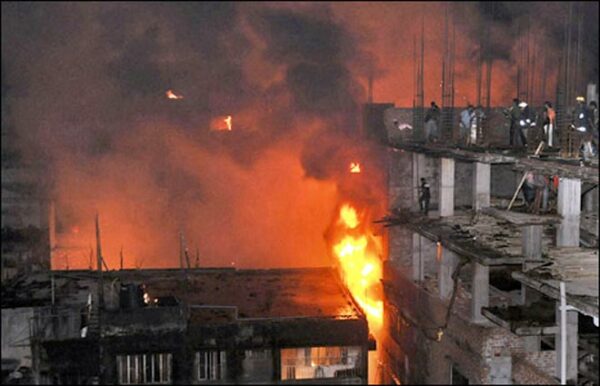
The ban on cars is not a mere suggestion; it’s a binding part of the lease agreement. In exchange for giving up their vehicles, residents receive an array of mobility perks, including a free annual pass for the adjacent light rail station, discounts on ride-sharing services like Lyft and Waymo, and access to a fleet of on-site e-bikes and scooters. The goal is to provide a comprehensive suite of alternatives that make a car unnecessary for daily life.
The project is a direct response to a growing demand for “missing middle housing,” a term for semi-dense, walkable urban living that is in short supply in most of the U.S. Developers argue that by eliminating the need for parking lots and garages, they are able to dedicate more space to housing, open space, and local businesses. Culdesac Tempe is home to over a dozen retailers, including a coffee shop, a Mexican restaurant, a bike shop, and a local market, all within a five-minute walk.
While the concept has been met with enthusiasm from urban planners and environmentalists, it has also faced skepticism. Critics have questioned whether the model can truly be successful in a city where most jobs and services are only accessible by car. “How do you take a watermelon back from the grocery store on a bike?” one resident joked, though she noted the community’s cargo bikes have helped. Others have pointed out that the development’s location, while adjacent to a light rail, is in a previously industrial area, and many residents will still need to use rideshare or public transit to get to work or visit family.

But for the residents who have embraced the car-free lifestyle, the benefits have been tangible. Some have reported saving hundreds of dollars a month on car-related expenses, while others have enjoyed the physical and mental health benefits of walking and biking more. As one resident told a reporter, it’s a way to reclaim the hours that would otherwise be spent “stuck in the car for those hours and then just getting home and being too tired to do anything.”
The success of Culdesac Tempe is still an open question. But for now, it stands as a daring and hopeful vision for a future that is not built around the automobile, but around people.
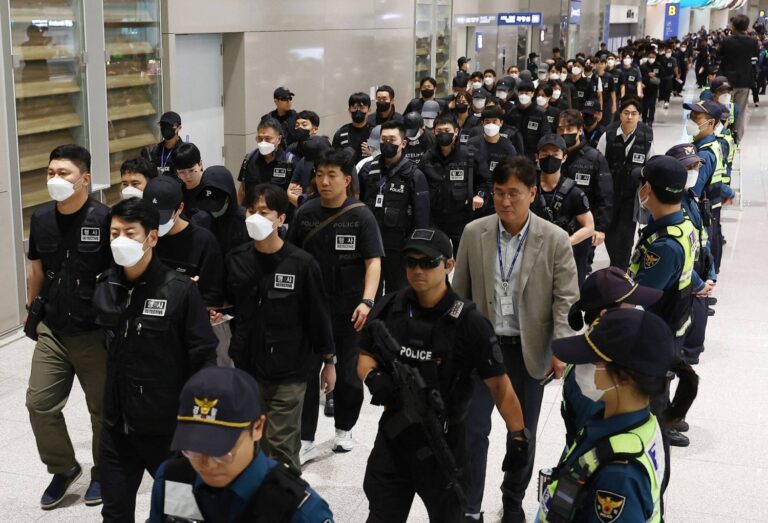
A Chinese national who entered the United States on a student visa has been sentenced to eight years in prison for acting as a foreign agent and illegally exporting weapons and military technology to North Korea. The sentencing of Shenghua Wen, 42, brings to a close a multi-year investigation that uncovered a sophisticated, multi-million dollar smuggling operation aimed at supplying a U.S. adversary with U.S.-sourced weapons.
According to a statement from the U.S. Attorney’s office in Los Angeles, Wen was sentenced on Monday after pleading guilty in June to one count of conspiracy to violate the International Emergency Economic Powers Act and one count of acting as an illegal agent of a foreign government.
The investigation revealed that Wen, who has been in the U.S. illegally since his student visa expired in 2013, had a pre-existing arrangement with North Korean officials. Prosecutors said that before he even entered the U.S., he met with officials at a North Korean embassy in China, where he was instructed to procure goods on behalf of the communist state.
The scheme intensified in 2022 when North Korean officials contacted him via an online messaging app and instructed him to buy firearms, ammunition, and sensitive technology. To carry out the operation, Wen reportedly purchased a firearms business in Houston, paying for it with $2 million wired by his North Korean contacts. He then had others purchase the firearms for him and drove the weapons to California, where he concealed them in shipping containers.
In one instance, Wen falsely claimed a container was a refrigerator to avoid detection by U.S. officials. The container, which was filled with weapons, was shipped from the Port of Long Beach to Hong Kong before being rerouted to North Korea.
The FBI’s investigation led to the seizure of 50,000 rounds of ammunition and military-grade equipment from Wen’s home in Ontario, California. Wen, who told investigators he believed the weapons were intended for a “surprise attack” on South Korea, also reportedly tried to acquire a civilian airplane engine and a thermal imaging system that could be mounted on a drone.
The sentence serves as a stark reminder of the lengths to which foreign adversaries will go to skirt international sanctions and acquire U.S. military technology. It also highlights the persistent threat of foreign espionage on U.S. soil. As U.S. Attorney Martin Estrada stated, Wen’s sentence “sends a strong message” that his office will “work tirelessly” to prosecute those who act as illegal foreign agents.
A new layer of uncertainty has been added to the complex diplomatic effort to end the war in Ukraine, as President Donald Trump, just a day after a high-profile meeting with his Ukrainian counterpart, has publicly questioned whether Russian President Vladimir Putin truly “wants to make a deal.” The skepticism from the White House stands in stark contrast to the Kremlin’s reaction, which has largely played down the significance of the Zelensky talks and affirmed its commitment to a separate, direct negotiation with Ukraine.
In an interview with Fox News, President Trump said he was “going to find out about President Putin in the next couple of weeks,” but conceded, “It is possible that he doesn’t want to make a deal.” He also warned that if Putin does not cooperate, “that’s going to be a rough situation” for the Russian leader, a statement that seems designed to increase pressure on Moscow to negotiate in good faith.
The new tone from the White House comes on the heels of a series of events that have left the international community with more questions than answers. Following a summit in Alaska, where Trump and Putin met for the first time since Trump’s return to office, the U.S. President had expressed optimism, claiming the two sides had a “very, very good chance” of a peace agreement. That optimism was followed by a meeting in Washington between Trump, Ukrainian President Volodymyr Zelensky, and key European leaders, which focused on a U.S.-backed plan for security guarantees for Ukraine.
The Kremlin’s reaction to the Washington meeting has been notably reserved. Aides to Putin confirmed that the Russian leader had spoken with Trump by phone, but they made no mention of a trilateral summit involving Zelensky. Instead, they reiterated that Putin and Trump had “spoken in favor of continuing direct talks” between Russian and Ukrainian delegations, with the possibility of “raising the level” of those discussions. This seemingly non-committal stance from Moscow has led many to question whether Putin is merely playing for time, using the diplomatic process to buy his forces more time on the battlefield.
The two sides’ differing interpretations of events have created a confusing and precarious situation. While the Trump administration believes it has secured Putin’s agreement to a meeting with Zelensky, the Kremlin has yet to publicly confirm it. In a hot mic moment during his meeting with French President Emmanuel Macron, Trump was overheard whispering that he thought Putin “wants to make a deal for me,” a belief that suggests he sees the peace process as a personal victory.
While some European leaders have expressed guarded optimism about the new diplomatic path, others have urged caution. German Chancellor Friedrich Merz has stressed that any meeting between Putin and Zelensky must be “well-prepared,” and some analysts have suggested that the current climate of hyped-up expectations is a deliberate attempt to force Putin to be the one to say “no.”
For now, the path to peace remains shrouded in uncertainty. The world watches to see if President Trump can deliver on his promise to end the war, or if he has overestimated Putin’s willingness to make a deal.
A long-sought glimmer of hope for a Gaza ceasefire has been overshadowed by a significant point of contention, as Israel’s leadership has cast doubt on a new truce proposal by insisting on the release of all remaining hostages. The demand comes just a day after Hamas announced it had accepted a deal brokered by Egypt and Qatar, leaving mediators and a war-weary public waiting for a formal response from the Israeli government.
According to a senior Israeli official, who spoke on condition of anonymity, Israel’s policy is “consistent and has not changed.” The official told reporters that “Israel demands the release of all 50 hostages in accordance with the principles set by the Cabinet to end the war. We are at the final decisive stage of defeating Hamas and will not leave any hostage behind.”
The statement, while not an explicit rejection of the proposal, puts Israel at odds with the reported terms of the deal, which Egyptian and Qatari mediators have said includes a 60-day ceasefire and the partial release of Israeli hostages in exchange for some Palestinian prisoners. Mediators in Qatar have said the proposal is “almost identical” to a previous plan that Israel had already agreed to.
Prime Minister Benjamin Netanyahu has yet to publicly comment on the plan, but he has maintained for weeks that the war will not end until all hostages are returned and Hamas is dismantled. The Prime Minister is facing immense pressure from his far-right coalition partners, who have threatened to topple his government if a deal is reached that they consider too lenient on Hamas. Simultaneously, he is facing growing public outrage at home, with tens of thousands of Israelis protesting in Tel Aviv, demanding a deal to free the remaining captives.
The Hamas-accepted proposal is believed to include the release of 10 living hostages in exchange for 200 Palestinian prisoners. This is in stark contrast to Israel’s demand for all 50 remaining hostages, 20 of whom are believed to be alive. The significant gap between the two sides’ positions leaves a major question mark over whether a deal can be reached.
While the diplomatic stalemate continues, the conflict on the ground rages on. The Israeli military has intensified attacks on Gaza City, a move many see as an attempt to increase pressure on Hamas to agree to a deal. Meanwhile, aid agencies continue to warn of a dire humanitarian crisis, with millions displaced and facing famine.
For now, the ball is in Israel’s court. As mediators in Doha and Cairo wait for a formal response, the fate of the remaining hostages and the future of the devastated Gaza Strip hang in the balance.
Air Canada’s operations are set to gradually resume after a tentative deal was reached with the Canadian Union of Public Employees (CUPE), ending a four-day strike that had crippled the airline and stranded hundreds of thousands of travelers at the peak of the summer season. The breakthrough came after late-night talks between the two sides and a crucial concession by the airline on a key sticking point: compensation for unpaid ground duties.
The agreement brings to an end a tense and chaotic period for the country’s largest carrier, which was forced to suspend its entire schedule of approximately 700 daily flights after flight attendants walked off the job on Saturday. The strike, which saw the union defy two separate back-to-work orders, was a powerful show of force by the 10,000 flight attendants, and their perseverance appears to have paid off.
“Unpaid work is over. We have reclaimed our voice and our power,” the union said in a statement. “When our rights were taken away, we stood strong, we fought back — and we secured a tentative agreement that our members can vote on.”
While the full details of the agreement have not been released, both the union and the airline have confirmed that a major part of the deal is a new provision for “ground pay.” This was a key demand from the union, which argued that flight attendants were being exploited by being forced to perform crucial safety and boarding duties without compensation.
Air Canada CEO Michael Rousseau said in a statement that the airline’s priority is now to “get them moving as quickly as possible,” but warned that a full return to normal operations could take a week or more. The restart is a complex logistical puzzle, with aircraft and crews out of position after being grounded for days. As a result, some cancellations will continue over the coming days, and the airline has urged passengers to be patient and to check their flight status before heading to the airport.
For the airline, the strike has been a costly and embarrassing affair, with shares losing a significant chunk of their value and the carrier having to pay millions in compensation and refunds. For the union, it is a significant victory that could set a precedent for the entire industry. The deal not only secures a key demand but also sends a clear message that workers’ rights and fair compensation are non-negotiable, even in the face of government intervention.
The tentative agreement will now be put to a vote by the union’s membership. For now, a fragile peace has been restored, and travelers can breathe a sigh of relief as the skies over Canada begin to clear.
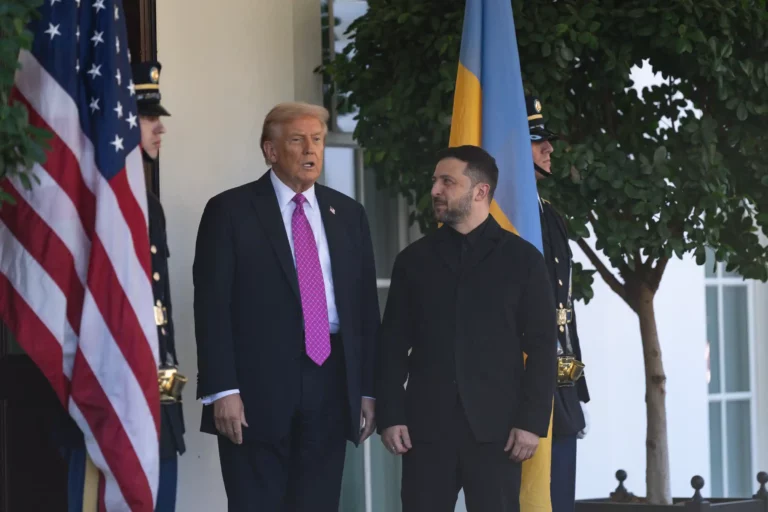
In a powerful display of unity, Ukrainian President Volodymyr Zelensky today was joined by a formidable delegation of European leaders at the White House for crucial talks with President Donald Trump on the future of the war. The meeting, which follows the Trump-Putin summit in Alaska, centered on a groundbreaking proposal for security guarantees for Ukraine, a move the administration says could be a “game-changer” in the search for peace.
The gathering, which included British Prime Minister Keir Starmer, French President Emmanuel Macron, German Chancellor Friedrich Merz, and NATO Secretary-General Mark Rutte, was a clear signal to both Washington and Moscow that Europe is determined to have a central role in shaping any peace deal. The presence of these leaders was seen as an effort to shore up Zelensky, whose previous encounter with Trump had been described as tense and unproductive.
The core of the discussions focused on a proposal floated by the Trump administration: that the U.S. and its European allies could offer Ukraine a security guarantee “resembling NATO’s collective defense mandate,” a promise of support akin to Article 5, but without formal membership in the alliance. U.S. envoy Steve Witkoff told CNN that Russia had agreed in principle to this idea at the Alaska summit, a development he called a “huge concession” and a significant shift from Moscow’s long-held position.
For his part, President Trump has said he will back the European-led effort, telling reporters he would “help them out” and that the U.S. would assist in providing “very good protection.” However, he stopped short of committing U.S. troops, emphasizing that the European nations would take on “a lot of the burden.”
The talks come at a pivotal moment. President Trump has recently shifted his public stance away from a ceasefire and towards a full-fledged “peace agreement,” a position that aligns with what Putin has been demanding for months. The change has fueled concern in Kyiv, where officials fear that a peace deal could force them to cede territory to Russia. In a post on X, Zelensky reaffirmed his position that any peace deal must be negotiated with Ukraine’s participation and stressed the need for a “real peace” that would secure Ukraine and all of Europe.
While the new diplomatic path offers a glimmer of hope, it is far from a done deal. The details of the proposed security guarantees are still murky, and key issues, such as whether Ukraine will be pressured to give up more of the Donbas region, remain a significant point of contention. The presence of Europe’s top leaders today was a powerful step towards a unified front, but the real work of ending the war is just beginning, with the fate of Ukraine and the broader European security landscape hanging in the balance.
The U.S. State Department has revoked over 6,000 student visas in a sweeping crackdown on foreign nationals, a move the Trump administration says is a direct response to lawbreaking and national security threats. The revocations, which have sent shockwaves through the academic community, were carried out for a range of reasons, including visa overstays, criminal activity, and for a small number of individuals, “support for terrorism.”
According to a senior State Department official, a majority of the visas, approximately 4,000, were revoked because the visa holders “broke the law while visiting our country,” with the most common offenses being assault and driving under the influence. Another 200 to 300 were pulled due to ties to “terrorist activity,” including allegations of raising funds for groups like Hamas, which the U.S. designates as a terrorist organization.
The aggressive policy is a direct result of several executive orders signed by President Donald Trump aimed at “combatting terrorism, antisemitism, and enhancing national security.” The administration has also expanded its visa vetting procedures to include a deeper review of social media accounts for “any indications of hostility toward the citizens, culture, government, institutions, or founding principles of the United States.”
The crackdown on student visas has been met with fierce criticism from civil liberties advocates and some lawmakers. Senator Jeff Merkley (D-Ore.) has called the visa revocations a “fundamental attack on freedom” and an assault on due process, arguing that the government is taking away people’s liberty without a fair legal process. The policy has also been criticized for targeting students involved in political demonstrations, particularly pro-Palestinian protests on college campuses. In one high-profile case, a Tufts University PhD student had her visa revoked after co-authoring an op-ed criticizing the university’s response to the Israel-Gaza conflict, though a federal judge later ordered her release.
The scale of the revocations is unprecedented, with the State Department reporting that approximately 40,000 visas have been pulled in 2025, compared to 16,000 during the same period under the previous administration. This heightened scrutiny has created a climate of fear and uncertainty for thousands of international students, with some reports indicating that even minor infractions like speeding tickets have led to visa terminations.
While the administration maintains that the policy is a necessary step to protect national security, critics argue that it undermines the U.S. higher education system by deterring international talent from coming to the country. A recent analysis from the NAFSA: Association of International Educators has forecast a potential 30-40% decline in new international student enrollment, a drop that would cost the U.S. economy billions and risk its global competitiveness.
For now, the policy remains in effect, and the message from Washington is clear: international students are welcome, but only on the condition of strict adherence to the law and a commitment to avoid any activity that could be deemed a threat to national security.