Friday, December 5, 2025
Home Blog Page 12

Trump Urges Starmer to Use Military to Control UK Borders

CHESHAM, ENGLAND — In a highly unusual and provocative intervention into UK domestic policy, President Donald Trump has suggested that Prime Minister Keir Starmer should consider using the military to stop illegal migration, a proposal that has been met with both diplomatic caution and public debate in Britain. The comments came during a press conference at Chequers, the Prime Minister’s official country residence, marking the conclusion of Trump’s unprecedented second state visit to the UK.

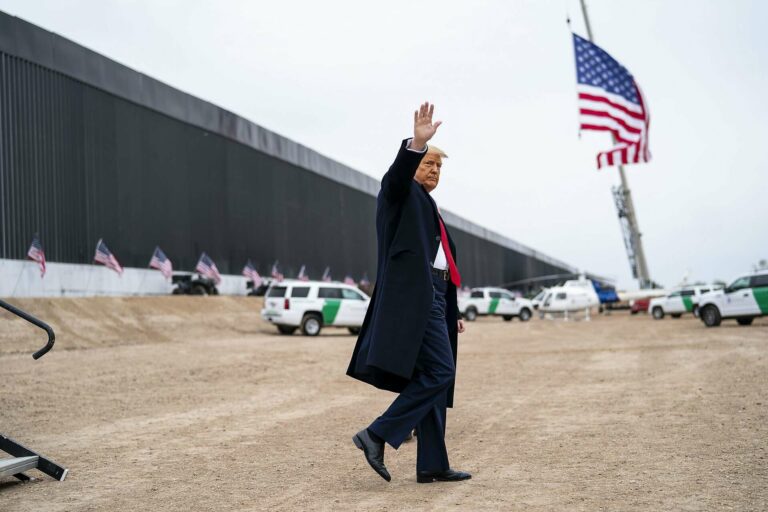
Speaking alongside Starmer, President Trump drew a parallel between the UK’s challenge with migrants crossing the English Channel in small boats and his own efforts to secure the U.S. southern border. “You have people coming in, and I told the prime minister I would stop it,” Trump said. “And it doesn’t matter if you call out the military, it doesn’t matter what means you use, but it’s going to destroy countries from within.”

The direct advice, offered on British soil, was a rare moment of candidness in an otherwise carefully choreographed visit designed to project a united front. While both leaders praised the “special relationship” and announced a new tech and investment deal, Trump’s remarks on migration highlighted a key point of divergence between the two allies.

For his part, Prime Minister Starmer did not directly address the military proposal, instead pointing to his government’s own efforts to tackle the issue. He noted that the UK had just deported its first migrant to France under a new “one in, one out” deal and that his government was taking the matter “incredibly seriously.” The prime minister’s measured response reflects the political sensitivity of using the military for border control in the UK, a measure that some MPs have suggested but has no widespread government support.

The conversation underscores the immense political pressure both leaders face on immigration, a top concern for voters on both sides of the Atlantic. While Trump has used his military as a tool for border enforcement, Starmer’s government has focused on a new Border Security Command and deportation deals. The comments serve as a vivid reminder that for all the pomp of state visits and talk of an unbreakable bond, the two nations’ approaches to some of the world’s most pressing issues remain fundamentally different.

Jimmy Kimmel’s Show Suspended Indefinitely in a New Front of the Culture War

In a sudden and stunning turn, ABC has indefinitely suspended Jimmy Kimmel Live!, a dramatic move that leaves one of late-night television’s most enduring chairs empty and signals a new, high-stakes phase in the nation’s political and media culture wars. The decision came swiftly after the host’s pointed remarks about the assassination of conservative activist Charlie Kirk sparked a firestorm of controversy and drew sharp condemnation from top government officials.

During his monologue earlier this week, Kimmel accused what he called the “MAGA gang” of trying to “capitalize on the murder” of Kirk, saying they were attempting to politically exploit the tragedy. The comments drew immediate backlash and prompted two of the largest owners of ABC affiliates, Nexstar Media Group and Sinclair Broadcast Group, to announce they would pull the show from their local stations, calling Kimmel’s words “offensive and insensitive at a critical time in our national political discourse.”

But the local affiliate rebellion was not the only source of pressure. The suspension was preceded by a public warning from the chairman of the Federal Communications Commission (FCC), Brendan Carr, a Trump appointee. In a public statement, Carr suggested that broadcasters who continued to air what he called “sick” content were putting their licenses at risk—an extraordinary and rare intervention by the federal regulator.

The confluence of events—the local affiliate revolt and the government pressure—has been widely condemned by free speech advocates and Democrats, who accuse the Trump administration of weaponizing its regulatory power to silence a critical voice. The Foundation for Individual Rights and Expression (FIRE), a nonprofit focused on free speech, called the suspension a sign that “another media outlet withered under government pressure, ensuring that the administration will continue to extort and exact retribution on broadcasters and publishers who criticize it.”

While many on the right, including President Donald Trump himself, have celebrated the suspension—citing a long-running animosity towards Kimmel’s comedic critiques—the abrupt removal of a show that has been a staple of the late-night landscape for over two decades has left the industry reeling. The move also follows the summer cancellation of Stephen Colbert’s show on CBS, a decision many critics believe was also politically motivated.

Kimmel himself has yet to comment on the suspension, leaving his future and the fate of his show in limbo. His contract is set to expire in May 2026, and the indefinite hiatus raises a stark and unsettling question: in a new era of political warfare, what space, if any, remains for satire and dissent on the nation’s airwaves? The empty chair in the late-night lineup serves as a powerful and ominous symbol for a new and dangerous moment in American media.

The Brain’s Odometer: Scientists Pinpoint the Mind’s Internal Mileage Clock

LONDON — Scientists have, for the first time, pinpointed a specific brain region that functions as an “internal mileage clock,” a landmark discovery that sheds new light on how the mind tracks distance and could have profound implications for understanding neurological disorders like Alzheimer’s disease. The groundbreaking study, published in the journal Current Biology, identifies a precise neural mechanism responsible for our innate sense of how far we have traveled.

The research, led by Professor James Ainge from the University of St Andrews, centered on a series of experiments with both rats and humans. In the primary experiment, researchers trained rats to run a specific distance in a controlled arena to earn a reward. While monitoring the animals’ brains, they discovered that “grid cells”—a type of neuron in the brain’s entorhinal cortex, a region crucial for navigation—were not only helping the rats map their surroundings but were also firing in a regular, ticking pattern with every few steps they took. The more regular this “ticking” was, the better the animals were at estimating the correct distance.

Brain-Injury

The scientists then scaled up the experiment for human participants, asking them to perform the same distance-estimation task in a larger arena. Just like the rats, the human volunteers consistently performed the task correctly, confirming that a similar cognitive process was at work. The team found that when the environment was altered to distort the signal from these “mileage-counting cells”—much like when landmarks disappear in dense fog—both humans and rats began to lose their sense of distance and underestimated how far they had traveled. This suggests the brain’s internal odometer is highly susceptible to environmental changes.

This discovery is a significant leap forward in understanding the brain’s “GPS.” While the existence of place cells (which map specific locations) and grid cells (which form a coordinate system for navigating) has been known for years, this study is the first to directly connect the rhythmic firing of grid cells to the ability to accurately gauge distance traveled. This newfound understanding of how the brain navigates could provide critical insights into neurodegenerative diseases, as the entorhinal cortex is one of the very first areas of the brain to be affected by Alzheimer’s.


The research is a substantial step toward understanding how we use our brains in real-world environments. This video, featuring Nobel laureate John O’Keefe, explores the foundational discoveries of place cells, grid cells, and how they function as the “GPS of the brain.”

The Austerity Backlash: A Nation on Strike as Protests Rock France

In a forceful and unified rebuke of government austerity plans, hundreds of thousands of workers across France have launched a massive, coordinated strike, bringing essential public services to a grinding halt and plunging the nation into a new political crisis. The nationwide demonstrations, fueled by frustration over budget cuts and economic inequality, have put immense pressure on the new prime minister, Sébastien Lecornu, as he attempts to navigate a deeply fractured political landscape.
The strike, heralded by unions as the largest day of protest in years, saw an estimated 600,000 to 900,000 people take to the streets in over 250 demonstrations across the country. In a rare show of unity, major trade unions brought together a diverse coalition of workers—from teachers and hospital staff to transport workers and pharmacists—who feel the burden of the government’s fiscal policies falls squarely on their shoulders.

“The anger is huge, and so is the determination,” declared Sophie Binet, the head of the powerful CGT union. “My message to Mr. Lecornu today is this: it’s the streets that must decide the budget.”

The public anger is a direct response to a proposed €44 billion budget squeeze aimed at tackling France’s ballooning public debt. The deeply unpopular austerity measures, which included a proposed freeze on welfare spending and cuts to public services, already cost Lecornu’s predecessor, François Bayrou, his job after he lost a no-confidence vote earlier this month. While Lecornu has vowed to scrap some of the most widely despised proposals, unions remain skeptical that he will reverse the core of the austerity plan.

The strike’s impact was immediate and widespread. Nearly half of all teachers in Paris walked off the job, with many schools closed and some high school entrances blockaded by students carrying signs that read, “Tax the rich.” In the transportation sector, regional trains and the Paris Metro were heavily disrupted, forcing commuters to find alternative routes. In a striking sign of discontent, up to nine out of 10 pharmacies were closed as pharmacists joined the protest.

The day of action serves as a brutal baptism of fire for Prime Minister Lecornu, who was appointed by President Emmanuel Macron just last week as the third head of government in less than a year. His position is precarious; with no absolute majority in parliament, he must try to find a compromise on the budget that appeases both the protesting masses and a divided legislature.

The protests, however, are not just about a single budget. They are a manifestation of a deeper crisis of public trust in Macron’s pro-business agenda. As one public sector worker put it, “France is one of the few countries that still has a proper social security system, but year after year it is being eroded by funding cuts. We’re being blamed for the high public debt when it’s Macron’s tax breaks to businesses that have damaged public finances.”

For now, the streets of France have delivered a powerful and unmistakable message. The coming weeks will be a test of whether the new government can find a way to compromise, or if the political chaos that has gripped the nation will continue, with the fate of the French economy hanging in the balance.

The Fed’s First Move: Central Bank Cuts Interest Rate, Citing Labor Market Weakness

The Federal Reserve has cut its benchmark interest rate by a quarter-point, the first such reduction this year, in a move that signals a pivot toward a more accommodative monetary policy as the central bank grapples with a softening labor market. The decision, which was largely anticipated by investors, lowers the federal funds rate to a range of 4% to 4.25%, the lowest it has been since November 2022.

In a closely watched press conference, Fed Chair Jerome Powell explained the decision was an exercise in “risk management,” rather than an indication of a thriving economy. Citing a recent slowdown in job gains and an uptick in unemployment, Powell said the central bank’s primary concern has shifted to the “downside risks to employment.” This move comes even as inflation remains elevated, a dual challenge that Powell described as an “unusual” situation for the Fed to manage. The sole dissenting vote came from the newest Fed governor, Stephen Miran, a Trump appointee who favored a larger, half-point cut.

Federal Reserve

The Impact on You: What the Rate Cut Means

While a single quarter-point cut may not dramatically alter the financial landscape overnight, it sets a tone for the coming months. Here’s how it could affect consumers and businesses:

  • Mortgages and Loans: For prospective homebuyers, much of the impact has already been priced into the market, with mortgage rates gradually falling since the beginning of the year. However, a declining interest rate environment will provide some relief for borrowers over time, potentially offering opportunities to refinance or consolidate high-interest debt.
  • Credit Cards and Savings: Credit card rates, which are at a high of over 20% on average, will likely see a slow-moving reduction. For savers, however, this could be bad news, as yields on high-yield savings accounts and CDs are expected to slowly erode from their currently attractive levels.
  • The Stock Market: The initial market reaction was mixed. While a rate cut is generally seen as a positive for stocks, the major indexes ended the day with little change, suggesting the news was already factored in. Investors are now looking to the Fed for a clearer signal on the pace of future cuts.

The Path Ahead: A Divided Outlook

Fed officials’ latest economic projections show a split on the committee regarding future rate cuts. While a majority of officials now pencil in at least two more cuts by the end of the year, a significant number believe no further reductions are necessary. This divergence reflects the uncertain economic outlook, with a weakening labor market on one side and persistent inflation on the other. Powell emphasized that the projections are not a commitment, and the central bank will continue to make decisions “meeting by meeting,” a statement that leaves the future of monetary policy firmly in the balance.

Trump Praises King Charles, Touts ‘Priceless’ UK Bond at State Banquet

WINDSOR, ENGLAND — In a lavish state banquet at Windsor Castle, President Donald Trump delivered a speech that was both a tribute to the “priceless” and “eternal” bond between the United States and the United Kingdom, and a personal salute to King Charles III and the royal family. The unprecedented second state visit for a U.S. president unfolded with a choreographed grandeur that attempted to project unity despite deep political and public divisions.

Seated beside the King in the opulent St. George’s Hall, President Trump hailed his second state visit as “truly one of the highest honours of my life.” He praised King Charles as a “very, very special man,” and thanked him for his decades of service, from environmental advocacy to supporting the arts.

In a speech that drew laughter and applause, the president used a lyrical metaphor to describe the transatlantic partnership. “We’re like two notes in one chord or two verses of the same poem,” he said. “Each beautiful on its own, but really meant to be played together.” He added that “the word special does not begin to do it justice.”

The evening’s pageantry was a careful diplomatic effort to balance history with modern political realities. Before the banquet, King Charles and President Trump rode in a gilded carriage and inspected a military parade, with a Red Arrows flypast underscoring the enduring military alliance. In his own remarks, the King spoke of the two nations’ shared history, from their common language to their sacrifices in two world wars. He also made a pointed reference to the need to stand with Ukraine against tyranny and to protect the environment.

The visit comes at a critical time for both nations. The UK government, led by Prime Minister Keir Starmer, is eager to solidify new trade and technology partnerships. For President Trump, the state visit serves as a powerful symbol of his diplomatic standing and a welcome break from domestic political turmoil.

While the banquet was a study in diplomatic grace, the backdrop of the visit was a London fraught with tension. Tens of thousands of protesters marched against the president, a vocal counterpoint to the pomp and ceremony. Yet inside Windsor, surrounded by the finest of British tradition, President Trump seemed to relish the moment. In a personal touch, he singled out the Princess of Wales, who he said looked “so radiant and so healthy, so beautiful,” a comment that was widely seen as a warm and sincere tribute.

As the evening concluded with a toast, the “special relationship” was not just a historical term but a present-day reality, a complex and enduring bond that, as President Trump noted, seems “irreplaceable and unbreakable” despite the challenges it faces.

Israeli Tanks Push Deep into Gaza Residential Areas, Forcing New Exodus

In a long-feared escalation of the ground war, Israeli tanks have pushed deep into the heart of Gaza City, advancing into major residential areas and marking a new and potentially devastating phase of a conflict that has already claimed more than 65,000 Palestinian lives. The incursion, supported by relentless airstrikes and artillery fire, has sent a fresh wave of panic and forced displacement through a population with nowhere left to run.

The Israeli military confirmed on Tuesday that it had begun its ground offensive into the urban core of Gaza City, a sprawling, densely populated area that it considers the main stronghold of Hamas. Two army divisions, comprising tens of thousands of troops, are now operating in the city. The military’s stated goal is to “dismantle Hamas’s central stronghold” and its vast network of tunnels and command centers.

The new offensive has had an immediate and catastrophic effect on civilians. Residents reported a night of “heavy, relentless” bombardment, with hospitals in the area, including the children’s Rantisi Hospital, reporting dozens of new casualties. The strikes have toppled high-rise residential towers and homes, adding to the already immense destruction. An estimated 600,000 people are believed to have remained in the city, many of whom are now trapped by the advancing ground forces.

Gaza exodus

“There is not a single day without bombings and deaths in the south, even in the so-called humanitarian zones,” said Fatima al-Zahra Sahweil, a researcher, reflecting the widespread fear that no place in Gaza is safe. The UN has reiterated its “grave concerns” for the safety of civilians and warned that with the closure of key aid routes, a humanitarian catastrophe is worsening by the hour. The total number of Palestinians killed since the war began in October 2023 has now surpassed 65,000, according to Gaza’s Health Ministry, a figure widely accepted by international humanitarian agencies.

As tanks roll into residential neighborhoods, the international community has reacted with alarm. A UN commission of inquiry accused Israel of committing genocide in a report released on the same day the offensive began, an accusation Israel has vehemently denied. The European Union is reportedly considering new tariffs and sanctions to pressure Israel to end the war, while Saudi Arabia and other nations have condemned the incursion.

For many Palestinians in Gaza, the military advance into their homes is a new chapter in a long-standing nightmare. They are caught between an advancing army and a devastated landscape, with few options for survival. As the battle for Gaza City’s heart begins in earnest, the world watches, bracing for a new level of carnage in a war that has already defied all expectations of horror.

Obama’s Stark Warning: ‘We’re at an Inflection Point’ After Killing of Charlie Kirk

In his first public comments on the assassination of conservative activist Charlie Kirk, former President Barack Obama issued a sobering warning that the United States has reached a dangerous “inflection point,” arguing that political violence, long an “anathema to democracy,” has re-emerged in a nation poisoned by rage and division.

Speaking at an event in Erie, Pennsylvania, Obama did not shy away from the fraught political nature of the tragedy. He called the killing “horrific” and a “tragedy,” while also acknowledging that he profoundly disagreed with many of Kirk’s ideas. “That doesn’t negate the fact that what happened was a tragedy and that I mourn for him and his family,” Obama said. “The central premise of our democratic system is that we have to be able to disagree and have sometimes really contentious debates without resorting to violence.”

The former president pointed a clear finger at a culture of normalization that he said is coming from the highest levels of government. Without naming President Donald Trump directly, Obama criticized the impulse by some leaders to “identify an enemy” and “use that as a rationale for trying to silence discussion” in the wake of such a tragedy. He argued that when the “weight of the United States government” is put behind extremist views, the nation is in a state of crisis. Obama also drew parallels to other recent political violence, including the shooting deaths of a Minnesota lawmaker and her husband.

“There’s been some confusion, I think, around this lately, and, frankly, coming from the White House and some of the other positions of authority,” Obama said. “We’re going to suggest that somehow that enemy was at fault…and that’s a mistake.”

The current White House was quick to fire back, with spokeswoman Abigail Jackson issuing a statement that called Obama the “architect of modern political division in America.” The pointed retort underscored the very political polarization that Obama was addressing.

In a rare moment of bipartisan praise, Obama commended Utah Governor Spencer Cox, a Republican, for his response to Kirk’s death, saying his call for unity showed “that it is possible for us to disagree while abiding by a basic code of how we should engage in public debate.”

For a nation still reeling from the shock of the assassination, Obama’s intervention was a powerful call to action. It was a plea for a return to a political discourse where even the most bitter of opponents could agree on a fundamental truth: that violence has no place in a functioning democracy. The question now is whether his words will be heeded, or if they will simply be lost in the deafening echo chamber of a nation on the brink.

Flying Cars Collide in China, Raising Sobering Questions

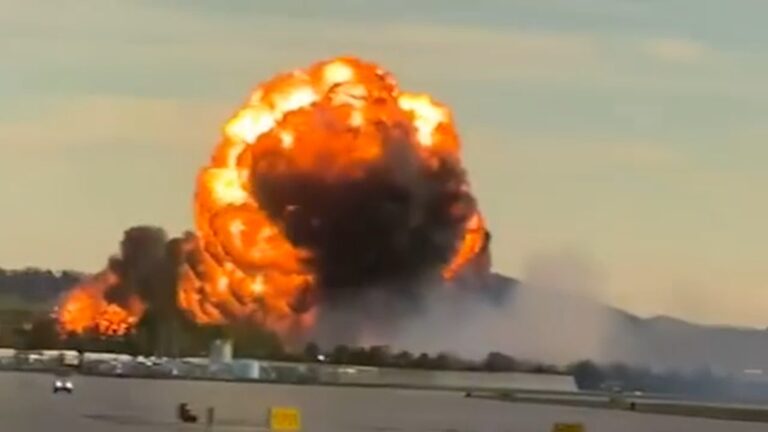
CHANGCHUN, CHINA – The thrilling promise of a new era of personal air travel was brought to a jarring halt on Tuesday, as two “flying cars” crashed into each other in a spectacular mid-air collision during a rehearsal for a major Chinese air show. While the crash resulted in no fatalities, it ignited a fire on one of the aircraft and cast a pall of uncertainty over an industry that has soared on a wave of ambition and hype.

The incident occurred at the Changchun Air Show in northeastern China, where two electric vertical takeoff and landing (eVTOL) vehicles, manufactured by Xpeng AeroHT, were practicing a close-formation drill. According to a company statement, the aircraft “came into contact due to insufficient clearance,” a miscalculation that sent one of the sleek vehicles spiraling to the ground. Footage from the scene, which circulated on Chinese social media, showed black smoke billowing from the wreckage as fire trucks rushed to extinguish the flames.

The accident is a sobering reality check for a burgeoning industry that has been aggressively promoted by Beijing as a key pillar of its “low-altitude economy.” Xpeng AeroHT, a subsidiary of the Chinese electric vehicle giant Xpeng, is a leading player in this field. The company has already amassed thousands of pre-orders for a modular flying car system priced at around $300,000, with plans for mass production and delivery to begin by 2026.
While the company quickly assured the public that “all personnel at the scene are safe,” conflicting reports emerged. Some sources, citing a company employee, stated that at least one pilot suffered minor injuries, highlighting the inherent dangers in a technology still in its infancy. For a sector that has long faced public skepticism over safety and regulation, the televised crash is a devastating setback.

Industry analysts are already warning that the incident will force a hard reset for the eVTOL industry, which has so far been focused on demonstration flights and ambitious production timelines. The crash serves as a powerful reminder that the path to a future of flying cars is not only a matter of engineering innovation but also of meticulous regulation and a meticulous attention to safety. For Xpeng and its competitors, the incident may ground some of their highest ambitions, proving that in the race to the skies, even a small mistake can have a catastrophic impact.

Robert Redford, Hollywood’s Enduring Icon, Dies at 89

Robert Redford, the effortlessly cool, golden-haired movie star who redefined American cinema as an actor, a director, and the visionary champion of independent film, has died. He was 89. His publicist, Cindi Berger, confirmed that Redford died peacefully in his sleep on Tuesday at his home at Sundance in the mountains of Utah, the sprawling sanctuary he created and loved. No cause of death was specified.

His passing marks the end of a remarkable career that spanned more than six decades, leaving an indelible legacy on both the silver screen and the culture it reflects. As an actor, Redford was the quintessential Hollywood idol, a symbol of rebellious cool in an era of social and political upheaval. He shared an iconic chemistry with Paul Newman in the classic caper films Butch Cassidy and the Sundance Kid and The Sting, and captivated audiences alongside Barbra Streisand in the bittersweet romance The Way We Were. He was the charismatic journalist in All the President’s Men, the cynical spy in Three Days of the Condor, and a lone figure of defiance in films from Jeremiah Johnson to All Is Lost.

But Redford’s influence extended far beyond his on-screen persona. In 1980, he stepped behind the camera to make his directorial debut with Ordinary People, a powerful family drama that earned him an Academy Award for Best Director, beating Martin Scorsese’s Raging Bull. Just a year later, he founded the Sundance Institute, a small retreat for filmmakers in Utah that would grow into the Sundance Film Festival, a global powerhouse that launched the careers of generations of independent artists, from Quentin Tarantino to Steven Soderbergh. As director Ron Howard said in a tribute, Redford was a “tremendously influential cultural figure… and for launching the Sundance Film Festival which supercharged America’s Independent Film movement. Artistic Gamechanger.”

Beyond Hollywood, Redford was a passionate and unwavering activist, using his fame to champion environmentalism and indigenous rights. He was a lifelong advocate for the Natural Resources Defense Council and a vocal opponent of policies he believed would harm the planet. In a statement, Jane Fonda, his friend and frequent co-star, said his death hit her “hard.” “He stood for an America we have to keep fighting for.”

Tributes poured in from across the world, from colleagues and fans alike. Barbra Streisand remembered their on-screen chemistry, saying, “Bob was charismatic, intelligent, intense, always interesting—and one of the finest actors ever.” Leonardo DiCaprio called his passing “a huge loss,” and President Donald Trump acknowledged, “He had a series of years where there was nobody better.”

Redford, who is survived by his wife, Sibylle Szaggars, and his two daughters, was a man of quiet grace who never fully embraced the celebrity he so easily achieved. He found solace in the mountains of Utah, the place where his career took flight and where he ultimately found peace. His death marks the end of an era, but his rebellious spirit, his unwavering vision, and his profound body of work will forever remain a part of American culture.

Charlie Kirk Suspect Refuses to Cooperate, Governor Says

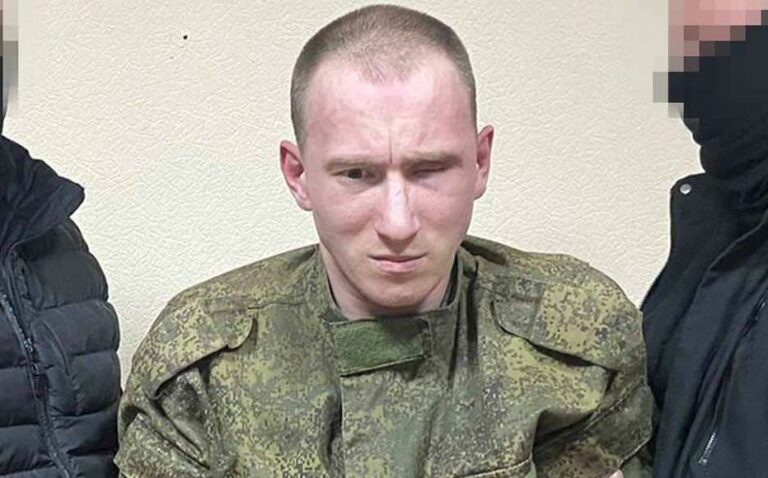
The man accused of assassinating conservative activist Charlie Kirk is refusing to cooperate with authorities, according to a series of statements made by Utah Governor Spencer Cox. The lack of cooperation from 22-year-old Tyler Robinson presents a significant obstacle to investigators seeking to fully understand the motive behind the brazen attack that shook the nation.

Speaking on Sunday morning news shows, Governor Cox revealed that while investigators have gathered a wealth of information from Robinson’s family and friends—including his confession to his father—Robinson himself has remained silent since being taken into custody. “He is not cooperating, but all the people around him were cooperating, and I think that’s very important,” Cox told ABC News.

The governor’s update comes as authorities piece together the events that led to the death of the 31-year-old Kirk. The murder weapon, a high-powered bolt-action rifle, was recovered, and engraved bullet casings with anti-fascist slogans like “Hey fascist! Catch!” were found nearby. These clues, combined with interviews with those close to Robinson, have led investigators to believe the attack was a politically motivated assassination. Cox described Robinson as “deeply indoctrinated in leftist ideology,” a conclusion drawn from conversations with the suspect’s family and friends.

Tyler Robinson

A key figure in the investigation, according to Cox, is Robinson’s live-in partner, a transgender individual who has been “incredibly cooperative” and was “shocked” to learn of the shooting. While authorities have not yet determined if the partner’s identity is directly relevant to the motive, they are exploring every angle.

Robinson’s refusal to talk to authorities is not uncommon in high-profile criminal cases, and he is exercising his Fifth Amendment right to remain silent. However, legal experts say it complicates the prosecution’s case in some ways, but also highlights the importance of the evidence already gathered. The prosecution’s case will have to rely heavily on forensic evidence and witness testimony, rather than a confession.

For now, the suspect remains in custody without bail. He is expected to be formally charged on Tuesday with aggravated murder, obstruction of justice, and felony discharge of a firearm. While a suspect is now behind bars, his silence leaves a painful void, a stark reminder that while the legal process can deliver justice, it may not always provide the full truth.

Last Night of the Proms 2025: Queen’s Surprise Proms Performance Electrifies Royal Albert Hall

In a stunning fusion of classical tradition and rock and roll swagger, the legendary band Queen brought the house down at the Last Night of the Proms, delivering a thunderous performance that electrified the Royal Albert Hall. In a surprise guest appearance, Sir Brian May and Roger Taylor joined the BBC Symphony Orchestra and Chorus for a new orchestral arrangement of their iconic masterpiece, “Bohemian Rhapsody,” which celebrates its 50th anniversary this year.

The performance, a highlight of the season’s grand finale on Saturday night, marked a rare crossover for the prestigious classical music institution. With West End star Sam Oladeinde providing the vocals for the six-minute anthem, the fusion of Queen’s raw power with the soaring sounds of a full orchestra captivated the audience. The Royal Albert Hall, usually filled with the dignified waving of Union Jack flags, was transformed into a chorus of cheers and applause, with Proms-goers roaring their approval.

For Sir Brian May, the moment was both monumental and deeply personal. “It was very emotional, too emotional. I missed a couple of things, which I would have loved to get better, but the overall feeling was great,” he told the BBC backstage. The performance was a powerful tribute to the enduring legacy of Freddie Mercury and a testament to the song’s timeless ability to connect with audiences across generations and genres.

The appearance was a significant break from the Proms’ usual tradition of patriotic and classical music, and it demonstrated the festival’s willingness to embrace a broader musical landscape. While the night also featured the traditional favourites—including “Rule, Britannia!” and “Land of Hope and Glory”—Queen’s performance was undoubtedly the most talked-about moment of the evening. The event, which was broadcast live on the BBC, has already gone viral on social media, with fans celebrating the rock legends’ powerful and emotional return to the stage.

For a nation in need of a moment of unity, the collaboration between a rock band and a classical orchestra offered a potent symbol of music’s ability to transcend boundaries. It was a royal rock triumph in every sense of the word, a performance that proved, once again, that the show must go on.

Nepal’s Interim PM Pledges to Hand Over Power Within Six Months

KATHMANDU — Nepal’s newly appointed interim Prime Minister, Sushila Karki, has pledged to hand over power within six months, setting a tight timeline for new elections that will test the country’s ability to navigate its current political crisis. The former Supreme Court Chief Justice, who made history as Nepal’s first female prime minister, now faces the daunting task of stabilizing a nation shattered by a week of deadly protests and political turmoil.

Karki’s appointment comes after a youth-led “Gen Z” uprising forced the resignation of her predecessor and the dissolution of parliament. The protests, initially sparked by a social media ban, quickly escalated into a broader rejection of political corruption and nepotism. The violence, which saw government buildings and politicians’ homes set on fire, left dozens dead and highlighted a deep-seated public fury with the country’s entrenched political class.

Nepal PM Sushila Karki

“I did not wish for this job. It was after voices from the streets that I was compelled to accept,” Karki said, speaking for the first time since being sworn into office on Friday. Her mandate is clear: to restore law and order, and to pave the way for a new government by holding fresh elections by March 5, 2026. The president’s office, in a formal notice, has given her a constitutional mandate to do so.

While Karki’s reputation as an independent and anti-corruption jurist has been widely welcomed by the protesters and the international community, the path to a stable democracy is fraught with challenges. The country’s political parties are already in an uproar over the dissolution of parliament, with many denouncing the move as “unconstitutional” and a “blow to democracy.”

For a nation that has seen over a dozen governments since 2008, the prospect of a swift, peaceful transition is far from guaranteed. The interim government will have to navigate deep political fissures, quell lingering public anger, and rebuild public trust in the electoral process—all within a six-month window. As Karki herself admitted, “We have to work according to the thinking of the Gen Z generation. What this group is demanding is the end of corruption, good governance and economic equality.”

The coming months will be a critical test for Nepal’s democracy. While Karki’s appointment represents a glimmer of hope and a promise of a new direction, her true legacy will be defined not by her time in power, but by her ability to successfully hand it over.

Charlie Kirk Assassination: In a Crying, Defiant Address, Erika Kirk Pledges to Continue Husband’s Mission

In a raw and heart-wrenching address that laid bare the profound grief of a nation on edge, Erika Kirk, the widow of slain conservative activist Charlie Kirk, delivered a message of both sorrow and defiance. Speaking publicly for the first time since her husband’s assassination, Mrs. Kirk, with tears in her eyes, vowed that her husband’s death would not be the end of his movement, but a powerful new beginning.

“If you thought his mission was powerful before, you have no idea what you have unleashed across this country and within this wife,” Mrs. Kirk said in a Friday livestream from her husband’s podcast studio. “The cries of this widow will echo around the world like a battle cry.”

The address was a poignant mix of personal grief and political purpose. Mrs. Kirk, who fought back tears as she spoke, described her husband as the “perfect” father and husband, and recalled the heartbreaking moment of telling their three-year-old daughter why her father was not coming home. “I said, ‘Baby, daddy loves you so much. He’s on a work trip with Jesus,'” she said.

But the eulogy was also a call to arms. She praised President Donald Trump, telling him, “My husband loved you, and he knew you loved him too.” She also thanked Vice President JD Vance and his wife, Usha, who had accompanied her as her husband’s body was brought home. Addressing the “evildoers who assassinated my husband,” she declared that his death would not be in vain and that she would not allow his legacy to die. “I’ll make TPUSA the biggest thing this nation has ever seen,” she pledged.

Mrs. Kirk’s address comes as the nation grapples with the fallout from her husband’s death and the ongoing legal process for the suspect, Tyler Robinson, who was taken into custody after a 33-hour manhunt. In her remarks, she gave a powerful voice to a grieving movement, channeling a profound sense of loss into a renewed commitment to her husband’s conservative cause. For a country still reeling from the shock of the assassination, her words served as a sobering reminder of the devastating human cost of political violence.

Unite the Kingdom: 100,000 March in London in Tommy Robinson’s Far-Right Rally as Tensions Flare

A vast crowd of more than 100,000 demonstrators, mobilized by far-right activist Tommy Robinson, marched through central London on Saturday in a controversial “Unite the Kingdom” rally that saw a small number of protesters clash with police and counter-protesters. While the march was ostensibly for “free speech,” its themes were fiercely anti-immigrant and nationalist, reflecting the deepening political polarization that has gripped the UK.

The day began with two opposing rallies converging on Whitehall, the heart of the British government. Robinson’s “Unite the Kingdom” march, estimated by the Metropolitan Police to number around 110,000 people, dwarfed the rival “March Against Fascism,” organized by Stand Up to Racism, which drew around 5,000. Police deployed a force of over 1,600 officers to keep the groups separate, a challenge that proved difficult as the massive crowds of the main rally swelled and became unruly.

Tensions flared in the late afternoon. Police reported that some supporters of the “Unite the Kingdom” march threw bottles and other projectiles at officers and tried to breach police cordons. Nine arrests were made on the day, with police vowing to pursue others identified on camera. The incidents stand in stark contrast to previous large demonstrations, such as the pro-Palestinian marches, which have been largely peaceful.

The rally was a powerful display of nationalist sentiment. Protesters, many waving the St. George’s Cross of England and the Union Jack, chanted “We want our country back” and carried placards with slogans like “stop the boats” and “send them home,” referencing the contentious issue of undocumented migrants crossing the English Channel. The crowd was also addressed by several prominent far-right figures, including French politician Éric Zemmour and U.S. billionaire Elon Musk, who appeared via video link and called for a “change of government” in Britain.

The rally was also fueled by the recent fatal shooting of American conservative activist Charlie Kirk. Several speakers and demonstrators paid tribute to Kirk, with one sign reading, “Freedom of speech is dead. RIP Charlie Kirk.” This emotional connection to a high-profile American political figure added an unexpected international dimension to the domestic protest, linking it to the wider global rise of far-right movements.

For the UK, the mass demonstration is a stark reminder of the country’s deep divisions. While the rally was framed as a show of national unity, its message was one of exclusion and hostility towards immigrants, putting Prime Minister Keir Starmer’s government in a difficult position. The Home Secretary, Shabana Mahmood, has condemned the violence against police, while opposition leaders have called for the government to take a harder line against the far-right. As the political rhetoric continues to heat up, the events of Saturday serve as a chilling warning that the fight for Britain’s future is no longer confined to the halls of power, but has spilled into the streets.

The Oil Ultimatum: Trump Puts Russia Sanctions on NATO’s Terms

In a dramatic and high-stakes gambit, President Donald Trump has issued a new challenge to NATO allies: the U.S. is ready to impose “major sanctions” on Russia, but only if every NATO member first agrees to halt all purchases of Russian oil. The ultimatum, which was outlined in a social media post on Saturday, puts the onus of economic pressure squarely on Europe and has reignited fierce debate over the alliance’s commitment to the war in Ukraine.

In a post on his Truth Social platform, Trump wrote, “I am ready to do major Sanctions on Russia when all NATO Nations have agreed, and started, to do the same thing, and when all NATO Nations STOP BUYING OIL FROM RUSSIA.” He criticized what he called a “shocking” level of Russian oil purchases by some members of the 32-country alliance, arguing that it “greatly weakens your negotiating position, and bargaining power, over Russia.” Trump’s statement comes amidst heightened tensions after Russian drones violated Polish airspace earlier in the week.


A Divided Alliance

The president’s proposal comes at a crucial moment for the alliance, which has been grappling with internal divisions over how to confront Russia. While the European Union has imposed extensive sanctions and largely cut off its reliance on Russian energy since 2022, a few key NATO members have continued to purchase Russian oil. According to the Centre for Research on Energy and Clean Air, NATO member Turkey remains the third-largest buyer of Russian oil globally, after China and India. Fellow members Hungary and Slovakia also continue to import Russian oil, citing economic hardship and a lack of alternative energy sources.

The conditional nature of the sanctions puts pressure on these countries, but it also provides a potential justification for the Trump administration to withhold further action against Russia. While some U.S. officials have backed the president’s call, critics have accused the move of being a tactic to avoid directly confronting Russian President Vladimir Putin himself.

Trump Putin Ukraine peace talks

The Economic Gamble

The plan also hinges on a second, equally controversial demand: that NATO members impose punitive tariffs of 50 to 100 percent on China, which is a major buyer of Russian energy. “China has a strong control, and even grip, over Russia, and these powerful Tariffs will break that grip,” Trump wrote. He has already taken a similar step by imposing 50 percent tariffs on Indian imports, straining relations between Washington and New Delhi.

Economists are divided on the proposal’s feasibility. While a complete halt to Russian oil purchases by all of NATO would be a significant blow to the Kremlin’s war funding, it would also cause widespread economic disruption and inflation for many European countries. For now, the administration’s position is clear: the United States is ready to act, but Europe must lead the charge. The message is simple: “Anyway, I am ready to ‘go’ when you are. Just say when?”

Israel Intensifies Bombardment of Gaza City, Forcing Mass Exodus

Israel has dramatically intensified its bombardment of Gaza City in a fierce military operation aimed at seizing the last major population center in the enclave. The relentless barrage of airstrikes and artillery fire has forced a mass exodus, as tens of thousands of families flee their homes in a desperate search for safety. The United Nations and aid organizations are warning that the forced displacement could create an even more catastrophic humanitarian crisis.

The neighborhoods of Zeitoun, Sabra, and Remal have borne the brunt of the attacks, with days of continuous strikes leaving them devastated. According to residents and human rights groups, Israel has been systematically destroying residential high-rises, which it claims house Hamas infrastructure, though these claims are denied by Hamas. The intensified bombing has been accompanied by repeated evacuation orders from the Israeli military, urging the remaining hundreds of thousands of residents to move south to what it has designated a “humanitarian zone.”

Many Palestinians are now facing an impossible choice: stay in their homes under the threat of death or flee to an area that is already overcrowded, lacks basic services, and has also been subjected to Israeli strikes. One resident told Al Jazeera, “There is no safe zone in the Gaza Strip. Danger is everywhere.” The UN’s humanitarian office has documented a significant increase in displacement in recent weeks, with over 25,000 movements recorded in just a few days. The agency also warns that the number of children suffering from malnutrition is rising at an alarming rate.

The intensified military campaign comes as Israel’s leaders, including Prime Minister Benjamin Netanyahu and Defense Minister Israel Katz, have repeatedly stated their intent to push deeper into Gaza City. In a statement, Katz said the recent bombing was “only the introduction” to the invasion and vowed a “mighty hurricane” if Hamas does not surrender. The international community, however, has condemned the displacement orders and ongoing violence, with organizations like Amnesty International calling the actions “unlawful.”

As the bombardment continues, many families are leaving behind everything they own. Some are moving to the al-Mawasi area in southern Gaza, while others, unable to find shelter or resources, are reportedly returning to Gaza City. For the Palestinians of Gaza, the intensified attacks are not just a military operation; they are a daily struggle for survival, a new wave of displacement and a constant, gut-wrenching choice between two equally terrifying options.

A Father’s Heartbreak: How Family Led to the Capture of Tyler Robinson

The 33-hour manhunt for the killer of conservative activist Charlie Kirk has come to a close in a way that is both a testament to a father’s duty and a painful reminder of a nation’s deepening divides. The suspect, 22-year-old Tyler James Robinson, is in custody after a dramatic and deeply personal sequence of events that began with a confession to his own father, a veteran law enforcement officer.

The breakthrough came late Thursday night, 33 hours after Kirk was assassinated at a campus event in Orem. Following the FBI’s public release of images of a “person of interest,” Robinson’s father, a 27-year veteran with the Washington County Sheriff’s Department, recognized his son. According to law enforcement sources, when confronted, Robinson confessed to his father, admitting he was the gunman.

The confession, however, was not met with an immediate surrender. Robinson reportedly resisted, telling his father he would rather die by suicide than face the consequences of his actions. In a harrowing moment of familial despair, the father, with the help of a family friend who is also a U.S. Marshals Service task force officer, convinced his son to surrender. The peaceful arrest occurred in Washington County, more than 250 miles south of the crime scene.

Utah Governor Spencer Cox praised the family’s actions, stating they “did the right thing” in putting the interests of justice above all else. “There are no words that can express the pain that the family is feeling right now, and our hearts break for them,” Cox said.

Investigators have since revealed a possible motive for the attack. Family members told authorities that Robinson had become more political in recent years and had expressed disdain for Kirk’s views. The discovery of unfired bullet casings near the scene, inscribed with anti-fascist slogans like “Hey fascist! Catch!” and “Oh, Bella ciao,” suggests a politically-motivated assassination.

Robinson is being held without bail and faces charges of aggravated murder, felony discharge of a firearm, and obstruction of justice. His arrest brings to a close the immediate search for the killer, but it marks the beginning of a long and painful legal battle. For the family who made the call that put a murderer behind bars, the end of the manhunt is only the beginning of a private grief played out on the national stage.

UK Fires Ambassador to US Peter Mandelson over Epstein Ties

The political career of Lord Peter Mandelson, once one of the most powerful figures in British politics, has been shattered by a trove of documents that reveal the shocking depth and duration of his relationship with the late financier and convicted sex offender Jeffrey Epstein. While the disgraced peer’s past association with Epstein was publicly known, new revelations from a “birthday book” and a series of emails have forced him from his post as the UK’s ambassador to the United States.

The fallout began with the release of a “birthday book” compiled for Epstein’s 50th birthday in 2003. In it, a handwritten note from Mandelson refers to the man now known as a child trafficker as “my best pal.” It includes a personal poem that speaks of their bond, as well as several photographs of Mandelson himself. The tone of the note is deeply personal and affectionate, painting a picture of a friendship far closer than Mandelson had ever publicly acknowledged.

But the most damaging revelations were yet to come. Emails obtained by the House Oversight Committee and published by U.S. and UK media outlets show that the relationship continued well after Epstein’s 2008 conviction for procuring a minor for prostitution. In one email, Mandelson tells Epstein to “fight for early release” and offers him words of support, writing, “The whole thing has been years of torture and now you have to show the world how big a person you are.” In another, Epstein refers to Mandelson by the pet name “Petie” and discusses his stay at Epstein’s Manhattan townhouse in 2009.

The revelations, which directly contradict Mandelson’s past claims that he had “never seen any wrongdoing” and had no business dealings with Epstein, led to a political firestorm. Faced with overwhelming pressure from a furious opposition and members of his own party, Prime Minister Keir Starmer was forced to dismiss Mandelson from his post, the second high-profile departure from his government in a single week.

For Mandelson, the new documents are a final, devastating blow to a legacy already marked by scandal and controversy. For the public, they are a sober reminder that the network of influence built by Jeffrey Epstein was far more extensive and deeply rooted than many were willing to believe. While the immediate political fallout has run its course, the scandal serves as a grim example of the long, slow march of accountability, and of how even a “best pal” can be a moral and political ruin.

A Manhunt’s End, A Morning’s Revelation: How Police Caught the Charlie Kirk Suspect Tyler James Robinson

OREM, UTAH – The 33-hour manhunt for the killer of conservative activist Charlie Kirk has ended, not with a SWAT team raid, but with a dramatic surrender and a stunning televised announcement that brought a nation’s collective tension to a close. Tyler James Robinson, a 22-year-old from southern Utah, is in custody, and the story of his capture is a remarkable testament to the power of family, faith, and the modern media landscape.

The breakthrough came late Thursday night, 33 hours after the fatal shot was fired. Authorities released new images of a “person of interest,” offering a $100,000 reward. Those photos, broadcast on every major news network and amplified across social media, reached the suspect’s family. According to Governor Spencer Cox, Robinson’s father, a veteran law enforcement officer, recognized his own son. In a tense confrontation, Robinson allegedly confessed to his father, who then urged him to turn himself in. When Robinson initially refused, a family friend who is also a local minister was called to mediate.

That conversation, a mix of spiritual guidance and familial duty, was the key to bringing the manhunt to a peaceful end. The suspect eventually agreed to surrender. He was taken into custody in Washington County, more than 250 miles south of the crime scene.

The public reveal, however, unfolded in an unprecedented and dramatic fashion on a national morning show. President Trump, speaking to Fox & Friends on Friday morning, was one of the first to announce the arrest. “I think with a high degree of certainty we have him in custody,” the President said, adding that “someone very close to him turned him in.” The informal, live-on-air reveal by the President himself created a surreal moment, confirming the news before formal law enforcement channels had done so.

At a subsequent press conference, Governor Cox identified the suspect as Tyler Robinson, a student who briefly attended Utah State University. Investigators found a Mauser bolt-action rifle, believed to be the murder weapon, discarded in a wooded area near the campus. They also revealed that a motive may have been political, as unfired casings found at the scene were inscribed with anti-fascist slogans like “Hey fascist! Catch!” and “Oh, Bella ciao.”

Robinson faces charges of aggravated murder, felony discharge of a firearm, and obstruction of justice. His arrest brings to a close the immediate search for the killer, but it marks the beginning of a legal and political battle that will be defined by the deeply polarized country that produced it. For a nation on edge, the end of the manhunt brings a moment of catharsis, but the questions of why, and what it means for the future of political discourse, are just beginning.

From the Ashes of Unrest, a Historic First: Nepal Appoints First Female Prime Minister

In a historic move following a week of deadly protests and political chaos, Nepal has appointed former Supreme Court Chief Justice Sushila Karki as its first female Prime Minister. The landmark appointment is a direct result of a youth-led uprising that forced the resignation of her predecessor and exposed a deep-seated public fury over corruption and political elitism.

The unrest, dubbed the “Gen Z protests,” began after the government of former Prime Minister K.P. Sharma Oli instituted a controversial ban on social media platforms. The ban served as a final spark, igniting widespread rage over systemic corruption and the flaunting of wealth by politicians’ families in one of the world’s poorest countries. The protests quickly escalated into violence, leaving dozens dead, and saw demonstrators set fire to government buildings, including the parliament and the prime minister’s residence.

With the country on the brink, President Ram Chandra Poudel, along with the army chief, entered into negotiations with representatives of the protesting youth. Their demand was clear: a neutral figure to lead an interim government and dissolve the parliament to make way for new elections. Their choice, Sushila Karki, was a name that resonated with a populace weary of entrenched political parties.

Sushila Karki, 73, is a widely respected figure known for her fierce independence and a career marked by a hardline stance against corruption. As Nepal’s first female Chief Justice in 2016, she made a name for herself by taking on high-profile cases and ruling against powerful ministers and police officials. Her appointment as interim prime minister has been hailed by many as a step toward restoring public trust in a government long seen as self-serving and out of touch. She will be tasked with the daunting challenge of healing a fractured nation, addressing the protesters’ demands for accountability, and holding elections within six months.

While her appointment has been widely praised by a hopeful public, the road ahead remains uncertain. The deep political fissures that led to the unrest have not disappeared, and the new government’s ability to navigate them will be the ultimate test of its success.

The Guard Returns: Trump Deploys National Guard to Memphis Amid Political Backlash

MEMPHIS, TENNESSEE – In a move that has ignited a fierce political firestorm, President Trump announced that he is deploying the National Guard to Memphis, Tennessee, to address what he called a “deeply troubled” crime situation. The announcement, made during a Friday morning interview on Fox News, marks the latest expansion of the president’s “law and order” agenda and his third use of the military to crack down on crime in a U.S. city since taking office.

The deployment to Memphis follows similar actions in Los Angeles and Washington D.C., and it is the first time Trump has mobilized the National Guard to a state he won in the November election. The decision, however, has drawn a sharp rebuke from local officials. While Tennessee Governor Bill Lee, a Republican, has been in “constant communication” with the White House and supports the move, Memphis Mayor Paul Young, a Democrat, has forcefully pushed back. “I did not ask for the National Guard, and I don’t think it’s the way to drive down crime,” Young said during a press conference. He added that while the troops “are coming” regardless, his office would work to ensure their presence “truly benefits and strengthens our community.” The governor’s office, meanwhile, framed the deployment as a partnership with the FBI and local law enforcement to build on a successful ongoing operation.

Trump’s announcement comes despite recent data from the Memphis Police Department showing that crime in the city has reached a 25-year low, with all major categories down in the first eight months of 2025. The city has seen a 22% drop in total crime since 2023’s peak and a six-year low in murders. However, the city continues to grapple with a high violent crime rate, and prominent Republicans, including Tennessee’s U.S. Senator Marsha Blackburn, have called on the president to “Make Memphis Safe Again.”

For now, the details of the mission remain unclear, including the number of troops to be deployed and the duration of their presence. Shelby County Mayor Lee Harris is even exploring legal options to stop the deployment. As the city braces for the arrival of troops, the debate over federal overreach and the appropriate use of military force in domestic policing has been reignited, putting Memphis at the center of a national political battle.

UN Report Finds North Korea Executing More Citizens for Watching Foreign Films

In a chilling new report, the United Nations has found that North Korea is executing an increasing number of its citizens for the act of watching and distributing foreign films and TV shows, a stark escalation of the regime’s efforts to isolate its people from the outside world. The report, which is based on interviews with over 300 escapees, paints a grim picture of a nation where even a glimpse of foreign culture is a capital offense.

The UN Human Rights Office concluded that North Korea is more repressive and isolated than at any time in its recent history. The report notes that new laws introduced since 2015 allow for severe punishments, including the death penalty, for acts such as sharing foreign media. The UN’s head of office working on DPRK, James Heenan, stated that they have “credible evidence that individuals have been executed” for distributing foreign content. Witnesses recounted being forced to attend public trials and executions designed to instill fear and deter dissent. The report describes the government’s crackdown as a way “to block the people’s eyes and ears” and to eliminate “even the smallest signs of dissatisfaction or complaint.”

North Korea Kim Jong Un

This extreme measure is a testament to the regime’s fear of the ideological threat posed by outside information. South Korean dramas, with their portrayals of wealth, freedom, and everyday life, are particularly feared, as they directly contradict state propaganda that claims South Korea is a poor and subjugated nation. The UN report found that mass surveillance has become more widespread, with technology being used to monitor citizens in all parts of their lives.

Despite these findings, North Korea continues to reject the UN’s human rights resolutions. The report reminds the international community of its obligation to hold the regime accountable for international crimes, including the use of torture, forced labor, and forced disappearances. It is a powerful reminder that while the world is consumed by global conflicts, a forgotten population remains subjected to what the UN Human Rights Chief Volker Türk called a decade of “suffering, brutal repression, and fear.”

Charlie Kirk Assassination: FBI Seeks Public’s Help and Offers $100K Reward

The Federal Bureau of Investigation (FBI) has released images of a “person of interest” and is offering a substantial reward of up to $100,000 for information leading to the identification and arrest of the individual responsible for the fatal shooting of conservative activist Charlie Kirk. The images, which depict a person in a baseball cap, sunglasses, and a black long-sleeved shirt, were released as the manhunt intensifies following Wednesday’s targeted killing.

Charlie Kirk assassination

The shooting took place at Utah Valley University, where Kirk, the 31-year-old co-founder of Turning Point USA, was addressing a crowd of an estimated 3,000 people. The Utah Department of Public Safety and the FBI have confirmed that a single shot was fired from a distant rooftop, striking Kirk and causing a scene of chaos and panic among attendees. Authorities believe the shooter, who is described as appearing to be “of college age,” blended in with the crowd and fled on foot after jumping from the building. Investigators have since recovered a high-powered, bolt-action rifle believed to be the murder weapon, and are analyzing additional forensic evidence, including footwear and palm prints.

The investigation, which has been labeled a “targeted event” by the FBI, has already seen two other individuals taken into custody and subsequently released after they were cleared of any connection to the crime. As the search for the shooter continues, Utah Governor Spencer Cox has publicly called the killing a “political assassination.” The case has drawn national attention, with President Donald Trump announcing that he will posthumously award Kirk the Presidential Medal of Freedom.

The FBI is urging anyone with information about the person in the images to contact their tip line.

The video below shows a news report on the shooting and the ongoing investigation.

A Reckoning for Brazil’s Democracy: Court Convicts Ex-President Bolsonaro of Plotting Coup

In a historic verdict that signals a legal and political reckoning for the far-right movement, Brazil’s Supreme Court has convicted former President Jair Bolsonaro of masterminding a coup plot to remain in power after his 2022 electoral defeat. The 3-1 vote by a five-justice panel marks the first time a former Brazilian president has been found guilty of attempting to subvert the nation’s democracy, a verdict that could lead to decades in prison.

The conviction is a culmination of a years-long investigation led by Supreme Court Justice Alexandre de Moraes, who has long been a target of Bolsonaro’s ire. In his five-hour opening statement, Moraes laid out a detailed timeline of a “criminal organization” led by the former president. Prosecutors argued that the plot, which began in 2021, involved a widespread campaign to delegitimize Brazil’s electronic voting system and included a plan to assassinate Supreme Court justices and President Luiz Inácio Lula da Silva.

The evidence presented was overwhelming. It included video recordings of meetings where Bolsonaro discussed the plot with top military officials, a draft of a presidential decree to suspend the results of the 2022 election, and testimony from key allies. Justice Cármen Lúcia, who cast the deciding third vote, said she was convinced that Bolsonaro was the “instigator, the leader of an organization that orchestrated every possible move to maintain or seize power.”

The verdict comes after an intense and politically charged trial. One judge, Luiz Fux, voted to acquit Bolsonaro, arguing that the prosecution had failed to prove the former president’s guilt “beyond a reasonable doubt.” Bolsonaro has consistently denied any wrongdoing, claiming the trial is a “witch hunt” aimed at preventing him from running for office again. He did not attend the proceedings, which have been underway for more than a week.

The conviction sends a powerful message that no one is above the law. However, the legal battle is far from over. Bolsonaro, who is already barred from running for office until 2030 in a separate case, is expected to appeal the verdict to the full 11-member Supreme Court. His conviction also deepens the political divisions in a country still recovering from the January 8, 2023 riots, when his supporters ransacked government buildings to protest the election results.

The verdict may embolden Lula’s government, but it also increases the pressure on a deeply polarized nation. For supporters of Brazilian democracy, the verdict is a long-awaited victory. For Bolsonaro’s fervent base, it is yet another sign of a corrupt establishment persecuting their leader, ensuring that the political turmoil in Brazil is likely to continue for the foreseeable future.