Home Blog Page 1047

How to cure different forms of headaches

A headache or cephalalgia is a pain anywhere in the region of the head or neck. It can be a symptom of a number of different conditions of the head and neck.

The brain tissue itself is not sensitive to pain because it lacks pain receptors. Rather, the pain is caused by disturbance of the pain-sensitive structures around the brain. Nine areas of the head and neck have these pain-sensitive structures, which are the cranium (the periosteum of the skull), muscles, nerves, arteries and veins, subcutaneous tissues, eyes, ears, sinuses and mucous membranes.

There are a number of different classification systems for headaches. The most well-recognized is that of the International Headache Society. Headache is a non-specific symptom, which means that it has many possible causes. Treatment of a headache depends on the underlying etiology or cause, but commonly involves analgesics.

Here you can find the most common types and how to treat them:

 1. DOUBLE-SIDED HEAD SQUEEZER

Symptoms: Daily pain on both sides of the head, which feels as if it is being squeezed.

Possible cause: Medication rebound headaches are caused when you stop taking regular painkillers, triggering withdrawal symptoms.

Taking paracetamol and aspirin more than twice a week or migraine drugs called triptans for more than ten days a month can put you at risk.

“What seems to happen is that pain receptors, which are blocked on a regular basis by medication, become over-sensitive to pain stimuli,” says Dr. Andy Dowson, director of headache services at King’s College London.

“If you stop taking the medicine, the headache comes back with a vengeance.”

Treatment: If the headaches are particularly bad, your doctor may prescribe anti-depressants and anti-epilepsy drugs, which raise your pain threshold.

“The old school of thought was that you go through the process of withdrawal,” says Dr. Andy Dowson.

“Now, we think it may be better to take preventatives – <<rescue pain medication>> – such as antidepressants and some anti-epilepsy drugs.

“These aren’t habit forming, and you can ease off them gradually.”

 2. TOP OF THE SKULL HEAD SQUEEZER

Symptoms: Pain accompanied by sensation that the head is pushed from the top or sides.

Possible cause: Stress or tension headaches are common, with 50 to 70% of the population suffering one every month.

While the cause is unclear, it may be that teeth grinding at night triggers the pain – this leads to the muscles in the jaw becoming permanently taut.

Poor posture – being slumped in front of a screen, for instance – is also thought to be a factor, as it causes tension in the neck and shoulder muscles, which can trap nerves to the head.

Treatment: Teeth grinding can be reduced by wearing a mouth guard at night.

A blast of fresh air and painkillers can provide short-term relief.

A 2007 Indian study also showed yoga can reduce chronic tension headache pain by 71%.

“A relaxing massage or hot bath can help to relieve tension,” says Dr. Andy Dowson.
A headache can be a symptom of a number of different conditions of the head and neck

3. HEAD EXPLODER

Symptoms: Dull throbbing pain in the front of your head, feeling of pressure, watery red eyes and fever.

Possible cause: Blocked or inflamed sinuses behind the eyes, nose and cheeks.

The sinuses can swell as a result of infection with bacteria or virus. This often happens during a cold. The inflamed passages block the drainage of mucus. The pain is compounded if the area becomes infected (sinusitis). It can also cause pain in the top teeth.

Treatment: Many sinus headaches subside on their own within a few days.

Over-the-counter medicines including ibuprofen or paracetamol can help reduce inflammation.

See your GP if symptoms continue beyond ten to 14 days, as you may need antibiotics.

4. LIGHT-HEADED HEADACHE

Symptoms: Pain and light-headedness sometimes accompanied by nausea and nervousness.

Possible cause: Coffee lovers and people who drink lots of cola drinks may suffer caffeine withdrawal headaches if they cut back.

It’s thought caffeine interferes with the chemical messenger that widens blood vessels in the brain. The body can’t compensate when caffeine levels suddenly fall.

Treatment: Have no more than 300 mg of caffeine each day – equivalent to three mugs of instant coffee or four cups of tea.

Typical cola drinks contain less than 50 mg of caffeine per can.

5. HEADACHE BEHIND EYES

Symptoms: Constant dull ache behind the eye sockets.

Possible cause: Eye strain can trigger asthenopia headaches, which can be debilitating.

“It’s important to get an early diagnosis because it can sometimes be caused by more serious conditions such as glaucoma or cancer,” says Dr. Clyde Alexander, an optician at Clyde Kobrin in Potters Bar, Herts.

One of the main causes is not wearing the correct glasses or any glasses at all when you need them.

“The ciliary muscles, responsible for flattening the lens and allowing clear vision far away, struggle to hold the lens in the correct position, which can lead to chronic headaches,” says Dr. Clyde Alexander.

People who spend a lot of time looking at screens, even if they don’t need glasses, can also suffer eye-strain headaches.

Treatment: “If you need to work looking at a screen, take short breaks every 20 minutes to allow the muscles in your eyes to relax,” says Dr. Clyde Alexander.

6. CRIPPLING HEADACHE

Symptoms: Severe pain accompanied by sensitivity to light.

Possible cause: Migraine affects around 15% of the population.

“Some people have a predisposition to migraines, which can then be triggered by factors including diet, changes in temperature and even artificial lighting,” says Dr. Andy Dowson.

“The intense pain is thought to stem from the trigeminal nerve, the main nerve in the face (also active in cluster headaches).

“The pain can last for hours and even days if left untreated.”

Treatment: Lying down in a quiet, dark room can help calm nerve cells. Triptan medication, such as Imigran recovery, can help if taken at the onset of symptoms.

If you’re getting weekly migraines and medication isn’t working, doctors may prescribe a low-antidepressant such as amitriptyline.

This works by increasing levels of feelgood brain chemical serotonin.

A recent Swedish study found people who exercised 40 minutes three times a week had the same pain reduction as those who took prescription migraine drug topiramate – it’s thought it stimulates release of pain-killing endorphins.

7. BENDING DOWN HEADACHE

Symptoms: Pain on bending down or moving head side to side.

Possible cause: Not drinking enough to maintain levels of fluid and electrolytes, such as sodium, chloride and potassium, in the body can lead to dehydration.

Experts believe dehydration may cause blood vessels to narrow, reducing the brain’s supply of blood and oxygen.

The brain has no pain receptors, so it is probably receptors in its lining that trigger the discomfort.

Treatment: “Don’t wait until you feel thirsty, and make sure you drink six to eight glasses of fluid a day,” says personal fitness instructor Kathryn Freeland.

8. MONTHLY HEADACHE

Symptoms: Throbbing pain that strikes once a month.

Possible cause: Women often experience headaches during and around the time of their period when levels of oestrogen are very low. The pain can be accompanied by nausea, vomiting or sensitivity to light and sound.

“There’s some evidence that changes in the oestrogen levels make blood vessels in the brain more sensitive, sending them into spasm,” says gynaecologist Mike Bowen from the Saxon Clinic Milton Keynes.

Women going through the menopause tend to experience more headaches, which may also be due to falling oestrogen levels.

Treatment: Over-the-counter pain relief can help, and anecdotal reports suggest alternative remedies containing feverfew and butterbur may provide relief.

A quick fix is an ice pack, applied to the sore area for ten to 15 minutes every hour, to ease inflammation, says Robert Kaniecki, neurologist at the University of Pittsburgh school of medicine.

9. ORGASM HEADACHE

Symptoms: Throbbing or stabbing pain within seconds of orgasm.

Possible cause: No one knows for sure why some people develop intense headaches at the point of orgasm, but it’s probably due to a change in the blood’s chemical composition when a protein is released by nerve cells.

“The first time it happens, it can feel as if you’ve burst a blood vessel and even lead to hospitalization,” says Dr. Andy Dowson.

Men report more sex headaches than women, possibly due to a surge in male hormones. The pain can last from a few minutes to hours.

Treatment: Low-dose aspirin every day may help, but this should never be taken without consulting your doctor.

Otherwise, certain anti-epilepsy drugs may dampen down hyper-excitable nerve cells in the brain.

10. PERFUME HEADACHE

Symptoms: Throbbing headache after using perfume or air freshener spray.

Possible cause: Many fragrances in multiple consumer products contain chemicals that can trigger headaches in sensitive people, and can even lead to migraine.

Several studies suggest that material commonly found in fragrances affect blood circulation in the brain, triggering pain.

“The chemicals most commonly identified in perfumes and fragrances that can cause problems are benzyl alcohol and anisyl alcohol,” says Dr. Andy Dowson.

“Natural ingredients such as clove or cinnamon oil can also cause headaches.”

Treatment: Opt for fragrance-free beauty products.

11. ALARM CLOCK HEADACHES

Symptoms: Excruciating pain that starts in the eye area and spreads to the temples and cheeks. Lasts from 30 minutes to four hours.

Possible cause: Cluster headaches.

Also known as suicide headaches or alarm clock headaches, these tend to come in clusters over a month or so, and strike at the same time each day.

One eye may go red and water and the lid may droop, possibly due to disruptions in the trigeminal nerve, the main nerve in the face. Men are more commonly affected.

The pain is thought to be triggered by an abnormality in the hypothalamus – the area of the brain that co-ordinates the release of various hormones and chemicals.

Faulty messages cause blood vessels in the brain to widen.

This also helps regulate the body’s biological clock.

Treatment: Your doctor can prescribe a preventative drug such as sumatriptan, which is injected and helps shrink the blood vessels.

If an attack comes on – usually without warning – people can take the steroid prednisolone every day for a week, which also helps narrow the vessels.

 

Heineken buys Tiger beer maker’s controlling stake in a $4.5 billion deal

0

Heineken has agreed to buy Fraser and Neave’s controlling stake in the maker of Tiger beer in a deal worth 5.6 billion Singapore dollars (US$4.5 billion).

Heineken had raised its bid, from 50, to 53 Singapore dollars per share.

On Saturday, Singapore-based Fraser and Neave confirmed it had accepted an improved offer from the Dutch brewer for its 40% stake in Asia Pacific Investment Pte Ltd (APIPL).

Fraser and Neave shareholders still need to approve the deal in a vote.

Heineken has agreed to buy Fraser and Neave's controlling stake in the maker of Tiger beer in a deal worth 5.6 billion Singapore dollars

APIPL is a joint venture between Heineken and Fraser and Neave which operates Asia Pacific Breweries (APB).

As well as Tiger, APB brews a range of other well-known Asian brands such as Anchor beer, Baron’s Strong Brew, ABC Extra Stout, Archipelago beer and Bintang beer.

Heineken’s chief executive, Jean-François van Boxmeer, said in a statement: “Our Asian headquarters will continue to be based in Singapore, and we remain 100% committed to the growth and success of APB and the Tiger brand.”

If approved, the deal would give Heineken an 81.6% stake in APB triggering an automatic takeover offer for the outstanding shares in the company which would cost a further 2.5 billion Singapore dollars.

As part of the deal, Fraser and Neave has promised not to “solicit, engage in discussions or accept any alternative offer or proposal” for its interests in APB.

This clause refers to a rival bid from the family of Thai billionaire Charoen Sirivadhanabhakdi who had made a 55 Singapore dollar per share offer for a smaller stake in APB.

Charoen Sirivadhanabhakdi controls Thai Beverage (ThaiBev) South East Asia’s second biggest brewer behind San Miguel of the Philippines.

ThaiBev is also Fraser and Neave’s biggest shareholder with a 26.4% stake making it a major power broker in the coming shareholder vote.


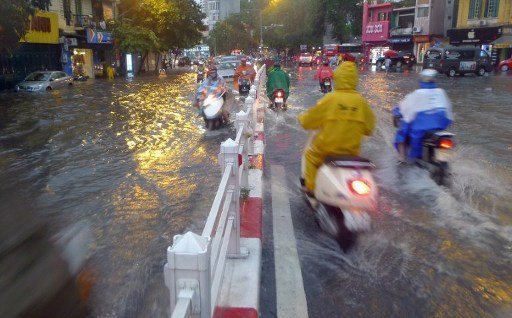
Typhoon Kai-Tak kills at least 27 people in Vietnam

Typhoon Kai-Tak has killed at least 27 people as it swept across northern provinces of Vietnam over the weekend, officials have said.

Typhoon Kai-Tak made landfall on Friday, bringing intense rain and strong winds.

Nearly 12,000 houses were damaged and 56,800 acres (23,000 hectares) of cropland were flooded, officials said.

Some of those who died were carried away by floodwaters, one died in a flood-triggered landslide.

Typhoon Kai-Tak has killed at least 27 people as it swept across northern provinces of Vietnam over the weekend

In the capital, Hanoi, where some 200 large trees were uprooted, one taxi driver was killed when a tree fell on his car.

In Bac Giang province a 46-year-old woman died after a hill near her house collapsed in the middle of the night.

On Sunday, parts of Hanoi remained flooded and residents complained that flash floods still posed a risk despite insistence from the authorities that drainage in the capital had been improved.

The Vietnamese army had prepared 20,000 soldiers, along with helicopters, rescue boats and canoes for rescue operations, but only a small number were actually deployed, reports Agence France Presse news agency.

China’s Xinhua news agency said that the typhoon had also left two dead and two others missing as it passed across parts of southern China on Friday, destroying some 4,200 homes in Guangdong province.

 [youtube yMO2E8fzK-Q]

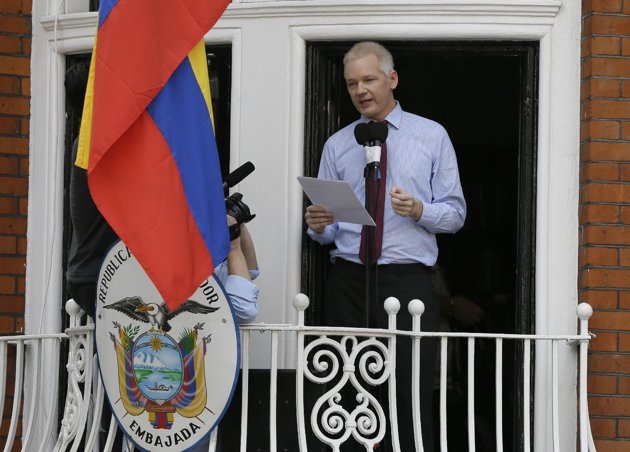
Julian Assange makes his first public statement since entering Ecuador’s embassy in London

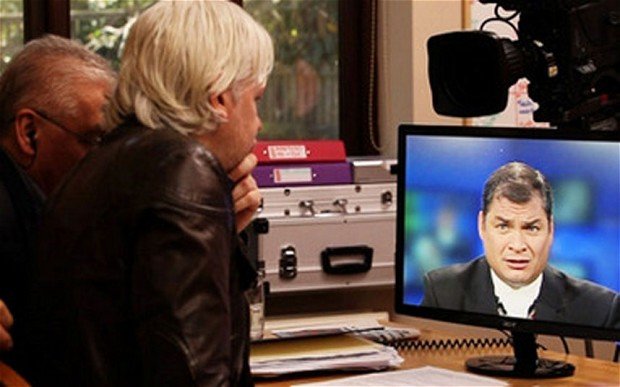
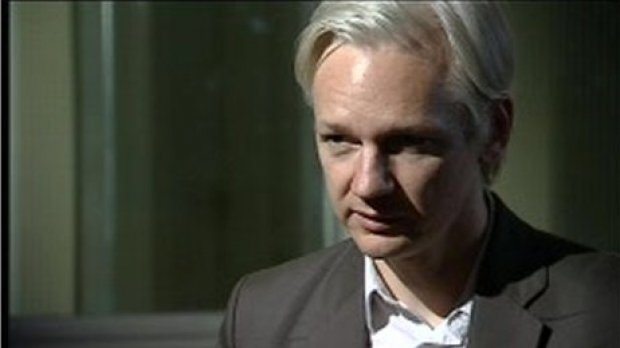
Julian Assange has urged the US to end its “witch-hunt” against WikiLeaks, in his first public statement since entering Ecuador’s London embassy.

Julian Assange also called for the release of Bradley Manning, who is awaiting trial in the US accused of leaking classified documents to the Wikileaks site.

He spoke from a balcony at the embassy and thanked Ecuador’s president, who has granted him asylum.

Julian Assange faces extradition to Sweden over sexual assault claims, which he denies.

Julian Assange has urged the US to end its "witch-hunt" against WikiLeaks, in his first public statement since entering Ecuador's London embassy

He said: “As WikiLeaks stands under threat, so does the freedom of expression and the health of all our societies.

“We must use this moment to articulate the choice that is before the government of the United States of America.

“Will it return to and re-affirm the revolutionary values it was founded on?

“Or will it lurch off the precipice, dragging us all into a dangerous and oppressive world in which journalists fall silent under the fear of prosecution and citizens must whisper in the dark?”

The US is carrying out an investigation into WikiLeaks, which has published a mass of leaked diplomatic cables, embarrassing several governments and international businesses.

Alleged WikiLeaks source Bradley Manning, 24, an intelligence analyst in the American army who served in Iraq, is alleged to have leaked US government cables to the whistle-blowing website. He is set to face a court martial.

In an interview for US television in 2010, Julian Assange denied any knowledge of Pte Manning.

Julian Assange began his speech by thanking his supporters, many of whom have been holding a vigil outside the building in Knightsbridge.

Speaking of the visit by police officers to the embassy on Wednesday, Julian Assange said: “Inside this embassy after dark, I could hear teams of police swarming up into the building through its internal fire escape. But I knew there would be witnesses and that is because of you.

“If the UK did not throw away the Vienna Conventions the other night it is because the world was watching and the world was watching because you were watching.”

It is an established international convention that local police and security forces are not permitted to enter an embassy, unless they have the express permission of the ambassador.

The Foreign Office has said it remained committed to reaching a “negotiated solution” but following its obligations under the Extradition Act, it would arrest Julian Assange if he left the embassy.

In 2010, two female ex-WikiLeaks volunteers accused Julian Assange, an Australian citizen, of committing sexual offences against them while he was in Stockholm to give a lecture.

Julian Assange claims the sex was consensual and the allegations are politically motivated.

In a statement issued after the Ecuadorean decision to grant Julian Assange political asylum, Foreign Secretary William Hague said the UK was under a “binding obligation” to extradite him to Sweden.

 [yputube 36aaKDnCCcE]

China: anti-Japanese protests across the country over disputed islands

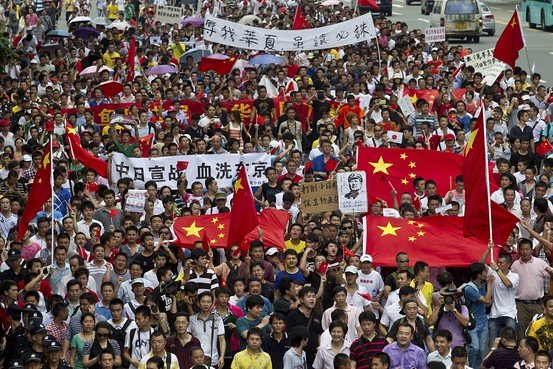
Anti-Japanese protests took place in cities across China after Japan’s nationalists raised their country’s flag on disputed islands.

Thousands of people took to the streets in Shenzhen, Guangzhou and a number of other cities demanding that Japan leave the islands in the East China Sea.

In Shenzhen, some demonstrators attacked Japanese restaurants and smashed Japanese-made cars.

The islands are known as Senkaku in Japan and Diaoyu in China.

Early on Sunday, at least 10 activists swam ashore after a flotilla carrying about 150 people reached the Japanese-controlled islands.

Japan’s coast guard is questioning the activists, who had earlier been denied permission to visit the islands.

Anti-Japanese protests took place in cities across China after Japan's nationalists raised their country's flag on disputed islands

However, as news of the action spread, angry protests broke out across China.

In the south-eastern city of Shenzhen, a Japanese-branded police car was overturned and smashed with a metal bar.

Footage carried by Hong Kong Cable TV showed other Japanese-branded cars and restaurants being damaged.

Protesters waved Chinese flags, burned images of the Japanese flag and shouted slogans denouncing Japan’s claims over the islands.

“They [Japan] should return the islands to us and apologize,” said one protester quoted by Reuters news agency.

In neighboring Guangzhou, demonstrators gathered near the Japanese consulate calling on Tokyo to quit the islands.

In Shanghai, protesters held a banner reading “down with Japanese imperialism”.

An estimated 200 demonstrators also marched through central Hong Kong to the Japanese consulate chanting anti-Japanese slogans, broadcaster RTHK reported.

In the south-western city of Chengdu, protests shut down a Japanese department store and a branch of the Japanese clothing store, Uniqlo.

The outbreak of protests was almost certainly sanctioned by the Chinese authorities, as they were well policed.

In the past, the authorities have used anti-Japanese sentiment to deflect criticism of their rule, he says.

The Japanese launched their flotilla on Saturday, saying they wanted to commemorate the Japanese who died near the islands in World War II.

Early on Sunday, 10 members of the group swam ashore to one of the islets and waved Japanese flags, emulating pro-China activists who had made the same gesture during a previous trip.

One of the politicians on the flotilla, Kenichi Kojima, told AFP news agency: “I want to show the international community that these islands are ours. It is Japan’s future at stake.”

Earlier this week, pro-Chinese activists sailed to the disputed island chain from Hong Kong in a protest aimed at promoting Chinese sovereignty.

Some of the activists were deported by Japan, and others sailed away from the islands.

The disputed islands – which lie on a vital shipping lane and are surrounded by deposits of gas – are also claimed by Taiwan.

Rows over them have caused Sino-Japanese ties to freeze in the past.

In September 2010, relations plummeted after the arrest of a Chinese trawler captain near the islands.

The captain was accused of ramming two Japanese patrol vessels in the area, but Japan eventually dropped the charges against him.

China claims the islands have been a part of its territory since ancient times, but Japan says it took control of the archipelago in the late 1890s after making sure they were uninhabited.

 [youtube iLLpJC8EY9g]

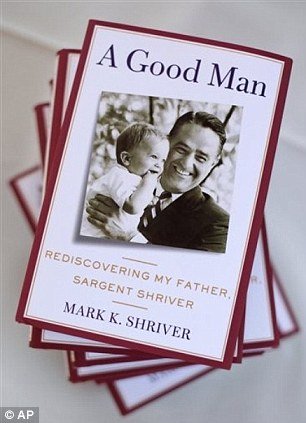
A Good Man by Mark Shriver reveals Kennedy clan secrets

Mark Shriver, who is a prominent member of the Kennedy clan, has pulled the curtain on some family secrets in his new book about his father, Robert Sargent Shriver Jr., A Good Man.

“We all have a drinker in the family,” Mark Shriver quipped, referring to his clan’s checkered past.

“We all have the eccentric aunt, problems with drugs.”

Mark Shriver, 48, who is the senior vice president for the charity Save the Children met with about 50 friends and family at the Mid-Cape Democratic Campaign Headquarters in Hyannis, Massachusetts, on Wednesday for a book reading.

During the reading, Maria Shriver’s brother has revealed that “people in his family had always suspected” that President Richard Nixon leaked a story to the media that Mark Shriver’s older brother, Robert “Bobby” Shriver, and cousin Robert F. Kennedy Jr. had been arrested by police on Cape Cod on marijuana possession charges as teenagers.

Mark Shriver has pulled the curtain on some Kennedy family secrets in his new book about his father, Robert Sargent Shriver Jr., A Good Man

According to a New York Post source who present at the literary gathering, the Democratic Party operator was very funny while regaling the small crowd with stories of his father and mother, Eunice Kennedy Shriver, the celebrated founder of the Special Olympics.

“One person in the audience told him he could be a comedian,” the unnamed attendee said.

Mark Shriver told his guests how in 1970, his brother and cousin, who were both 16 at the time, were busted on drug charges in Hyannis Port, which were dismissed after a year of probation.

However, that story ended up on the front page of every newspaper in the country, leading the Kennedy clan to believe that then-President Richard Nixon, a Republican, was behind the leak.

Two years later, Mark Shriver’s father unsuccessfully ran against Richard Nixon on Democrat George McGovern’s ticket.

Years later, Sargent Shriver joked: “I always wanted to be private and anonymous. That’s why in 1972 I ran with George McGovern.”

Mark Shirver’s book paints an intimate and touching portrait of his special relationship with his father, who passed away in 2011 after a battle with Alzheimer’s, AARP blog reported.

Sargent “Sarge” Shriver is best known for launching the Peace Corps and being the architect of President Lyndon B. Johnson’s War on Poverty. Among the many jobs he had held during his 95 years, Sarge Shriver also spent two years serving as the U.S. ambassador to France.

During Wednesday’s book reading, Mark Shriver also revealed that his father planned President John F. Kennedy’s funeral following his 1963 assassination in Dallas when his widow, Jackie Kennedy, asked him to help.

In his private life, Sarge Shriver was widely regarded as a loving and tender father who would every night hand-write a note to each of his five children, telling they how proud he was of them, and calling each one “numero uno”.

The intimate book reading was attended by several Kennedys, among them Anthony Kennedy Shriver, who Mark Shriver joked “only came for the free food”.


Kristen Stewart cheating scandal turns into Skreened T-shirt business

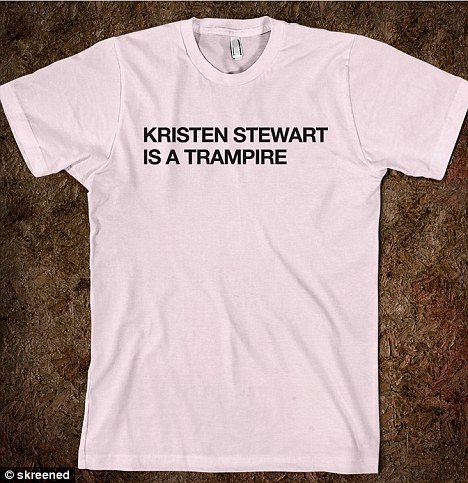
The backlash against Kristen Stewart has taken a strange turn with a T-shirt company selling tops with “Kristen Stewart Is A Trampire” splashed across the front.

The custom shirt company called Skreened.com is obviously trying to cash in on Kristen Stewart’s affair with her Snow White and the Huntsman director Rupert Sanders.

The shirts sell for $20.99 and are available on the company’s website in several colors.

The website also offers a series of other shirts related to the cheating scandal including one that says “Robert Pattinson deserves better”.

The unflattering “trampire” moniker is believed to have been started by comedian Will Ferrell.

Skreened.com is obviously trying to cash in on Kristen Stewart's affair with her Snow White and the Huntsman director Rupert Sanders

Earlier this month, he appeared on TV talk show Conan and “broke down” over the actress’ split from Robert Pattinson – who she first met on the set of vampire franchise The Twilight Saga.

When host Conan O’Brien asked a forlorn Will what was wrong with him the comedy actor jokingly opened his heart over his feelings about the cheating scandal.

In what appeared to be a spoof of super-fan Nutty Madam’s tearful video post about Kristen’s cheating, he said: “I don’t know if you follow the news at all, but there’s this actress, Kristen Stewart and she goes by K-Stew, and she had a boyfriend Robert Pattinson – he’s R-Patz – and she cheated on him.

“And they’ve broken up, they’re not going to get back together, ever. What they had was so special Conan, you don’t even know what they had, they were in love and she just threw it all away.”

Pretending to hold back tears, he added: “I don’t know if there was anything I could have done to prevent this.

“I don’t know what it means to the Twilight franchise. It’s not going to be fine ever!”

He shouted: “It’s never going to be fine. She is a trampire, that’s what she is.”

The audience cheered loudly as he called Kristen a “trampire”.

Kristen Stewart, 22, and Robert Pattinson, 26, have both moved out of their Los Angeles home, and the heartbroken actor is staying at his friend Reese Witherspoon’s holiday home in California as he tries to get over his heartbreak.

For now there are no such T-shirts on Skreened.com with Rupert Sanders’ name on them.


Is it legal to hide in an embassy?

0

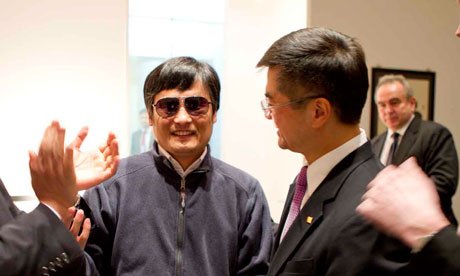
Chinese dissident Chen Guangcheng has left the US embassy in Beijing after taking refuge there for a week and Chinese officials have accused the US of breaking the law and demanded an apology.

Why?

Chen Guangcheng left the embassy on Wednesday and went from there to hospital for a check-up.

His lawyer said that he was now “free” – while previously he had been under house arrest. However, Chen Guangcheng himself later said his family had been threatened and that they now wanted to leave the country.

Chen Guangcheng is the second Chinese national to seek refuge with US authorities in China in a matter of weeks. The first was former police chief Wang Lijun who briefly fled to the US consulate in Chengdu in February.

There is in fact a long tradition of dissidents seeking sanctuary in embassies, both in China and in other countries.

So is it legal or not?

Chinese dissident Chen Guangcheng has left the US embassy in Beijing after taking refuge there for a week

The 1961 Vienna Convention on Diplomatic Relations codified a custom that has been in place for centuries when it established the “rule of inviolability”.

This states that local police and security forces are not permitted to enter, unless they have the express permission of the ambassador – even though the embassy remains the territory of the host nation.

The convention is widely adhered to and is regarded as a basic pre-requisite for diplomatic relations.

“Embassies are privileged areas. The local authorities have no rights to enter,” says Colin Warbrick, a specialist in international law and honorary professor at Birmingham University.

Human rights law provides a further layer of protection, in the form of the European Convention on Human Rights and – in the case of the US – the International Covenant on Civil and Political Rights.

This means that the embassy is obliged to consider whether there is a real risk that the person could be killed or seriously injured if they were handed over to the local authorities. And if there is, then they could be held accountable if they give the person up.

How Chen Guangcheng gained entry to the embassy is unknown – whether he walked in by himself or was smuggled in by diplomats past Chinese security guards on the street outside. If he had been a fugitive from justice and had been smuggled in, then the US diplomats would be guilty of breaking Chinese law, Colin Warbrick says.

Diplomats are obliged to comply with local law, he points out, even though they enjoy immunity from prosecution.

However, correspondents say Chen Guangcheng’s house arrest, or “soft detention” in Chinese, was an unofficial measure imposed by the local authorities, not by a court, so he was not a fugitive.

One reason for the robust Chinese response is their desire to send a signal to other Chinese citizens tempted to follow Chen Guangcheng’s example, Colin Warbrick says.

“The Chinese will not want this to become a pattern – that disaffected people go to the Americans and see what they can get out of them.”

Cases like this are almost always “politically awkward” he says. In this case, the arrival of Hillary Clinton in Beijing on an official visit may have provided an extra incentive to find a quick solution.

“From an embassy’s point of view, they would want to get rid of the person as quickly as possible to resume normal business,” says Paul Whiteway, who was a British diplomat for over 30 years, and is now director of Independent Diplomat’s London office.

“I think it’s fair to say the embassy would fret about the disruption. These cases can go on for weeks, months, sometimes even years. It is not actively greeted with open arms.”

The most direct parallel with this latest case is that of Fang Lizhi, a Chinese astrophysicist and government critic, who took refuge in the US embassy in Beijing in 1989, just as the authorities were launching their crackdown on the Tiananmen protests.

He stayed over a year, and left under a deal which saw him take up a fellowship at the University of Cambridge, before moving to the US. He lived there for the rest of his life and died a few weeks ago.

The case of Fang Lizhi was a “great loss of face for Chinese authorities,” says Hugh Davies, a retired British diplomat who helped Fang to leave China, and risked becoming so with Chen Guangcheng.

Possibly the longest case ever of a dissident taking sanctuary in an embassy was that of the Hungarian Catholic Cardinal Jozsef Mindszenty who spent 15 years under the protection of the US embassy in Budapest, from 1956 to 1971.

One of the largest occurred just before the fall of the Iron Curtain, when hundreds of East Germans travelled to Poland, the Czech Republic and Hungary and climbed into the compounds of the West German embassies there.

“The Poles agreed to take them in sealed trains across East Germany and into West Germany,” says Eileen Denza author of Diplomatic Law.

“So then many more people did it – it was a wonderful loophole!”

The practicalities of life inside depend very much on the facilities of the individual embassy.

“They have to improvise on sleep and accommodation and feeding arrangements,” says Paul Whiteway.

“Larger embassies will have kitchens normally, and they might have an embassy club. They might be arranged as a compound – in which case they might have staff housing, swimming pools and accommodation where they could put someone.

“But a lot of missions are not like that. It’s just a floor in an office block, which would make life much more difficult.”


Nemo 33: the world’s deepest indoor pool descends 113 feet

0

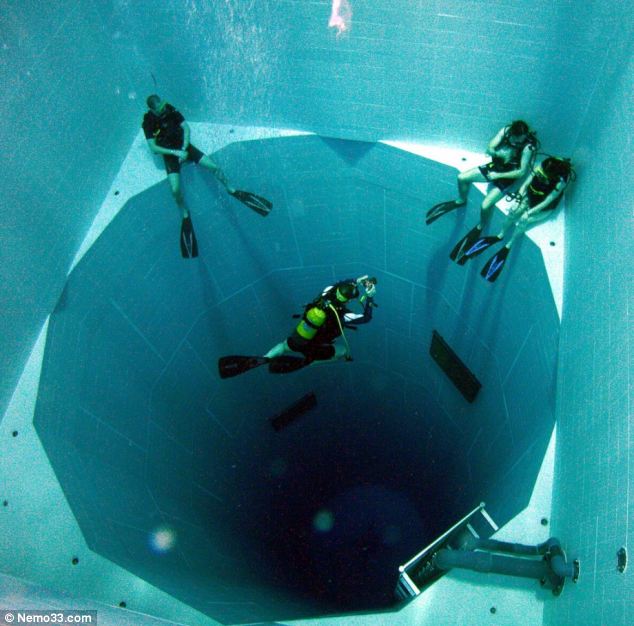
Located in Brussels in Belgium, Nemo 33, the world’s deepest swimming pool, contains a whopping 660,500 gallons (2.5 million litres) of non-chlorinated, highly filtered spring water that is kept at a temperature of 30C (86F).

Swimmers wanting to fetch something off the bottom of this pool will certainly need more than a lungful of air – seeing as it’s a staggering 113 feet (34.5 metres) deep.

It takes the phrase “being thrown in at the deep end” to a whole new level.

Located in Brussels in Belgium, Nemo 33, the world's deepest swimming pool, contains a whopping 660,500 gallons

The pool consists of a submerged structure with flat platforms at various depths and has two large flat-bottomed areas at depth levels of 16feet (5 metres) and 33 feet (10 metres), and a large circular pit that has a depth of 108 feet (33 metres).

It also holds several underwater caves at 10 metres deep.

The venue, with its simulated underwater caves, varying depths and constant toasty temperatures, is the perfect place for both novice and more experienced divers.

And for those divers and instructors that need more time at the bottom, there are three pressurized rooms at -30 (-10 metres) and -23 metres (-7 metres) with constantly renewed air.

Nemo 33 was designed by Belgian diving expert John Beernaerts as a multi-purpose diving instruction, recreational and film production facility.

Meanwhile, for those that don’t want to take a dip, there are fourteen underwater windows that allow outside visitors to view all the underwater action.

 [youtube xsbfdXl1toA]

Kim Kardashian tweets pictures of herself posing as an alien

Kim Kardashian has seized the limelight again by posting pictures of what she would look like… as an alien.

Kim Kardashian, 31, took some time from her apparently not-so-busy schedule in Hawaii to post the images on her Twitter account today.

And she looked more than a little like one of the famous Greys of alien conspiracy folklore.

The mysterious creatures were the inspiration for the titular character in last year’s sci-fi comedy hit Paul.

In a posting that will be music to the ears of many, Kim Kardashian wrote: “I’m ready for an abduction,” with a series of accompanying shots.

Kim Kardashian has seized the limelight again by posting pictures of what she would look like as an alien

She was not the only one receiving the image processing software treatment on her computer, however.

Kim Kardashian, who is currently going through a messy divorce with estranged husband Kris Humphries, also took the opportunity to rope in her latest beau Kanye West for a few stills.
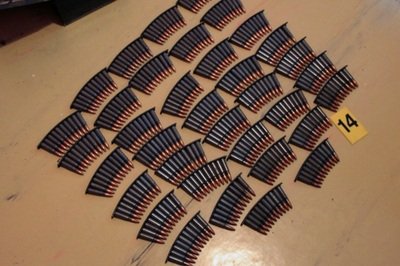
In a cryptic message posted alongside photos of herself posing with the rapper, she wrote: “They’re calling me an alien a big headed astronaut…maybe that’s bc my boy Yeezy gets…”

Whatever she was blabbering about, it certainly gave her fans another insight into how she’s been spending her time in tropical paradise with Kanye West.

Kanye West, 35, who has been accompanied by Kim Kardashian as he records new material in Hawaii, earlier this week joined her on three separate trips to a local frozen yoghurt shop.


Miss World 2012: Miss China Yu Wenxia wins beauty crown

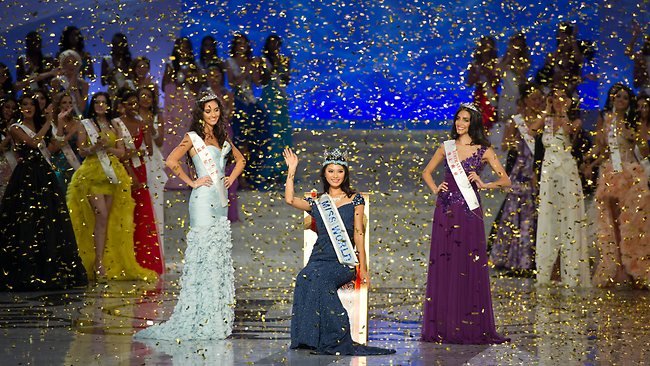
Miss China Yu Wenxia was crowned as Miss World 2012 at the Dongsheng stadium in China on Saturday.

According to the Straitstimes, last year’s winner Ivian Sarcos of Venezuela crowned Yu Wenxia.

MissWorld.com reports that Yu Wenxia, 23, beat out 116 contestants from around the world. Yu Wenxia is the second woman from China to be crowned Miss World since 2007 when Zhang Zilin won the crown.

Miss China Yu Wenxia was crowned as Miss World 2012 at the Dongsheng stadium

After winning the award, Yu Wenxia said that she hoped to use the crown to make children around the world feel lucky.

She said: “When I was young I felt very lucky because so many people helped me and I hope in the future, I can help more children to feel lucky.”

Sophie Elizabeth Moulds of Wales was the runner up at the beauty pageant, and Jessica Michelle Kahawaty of Australia came in third.

According to her bio on MissWorld.com, Yu Wenxia is a music student who wants to become a teacher.

The website writes: “Wenxia studied music, and would like to become a music teacher. In her spare time she enjoys hiking, travelling, singing, dancing and playing the piano. She describes herself as someone who follows her dreams with a smile, and says her favorite food is dumplings.”

 [youtube 3ZjIyQGxXeI]

Rare Picasso glass artwork found in Evansville Museum of Art storage

A rare piece of art believed to have been inspired by Pablo Picasso in an Evansville museum, actually turned out to be an original work of art.

Evansville Museum of Art, History and Science Curator Mary Bower says there are only approximately 50 of these glass works of art done by Picasso.

The Evansville Museum says the piece titled “Seated Woman with Red Hat” was donated to the museum in 1963.

Museum officials say it was cataloged as art inspired by a design for a Picasso painting but credited to an artist named Gemmaux. That name turned out to be plural for “gemmail,” which is the type of glass used in the work.

The Evansville Museum says Picasso glass artwork titled "Seated Woman with Red Hat" was donated to the museum in 1963

Mary Bower says their research has found Picasso worked with a French studio to make the layered glass art.

She says their research has also found it’s not financially feasible to insure, display and secure the art in their museum.

Mary Bower says the museum’s Board of Trustees has contracted with Guernsey’s of New York to auction the item. She says it could be auctioned off within 6 months.
 

Why is Ecuador protecting Julian Assange?

The Ecuadorean government said it had granted WikiLeaks founder Julian Assange asylum because it shared his fears of political persecution and the possible consequences of an eventual extradition to the United States.

“There are serious indications of retaliation from the country or countries that produced the information published by Mr. Assange; retaliation that could endanger his safety, integrity and even his life,” said the Minister of Foreign Affairs, Ricardo Patino.

“The evidence shows that if Mr. Assange is extradited to the United States, he wouldn’t have a fair trial.

“It is not at all improbable he could be subjected to cruel and degrading treatment and sentenced to life imprisonment or even capital punishment,” he added.

Most supporters of the WikiLeaks founder share this belief.

And Julian Assange knew he could count Ecuadorean President Rafael Correa among those supporters, even before he walked into the Ecuadorean embassy in London.

The Ecuadorean government said it had granted WikiLeaks founder Julian Assange asylum because it shared his fears of political persecution

But according to Santiago Basabe, a professor at the Latin American Faculty of Social Sciences, Rafael Correa’s reasons go beyond his declared interest in protecting Julian Assange’s rights.

“It is important to understand that this event was the conclusion of a very long negotiation between Mr. Assange and the Ecuadorean government,” he said.

“Many see Mr. Assange as somebody who has fought for freedom of speech and freedom of opinion, which are also key components of the Ecuadorean government official discourse.

“By granting him asylum, the government was trying to prove it really cares about freedom of opinion and freedom of the press, at a moment when Ecuador has been strongly criticized, both nationally and internationally, for the way the national government understands democracy,” Prof. Santiago Basabe added.

In Ecuador, however, not everybody is convinced the country’s international image will be better off as a result.

The private media and a large majority of opinion makers – traditionally opposed to President Rafael Correa – warned that Ecuador had very little to win from a positive response to Julian Assange’s request.

For instance, Ecuador has been trying to secure a commercial agreement with the European Union and many fear that picking a fight with the United Kingdom and Sweden will not help.

And they will certainly try to use the whole issue against Rafael Correa as he seeks re-election in February 2013.

Former President Lucio Gutierrez has even suggested that Rafael Correa’s real intention is to use Julian Assange’s hacking skills to steal the elections.

But according to Santiago Basabe, Rafael Correa does not need to resort to such strategies to stay in power.

“The possibility of President Correa losing the February voting is very low,” he said, while also noting that a small majority of Ecuadoreans supported Julian Assange’s asylum request anyway.

And the possibility of the British authorities storming into the Ecuadorean embassy in London to capture Julian Assange, raised on Wednesday by Foreign Minister Patino, has provided Correa supporters with a powerful rallying cry.

“This is a decision of a sovereign government, which doesn’t have to ask for British permission to act,” said Rosana Alvarado, a representative in the National Assembly of the official Alianza Pais party.

“I hope the Ecuadorean people will remain united and reject any form of colonialism,” said Paco Velasco, also from Alianza Pais.

To a large extent, however, repercussions will depend on the reaction of the British and Swedish governments – and, of course, of the United States.

And very few people seem to believe the WikiLeaks founder will ever make it to South America.


V Festival 2012 Staffordshire: young man found dead inside a Weston Park tent

A 20-year-old man has died at the V Festival in Staffordshire in UK.

Police said security staff at Weston Park was called to a tent in the early hours where a man was unresponsive and not breathing.

The young man was given first aid, but later pronounced dead.

Police are treating the death of the man from Shropshire as unexplained and are keen to speak to anyone who may have information or seen him during Saturday evening.

A 20-year-old man has died at the V Festival in Staffordshire in UK

A forensic examination of the scene has been carried out and detectives have been investigating the circumstances which led to the death.

Chief Inspector Carl Ratcliffe said: “We are very saddened by the tragic death of this young man and we are working to establish the full facts and build a picture of his actions in the few hours before his death.

“We will be preparing a report for Her Majesty’s coroner who has already been informed about this incident and we are working to support those affected by this incident.”

A spokesman for the V Festival said: “We are all very saddened by this tragic incident, and we want to extend our deepest sympathies to the family of this young man.

“Our team worked throughout the night to support those affected at the festival site and we want to thank everyone for their co-operation and support during the incident.”

A post-mortem examination will take place later.


Julian Assange expected to make public statement in front of London’s Ecuador embassy

WikiLeaks founder Julian Assange is expected to make a public statement later on the diplomatic row that has engulfed him since being granted asylum by Ecuador.

WikiLeaks says Julian Assange will speak outside the Ecuadorean embassy in London, where he has taken refuge.

Julian Assange faces extradition to Sweden over sexual assault claims, which he denies.

Ecuador’s president has suggested Julian Assange could co-operate with Sweden if assurances are given that there would be no extradition to a third country.

Australian Julian Assange, 41 – whose WikiLeaks website has published a mass of leaked diplomatic cables embarrassing countries including the US – first walked into the embassy in Knightsbridge, asking for protection, two months ago.

Julian Assange is expected to make a public statement later on the diplomatic row that has engulfed him since being granted asylum by Ecuador

Julian Assange entered the embassy after the UK’s Supreme Court dismissed his bid to reopen his appeal against extradition and gave him a two-week grace period before extradition proceedings could start.

It is established international protocol that local police and security forces are not permitted to enter an embassy, unless they have the express permission of the ambassador.

On Thursday a post appeared on the WikiLeaks Twitter feed which said: “ANNOUNCEMENT: Julian Assange will give a live statement in front of the Ecuadorian embassy, Sunday 2:00 pm.”

However, it is not clear precisely how this statement will be made and Julian Assange has been warned by the British authorities that he will be arrested when he leaves the embassy.

The Sunday Times quotes sources close to Julian Assange who say he would be prepared to leave the embassy if guarantees are given by Sweden that he will not be extradited to the US.

His supporters claim he could face persecution and even the death penalty.

On Friday, Ecuador’s President Rafael Correa used his weekly national address to say that the South American country had never said Julian Assange should not “answer to the Swedish justice system”.

“What we have always asked for is a guarantee that there won’t be a second extradition to a third country as that would put at risk Mr. Assange’s life and freedom.”

Rafael Correa said a letter from the British government that drew attention to the Diplomatic and Consular Premises Act 1987 was “intolerable” and an “explicit threat”.

The act could allow the UK to potentially lift the embassy’s diplomatic status to allow police to enter the building to arrest Julian Assange for breaching his bail terms.

Meanwhile, the Alba group of leftist Latin American nations – founded by Venezuela’s President Hugo Chavez – has warned the UK government “it will face grave consequences around the world if it directly breaches the territorial integrity” of the embassy.

The UK Foreign Office has said the letter was sent to clarify “all aspects of British law that Ecuador should be aware of”.

It has also said it would follow its obligations, under the Extradition Act, to arrest Julian Assange if he leaves the embassy.

Sweden, meanwhile, has said it is “unacceptable that Ecuador would want to halt the Swedish judicial process”.

It wants to question Julian Assange over allegations that he sexually assaulted two female ex-WikiLeaks volunteers while he was in Stockholm to give a lecture in 2010.


Alice Pyne, teenager dying of cancer, fulfills bucket list of dreams after two years

Alice Pyne, a teenager dying of cancer, has fulfilled her “bucket list” of things she wanted to do.

Her final dream came true after her parents made a “terrifying” late-night decision to fly her abroad.

Alice Pyne, 16, flew to Canada to go whale watching and tick off her last bucket list wish.

The girl, who has a white blood cell cancer called Hodgkins lymphoma, made a pilgrimage to Vancouver and stood on the brow of a boat surrounded by orcas and humpbacks.

She said the trip was “the best holiday ever”.

Her parents, Vicky and Simon Pyne, took on the 11-hour flight abroad – after a sleepless night of worry – to allow Alice to complete her list of achievements.

Vicky Pyne said their consultant advised them not to travel abroad, but added: “If you are to go, go quickly.”

“We thought it was too risky, it was too far,” added Vicky Pyne.

However, an email message from Alice Pyne’s Vancouver friend Nicole convinced them to take the trip to see their daughter’s favorite animal despite the cost and impossibility of insurance.

Within hours of booking their flights, the family, including Alice Pyne’s sister Milly, were waiting for a jet at Manchester Airport.

They made the flight and drove across to Vancouver Island. The following day they met Nicole and her father Bill MacKay, who run MacKay Whale Watching.

Alice Pyne flew to Canada to go whale watching and tick off her last bucket list wish

Alice Pyne’s family stepped on to a boat and, after 45 minutes on the water, they were surrounded by 25 orca and humpback whales.

She said: “They were huge. I couldn’t believe I was there. This was something I’ve always wanted to do. I wanted to see them in the wild and I loved the way they moved in the water.”

They spent five hours on the water, allowing Alice Pyne, of Ulverston, Cumbria, time to watch the whales rolling and playing around their vessel, as well as watching sea lions and dolphins.

She said: “When I made my bucket list I never expected it to be published to the whole world – so I didn’t expect to tick off the last item – I didn’t even expect to get the majority of my wishes fulfilled.

“Words can’t really explain it but I’m so happy it is done.

“There was a point where I was on the back of the boat and a whale came up two metres away from me. It was about 25 foot long and just amazing.

“I always said you should take a few risks and there is no part of me that thinks this was a bit of a risk. What was the worst that could happen? More people should feel the same way.”

Alice Pyne told fans on her blog: “I don’t think about it all too much as they didn’t think I’d be here 18 months ago and I could waste the life I’ve got just thinking about it all.”

Her mother added: “A year ago we weren’t brave enough to make the trip – we wouldn’t have dreamed of it – but we knew it was now or never and we might have lived a long life of regret after Alice is gone if we didn’t grab the opportunity.”

Alice was recognized by fans of her blog at Manchester Airport, in a cafe at Telegraph Cove where they were taken on a millionaire’s yacht and invited on a helicopter ride across the rivers and waterfalls.

Alice Pyne’s bucket list, which went viral online and has now been viewed by around four million people, led to her meeting Prime Minister David Cameron in July, last year, to discuss how to help people suffering cancer.

She has campaigned tirelessly to raise awareness of the need for more bone marrow donors.

Alice Pyne has now battled her condition for five years and set up the charity Alice’s Escapes, this year, to provide holidays for seriously ill children.


ALICE’S BUCKET LIST:

DONE – To go whale watching

DONE – Visit Cadbury World

DONE – To go to my school leavers prom

DONE – To stay in the Chocolate room at Alton Towers

DONE – To swim with sharks

DONE ‘ish – To go to Kenya (got to go to Kent-ya)!

DONE – To enter Mabel in a Labrador show

DONE – Photo shoot with Milly, Clarissa, Sammie and Megs

DONE – To have a private cinema party for me and my BFFs

DONE – To design an Emma Bridgewater Mug to sell for charity

DONE- To stay in a caravan

DONE – To have a purple Apple ipad

DONE – To meet Take That

DONE – To have a nice picture taken with Mabel

DONE – To have my hair done

DONE – To have a back massage


Jesse Robredo, Philippine Interior Secretary, missing after plane crash

Philippine Interior Secretary Jesse Robredo is missing after the light aircraft he was travelling in crashed into the sea, officials say.

Two other people are said to be missing after the Cessna came down in the sea off central Masbate province while trying to make an emergency landing.

An aide to Jesse Robredo was rescued from the water by local fishermen.

Police said search efforts had been suspended for the evening because of darkness.

Philippine Interior Secretary Jesse Robredo is missing after the light aircraft he was travelling in crashed into the sea

Military spokesman Colonel Generoso Bolina said the plane had been travelling from central Cebu city to Jesse Robredo’s hometown of Naga city, in Camarines Sur province.

“There was an engine problem so they sought permission to make an emergency landing at Masbate, but the plane did not make it there and crashed,” Generoso Bolina told reporters.

Witnesses saw the Cessna 172 crash into the sea less than a kilometre from the runway. The wreckage has not been found.

Jesse Robredo’s police escort managed to jump out of the aircraft and was rescued and taken to hospital with minor injuries.

Two pilots – a Filipino and a Nepali – are also missing.

Rico Puno, the under secretary in the interior ministry, said Jesse Robredo had been in Cebu for a gathering of civilian volunteers assisting in police work, the Associated Press news agency reports.

Jesse Robredo, 54, is a close ally of President Benigno Aquino and helped his election campaign in 2010.


Al-Qaeda attacks Yemeni intelligence headquarters of Aden city

Suspected Al-Qaeda militants have attacked the intelligence headquarters of Yemen’s southern city of Aden killing 14 people, officials say.

The militants attacked the building from two sides, firing rocket-propelled grenades and automatic weapons inside.

The “well-planned” attack took place in Aden’s coastal Tawahi neighborhood.

Al-Qaeda remains active in the area, after a security vacuum was created in a year of protests against former president Ali Abdullah Saleh.

Suspected Al-Qaeda militants have attacked the intelligence headquarters of Yemen's southern city of Aden killing 14 people

Militants have seized large parts of the south and east of the country.

A recent, two-month military offensive backed by the US drove them from their strongholds in towns in the southern Abyan province but many escaped into nearby mountains from where they continue to launch attacks.

Among the dead in the Aden attack were at least 11 soldiers, many of whom were reported to be sleeping when hand grenades were thrown into their rooms.

The militants launched the attack from both sides of the intelligence complex, situated next to a state television building. They then managed to escape.

“The operation seemed to have been well planned,” a security source told Reuters, adding he believed the attackers belonged to Al-Qaeda.

A few weeks ago, suspected Al-Qaeda militants carried out a suicide bombing that killed at least 45 people during a funeral in the city of Jaar.

In May, more than 90 people died in a suicide bomb attack at a military parade rehearsal in the capital, Sanaa.


Japanese flotilla sets sail for disputed islands Senkaku despite China’s protests

Japanese politicians have set sail for a group of disputed islands, in the teeth of protests by China which claims them for its own.

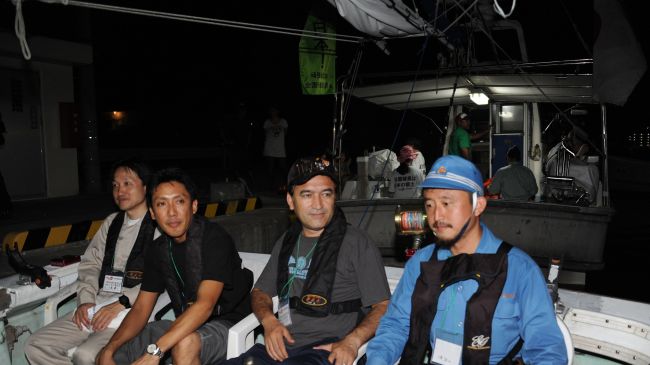
A flotilla of some 20 Japanese boats set out for the Senkaku (Chinese: Diaoyu) islands and is expected to anchor off them early on Sunday.

The politicians plan to commemorate Japanese dead in World War II, when Japan occupied eastern China.

But Japan’s government has denied them permission to land on the islands.

China says the event will undermine its “territorial sovereignty” and this is the latest move in an escalating dispute over the islands.

On Friday, Japan deported several Chinese activists who had landed there this week.

Japanese politicians have set sail for a group of disputed islands, in the teeth of protests by China which claims them for its own

The islands, also claimed by Taiwan, are close to strategically important shipping lanes, offer rich fishing grounds and are thought to contain oil deposits.

Emotions have been running high since the commemoration on Wednesday of Japan’s surrender in World War II, when China and South Korea both protested against a visit to a Tokyo war shrine by two Japanese cabinet members.

Just before 21:00, the 150-strong party sailed out of the Japanese port of Ishigaki.

They are expected to arrive off the disputed islands in the East China Sea at dawn on Sunday.

“I want to show the international community that these islands are ours,” Kenichi Kojima, a local politician from Kanagawa, near Tokyo, told AFP news agency before he boarded.

“It is Japan’s future at stake.”

Chinese foreign ministry spokesman Qin Gan said: “Any unilateral action taken by Japan on the Diaoyu Islands is illegal and invalid.”

Earlier this week, activists sailed to the disputed island chain from Hong Kong in a protest aimed at promoting Chinese sovereignty.

China had praised Japan’s “wise” decision to free them, saying in an article on Xinhua news agency’s website that the speedy action had averted a deterioration in relations.

Rows over the disputed islands have caused Sino-Japanese ties to freeze in the past.

China claims the largely uninhabited islands has been a part of its territory since ancient times but Japan says it took control of the archipelago in the late 1890s after making sure they were uninhabited.

In September 2010, relations plummeted after the arrest of a Chinese trawler captain near the islands.

The captain was accused of ramming two Japanese patrol vessels in the area, but Japan eventually dropped the charges against him.


Czech police arrest man over planning Breivik-style attack in Ostrava

Czech police have arrested a man they suspect of planning an attack similar to those launched by Anders Bering Breivik in Norway.

Weapons, explosives and police uniforms were found in his flat in the city of Ostrava and detectives say he was using the name Breivik on the internet.

The man has five convictions, one for blowing up a wooden shack near a petrol station, police say.

Neighbors told Czech media he was not an extremist but mentally unhinged.

Police searched the man’s apartment on 10 August but have only now disclosed details of what was found.

Weapons, explosives and police uniforms were found in suspect’s flat in Ostrava and detectives say he was using the name Breivik on the internet

Police raided the property after being tipped off that he was planning to detonate a large explosive device crafted from an aircraft bomb.

He was reportedly carrying a remote-controlled detonator when he was arrested.

At a news conference, police said they did not know the suspect’s intended target, but said the explosives, weapons and ammunition were all functional.

The director of the regional headquarters of the Czech police, Tomas Tuhy, said they were investigating any possible connection with Anders Breivik.

“We are working with the idea that this 29-year-old man probably sympathises with known murderer Anders Breivik from Norway,” he said.

A photograph in the Czech media shows a smiling young man with a receding hairline and a neatly trimmed beard, being led away in handcuffs.

On 22 July 2011, Anders Bering Breivik, a right-wing militant, killed eight people in a bomb attack in Oslo before gunning down another 69 in a youth camp on the island of Utoeya.

Judges are set to decide next week whether he is sane or insane, and therefore whether he will be given a long prison sentence or be sent to a secure psychiatric ward.


Eduardo Leite survives after six-foot steel rod pierced his head

Eduardo Leite, a Brazilian construction worker, has survived after a 2 m (six-foot) steel rod fell from above and pierced his head, doctors who treated him say.

Eduardo Leite was taken to a Rio de Janeiro hospital, where the rod was removed after five hours of surgery.

The doctors said he responded well to surgery, suffered no adverse consequences and has experienced little pain.

He narrowly escaped partial paralysis and loss of an eye, they added.

Eduardo Leite has survived after a 6-foot steel rod fell from above and pierced his head

The rod is said to have fallen from the fifth floor of a building under construction.

It pierced Eduardo Leite’s hard hat, then the back of his skull, before exiting between his eyes.

Luis Alexandre Essinger, chief of staff at the Miguel Couto hospital, said Eduardo Leite was conscious when he arrived there and explained what had happened to him.

“He was taken to the operating room, his skull was opened, they examined the brain and the surgeon decided to pull the metal bar out from the front in the same direction it entered the brain,” he said.

Eduardo Leite had “few complaints” after the surgery, Alexandre Essinger added, saying “it really was a miracle” that he survived.

Neurosurgeon Ruy Monteiro told local TV that the bar had entered a part of the brain with no specific major known function.

The victim is expected to stay in hospital for another two weeks, and will be given antibiotics to avoid risk of infection.


Macaulay Culkin looks healthier as he steps out in NYC

Few months ago, Macaulay Culkin shocked the world with his pale and skeletal appearance, but he seems to have turned a major corner, and is now sporting a fuller frame and healthier complexion.

Macaulay Culkin, 31, who currently works as a DJ, stepped out yesterday in New York City looking the best he has in a long time.

Wearing a stripped shirt, black shades and faded gray jeans, Macaulay Culkin could be seen shopping at a Duane Reade convenience store and walking around the city’s Soho neighborhood.

In February, shocking photos of Macaulay Culkin emerged showing just how badly his life had seemingly unravelled.

Then last month, the 31-year-old’s tragic tale took a dramatic turn when it was claimed by the National Enquirer that he was “close to death”, because of an addiction to prescription drugs and heroin.

Macaulay Culkin stepped out yesterday in New York City looking the best he has in a long time

The allegations said he regularly shoots up heroin and the addictive painkiller oxycodone (dubbed hillbilly heroin).

The report went on to claim Macaulay Culkin had turned his Manhattan apartment into a drug den.

Although the reports were immediately denied by the star’s spokesperson, Michelle Bega, his estranged father, Kit Culkin, pleaded with his son to seek help before it’s too late.

The 67-year-old pensioner – who hasn’t spoken to Macaulay Culkin in 15 years following a row over his $17 million fortune – told The Sun: “I hope that he has the right people looking after him.”

Too distraught to talk any more, Kit Culkin’s wife, Jeanette, 68, explained the pair fear the former Home Alone actor is “dying of some disease or heavily into drugs” after seeing disturbing photographs of the star.

Responding to the drug addiction allegations, Macaulay Culkin’s publicist Michelle Bega said: “The report in the National Enquirer that Macaulay Culkin is addicted to heroin and assorted hallucinogenics is not only categorically without merit, but it is also impossibly and ridiculously fictitious.”

The Enquirer claimed Macaulay Culkin’s alleged drug use intensified 18 months ago – around the time he split from long-term girlfriend Mila Kunis, who is now dating Ashton Kutcher.

Two weeks ago, Macaulay Culkin was spotted out at Hollywood hot spot Chateau Marmont.

Although he wasn’t as skinny as before, his appearance didn’t entirely help to end the addiction rumors as he was seen clutching his stomach and appeared to be sick.


Patrick Ricard, head of global spirits company Pernod Ricard, dies at 67

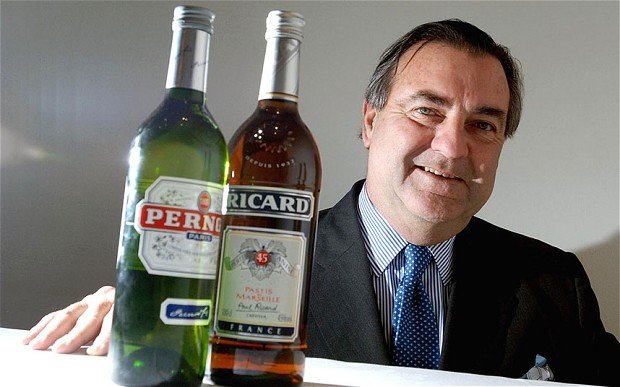
Patrick Ricard, head of the global spirits company Pernod Ricard, whose father founded the Ricard firm, has died at the age of 67.

The firm said Patrick Ricard had passed away on Friday. French media reports suggested he had heart problems.

Paul Ricard founded the company, which began selling the anise-flavoured liqueur pastis, in Marseille in 1932.

His son transformed the firm into the second largest wine and spirits company in the world.

Patrick Ricard, head of the global spirits company Pernod Ricard, whose father founded the Ricard firm, has died at the age of 67

Patrick Ricard spent his entire career within the family firm and took over leadership as chairman and CEO in 1978, at the age of 33, just a few years after it had merged with its arch-rival, Pernod.

He made a series of acquisitions beginning with bourbon maker Wild Turkey, in 1981, followed by Irish Distillers, then brands including whiskey-maker Chivas and cognac producer Martell.

Patrick Ricard led a buyout of UK-based competitor Allied Domecq in 2008.

The expansion into foreign markets transformed the firm into a major global player generating sales of 7.6 billion Euros ($9.35 billion) in 2011, with some 18,000 staff worldwide.

Patrick Ricard, who was named European businessman of the year by the US magazine Fortune in 2006, was married with three children.


Limbless Phillipe Croizon completes swim to link five continents

0

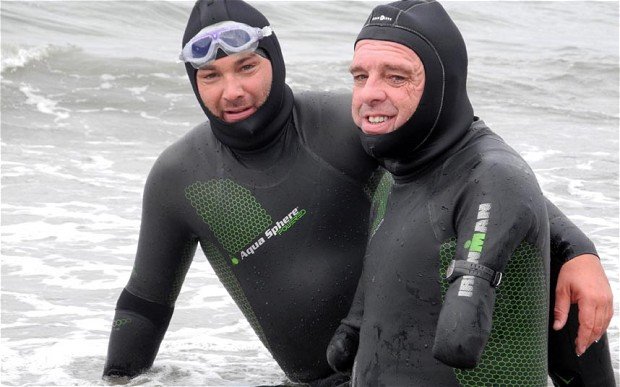
French Phillipe Croizon, who lost all his limbs in an electrocution accident, has completed a swim to link five continents.

Using tailor-made flippers, Philippe Croizon, 44, finished his quest by crossing between the US island of Little Diomede and Great Diomede in Russia, joining Asia and the Americas.

He has swum three other straits since May.

Reaching shore, Phillipe Croizon said the icy waters had been a challenge.

Phillipe Croizon, who lost all his limbs in an electrocution accident, has completed a swim to link five continents

“This was the hardest swim of my life, with a water temperature of four degrees Celsius (39 degrees Fahrenheit) and strong currents,” he told AFP news agency.

“We made it.”

He swam the 4.3 km (2.7 miles) stretch in the Bering Strait in one hour and 20 minutes, accompanied by friend and long-distance swimmer Arnaud Chassery.

Phillipe Croizon said he hoped to be an encouragement to other disabled people.

“I tell them: <<Everything is possible, everything can be done when you have the will to go beyond yourself>>. We’re all equal, disabled and non-disabled people on all continents,” he said, according to AFP.

In past months Phillipe Croizon has swum between Papua New Guinea and Indonesia to link Oceania with Asia, across the shark-infested Red Sea to link Africa to Asia, and across the Strait of Gibraltar between Europe and Africa.

Phllipe Croizon had the amputations after an accident on a roof in 1994, when a high-voltage power cable discharged through a metal ladder he was standing on.

 [youtube aoJoELr0R6o]


Two years on Mediterranean diet in mid-life could protect your bones in old age

0

Researchers claim that swapping to a Mediterranean diet rich in olive oil could help protect your bones in later life.

Just two years of eating like the Spanish and Italians who use olive oil rather than less healthy fats may preserve or even build bone in older people, says a new study.

The Mediterranean diet is regarded as the classic eating habits of populations from countries in southern Europe, even though fewer inhabitants follow it today.

It has been thought to improve heart health and stave off cancer because it is high in fruit, vegetables, fish, nuts, whole grains and “healthy” fats such as those in olive oil, while low in red meat and dairy products.

But a new study shows further benefits to bones as people eating more olive oil had higher levels of the hormone osteocalcin in their blood – a marker linked to better bone strength.

Researchers claim that swapping to a Mediterranean diet rich in olive oil could help protect your bones in later life

Previous studies have shown that Mediterranean countries have lower rates of osteoporosis compared with northern European nations, which could be due to different dietary factors.

Osteoporosis is often termed the “silent disease” as there are no symptoms prior to a fracture. However, once a person has broken a bone, their risk of breaking another bone – a fragility fracture – increases dramatically.

In the study, 127 people aged 55 to 80 regarded as high risk heart patients took part in the Prevencion con Dieta Mediterranea (PREDIMED) study.

They had type 2 diabetes, high blood pressure or other cardiovascular risk factors, says a report in the Journal of Clinical Endocrinology and Metabolism.

They were randomly assigned to three different diets: Mediterranean diet with mixed nuts, Mediterranean diet with at least 50 ml of virgin olive oil a day, and a low-fat diet.

People on the olive oil diet were told to use it for cooking and dressing salads, eat more fruit and vegetables, eat less red meat, avoid butter, cream, fast food, cakes, and, if they were alcohol drinkers, to consume moderate amounts of red wine.

The results after two years showed those on the Mediterranean diet with olive oil had a significant increase in concentrations of osteocalcin and other bone formation markers, and no other diet had the same effect.

Dr. Jose Manuel Fernandez-Real, of Hospital Dr. Josep Trueta in Girona, Spain, said the consumption of olive oil has been already been linked to prevention of osteoporosis in experimental research, but the new study looked at direct effects in people.

He said: “This is the first randomized study which demonstrates that olive oil preserves bone, at least as inferred by circulating bone markers, in humans.

“It’s important to note that circulating osteocalcin was associated with preserved insulin secretion in subjects taking olive oil.

“Osteocalcin has also been described to increase insulin secretion in experimental models.”

Olive oil contains omega-6 fats, a form of “healthy” polyunsaturates which blocks the body’s response to inflammation in chronic conditions such as heart disease and arthritis.

It also reduces blood pressure and improves the ratio of good to bad blood fats.

Dieticians say the Mediterranean diet also appears to improve vascular function, the flexibility of cells lining the walls of blood vessels, particularly in the heart and circulatory system.

The diet is known to fight inflammation and repair oxygen-related cell damage.

Previous research has found strict adherence to a Mediterranean diet could help stave off memory loss and Alzheimer’s.