Friday, December 5, 2025
Home Blog Page 10

Trump’s Welcome to Hamas Stuns Israel and Ignites Hope, and Fear, in Gaza

GAZA CITY, GAZA STRIP—A collective, disbelieving gasp swept across the region late Friday as U.S. President Donald Trump, in an abrupt diplomatic pivot, publicly welcomed Hamas’s partial acceptance of his 20-point Gaza peace plan and—more stunningly—issued a direct order to a key ally: “Israel must immediately stop the bombing of Gaza.”

The announcement, delivered via a post on his social media platform and followed by a video address, has set off a political earthquake in the Middle East, simultaneously injecting a fragile, unprecedented hope into the besieged Gaza Strip and leaving the government of Israeli Prime Minister Benjamin Netanyahu reportedly “shocked.”

‘A Very Special Day’

Only hours after the expiration of President Trump’s ultimatum for Hamas to accept the comprehensive deal or “face all HELL,” the militant group submitted a response to mediators in Qatar and Egypt. While the statement stopped short of full, unconditional acceptance—notably demanding further negotiation on key issues like its disarmament and the staged Israeli withdrawal—it was the content of the concession that electrified the world.

Hamas agreed to one of the most immediate and emotionally charged demands of the plan: the release of all remaining Israeli hostages, alive and deceased, in exchange for Palestinian prisoners.

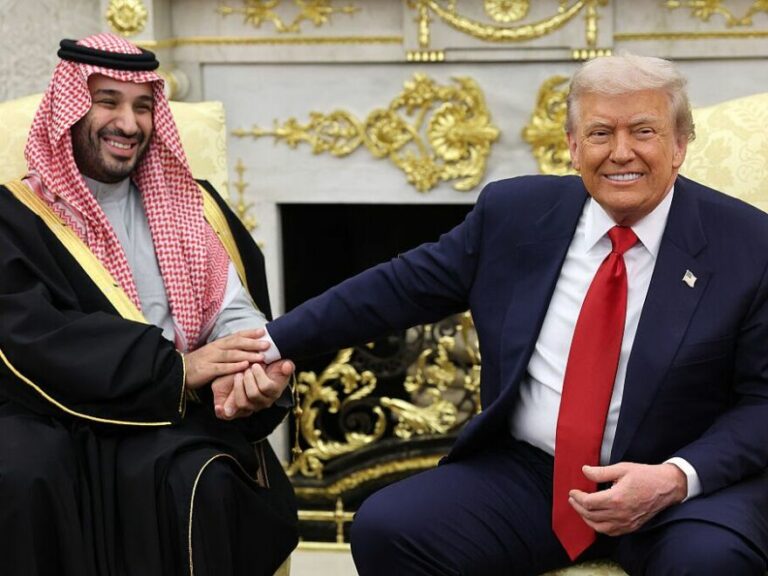
President Trump seized on this partial concession as a major breakthrough. “Based on the Statement just issued by Hamas, I believe they are ready for a lasting PEACE,” he wrote, calling the development a “very special day, maybe unprecedented.” The consequential nature of the US President’s reaction, a departure from his historically hardline stance against the group, was immediately clear. For the first time, an American President publicly told Israel to halt its military operations to facilitate a deal with the militant faction.

Netanyahu Left ‘Off Guard’

Sources close to Prime Minister Netanyahu’s office, who had reportedly viewed the Hamas response as a rejection due to the non-negotiable points it sought to revisit, described being “surprised” by the White House’s full-throated embrace of the counter-offer.

Despite the apparent friction, Mr. Netanyahu’s office quickly issued a statement that, while conspicuously avoiding any mention of Trump’s order to stop the bombing, affirmed Israel was “preparing for the immediate implementation of the first stage of the Trump plan for the release of all the hostages.” This uneasy alignment signals the immense pressure both leaders face from the international community and the hostage families to bring the nearly two-year war to an end.

Gaza ceasefire talks Doha

Jubilation and Fear in the Rubble

The most profound reaction, however, was felt in the Gaza Strip itself. News of Hamas’s acceptance of a hostage deal, coupled with a U.S. presidential call for an immediate ceasefire, brought displaced families in the tent cities to a fever pitch. In some areas, cries of “Allahu Akbar!” (God is the greatest) could be heard, a raw expression of relief that an end to the brutal campaign may be in sight.

A spokesman for Hamas, Taher al-Nunu, called President Trump’s call for a cessation of bombing “encouraging” and confirmed the group was ready to immediately enter negotiations.

Yet, even as glimmers of hope appeared, reports from Gaza Civil Defence officials confirmed that the overnight hours saw heavy Israeli artillery fire and airstrikes in Gaza City and elsewhere. Despite the American President’s direct order, the war machinery has yet to grind to a halt.

Palestinians on the ground remain in a state of shock, a mix of cautious jubilation over a potential ceasefire and deep-seated apprehension. The key sticking points—the fate of Hamas’s military arsenal and its role in a future Gaza administration—are profound, and no one in the enclave is under any illusion that peace is secured. The path ahead is fraught with the kind of volatile details that could yet shatter the most promising diplomatic window in years.

The world watches as the clock ticks, with a partial agreement on the table and the fate of the long-sought Middle East peace now hanging on the resolution of seemingly intractable disagreements. The Truce Tempest has begun, and its final direction is far from certain.

Russian Drone Strike on Passenger Train in Sumy Injures at Least 30, Zelensky Says

SHOSTKA, Ukraine— A Russian “double-tap” drone strike on a railway station in the northeastern Sumy region of Ukraine has wounded at least 30 people, including children and railway staff, Ukrainian President Volodymyr Zelensky announced on Saturday. The attack, which struck two passenger trains at the Shostka station, marks a brutal escalation in Russia’s campaign against Ukraine’s vital civilian infrastructure.

President Zelensky described the attack as “savage” and an undeniable act of “terrorism,” sharing video footage on social media of a mangled train carriage engulfed in flames with shattered windows.

“The Russians could not have been unaware that they were striking civilians. And this is terror the world must not ignore,” Zelensky wrote. “Only strength can make them stop.”

‘Double-Tap’ Attack Hits Rescuers

According to Ukrainian Railways (Ukrzaliznytsia) and government officials, the strike was a sophisticated and deliberately cruel “double-tap” attack.

The initial drone strike hit a local commuter train. A second drone then targeted the same area as passengers and emergency services began to evacuate the site.

“The second strike… occurred while the evacuation was already underway,” said Oleksiy Kuleba, Ukraine’s deputy prime minister, calling the tactic one of the “most brutal Russian tactics” aimed at maximizing casualties among both civilians and rescuers.

Local prosecutors later confirmed the grim news that at least one person, a 71-year-old man, was found dead in one of the wrecked train carriages. Among the confirmed injured are at least three children.

Targeting Civilian Lifelines

The attack on the railway in Shostka, a city approximately 70 kilometers from the Russian border, underscores Moscow’s recent and intense focus on degrading Ukraine’s civilian transport and energy networks as winter approaches. Railway infrastructure, while crucial for military logistics, is also the primary lifeline for civilian travel, especially in border and frontline areas.

Oleksandr Pertsovsky, CEO of Ukraine’s national rail operator, stated that there was “no military purpose whatsoever” in the strike. “The only purpose is to sow panic among people… that the connection will be destroyed and people will be left alone,” he said, noting that the drones were “hunting for locomotives” and increasingly targeting civilian routes.

This latest strike follows a massive Russian aerial bombardment across several regions in the preceding 24 hours, which Ukrainian officials described as the biggest attack of the war on natural gas facilities. The combined assaults on gas, power grids, and now passenger rail lines suggest a renewed strategy of weaponizing the approaching cold season against the Ukrainian populace.

International Outcry

The European Union was quick to condemn the drone strike. European Commission President Ursula von der Leyen denounced the “shocking scenes” and Russia’s “reckless and continued willingness to target civilians.”

Zelensky, however, demanded more than mere words. “We’ve heard resolute statements from Europe and America – and it’s high time to turn them all into reality,” he urged. “Lip service is not enough now. Strong action is needed.”

Hard-Line Conservative Sanae Takaichi Shatters Japan’s Highest Glass Ceiling

TOKYO—In a historic vote that defied the long-entrenched patriarchy of Japanese politics, Sanae Takaichi has been elected president of the ruling Liberal Democratic Party (LDP), paving her way to become Japan’s first female prime minister.

The 64-year-old former economic security minister and protégé of the late Shinzo Abe secured the party’s top post in a runoff vote on Saturday, instantly shattering the “highest glass ceiling” in a nation consistently ranked poorly for gender equality. She is expected to be formally appointed Prime Minister by the Diet (Japan’s parliament) around October 15, replacing the outgoing Shigeru Ishiba.

However, the history-making moment is complicated by Takaichi’s ultra-conservative, nationalist ideology, which political analysts warn may not herald a new era of liberal social reform for Japanese women.

A Protégé of the Right-Wing

Takaichi, a veteran lawmaker with over three decades in parliament, is the undisputed torchbearer for the LDP’s hawkish right-wing. She is often compared to former British Prime Minister Margaret Thatcher, a role model she frequently invokes, though critics note her preference for aggressive fiscal spending contrasts sharply with Thatcher’s discipline.

Her political platform is an aggressive cocktail of social conservatism and economic expansionism:

  • Security Hawk: She advocates for a stronger military, a larger defense budget, and a debate over allowing the use of U.S. nuclear weapons in Japan during an emergency.
  • Abenomics Revival: She plans to continue with a variant of her mentor Shinzo Abe’s “Abenomics,” supporting aggressive monetary easing and heavy government spending to spur growth and combat rising prices.
  • Cultural Conservatism: Takaichi staunchly opposes social reforms like same-sex marriage and allowing married couples to keep separate surnames, arguing they “undermine traditional family values.” She also supports male-only imperial succession.

  • Foreign Relations Strain: A self-described “China hawk,” Takaichi’s positions, including her regular visits to the controversial Yasukuni Shrine, are expected to strain already delicate relationships with Beijing and Seoul.

Historic Rise, Uncertain Outlook for Gender Equality

Takaichi’s victory is an undeniable milestone, making her the first woman to lead the LDP, a party that has governed Japan nearly continuously since 1955. Yet, experts caution that her leadership will not necessarily advance the cause of gender equality.

“She has no interest in women’s rights or gender policies,” warned one politics and gender specialist from Tokai University.

During her campaign, Takaichi did promise a significant increase in the number of female ministers in her government. However, she has largely stuck with traditionalist views favored by the male heavyweights of the LDP. Her pledge to abandon “work-life balance” and “work, work, work” to revive the nation, while cheered by some for its resolute tone, also drew criticism for reinforcing Japan’s culture of overwork.

The Daunting Challenges Ahead

Takaichi inherits a deeply fractured political landscape and a daunting list of national crises. The LDP-led coalition recently lost its majority in both chambers of parliament, forcing Takaichi to build a broader coalition to govern effectively.

Her immediate challenges include:

  1. Economic Malaise: Tackling sluggish growth, rising inflation, and the lingering social impact of poor-paid non-regular employment.
  2. Demographics and Welfare: Managing a rapidly aging population where nearly a third are 65 or older, straining the nation’s social welfare budget.
  3. Geopolitical Jitters: Navigating increasing tensions in the Asia-Pacific and managing a critical, and likely tense, diplomatic relationship with the United States, with a possible summit with President Donald Trump looming in late October.
  4. Immigration: Appealing to conservative voters who have drifted to far-right, anti-immigration parties, a dynamic Takaichi fueled by suggesting Japan should “reconsider policies that allow in people with completely different cultures and backgrounds.”

The ascent of the former heavy-metal drummer and motorbike enthusiast to the pinnacle of Japanese power marks a tectonic shift. But as Japan looks to its first female leader for stability and change, it is clear that for Sanae Takaichi, the historic victory was just the warm-up. The real test is about to begin.

Trump Uses Shutdown to Target ‘Dead Wood’ as Democrats Hold the Line on Healthcare

The second day of the federal government shutdown has solidified into an ideological battle over the scope and purpose of the state, with President Donald Trump framing the funding lapse as an “opportunity” to purge the civil service while Democrats stand united on non-negotiable healthcare demands.

In a stark escalation of the budget brinkmanship, President Trump urged Republicans to capitalize on the crisis to “clear out dead wood, waste, and fraud,” signaling an intent to use the shutdown not merely as a temporary bargaining tool but as a chance for “irreversible” cuts to federal programs and agencies. White House officials have already threatened mass, permanent layoffs in what is being viewed by Democrats as a vindictive move targeting the bureaucracy they often control.

The Healthcare Wall

The central, intractable obstacle to reopening the government remains the Democratic Caucus’s refusal to back any stopgap measure that does not address an impending healthcare crisis. Democrats are demanding two key concessions:

  1. Extension of Affordable Care Act (ACA) Subsidies: The enhanced tax credits put in place during the pandemic, which dramatically lowered premiums for millions of low- and middle-income Americans on the ACA marketplace, are set to expire at the end of the year. Democrats insist that without an extension, millions will see their healthcare costs double or lose coverage entirely, with notices of price hikes already beginning to reach consumers.
  2. Reversal of Medicaid Cuts: Democrats are also demanding the reversal of steep cuts to Medicaid enacted under the administration’s recent sweeping legislative package, which analysts project could strip coverage from millions over the next decade.

“We will not allow President Trump and the Republicans to hold the government hostage while simultaneously gutting the healthcare of the American people,” said Senate Democratic Leader Chuck Schumer. “This is a moral fight, and we will not blink.”

Image source: Wikimedia Commons

The ‘Dead Wood’ Strategy

The White House, which holds the unique power to execute the shutdown, has embraced the closure with an almost eager belligerence. President Trump’s call to “clear out dead wood” follows reports that his administration is working closely with conservative groups to identify federal positions for targeted termination—a move that goes far beyond the typical temporary furloughing of non-essential workers.

The President’s Office of Management and Budget has confirmed that mass layoffs are “imminent,” a move House Democratic Leader Hakeem Jeffries condemned as “cruelty” and an attempt to “weaponize the government shutdown against the American people.”

The administration has sought to shift the blame to Democrats, with Vice President J.D. Vance repeating the unsubstantiated claim that the shutdown is about forcing funding for healthcare for undocumented immigrants—a narrative that fact-checkers and Democratic lawmakers have repeatedly debunked, confirming that the central dispute is over ACA subsidies and Medicaid funding.

With both sides deeply entrenched, and the White House showing no desire for a clean, short-term funding bill, the shutdown appears poised to drag on. The political standoff is rapidly transforming into a structural confrontation over the size and function of the federal government, placing the financial well-being of hundreds of thousands of federal employees and the healthcare coverage of millions of Americans squarely in the crosshairs.

Robert Mugabe’s Son in Court on Drug Charge

HARARE, ZIMBABWE — The life of privilege enjoyed by the children of the late Zimbabwean strongman Robert Mugabe has been cast into the spotlight once again, as his son, Robert Mugabe Jnr, appeared in court today on a charge of illegal possession of a narcotic drug.

The arrest and subsequent court appearance follow a dramatic incident where police allege they found marijuana on Mr. Mugabe Jnr during a traffic stop in an upscale suburb of Harare.

However, the case takes on a far more serious dimension as the Zimbabwe Republic Police (ZRP) have indicated that the 33-year-old son of the former President is being investigated for alleged links to a wider drug syndicate.

Appearing briefly before the Harare Magistrates’ Court, Robert Jnr, who has often made international headlines for his lavish lifestyle and partying, was not immediately asked to plead. The prosecution requested a remand as police sources confirmed the existence of a broader investigation into the alleged trafficking network.

From Lavish Lifestyle to Legal Limbo

The details presented in court paint a picture far removed from the golden-spoon existence he and his brother, Chatunga, were known for during their time in South Africa and abroad.

During his father’s 37-year rule, the Mugabe children became symbols of the political elite’s extravagance, funded by a country grappling with economic turmoil. Robert Jnr, an aspiring basketball player and fashion designer, and his brother were notorious for their high-profile social media posts documenting expensive cars, watches, and champagne-fueled parties.

This is not the first time Robert Mugabe Jnr has found himself in legal trouble in Zimbabwe. In 2023, he faced charges of malicious damage to property following an altercation at a party, charges which were ultimately withdrawn.

Political Implications and Public Scrutiny

The latest arrest will inevitably ignite public discourse in Zimbabwe, a nation still struggling with the legacy of the Mugabe era and persistent issues of official corruption and impunity.

While the current government of President Emmerson Mnangagwa, a former ally who orchestrated the removal of the elder Mugabe, has often sought to distance itself from the excesses of the past, the high-profile nature of this drug case places intense scrutiny on the police and judicial process. Critics are already watching closely to see if Robert Mugabe Jnr will face the full force of the law or if his family’s residual influence will once again secure a reprieve.

The case has been adjourned, with the magistrate setting a new remand date as police continue their probe into the alleged drug network.

Police Name Jihad Al-Shamie in Yom Kippur Terror Attack That Killed Two at Manchester Synagogue

MANCHESTER, UK — British counter-terrorism police have formally named the assailant in Thursday’s devastating car-ramming and stabbing attack outside the Heaton Park Hebrew Congregation Synagogue as Jihad Al-Shamie, a 35-year-old British citizen of Syrian descent.

The horrific attack, which claimed the lives of two Jewish worshippers and seriously injured three others, has been unequivocally declared a terrorist incident. The bloodshed occurred on Yom Kippur, the holiest day in the Jewish calendar, a deliberate act of hatred that struck as congregants gathered for morning prayers.

The Attack and Swift Police Response

The assault unfolded just after 9:30 a.m. when Al-Shamie is reported to have driven a car directly into pedestrians near the synagogue gates in Crumpsall, before exiting the vehicle and launching a knife attack. The two fatalities are confirmed to be members of the local Jewish community.

In a commendation of extraordinary bravery, Greater Manchester Police (GMP) Chief Constable Stephen Watson credited the swift action of both the synagogue’s security staff and worshippers for preventing the attacker from gaining access to the main building, undoubtedly averting a greater tragedy.

Armed police, responding to the scene within minutes of the initial 999 call, shot and killed the suspect at 9:38 a.m. The confirmation of the assailant’s death was delayed after he was found to be wearing a vest with the appearance of an explosive device, which investigators later determined was not viable.

Investigating the Attacker’s Profile

Police confirmed that the deceased attacker, Jihad Al-Shamie, was a British national of Syrian heritage who had been granted citizenship in 2006. In a key development, counter-terrorism officials stated that initial checks revealed Al-Shamie’s name did not appear in any records of Prevent, the government’s counter-terrorism programme.

“We are working urgently to understand the motivation behind the attack as the investigation continues,” Assistant Commissioner Laurence Taylor said at a briefing, noting that three other individuals—two men in their 30s and a woman in her 60s—have been arrested on suspicion of commission, preparation, or instigation of acts of terrorism. Authorities are now racing to trace the attacker’s associates and digital footprint to determine if he was acting alone or as part of a wider conspiracy.

The targeting of a religious community on its most solemn day drew immediate and fierce condemnation from across the country. Prime Minister Keir Starmer cut short a foreign trip to chair an emergency COBRA meeting, denouncing the “vile individual” who “attacked Jews because they are Jews.” Security has been ramped up around synagogues and Jewish institutions nationwide as the community struggles to come to terms with the calculated violence.

Philippines: At Least 69 Dead as Shallow M6.9 Quake Decimates Cebu, Plunging Province into ‘State of Calamity’

CEBU, Philippines — A powerful and shallow magnitude 6.9 earthquake tore through the central Philippines late Tuesday night, killing at least 69 people and unleashing a fresh wave of devastation on a province still reeling from a deadly tropical storm.

The tremors, which struck near 10:00 p.m. local time, sent terrified residents scrambling into the dark as buildings collapsed, roads cracked, and power grids failed across the island of Cebu. In the wake of the catastrophe, officials have placed the entire province under a “State of Calamity” to unlock emergency funds for what is quickly becoming a massive, urgent relief operation.

The death toll, which authorities from the Office of Civil Defense (OCD) warn is “very fluid” and expected to climb, has exposed the region’s vulnerability, with the devastation centered on northern Cebu. The quake’s epicenter was traced to a dangerously shallow depth of just five kilometers, approximately 19 kilometers northeast of the coastal city of Bogo, which has reported the highest number of casualties.

The Human Cost and Desperate Search

The majority of victims were reportedly crushed by collapsing walls and ceilings as the quake hit while most were either sleeping or retiring for the night. Harrowing details have emerged from towns closest to the epicenter:

  • Bogo City saw roughly 30 deaths, with search-and-rescue efforts hampered in one mountain village where a landslide buried a cluster of shanties.
  • In San Remigio, at least 22 fatalities included uniformed personnel—three Coast Guard officers and a firefighter—who were killed by falling debris while attempting to flee a sports complex where a basketball game was interrupted by the shaking.
  • In the town of Medellin, at least ten residents died after their homes gave way.

With over 147 people reported injured and rescue teams struggling to navigate cracked highways and damaged infrastructure, officials have stressed they are still within the critical “golden hour” for finding survivors trapped beneath the wreckage.

A Devastating Double Blow

The disaster represents a heartbreaking double blow for the central Visayas region, which was only days earlier lashed by a tropical storm that left at least 27 people dead and caused widespread power outages.

The declaration of a State of Calamity by the Cebu Provincial Board is a crucial step that enables local government units to impose price freezes on essential goods and quickly access the calamity fund for aid, relief, and rehabilitation.

Initial assessments paint a picture of widespread destruction: two seaports are non-operational, water systems in towns like San Remigio are damaged, and essential services remain severed in multiple municipalities. Historic structures, including a centuries-old Catholic church in Daanbantayan, have also sustained significant damage, a painful loss of cultural heritage alongside the human tragedy.

As aftershocks continue to rattle the island, thousands of traumatized residents have spent the night huddled in open fields, too terrified to return to what remains of their homes. The tremor serves as a stark, violent reminder of the Philippines’ position on the Pacific’s volatile “Ring of Fire,” forcing a national reckoning with infrastructure safety and disaster preparedness in one of the world’s most seismically active regions. The nation now watches and waits as the toll of the latest natural disaster continues to rise.

US Government Shuts Down as Partisan Warfare Hits Healthcare

The United States government officially ceased non-essential operations today, October 1, triggering the nation’s first federal shutdown in nearly seven years, after a furious, last-gasp effort in the Senate to pass a stopgap funding bill collapsed.

The deadlock, fueled by a ferocious partisan standoff over healthcare policy, saw a Republican-crafted short-term funding resolution fail in the upper chamber late Tuesday night, with a 55-45 vote falling short of the 60 required to overcome a Democratic filibuster.

As the clock struck midnight, hundreds of thousands of federal workers were immediately notified they would be furloughed without pay, and a devastating domino effect of service interruptions began rippling across the nation.

The Healthcare Cliff

The legislative failure was not over spending levels, but over a fierce, last-minute policy fight. Senate Democrats, led by Minority Leader Chuck Schumer (D-N.Y.), refused to back the Republican measure—a “clean” Continuing Resolution—until it included concessions to protect the Affordable Care Act (ACA).

Their core demands: an extension of soon-to-expire premium tax credits for ACA insurance plans and a reversal of recent Medicaid cuts.

“Republicans are plunging America into a shutdown, rejecting bipartisan talks, pushing a partisan bill and risking America’s healthcare,” Senator Schumer stated, framing the shutdown as a necessary fight to prevent millions of Americans from facing steep, end-of-year increases in health insurance premiums.

Republicans, including Senate Majority Leader John Thune (R-S.D.), have staunchly refused to negotiate on policy while the government remains closed, insisting the healthcare issues be addressed separately once agencies are funded.

“The Democrats’ far-left base and far-left senators have demanded a showdown with the president,” Thune countered, shifting the blame directly onto the minority party for prioritizing a legislative wish list over keeping the lights on.

Trump Gaza
Photo Chicago Tribune

Immediate Impact: Airports, Parks, and Paychecks Halt

The shutdown’s effect is immediate and far-reaching, with the nonpartisan Congressional Budget Office estimating it will cost approximately $400 million per day in lost compensation alone.

  • Furloughs and Lost Wages: Approximately 750,000 federal employees are expected to be temporarily sent home, joining hundreds of thousands of “excepted” essential workers—including air traffic controllers, border patrol agents, and military personnel—who must continue to work without a paycheck.
  • Public Services: National Parks across the country are expected to close or operate with minimal staffing, risking damage and public safety. Routine functions at the IRS, passport processing centers, and regulatory bodies like the FDA will cease.
  • A Political Twist: In an extraordinary and controversial move, the Trump administration has signaled a potential departure from past shutdowns, hinting at plans to use the funding lapse to implement mass layoffs of federal workers.

The impasse is not only disrupting government functions but also creating a climate of fear and uncertainty. Outside the Capitol, the mood is one of disbelief: a political game of high-stakes chicken has become a self-inflicted wound, with the public and hundreds of thousands of civil servants paying the price.

The Senate is scheduled for another round of votes today, but without a significant shift from either side, America’s third shutdown under President Donald Trump’s administration is set to be prolonged, bitter, and economically damaging.

Indonesia: Desperate Hunt for Dozens Trapped in Unauthorized School Collapse

SIDOARJO, INDONESIA — Rescuers in East Java are engaged in a frantic, minute-by-minute search for survivors today, navigating a treacherous landscape of twisted rebar and huge concrete slabs after the catastrophic collapse of a building at a century-old Islamic boarding school.

The disaster, which occurred during afternoon prayers on Monday at the Al Khoziny Islamic Boarding School in Sidoarjo, has left a tragic tally: three students confirmed dead, nearly 100 people injured, and at least 38 people, mostly teenage boys, still believed to be trapped beneath the wreckage.

Signs of Life and a Critical Delay

The race to reach the buried victims—many aged between 12 and 17—is a desperate gamble against structural instability. Rescue teams, comprised of hundreds of soldiers, police, and volunteers, have been forced to rely on manual digging and specialized equipment rather than heavy machinery.

“We have been running oxygen and water to those still trapped under the debris and keeping them alive,” said Nanang Sigit, a local search and rescue official, highlighting the grim triage underway.

Crucially, rescuers have detected definitive signs of life. Utilizing search cameras, they confirmed that at least six victims were still alive in one section of the collapse, having delivered sustenance through existing gaps in the rubble. However, the operation was temporarily halted on Tuesday after the remaining concrete structure unexpectedly shook, underscoring the immense risk of a secondary collapse.

The Cause: An Unauthorized Expansion

The root of the tragedy points to a failure of construction standards, a familiar and fatal flaw in Indonesia.

Provincial police confirmed the collapsed structure was a prayer hall that was undergoing an unauthorized expansion. The original two-story building had two additional floors being added without the necessary permit. Authorities stated that the old building’s foundation pillars were simply unable to support the weight of the new concrete work on the fourth floor, causing the entire upper section to buckle and crash onto the students praying below.

As the death toll is expected to climb, the incident has ripped open the urgent national debate on lax construction oversight.

Outside the ruins, the scene is one of agonizing suspense. Families clutch mobile phone pictures of their missing children, their desperate cries a constant echo near the command post. With 77 injured victims already transferred to multiple local hospitals—some in critical condition requiring emergency surgery—the nation waits, hoping for a miracle to emerge from the dust of a preventable disaster.

European Leaders Arrive in Fortress Copenhagen After Drone Attacks Spark Global Security Scare

COPENHAGEN, Denmark — Under a blanket of unprecedented air defense and international military support, European leaders converged on Copenhagen today for a high-stakes summit on security, their agenda fundamentally reshaped by the “hybrid attacks” that rocked Denmark’s airspace just days earlier.

The two-day gathering of the European Union Council, followed by the wider European Political Community (EPC) summit, has been transformed into an urgent war council, with the very nation hosting the talks reeling from a coordinated series of mysterious, unidentified drone incursions that forced the closure of multiple Danish airports and military bases last week.

The Fortress City: A NATO-Backed Shield

The security measures in place—described by officials as the most intense since the Cold War—reflect the acute alarm gripping the continent. Denmark has effectively closed its airspace to all civilian drone flights for the duration of the summits to “remove the risk that enemy drones can be confused with legal ones.”

Crucially, the host country is being actively shielded by its allies:

  • Anti-Drone Systems have been rushed to Copenhagen from the United States, Germany, France, Sweden, and the UK, including sophisticated precision radar and counter-drone capabilities.
  • A German air defense frigate is docked in Copenhagen, bolstering NATO’s enhanced “Baltic Sentry” mission.
  • Ukraine has deployed a mission of its own specialists to share real-time combat experience in countering Russian drones, a development President Volodymyr Zelenskyy called the foundation for a future “Europe’s Drone Wall.”
  • Dozens of allied soldiers from Germany and France are on the ground, specifically tasked with detecting and neutralizing aerial threats.

Russia’s Shadow Over the Agenda

The drone incidents, which Danish Prime Minister Mette Frederiksen labeled a calculated “hybrid attack,” have immediately put Russia at the center of the talks, despite Moscow’s firm denials of involvement.

“We can find that there is primarily one country that poses a threat to Europe’s security – and that’s Russia,” Frederiksen stated, setting the combative tone for the discussions.

The key focus of the two-day summit has shifted from general strategy to urgent, tangible defense projects:

  1. The ‘Drone Wall’: Leaders are set to finalize plans for a “drone wall”—a multi-layered, technologically advanced defense shield stretching along Europe’s eastern border to detect, track, and neutralize unmanned aerial threats.
  2. Preparing for War: The EU meeting is expected to address how Europe can rapidly prepare to “fend off Russian aggression by 2030,” especially amid mounting doubts over the future of U.S. commitment to NATO.
  3. Ukraine Support: Continued military and financial aid, including a new proposal to use frozen Russian assets to fund Ukraine’s war effort, remains a top priority.

The disruption in Denmark, which followed previous Russian drone breaches in Polish and Estonian airspace, is serving as a chilling reminder to the leaders arriving today that the “grey zone” of hybrid warfare is no longer an abstract concept—it is operating right over their heads. The conversations inside the heavily secured chambers of Christiansborg are now less about theory, and more about immediate survival.

Emily Blunt Leads Hollywood Firestorm Over AI ‘Actor’ Tilly Norwood

The future of acting, Hollywood’s most guarded craft, erupted in crisis this week as the unveiling of “AI actor” Tilly Norwood sent an immediate, visceral shockwave across the industry, with Oscar-nominated star Emily Blunt voicing the profound fear gripping performers.

Norwood, an entirely synthetic digital creation launched by the AI talent studio Xicoia, has been branded as a “terrifying” threat by top-tier talent, sparking calls for a boycott of any agent or studio that dares to sign her.

“Good Lord, we’re screwed. That is really, really scary,” a visibly aghast Emily Blunt told a Variety podcast when shown an image of the photorealistic composite, which appears to blend the features of stars like Gal Gadot and Ana de Armas. “Come on, agencies, don’t do that. Please stop. Please stop taking away our human connection.”

Blunt’s alarm is the new rallying cry for actors who see Norwood as the personification of a post-strike nightmare: a perfectly compliant, perpetually youthful, and infinitely cheap substitute for flesh-and-blood artistry.

The Digital Scab: A ‘Stolen Performance’

The controversy exploded after Xicoia founder Eline Van der Velden touted Norwood at the Zurich Summit, claiming that major talent agencies were already vying to represent the character she ambitiously wants to be “the next Scarlett Johansson.”

The reaction was immediate and uncompromising.

SAG-AFTRA, the union representing tens of thousands of performers, issued a blistering statement, explicitly condemning the creation. “To be clear, ‘Tilly Norwood’ is not an actor, it’s a character generated by a computer program that was trained on the work of countless professional performers — without permission or compensation,” the union declared. “It doesn’t solve any ‘problem’—it creates the problem of using stolen performances to put actors out of work.”

Other prominent voices joined the condemnation:

  • Scream star Melissa Barrera took to social media, writing: “Hope all actors repped by the agent that does this, drop their a$$. How gross, read the room.”
  • Matilda actress Mara Wilson questioned the ethical foundation: “And what about the hundreds of living young women whose faces were composited together to make her? You couldn’t hire any of them?”
  • Marvel star Simu Liu sarcastically noted that movies would surely be “better is if the characters in them weren’t played by actual humans, but by AI replicas approximating human emotion.”

The Creator’s Defense: Art or Annihilation?

Norwood’s creation, which currently stars in an unsettling, fully AI-generated comedy sketch called AI Commissioner, is defended by Xicoia as a pioneering work of art.

Van der Velden insists that Norwood is “not a replacement for a human being, but a creative work—a piece of art.” She argues that AI is merely a “new tool, a new paintbrush” that should be judged on its own merits, much like animation or CGI.

However, the industry’s fear is rooted in the economics of the new digital star: Norwood comes with no salary demands, no contract disputes, no public controversies, and never ages, making her the “platonic ideal” of a corporate-controlled performer.

Emily Blunt’s plea to Hollywood’s gatekeepers—“Please stop taking away our human connection”—underscores the deeper philosophical battle. For the industry, the choice is clear: embrace a sterile, risk-free future of synthetic storytelling or fight to preserve the vulnerable, irreplaceable heart of human performance. For now, the actors are digging in, turning the name ‘Tilly Norwood’ into a rallying cry for the soul of Hollywood.

Trump and Netanyahu Issue ‘Accept or be Finished’ Warning to Hamas Over New US Peace Plan

In a dramatic show of unified resolve, U.S. President Donald Trump and Israeli Prime Minister Benjamin Netanyahu unveiled a comprehensive new peace proposal for Gaza on Monday, delivering an immediate and stark ultimatum to the Hamas militant group: accept the terms to end the conflict or face the full force of a final Israeli offensive with unconditional American backing.

Following a pivotal meeting at the White House, the two leaders presented a 20-point plan they called a decisive path to security and stability. While President Trump declared the deal “beyond very close,” Prime Minister Netanyahu’s words were laced with menace for the rulers of Gaza.

“If Hamas rejects your plan, Mr. President, or if they supposedly accept it and then basically do everything to counter it, then Israel will finish the job by itself,” Netanyahu stated at a joint press conference, adding, “This can be done the easy way or it can be done the hard way, but it will be done.”

President Trump echoed the warning, affirming that if Hamas refused the deal, Israel would have “our full backing to do what you would have to do” to “finish the job of destroying the threat of Hamas.”

The Core of the 20-Point Plan

The proposal, which has been circulated among regional partners, is an ambitious framework that seeks to achieve Israel’s core war aims while providing a pathway for Gaza’s reconstruction:

  1. Immediate Ceasefire and Hostage Release: The plan calls for an immediate end to all military operations and the return of all remaining Israeli hostages, living or deceased, within 72 hours of Israel’s public acceptance. In return, Israel would release a significant number of Palestinian prisoners.
  2. Hamas Disarmament and Exclusion: The deal explicitly demands the complete disarmament of Hamas, the destruction of all its military infrastructure (including tunnels), and a renunciation of any future role in the governance of Gaza. Hamas members who agree to peaceful coexistence would be granted amnesty; others would be offered safe passage to receiving countries.
  3. Transitional Governance: The plan bypasses the current Palestinian Authority, establishing a “Board of Peace”—a new international body to oversee Gaza’s reconstruction and a temporary, technocratic Palestinian committee to run daily public services. Critically, President Trump announced that he himself would chair this new oversight board, which would also include former British Prime Minister Tony Blair.
  4. Economic Reconstruction and Security: It promises a major “Trump economic development plan” to rebuild the devastated territory and includes provisions for a special economic zone. On the security front, Israel would withdraw its forces in stages as a Temporary International Stabilization Force (ISF) deploys to oversee security.
  5. A Path to Statehood: While Prime Minister Netanyahu remains publicly opposed to a Palestinian state, the U.S. plan carefully notes that “conditions may finally be in place for a credible pathway to Palestinian Statehood” once all political and demilitarization reforms are faithfully carried out.

Netanyahu’s Political Coup

For Prime Minister Netanyahu, whose government has faced growing international isolation, the agreement is a major political victory. He enthusiastically endorsed the proposal, stating it “achieves our war aims” by guaranteeing the return of hostages, dismantling Hamas, and ensuring Gaza “never again poses a threat to Israel.”

The joint announcement puts the focus squarely on the militant group. With the plan already reportedly presented to Hamas officials in Doha via mediators, the ball is now in their court. If they reject the terms—especially the demand to disarm and relinquish power—the U.S. has signaled an unprecedented green light for a final Israeli operation, shifting the burden of responsibility for the war’s continuation directly onto the militant organization.

The ultimatum has set the stage for one of the most consequential decisions of the conflict, holding the future of a decimated Gaza and the fate of remaining hostages in the balance. The world now waits for Hamas’s reply to the proposal that the White House has framed as the only choice left between peace and annihilation.

Taliban Plunges Afghanistan into Nationwide Telecom Blackout to Combat ‘Immorality’

KABUL, Afghanistan — Afghanistan has been severed from the global internet, as Taliban authorities moved aggressively to enforce a sweeping, nationwide telecommunications blackout that critics warn is a calculated attempt to tighten the regime’s control and isolate the country from the world.

The blackout, which began as a phased shutdown in various provinces, culminated on Monday in a near-total communications collapse, with connectivity plummeting to as low as 1% of ordinary levels, according to internet watchdog NetBlocks. The disruption has cut off not just high-speed internet, but also severely impacted mobile and fixed-line telephone services that rely on the same vital fiber-optic infrastructure.

The order to pull the plug came directly from the Taliban’s reclusive Supreme Leader, Hibatullah Akhundzada, who decreed the ban on fiber-optic networks to “prevent immoral activities.”

The Reason: A War on ‘Vice’

Since seizing power in August 2021, the Taliban has systematically rolled back freedoms, but this move marks the first time the regime has targeted the country’s core communications backbone—a network largely built with international aid money and previously touted as a key to national development.

Taliban officials in northern provinces confirmed the initial shutdown was aimed at curbing what they termed “vice,” including concerns over pornography and improper online interactions between men and women.

However, media and human rights organizations have universally condemned the action as a brazen escalation of censorship and an attempt to stifle the free flow of information. The Afghanistan Media Support Organization stated the ban “poses a grave threat to freedom of expression and the work of the media.”

None

The Devastating Impact: Isolation of Women and Collapse of Commerce

The ramifications of the blackout are immediate and devastating, threatening to push a country already grappling with a humanitarian crisis further into isolation.

  • A Final Lifeline Cut for Women: For thousands of Afghan women and girls banned from secondary schools and universities, the internet had become the last remaining lifeline for education, online work, and communication with the outside world. The high-speed fiber lines were essential for online courses and virtual book clubs, which are now instantly inaccessible.
  • Economic Paralysis: The banking sector, private businesses, and crucial humanitarian aid operations depend on stable, fast internet. Aid workers rely on digital platforms for payments, logistics, and coordinating relief. Business owners across major cities like Mazar-i-Sharif and Kandahar are already reporting a complete standstill, unable to communicate with international partners or manage supply chains.
  • A Deliberate ‘Blind Spot’: Torek Farhadi, a former senior advisor to the IMF and World Bank, described the move as a “deliberate decision to lead society to a blind spot,” warning that it “closes the door on online education [and] severely handicaps business owners.”

The sheer scale of the disruption has prompted fears that the Taliban is moving to create a state-controlled “national intranet,” a walled-off digital space that would be far easier to monitor and censor than the global web.

As the country remains dark, the silence from Afghanistan is the clearest sign yet of the regime’s increasing confidence in enforcing its rigid interpretation of social and digital order, effectively drawing a new “digital iron curtain” around its 40 million citizens.

Ryder Cup: European Victorious Over US, Taunts President Trump in Locker Room Video

Team Europe capped off their stunning 15-13 victory over the United States in the Ryder Cup by delivering a viral, champagne-soaked taunt directly to a high-profile spectator: U.S. President Donald Trump.

In a scene that perfectly encapsulated the fiery drama of the New York-hosted tournament, Europe’s victorious players, led by an exhilarated Rory McIlroy, filmed themselves holding the coveted trophy and chanting a message straight at the commander-in-chief.

The chant—a playful, yet pointed, dig at the President who had flown into Bethpage Black to support the American team—came moments after McIlroy, a close acquaintance of Mr. Trump’s, revealed he had received a congratulatory text message from the golf-loving President.

The Viral Reply

European Captain Luke Donald confirmed that the spontaneous moment of celebration was a direct response to the incoming text. As the team gathered in the locker room following the dramatic Sunday singles matches, which secured Europe’s first victory on American soil since 2012, McIlroy raised his phone and the entire squad joined in the chorus.

“Are you watching? Are you watching? Are you watching, Donald Trump?” the players sang, with McIlroy filming the joyful chaos.

The video was quickly shared across social media, ensuring the message landed precisely where it was intended.

The Gracious Response

The exchange, however, ended not in political friction, but in a surprisingly good-natured reply from the President himself.

Shortly after the video went viral, President Trump responded on his Truth Social platform with a concise, four-word message that earned praise for its unexpected graciousness:

“Yes, I’m watching. Congratulations!”

The lighthearted digital exchange provided a final, humorous twist to a highly tense and often hostile weekend at Bethpage Black. European players, particularly McIlroy and Shane Lowry, had faced a torrent of verbal abuse from the partisan New York crowds over the three days.

The moment underscored a theme that often runs through the Ryder Cup: intense competition quickly gives way to mutual respect—even across the deepest political and geographic divides. While the Americans were left to dissect a disappointing home defeat, Europe celebrated their history-making win with a jibe that instantly became part of Ryder Cup legend.

White House Weighs Arming Kyiv with Tomahawk Missiles, Signaling Major Policy Shift

The White House is actively considering a request to supply Ukraine with the long-range Tomahawk cruise missile, a move that would represent a seismic shift in U.S. policy and dramatically escalate the pressure on Russia, Vice President J.D. Vance confirmed on Sunday.

The powerful statement from the Vice President, made during a televised interview, follows a request by Ukrainian President Volodymyr Zelensky to secure the weapons system, which boasts a strike range of up to 2,500 kilometers (1,550 miles)—a distance capable of placing Moscow and other deep-inland Russian targets within Kyiv’s reach.

“We’re certainly looking at a number of requests from the Europeans,” Vice President Vance said, confirming the administration is reviewing the deal, which would involve the U.S. selling the Tomahawks to European allies for eventual transfer to Ukraine. He stressed that President Donald Trump would make the “final determination” on the matter.

The Leverage of Escalation

The revelation comes amid a noticeable hardening of the administration’s stance on the conflict. After a recent meeting with President Trump, President Zelensky reportedly framed the possession of such a capability as the ultimate leverage to force Russian President Vladimir Putin to the negotiating table.

This potential policy reversal contrasts sharply with the White House’s earlier resistance to providing long-range weapons, rooted in fears of escalating the war into a direct confrontation between NATO and Russia.

However, after what U.S. officials described as President Trump’s growing frustration with Putin’s refusal to engage in meaningful peace talks and the continuation of what the U.S. President has called a “war that should have taken a Real Military Power less than a week to win,” the appetite for a bolder strategy appears to be growing.

Image source: Wikimedia Commons

Kremlin’s Warning: An Escalatory Step

Russia’s reaction was swift and pointed. Kremlin spokesman Dmitry Peskov immediately warned that the potential delivery of Tomahawks would constitute a “major escalation.”

“Moscow has heard Washington’s statements about possible Tomahawk deliveries to Ukraine and is carefully analyzing them,” Peskov said, raising pointed questions about who would be responsible for operating and targeting the missiles. “It is important to understand who will be directing and launching the Tomahawk missiles from Ukrainian territory—the Americans or the Ukrainians themselves.”

Despite the threat of escalation, former National Security Adviser and current U.S. Special Envoy to Ukraine, Keith Kellogg, appeared to green-light the concept of deeper strikes. Speaking on the same day as Vance, Kellogg asserted that Ukraine must have the ability to “hit deep” into Russian territory. “There are no such things as sanctuaries” in war, he added, providing further evidence of a dramatic change in White House posture.

The U.S.-made Tomahawk, a precision-guided munition carrying a formidable warhead, would offer a significant strategic upgrade to Ukraine’s current long-range arsenal, which is limited by the range of existing ATACMS and Anglo-French Storm Shadow missiles. For Kyiv, the transfer would be a game-changer; for the Kremlin, it presents a challenge to the perceived security of its command centers and military infrastructure far from the front lines.

As the request enters its final review stage, the potential introduction of the Tomahawk into the war zone looms as a decisive test of how far the U.S. is willing to go to force a diplomatic resolution to the conflict.

Zelensky Condemns ‘Vile’ Russian Barrage That Rocked Seven Regions

President Volodymyr Zelensky of Ukraine has condemned the latest Russian aerial assault as “vile and inhumane,” after an unprecedented bombardment of drones and missiles slammed into the country for over 12 consecutive hours, leaving a trail of civilian casualties and destruction across multiple regions.

The attack, described by Ukrainian officials as one of the largest and most intense strikes since the start of the full-scale invasion, saw nearly 500 Iranian-made strike drones and more than 40 missiles, including Kinzhal hypersonic weapons, target cities from the capital to the Black Sea coast.

Civilian Carnage in Kyiv

The capital, Kyiv, bore the heaviest burden of the overnight assault, with officials confirming at least four civilian fatalities, including a 12-year-old girl. The violence extended into daybreak, forcing residents across the city to take cover in metro stations as air raid sirens blared incessantly.

“The Russians have restarted the child death counter,” Tymur Tkachenko, head of the Kyiv City Administration, wrote on Telegram, noting that the strikes deliberately targeted civilian areas, damaging multi-storey apartment buildings, private homes, and a local bread-production facility. The blast damage was also reported at the Institute of Cardiology, a grim testament to Moscow’s disregard for non-military infrastructure.

Across the country, at least 40 people, including children, were reported injured, with blasts and wreckage confirmed in Zaporizhzhia, Khmelnytskyi, Sumy, Mykolaiv, Chernihiv, and Odesa regions.

A Statement at the UNGA’s Close

In a furious post on social media, President Zelensky linked the timing of the massive bombardment directly to international diplomacy, calling it Russia’s true declaration to the world.

“This vile attack came virtually as the close of UN General Assembly week, and this is exactly how Russia declares its true position,” Zelensky wrote. “Moscow wants to keep fighting and killing, and it deserves only the harshest pressure from the world.”

He accused the Kremlin of using the attacks as a calculated campaign of “deliberate and targeted terror against ordinary cities” designed to sow fear and compel Ukraine towards disadvantageous peace talks.

The President’s message was a stark appeal to international allies, urging them to sever Russia’s financial lifelines. “The Kremlin benefits from continuing this war and terror as long as it earns revenue from energy and operates a shadow fleet,” he stated. “We will continue to strike back to deprive Russia of those revenue streams and to compel it toward diplomacy.”

The magnitude of the aerial assault has triggered a ripple effect across Europe. Neighboring Poland scrambled its air force and allied jets in a preventative measure as the Russian missiles and drones approached the Ukrainian border, highlighting the ever-present risk of regional escalation posed by the indiscriminate strikes.

As emergency services work through the rubble to assess the full toll of the 12-hour blitz, the message from Kyiv is clear: Russia has responded to a week of global diplomacy with its most savage act of terror yet, daring the international community to meet the violence with decisive, punitive action.

Trump Orders Troops to Portland, Escalating Federal Power Standoff with Oregon

President Donald Trump announced Saturday he is ordering the deployment of U.S. troops to Portland, Oregon, with a chilling authorization to use “Full Force, if necessary,” escalating an already intense confrontation between the federal government and local officials.

The unilateral order, posted to the President’s social media platform, directs the Secretary of Defense, Pete Hegseth, to provide “all necessary Troops to protect War ravaged Portland, and any of our ICE Facilities under siege from attack by Antifa, and other domestic terrorists.”

The announcement immediately sparked outrage from Oregon’s Governor and Portland’s Mayor, who deny the President’s assessment of the city and vow to fight the deployment through legal and political channels.

A ‘Fable’ Versus ‘Full Force’

The President’s directive hinges on a depiction of Portland as a city in a state of anarchy—a characterization local leaders call grossly inaccurate. Recent protest activity in the city, centered around a federal Immigration and Customs Enforcement (ICE) facility, has been small-scale and peaceful compared to the intense racial justice demonstrations of 2020.

“The number of necessary troops is zero,” declared Portland Mayor Keith Wilson in a press conference that was hastily assembled hours after the announcement. “We did not ask for them to come. They are here without clear precedent or purpose.”

Oregon Governor Tina Kotek, who spoke directly with the President following the post, emphatically rejected the notion of an emergency. “There is no insurrection. There is no threat to national security,” Kotek stated. “I have been abundantly clear that Oregon believes in the rule of law and can manage our own local public safety needs.”

The deployment follows a controversial executive order signed by President Trump this week, which formally designated the anti-fascist movement “Antifa” as a domestic terrorist organization, providing an expanded mandate for federal agencies to target and disrupt the group.

The Return of Federalized Force

The order carries profound constitutional implications, reigniting the contentious debate over the Posse Comitatus Act, which severely restricts the use of U.S. military forces for domestic law enforcement.

While the President did not specify the legal mechanism for the deployment, such an action typically relies on the Insurrection Act of 1807, a rarely used law that allows a president to deploy the military for domestic purposes without the consent of a state governor. Legal analysts, however, are questioning whether the current level of protest activity meets the threshold for an “insurrection” or an “obstruction to the laws” that cannot be managed by local authorities.

The Department of Defense issued a brief statement confirming they “stand ready to mobilize U.S. military personnel in support of DHS operations in Portland at the President’s direction,” but offered no clarity on the timeline, troop numbers, or the specific rules of engagement that would define “Full Force.”

Oregon’s entire Democratic congressional delegation released a joint letter demanding the order be rescinded. “This unilateral action represents an egregious abuse of executive authority, seeks to incite violence, and undermines the constitutional balance of power between the federal government and states,” the lawmakers wrote.

For Portland residents, the order conjures dark memories of 2020, when unmarked federal agents were deployed, resulting in the violent suppression of protests, including the use of tear gas and the indiscriminate detainment of demonstrators. With federal forces on a collision course with a city determined to resist federal intervention, the conflict now stands as a test of states’ rights versus unchecked executive power.

FBI Fires Agents Photographed Kneeling at George Floyd Protest

In a dramatic escalation of the political tensions swirling around the nation’s top law enforcement agency, the FBI has fired a group of agents who were photographed kneeling alongside racial justice demonstrators during the tumultuous summer of 2020.

Sources familiar with the matter, speaking on condition of anonymity due to the sensitivity of the personnel actions, indicate that roughly 15 to 20 agents were summarily dismissed this week, four years after the images of them taking a knee during a Washington, D.C. protest went viral.

While the FBI has officially declined to comment on the internal personnel actions, the dismissals have ignited a fierce political and legal firestorm, with the FBI Agents Association (FBIAA) condemning the move as “unlawful” and a severe violation of the agents’ due process rights.

The Defining Image of 2020

The agents in question, many attached to the FBI’s Washington Field Office, were deployed to the city in the wake of George Floyd’s murder, tasked with protecting federal property amid widespread demonstrations. Photos and videos from June 2020 captured the agents, in uniform, taking a knee on Pennsylvania Avenue.

At the time, the gesture was understood by many on the ground as a calculated effort to de-escalate a tense standoff between law enforcement and protesters. However, it immediately drew blistering criticism from conservative commentators and political figures who viewed the act as a partisan endorsement of the Black Lives Matter movement, violating the strict non-political standards required of federal agents.

Internal reviews under the previous FBI Director, Christopher Wray, reportedly concluded the agents had not violated specific bureau policy, and no disciplinary action was taken. The firings this week represent a stark reversal of that initial decision.

Lack of Judgement’ Cited in Purge

The termination letters to the agents reportedly cited a “lack of judgement” in their actions, suggesting the bureau now views the public demonstration of solidarity—whether intended as a political statement or a de-escalation tactic—as incompatible with the impartiality required of an FBI agent.

However, the FBIAA views the move as part of a broader, politically motivated purge under the leadership of current FBI Director Kash Patel, a Trump appointee.

In a scathing public statement, the FBIAA confirmed the terminations, including several military veterans with statutory protections, and called on Congress to launch an immediate investigation. “Patel’s dangerous new pattern of actions are weakening the Bureau because they eliminate valuable expertise and damage trust between leadership and the workforce,” the association declared, accusing the Director of ignoring agents’ constitutional and legal rights.

The firings of the kneeling agents come amid a wave of high-profile departures at the FBI, including senior executives involved in politically sensitive investigations, such as those related to the January 6th Capitol riot. Several recently terminated agents have filed lawsuits alleging they were illegally fired based on their previous case assignments or perceived political leanings.

The move throws the already embattled bureau deeper into the political arena, raising profound questions about the limits of an agent’s right to expression, and whether the FBI’s long-standing tradition of non-partisan enforcement can withstand the pressures of Washington’s fractured political climate.

Epstein Files Name Elon Musk and Prince Andrew, Revealing Financier’s Elite Network

The fallout from Jeffrey Epstein’s sprawling network broadened dramatically on Friday after Democratic lawmakers on the House Oversight Committee released a new batch of documents revealing the disgraced financier’s contact with some of the world’s most powerful figures, including billionaire Elon Musk and Britain’s Prince Andrew.

The documents, a partial release from the third tranche of records subpoenaed from the Epstein estate, include flight manifests, financial ledgers, and the late sex offender’s daily schedules, painting a chilling portrait of his access to the global elite even after his 2008 conviction.

While the inclusion of Prince Andrew merely reinforces his well-documented association with the convicted sex trafficker, the mention of Musk represents a seismic new revelation, bringing the crisis of complicity directly into the world of Big Tech.

Musk’s Tentative Island Visit

The most startling entry involving the tech mogul is a notation in Epstein’s schedule from December 2014, a time when Epstein was a registered sex offender. The entry reads: “Reminder: Elon Musk to island Dec. 6 (is this still happening?).”

The notation refers to Little St. James, Epstein’s notorious private island in the Caribbean. While the document does not confirm whether Musk ultimately made the trip, or what the nature of the visit would have been, the record of a planned visit years after Epstein’s plea deal is highly damaging.

The inclusion of Musk is particularly notable given his recent public clashes with political figures over the release of the Epstein files, where he previously claimed—without evidence—that a specific rival politician was named in the sealed documents.

The Duke and the Flight Log

For the Duke of York, the new documents offer fresh evidence regarding his long-standing ties to Epstein. A flight manifest was released showing Prince Andrew as a passenger on Epstein’s private jet, the “Lolita Express,” on a flight from New Jersey to Florida in May 2000. The manifest also lists Epstein and his former associate and convicted sex trafficker, Ghislaine Maxwell.

The documents further included a financial disclosure showing a payment from Epstein to someone named “Andrew” for “Massage, Exercise, Yoga” that same year. The Duke has long denied any wrongdoing in connection with Epstein, and has settled a civil lawsuit brought by a woman who claimed she was trafficked to him by Epstein.

Elon Musk America Party

A Network of Power

Beyond Musk and Prince Andrew, the newly unsealed records name other influential figures with scheduled contact, including former White House strategist Steve Bannon and tech titan Peter Thiel. Bannon’s calendar showed a scheduled breakfast with Epstein in February 2019, just months before Epstein was re-arrested on sex trafficking charges.

The Oversight Democrats, who pushed for the release, stated the goal was to provide justice for victims and identify those complicit. “It should be clear to every American that Jeffrey Epstein was friends with some of the most powerful and wealthiest men in the world,” said a spokesperson for the Committee.

The documents, heavily redacted to protect the identities of survivors, have intensified the political fight over transparency. Republican members of the committee immediately accused Democrats of “cherry-picking” files to maximize political damage while concealing documents that might implicate their own allies.

The release marks a continuing, painful process of uncovering the truth behind Epstein’s orbit, ensuring that the shame of association will continue to plague the world’s highest echelons for years to come.

ICE Officer Relieved of Duties After Video Shows Him Slamming Mother to Manhattan Courthouse Floor

NEW YORK, NY — A federal immigration officer has been stripped of his duties and placed under investigation after viral video captured him violently shoving an Ecuadorian woman to the floor of a crowded Manhattan courthouse, moments after agents detained her husband.

The highly volatile incident, which unfolded on Thursday at 26 Federal Plaza, a key immigration court in Lower Manhattan, has ignited a fresh firestorm over the aggressive tactics used by Immigration and Customs Enforcement (ICE) inside sensitive legal spaces.

The Courthouse Collision

The woman, identified by reports as Monica Moreta-Galarza, was distraught after ICE agents arrested her husband during his appearance at the asylum court. Video footage, quickly shared across social media, showed Moreta-Galarza and her young children desperately clinging to the detained man and then pleading with the agents.

As one officer attempted to walk away, Moreta-Galarza approached him, crying and demanding answers in Spanish. The agent, in clear view of several witnesses and cameras, is seen yelling “Adios” (Goodbye) before forcibly grabbing her, pushing her against a wall, and then forcefully slamming her to the marble floor. Reports indicate she hit her head and was later taken to a hospital for treatment.

The confrontation instantly drew fierce condemnation from city officials. Democratic Congressman Dan Goldman, whose district includes the courthouse, called the act an “egregious act of excessive force” and, along with New York City Comptroller Brad Lander, submitted a formal referral to federal prosecutors demanding a felony prosecution of the officer.

A Rare and Rapid Rebuke

In a rare move of public accountability for the agency, the Department of Homeland Security (DHS), which oversees ICE, issued a swift and stern statement regarding the incident.

“The officer’s conduct in this video is unacceptable and beneath the men and women of ICE,” said Tricia McLaughlin, Assistant Secretary for Public Affairs at DHS. “Our ICE law enforcement are held to the highest professional standards and this officer is being relieved of current duties as we conduct a full investigation.”

The administrative action marks a notable departure from the Trump administration’s usual defense of aggressive immigration enforcement tactics and underscores the public pressure generated by the clear video evidence. The officer in question has reportedly been the subject of prior complaints concerning his physical conduct in the courthouse.

The incident is the latest flashpoint in the national debate over the escalating presence of ICE agents in courthouses—which advocates argue are sensitive areas that should be off-limits to enforcement actions, as they discourage immigrants from pursuing legal protection or cooperating with local courts.

Moreta-Galarza, an immigrant from Ecuador, reportedly told journalists after the incident, “Over [in Ecuador], they beat us there too. I didn’t think I’d come here to the United States and the same thing would happen to me.”

While the officer is currently relieved of duty, it remains unclear whether the full investigation will lead to a permanent firing or criminal charges. For now, the image of a mother being violently subdued in a temple of justice serves as a searing metaphor for the deepening tensions of America’s immigration crackdown.

Netanyahu’s UN Attack on Palestine Recognition Sparks Mass Diplomatic Walkout

UNITED NATIONS, NEW YORK — Israeli Prime Minister Benjamin Netanyahu used the world stage of the United Nations General Assembly (UNGA) on Friday to deliver a fiery, defiant address that launched a frontal assault on the international push for a Palestinian state, a move that was met with a dramatic mass walkout of over 100 diplomats and left the hall visibly fractured.

In a speech meant to project resolve amid mounting international isolation, the Israeli leader sharply denounced key Western allies—including the UK, France, Canada, and Australia—for their recent decisions to recognize Palestinian statehood.

“This week, the leaders of these countries unconditionally recognized a Palestinian state,” Netanyahu said, referring to the diplomatic flurry that has intensified since the war in Gaza began. “You know what message the leaders who recognize the Palestinian state this week sent to the Palestinians? It’s a very clear message: murdering Jews pays off.

Netanyahu did not stop there, calling the very idea of a post-Gaza two-state solution “sheer madness” and “insane,” famously claiming, “Giving the Palestinians a state one mile from Jerusalem after October 7 is like giving al-Qaeda a state one mile from New York City after September 11.”

The Silence of the Empty Seats

The most striking moment of the session was the silent, coordinated protest that began as Netanyahu approached the podium. Scores of delegates from more than 50 countries, primarily from the Arab League, the Organisation of Islamic Cooperation (OIC), and the Global South, rose from their seats and streamed out of the General Assembly hall, leaving the grand chamber peppered with empty chairs.

The visual act of mass repudiation, which stood in stark contrast to the rousing applause Palestinian Authority President Mahmoud Abbas had received the previous day, highlighted the widening chasm between Israel and the international community over the conduct of the nearly two-year war in Gaza and the future of the Israeli-Palestinian conflict. While the U.S. delegation remained seated in solidarity with Israel, its representation, along with that of the UK, was notably junior-level, a subtle yet unmistakable sign of diplomatic discomfort even among its closest allies.

Finishing the Job: A Vow of Unilateral Action

Netanyahu, currently facing an International Criminal Court arrest warrant for alleged war crimes, was unapologetic in his stance that Israel would “finish the job” in Gaza to eliminate the final remnants of Hamas, regardless of the humanitarian crisis or global pressure.

His speech served as a powerful declaration of an unwavering, unilateral policy. He explicitly vowed to block any external effort to impose a Palestinian state on Israel, stating, “Israel will not allow you to shove a terror state down our throats.”

The prime minister even turned his speech into a broadcast, announcing that his remarks were being played on loudspeakers positioned at the Gaza border and, allegedly, streamed to mobile phones across the territory. He used this platform to issue a stark ultimatum to Hamas: “Lay down your arms. Free the hostages. All of them. If you do, you will live. If you don’t, Israel will hunt you down.”

The speech, punctuated by boos and cheers, was less an exercise in diplomacy and more a political rallying cry. It firmly cemented the Israeli government’s position as being at direct loggerheads with a growing international consensus, signaling a protracted diplomatic battle ahead that could further isolate Israel on the world stage.

James Comey’s Indictment: What Comes Next After Former FBI’s Director Charges?

ALEXANDRIA, VA — Former FBI Director James B. Comey, a man synonymous with the political and legal turbulence of the last decade, was indicted late Thursday on charges of lying to Congress and obstruction of a congressional proceeding. The grand jury’s decision, which came after an extraordinary public pressure campaign by President Donald Trump, marks the most significant step yet in the administration’s effort to use the Justice Department to prosecute its political foes.

The two-count indictment, filed in the Eastern District of Virginia, accuses Comey of knowingly making false statements during a September 2020 testimony before the Senate Judiciary Committee regarding the FBI’s investigation into Russian election interference. Specifically, prosecutors allege Comey lied when he stated he never authorized anyone at the FBI to serve as an anonymous source in news reports about the investigation, a claim that contradicted other testimony.

The charges—which carry a potential sentence of up to five years in prison—have been widely condemned by former Justice Department officials and political opponents as a case of “selective prosecution” and a dangerous breach of norms designed to shield the Justice Department from direct political interference. Comey, who was represented by high-profile defense attorney Patrick Fitzgerald, responded with characteristic defiance.

“My heart is broken for the Department of Justice, but I have great confidence in the federal judicial system, and I’m innocent,” Comey said in a video statement, adding, “Let’s have a trial and keep the faith.”

The Road Ahead: Arraignment, Discovery, and a High-Stakes Trial

The indictment is merely the opening salvo in what is expected to be a tumultuous, politically charged legal battle. The next steps will determine the shape of the case:

  1. Surrender and Arraignment (October 9): Comey is expected to surrender to authorities in the coming days. His formal arraignment is scheduled for October 9 before U.S. District Judge Michael S. Nachmanoff. At this hearing, Comey will formally enter his plea of Not Guilty, and the court will set the terms of his bail, which, given his ties and standing, is likely to be a personal recognizance bond.
  2. Motions and Discovery: The defense team is expected to immediately file a flurry of motions challenging the indictment, including a motion to dismiss based on selective prosecution or insufficient evidence. The discovery process will commence, with prosecutors handing over all evidence, transcripts, and internal Justice Department memos related to the case. This stage could prove explosive, potentially revealing internal discord among career prosecutors who reportedly objected to the charges.
  3. The Trial: The ultimate showdown will be a jury trial, likely to take place in Alexandria, Virginia. To secure a conviction on the false statements charge, prosecutors must prove not only that Comey’s statement was untrue, but that he knowingly and willfully lied, and that the lie was material to the Senate’s investigation. Proving intent in such a high-profile case is often the highest hurdle for the prosecution.
James Comey Trump

The Political Fallout and The Rule of Law

The indictment’s political backdrop—filed just days after President Trump publicly urged his Attorney General, Pam Bondi, to “move now” to prosecute his perceived foes—has cast a long shadow over the Justice Department’s independence. The appointment of Lindsey Halligan, a former personal lawyer to Trump, as interim U.S. Attorney for the Eastern District of Virginia to present the case solidified the perception of weaponization.

Attorney General Bondi defended the charges, stating, “No one is above the law. Today’s indictment reflects this Department of Justice’s commitment to holding those who abuse positions of power accountable…”

Conversely, Comey’s former colleagues and Democratic leaders have denounced the charges as a “disgraceful attack on the rule of law.” The immediate resignation of Comey’s son-in-law, a federal prosecutor in the same office, minutes after the indictment, with a stated purpose “to uphold my oath to the Constitution,” underscores the profound crisis of conscience now gripping the Department. The trial will thus become more than a criminal proceeding; it will be a landmark test of the political limits placed on the nation’s justice system.

Houthi Drone from Yemen Strikes Israel’s Eilat, Injuring Twenty

EILAT, ISRAEL — A drone launched from Yemen has struck the southern Israeli city of Eilat, injuring at least 20 people and opening a dangerous new front in the already volatile Middle East. The strike, claimed by the Iranian-backed Houthi rebels, signals a significant escalation of regional tensions and a direct challenge to Israel’s military dominance, demonstrating a new vulnerability in its advanced air defense systems.

The attack occurred on Wednesday afternoon when the drone, flying a flight path designed to evade radar, successfully penetrated Israel’s multi-layered air defenses. It slammed into the ground near a bustling hotel and shopping district in Eilat, a popular resort city on the Red Sea. Medics from the Magen David Adom rescue service confirmed that at least 20 people were injured by shrapnel, with two in serious condition and others suffering moderate to light wounds.

The Iran-backed Houthi rebels, who control large parts of Yemen, were quick to claim responsibility for the attack, stating it was carried out in solidarity with Palestinians in Gaza. The group has been launching drones and missiles at Israel since the beginning of the war, but the vast majority have either been intercepted by Israeli defenses or landed in open areas. This latest strike, with its high casualty count, marks a significant and worrying development.

Adding to the gravity of the incident, the Israeli military confirmed that a drone launched from Yemen was responsible and that “interception attempts were made.” Local reports, however, were more specific, citing initial investigations that confirmed the Iron Dome air defense system had failed to stop the drone. The failure of the advanced defense system to neutralize the threat has prompted a formal investigation and raised questions about the system’s effectiveness against the low-altitude, long-range drones now being deployed by the Houthis.

The attack drew a swift and angry response from Israeli officials. Defense Minister Israel Katz vowed a response on social media, warning that “anyone who harms Israel will be harmed sevenfold.” The mayor of Eilat, Eli Lankri, called on the government to “strike the Houthis hard” in retaliation. For years, Israel has retaliated for Houthi aggression with targeted airstrikes on military infrastructure in Yemen. But this latest, more damaging strike, suggests a new and more dangerous phase of the conflict has begun, one that underscores the regional nature of the war and the constant threat of a wider confrontation.

Artemis II Mission: Meet the Crew Returning to the Moon

HOUSTON — They are a crew of four trailblazers, a diverse group of astronauts chosen to lead humanity’s long-awaited return to the Moon. On Sunday, NASA officially announced the crew for the Artemis II mission, a historic journey that will mark the first time a crewed vessel has ventured to the Moon in over half a century. But this is not just a return to the past; it is a giant leap into the future, led by a crew that redefines what it means to be a space explorer.

The crew is a group of seasoned veterans and international partners, each bringing a unique set of skills and a history-making distinction to the mission:

  • Reid Wiseman, Commander: A decorated U.S. Navy aviator, Commander Wiseman will lead the mission. A veteran of a 165-day mission on the International Space Station, he has served as the Chief of the Astronaut Office, overseeing all flight operations and training. His steady leadership and deep experience in deep space are crucial for the high-stakes journey ahead.
  • Victor Glover, Pilot: A U.S. Navy captain and veteran of a 168-day mission on the International Space Station, Glover will pilot the Orion spacecraft. His role is particularly historic: he will become the first person of color to fly on a lunar mission. His extensive background as a test pilot, with over 40 aircraft under his belt, makes him uniquely qualified for the challenges of this inaugural flight.
  • Christina Koch, Mission Specialist: An electrical engineer and veteran of a record-setting 328-day mission on the International Space Station, the longest single spaceflight by a woman. Koch will become the first woman to fly on a lunar mission, a monumental step forward for gender equality in space. Her scientific expertise and extensive experience in the harsh environment of orbit make her an invaluable member of the crew.
  • Jeremy Hansen, Mission Specialist: A colonel in the Royal Canadian Air Force, Hansen is a fighter pilot and the first Canadian to venture to the Moon. His inclusion in the crew is a testament to the international collaboration that underpins the Artemis program. His deep experience in astronaut training and mission planning will be critical in ensuring a successful flight.

The Artemis II mission, currently scheduled for a February 2026 launch, will not land on the lunar surface. Instead, the crew will fly a 10-day test mission around the Moon, journeying farther than any human has before. The purpose is to test the Orion spacecraft’s life support systems and to confirm that the vehicle can safely carry a crew in deep space before a future landing mission.

This diverse crew is a clear statement that the future of space exploration will not be the exclusive domain of any single nation or demographic. They are not only a symbol of humanity’s enduring quest to explore, but also a beacon of hope for a future where the boundless expanse of space is open to all who dare to dream.

Jimmy Kimmel Sends a Defiant Message to Trump in Fiery Return

In a highly anticipated and emotional return to his show, Jimmy Kimmel pulled no punches in sending a clear and defiant message to President Donald Trump, directly addressing the political firestorm that led to his controversial suspension. Back on the air after a six-day hiatus, Kimmel used his opening monologue not only to offer a heartfelt apology but also to lay down a marker for the future of late-night comedy in a polarized America.

“I’m happy to be here tonight,” a visibly emotional Kimmel told his audience, opening with a raw and personal reflection on the events that led to his temporary removal. He clarified that it was “never my intention to make light of the murder of a young man” and said he understood how his initial comments about the killing of Charlie Kirk might have been perceived as “ill-timed or unclear.”

But what followed was a direct and unsparing message to the President. Kimmel took aim at Trump’s social media posts celebrating his suspension and ridiculing his ratings. “You almost have to feel sorry for him,” Kimmel said. “He tried his best to cancel me. Instead, he forced millions of people to watch the show. That backfired bigly.”

Jimmy Kimmel returns

Kimmel did not stop there. He criticized the President for “celebrating Americans losing their livelihoods because he can’t take a joke,” a clear reference to Trump’s continued pressure on other networks to fire late-night hosts. The monologue was a powerful defense of the First Amendment, with Kimmel showing a social media post from FCC Chairman Brendan Carr—a key figure in the pressure campaign—that ironically celebrated free speech and political satire.

While Kimmel’s return was a victory, it was not a clean one. He noted that some local ABC affiliates, particularly those owned by Sinclair and Nexstar, were still refusing to air his show. This continued boycott underscores the high-stakes battle between national networks and politically-motivated affiliate groups, a new front in the culture war that threatens to fragment the media landscape.

The emotional and defiant monologue served as a powerful statement that Kimmel and his fellow hosts will not be silenced. In a week that saw a President take on a comedian, it was clear by the end of the broadcast that the comedian was not only unbowed, but also ready for the next round.