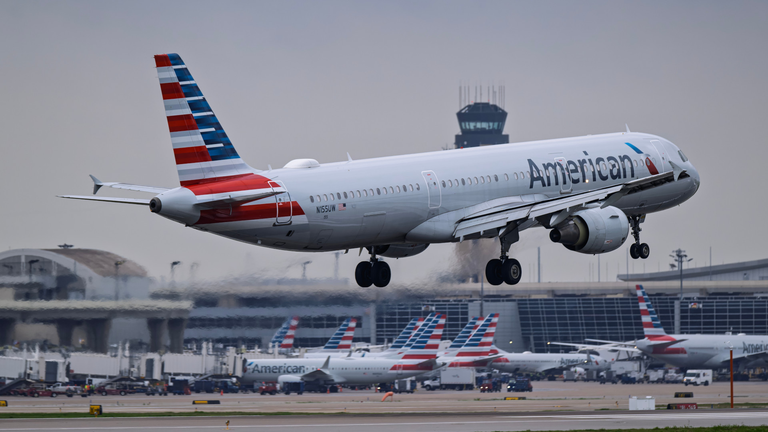
WASHINGTON — A routine maintenance project to replace decades-old copper wiring with modern fiber-optic cables triggered the longest nationwide grounding of U.S. flights since the September 11, 2001 terror attacks, stranding millions of travelers and exposing critical vulnerabilities in America’s aging aviation infrastructure.
At 3:54 p.m. EST on Friday, November 13, 2026, the Federal Aviation Administration (FAA) issued an emergency ground stop halting all departing domestic flights across the United States. The rare four-hour-and-21-minute shutdown rippled immediately across the globe, freezing U.S.-bound air traffic from 42 European and neighboring nations under Eurocontrol, halting departures from Canada and Australia, and leaving more than 3,500 airborne planes scrambling to land or divert while tarmac queues backed up at major hubs from New York to Chicago.
A Router Floods the Grid
Addressing reporters on Saturday, U.S. Transportation Secretary Sean Duffy revealed that the historic disruption was not the result of a foreign cyberattack or a rogue artificial intelligence system, as initially feared, but an equipment breakdown during a hardware transition at a remote FAA telecommunications site.
According to Duffy, technicians from longtime federal contractor L3Harris were performing scheduled maintenance to migrate an essential air traffic control communications line off discontinued, analog copper wiring and onto digital fiber optics. During the cutover, a router being worked on malfunctioned, suddenly flooding interconnected air route traffic control centers with corrupt, inconsistent data.
The resulting instability degraded the critical radar feeds and radio links that allow air traffic controllers to track and communicate with pilots. Faced with flickering screens and unreliable data streams across the world’s busiest airspace, FAA Administrator Bryan Bedford ordered the nationwide freeze “out of an abundance of caution” to relieve pressure on controllers while engineers isolated the bad node.
Millions Stranded Ahead of Thanksgiving
While federal controllers successfully guided every aircraft already in the sky to a safe landing without injury, the human and logistical toll on the ground was staggering:
- Massive Cancellations: Across Friday and Saturday alone, tracking data recorded well over 14,000 flight cancellations and tens of thousands of delays, disrupting travel plans for well over 1.5 million passengers.
- Global Ripple Effects: Major international carriers at London Heathrow, Paris Charles de Gaulle, and Frankfurt were forced to scrub transatlantic routes as displaced aircraft and flight crews ended up out of position.
- Terminal Gridlock: Airports from Washington to Tampa turned into makeshift campgrounds overnight as exhausted travelers slept on terminal floors waiting for rebookings, while major airlines scrambled to offer crews overtime pay to clear the backlog before Sunday night.
Blame, Accountability, and Aging Wires
The incident has ignited a fierce political and corporate finger-pointing match just weeks before the peak Thanksgiving travel rush. Secretary Duffy sharply rebuked the state of the nation’s aviation backbone, noting that much of the FAA’s network still relies on antiquated copper lines so obsolete that telecom carriers are actively discontinuing them.
Duffy vowed to hold contractors accountable, stating federal investigators are working to determine whether Friday’s collapse stemmed from “incompetence” by L3Harris technicians or a defective piece of router hardware. In a statement, L3Harris—which owns and operates the core communications network under a two-decade partnership with the FAA—confirmed it had already completed more than 70% of its nationwide modernization upgrades without incident and pledged full cooperation with the federal probe.
As flight schedules slowly stabilized on Sunday, aviation analysts warned that Friday’s meltdown serves as a stark wake-up call for Congress: modernizing America’s decaying air traffic control grid is no longer an abstract budget debate, but an urgent necessity to keep the nation flying.