
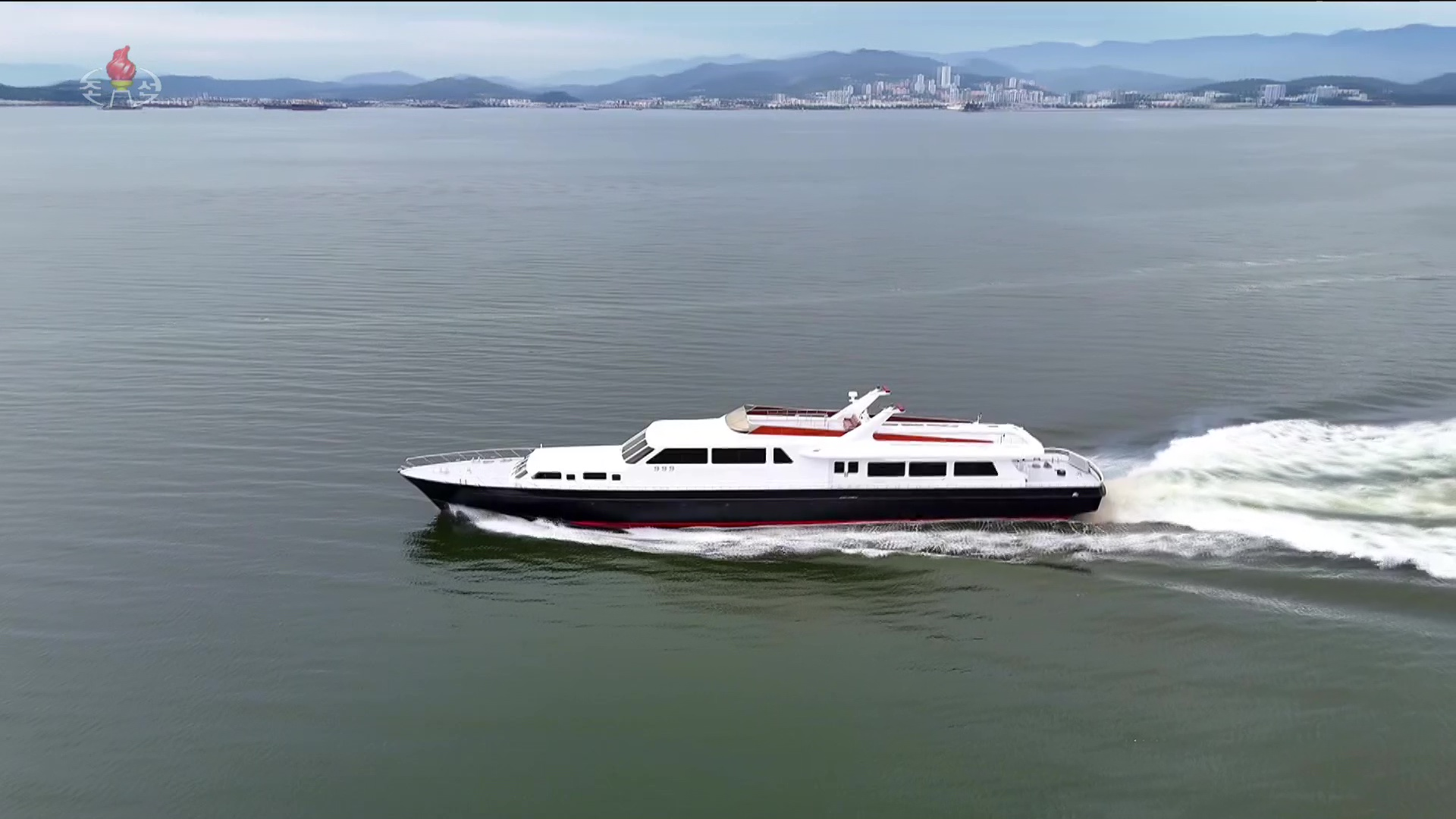
Freshly analyzed satellite imagery has exposed the staggering scale of North Korean leader Kim Jong Un’s private luxury fleet, headlined by a massive 80-meter pleasure vessel outfitted with a 50-meter swimming pool and a towering cluster of waterslides.
The high-resolution images catch the megayacht actively operating off the country’s eastern Wonsan coast, positioned directly alongside the regime’s heavily fortified summer retreats and the newly inaugurated Wonsan-Kalma beach resort zone. While state-run propaganda networks consistently broadcast imagery of Kim inspecting construction projects as grueling official duties, the maritime data tells a radically different story—unveiling an elite family holiday playground completely insulated from the harsh economic realities endured by the North Korean population.
A Floating Water Park in a Sanctioned State
The jewel of the newly observed naval deployment is an 80-meter (263-foot) custom luxury vessel. After spending the winter months hidden away at a secured shipyard maintenance dock, tracking data indicates the megayacht relocated to the waters off the Kalma Peninsula.
Satellite photography analyzed by aviation and maritime experts reveals highly distinctive structural details running along the ship’s deck:
- The Olympic-Length Pool: The vessel features a specialized 50-meter swimming pool cutting across the deck structure.
- The Waterslide Complex: A multi-story cluster of figure-eight waterslides is mounted directly to one end of the swimming deck, creating a floating amusement structure.
- The Companion Fleet: The 80-meter megaship does not travel alone. Satellite sweeps caught at least three other distinct luxury yachts—measuring 50, 55, and 60 meters—operating in tight coordination around the nearby islands of Tae and Sin.
Former North Korean officials and intelligence defectors emphasize that it is structurally impossible for anyone outside the absolute apex of the ruling Kim dynasty to own, operate, or even approach vessels of this magnitude inside the totalitarian state.
The Illusion of “Guidance” vs. The Elite Reality
The movements of the luxury fleet show a striking correlation with deliberate gaps in Kim Jong Un’s public appearances, offering a rare glimpse into the dictator’s private recreation periods.
When Kim does appear in the region, state media carefully sanitizes the narrative. Recent dispatches from the Korean Central News Agency (KCNA) depicted Kim and his daughter, Kim Ju Ae, conducting “field guidance” at the sprawling Wonsan-Kalma tourist zone. State photographs showed the leader in a suit sitting on a beach chair, watching an individual descend a massive water slide, framing the multi-million-dollar development as an “innovative and highly civilized” triumph for the nation’s cultural advancement.
Yet, the stark contrast between the regime’s inner circle and the broader populace remains immense. While Kim navigates the Wonsan coast on custom yachts estimated to be worth tens of millions of dollars, United Nations humanitarian assessments indicate that roughly 40 percent of the North Korean population remains chronically undernourished, living under severe structural constraints, forced labor conditions, and strict internal travel prohibitions that make a standard summer holiday an alien concept.
Evading the Global Blockade
The active maintenance and expansion of Kim’s luxury fleet also exposes the ongoing limitations of international enforcement. Under United Nations sanctions enacted following Pyongyang’s initial nuclear detonations, the transfer of luxury goods, high-end electronics, and recreational vessels to North Korea is strictly prohibited by international law.
According to financial intelligence records, the core hulls of Kim’s primary cruise ships were originally obtained by his father, Kim Jong Il, during the 1990s before the primary blockade snapped shut. However, the continuous structural updates, tech retrofits, and the introduction of top-tier consumer products—ranging from European-manufactured yachts to German armored vehicles—prove that the regime’s illicit black-market procurement networks continue to successfully penetrate international borders.
As the sun sets over the heavily guarded beaches of Wonsan, the servers tracking global shipping lanes provide a definitive reminder of how the regime functions. The high-rise hotels and water parks of the Kalma Peninsula may be advertised as monuments to national strength, but the massive waterslide megayacht anchored just off the coast remains an exclusive, floating sanctuary reserved for the world’s most reclusive elite.