
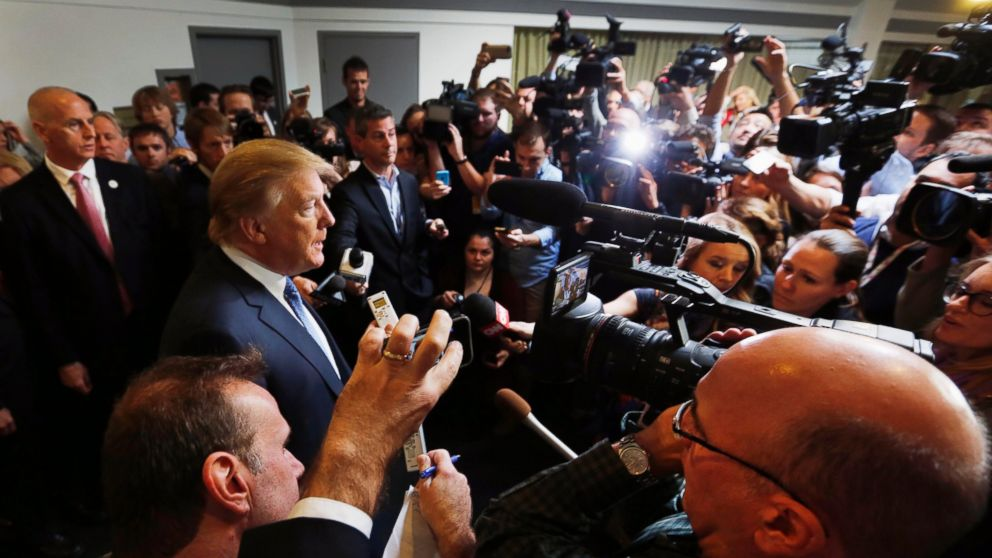
The escalating war between the executive branch and the press corps has mutated into an aggressive legal offensive, with the U.S. Department of Justice launching an antitrust investigation into the nation’s largest television networks.
The federal probe targets ABC, CBS, CNN, NBC, and Fox News—the primary corporate entities that comprise the White House television press pool. Investigators are seeking to determine whether the broadcasters violated federal competition laws when they collectively suspended pooled video coverage of President Donald Trump last month. The Justice Department issued formal “civil investigative demands” to the networks, demanding internal communications and materials surrounding the synchronized media blackout.
The intervention marks a dramatic and unprecedented escalation, representing the first time in modern American history that a presidential administration has wielded federal antitrust enforcement machinery to penalize the news media for a collective editorial decision.
The Solidarity Boycott
The corporate friction stems from events that unfolded in September, when the White House aggressively stripped the permanent credentials of reporters representing CNN, Politico, and MS NOW. Executive officials defended the ban by declaring that covering the president is a “privilege – not a right” and accusing the outlets of distributing fabricated news.
The punitive measures shattered the long-standing protocol of the White House press pool, a century-old rotating cooperative system where competitors share the immense logistical costs of filming the president and distribute the raw footage evenly to outlets worldwide. When the White House explicitly pulled CNN out of the pool rotation for a presidential trip to New York, the remaining networks responded with a historic display of solidarity.
Led by Fox News Washington Bureau Chief Bryan Boughton, who served as the TV pool chair, the networks refused to provide a replacement pool or cover events designated under the shared system. The joint blackout left administrative broadcasts blank for several days until a federal district judge temporarily forced the White House to restore access.
The Trust-Busting Strategy
By framing a press solidarity movement as an illegal corporate conspiracy, the Justice Department is utilizing a highly creative—and heavily contested—interpretation of federal commerce codes.
Justice Department spokeswoman Emily Covington confirmed the inquiry, noting that group boycotts among competitors can potentially violate the Sherman Act. Originally designed in 1890 to dismantle industrial monopolies and price-fixing cartels, applying this statute to a temporary media protest represents an extraordinary expansion of antitrust enforcement. The probe follows sustained public pressure from administration allies urging legal action against major broadcasters.
A First Amendment Showdown
First Amendment advocates swiftly denounced the investigation as an alarming attempt to intimidate independent journalism. Bruce D. Brown of the Reporters Committee for Freedom of the Press condemned the move as a blatant intimidation tactic, emphasizing that editorial decisions are constitutionally protected. Legal scholars suggest that prevailing Supreme Court protections regarding news coverage will make the antitrust claims exceptionally difficult for the government to prove in court.
As major networks review the civil demands and decline formal comment, this confrontation sets the stage for a historic legal battle over whether the government can penalize media solidarity under the guise of antitrust law.