
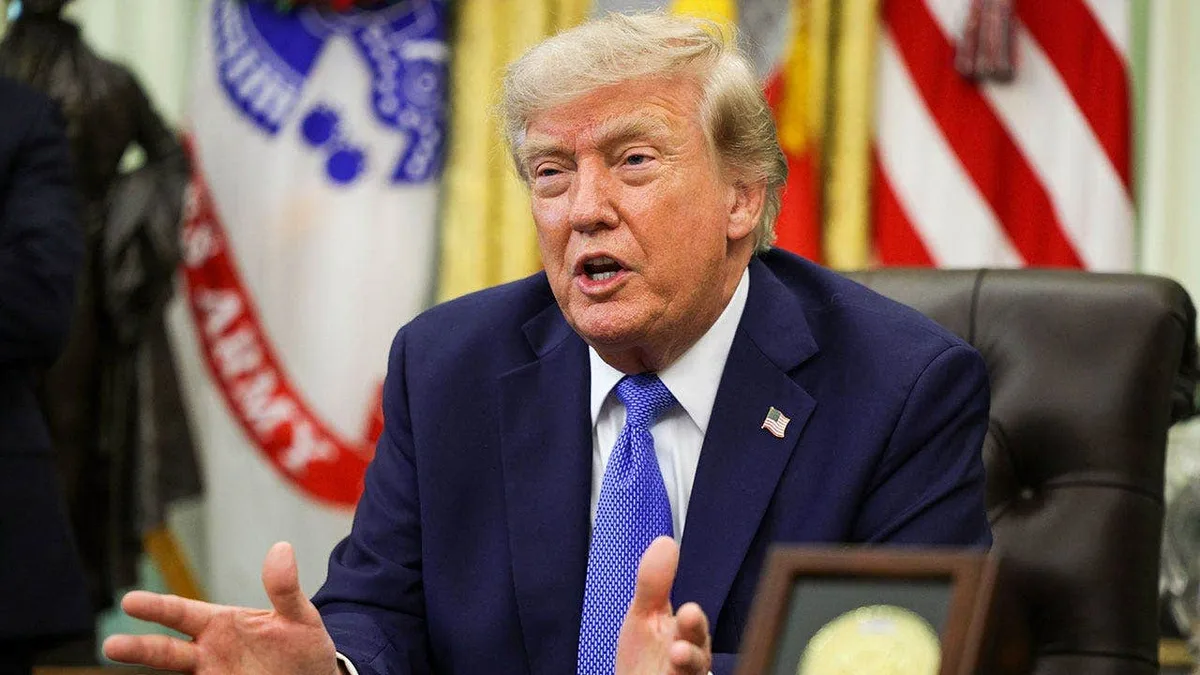
The long-running war between the executive branch and the press corps reached a dramatic climax when the White House functionally deactivated the credentials of major American news organizations, physically barring reporters at the gates of the West Wing.
Following an abrupt decree from President Donald Trump, reporters and photojournalists representing CNN, Politico, and MS NOW arrived for their standard shifts only to find their security badges disabled. At the security checkpoints outside the White House grounds, Secret Service officers systematically confiscated or deactivated the permanent press passes of correspondents trying to log into the complex.
The sweeping, targeted blacklisting marks the most aggressive administrative assault on independent press access in modern American history, instantly plunging Washington into a high-stakes constitutional showdown.
Turning Back the Fourth Estate
The physical implementation of the ban followed an explicit threat posted by Trump on Truth Social, where he accused the three prominent outlets of engaging in “constant reporting FAKE NEWS” and writing “fiction or lies”. While senior administration officials initially offered few clues on the internal directive, the practical reality became clear at the gates of the executive mansion.
- The Gate Rejections: Correspondents including Akayla Gardner of MS NOW, Betsy Klein of CNN, and Cheyenne Haslett of Politico were individually turned away by security personnel when attempting to access the briefing room.
- Deactivation and Confiscation: White House-issued hard badges failed to scan at the entrances, after which officers requested the immediate surrender of the credentials.
- Threats of Expansion: In his public statements, Trump openly warned that the prohibitions are not final and that “other outlets” could face identical bans if their coverage remains unfavorable.
“The officer asked me to hand over my badge; he said that it was disabled,” MS NOW correspondent Akayla Gardner recounted during an on-air broadcast delivered from outside the secure perimeter.
A Premeditated Escalation
While the physical lockouts shocked press advocates, the administration has spent months systematically probing the legal and administrative limits of media exclusion. The White House previously restricted the Associated Press from the small contingent of pool reporters over an editorial dispute regarding the naming of the Gulf of Mexico, a move that sparked an ongoing federal lawsuit. The administration also previously excluded a Wall Street Journal reporter from Air Force One.
However, the complete and arbitrary banishment of entire news organizations from the building represents an unprecedented escalation. Legal experts and free-speech advocates immediately condemned the move as flatly unconstitutional, noting nearly five decades of legal precedent holding that the government cannot strip press access based on a reporter’s viewpoint or the content of their coverage.
White House Communications Director Steven Cheung quickly signaled that the administration has no intention of backing down, writing in an email that senior staff fully supported the president’s decision.
The Coming Legal Firestorm
The targeted networks responded with immediate, uniform defiance, pledging to mount aggressive legal challenges in federal court to reclaim their constitutional rights. CNN branded the move an “illegal assault” on the First Amendment, while Politico and MS NOW stated they would vigorously defend the essential role of independent journalism in a democracy.
The White House Correspondents’ Association issued a blistering rebuke, warning that allowing the executive branch to arbitrarily filter the press corps based on political favor threatens the foundational structure of democratic accountability. “A standard used to exclude one news outlet because of its coverage could be applied to any outlet in the future,” wrote WHCA President Jacqui Heinrich, calling for the immediate restoration of access.
As rival television networks begin urgent discussions on how to handle press pool sharing in solidarity with their barred colleagues, the briefing room stands significantly emptier. For an administration that has long treated the free press as an “enemy of the people,” the empty chairs represent a calculated victory—but for the American legal system, they set up a monumental trial over who controls the flow of truth from the halls of power.