
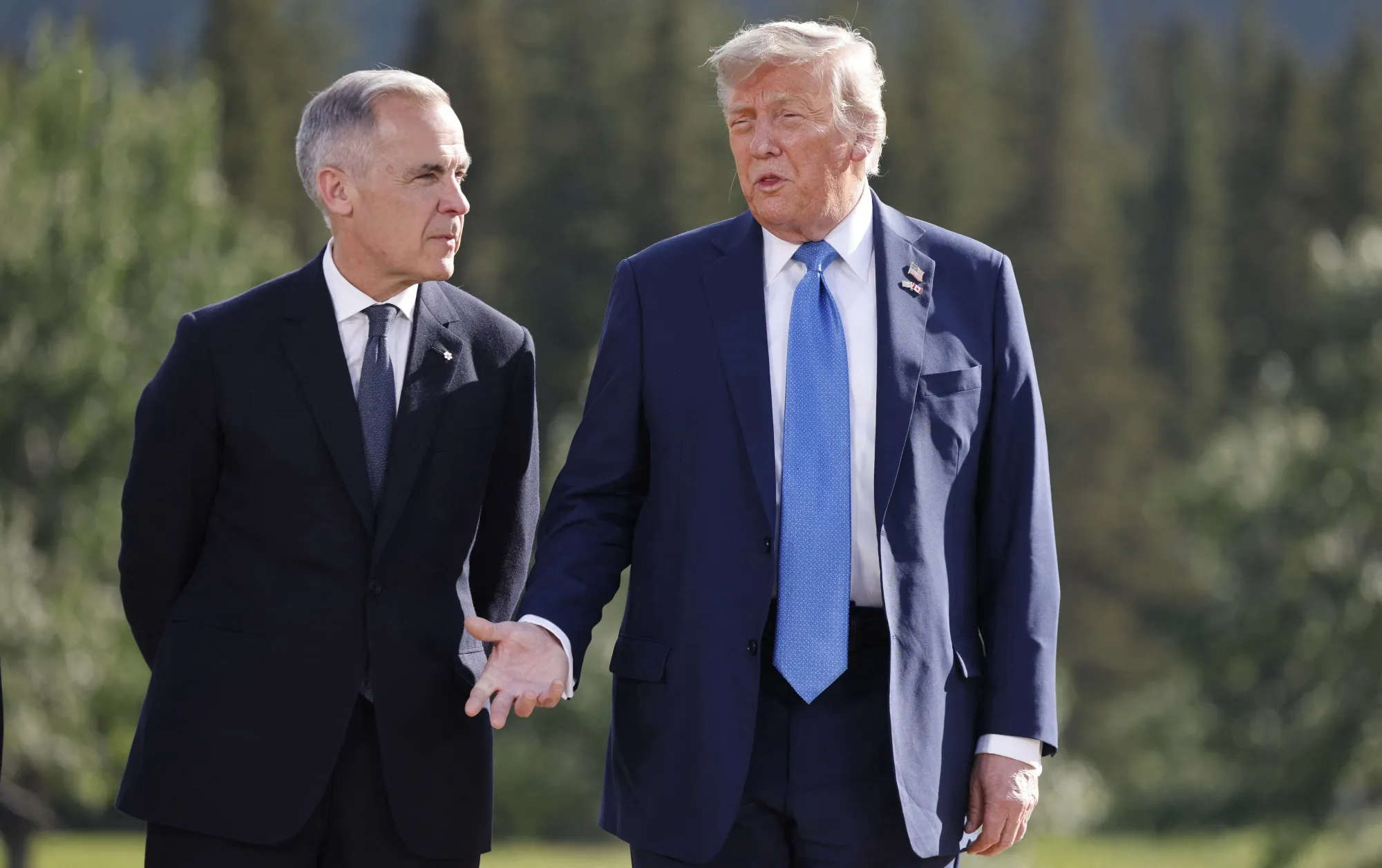
OTTAWA — In an unprecedented display of economic brinkmanship, Canadian Prime Minister Mark Carney has plunged North America into a full-scale trade war. By abruptly ordering his negotiators to walk away from a tentative trade deal with U.S. President Donald Trump, the former central banker has triggered immediate 50% U.S. tariffs on $20 billion worth of Canadian goods.
The high-pressure negotiations collapsed late Friday evening after Washington allegedly introduced eleventh-hour demands that Carney slammed as “uneconomic, unfair,” and a direct assault on Canadian sovereignty. In a resolute national address, Carney called the punishing new levies a “miscalculation” designed to divide the country, announcing that Canada will retaliate “dollar-for-dollar” starting September 8 on American steel, dairy, electronics, and appliances.
The Eleventh-Hour Demands That Broke the Deal
For three intense days, a breakthrough appeared well within reach, with Canada ready to make key trade concessions. However, the agreement disintegrated when the White House attempted to squeeze further structural advantages out of Ottawa.
According to senior Canadian officials, Trump’s trade team presented a series of aggressive new requirements:
- Auto Industry Cuts: Drastically reducing the scheduled tariff relief for Canadian-made vehicles.
- Sovereignty Restrictions: Striking provisions that would have barred Canada from freely negotiating independent trade treaties with other global powers.
- Weakened Protections: Diluting legal defense frameworks meant to shield Canadian firms from arbitrary U.S. industrial actions.
“In short, they asked too much, and they offered too little,” Carney declared, asserting that Canada would not compromise its core industries under the weight of an American power play.
Trump Strikes Back: “The 51st State” Rhetoric
The White House reacted with immediate hostility to Carney’s defiance. U.S. Trade Representative Jamieson Greer expressed deep frustration, calling the sudden breakdown a major “missed opportunity” and blaming Canadian negotiators for demanding unreasonable last-minute changes.
Taking to social media, President Trump escalated the rhetoric to a personal level. Trump argued that Canada constantly demands “the benefits of being a State, without being one,” while complaining that American farmers have suffered under Canadian agricultural regulations for decades. The comments mirror Trump’s long-standing, aggressive stance toward Ottawa, which has previously included suggestions that Canada behaves like an economic vassal of the United States.
A Surge of Canadian Patriotism
While the economic fallout is expected to be severe, Carney’s refusal to bow to Washington’s pressure tactics has ignited a powerful wave of domestic unity.
THE BILLION-DOLLAR TARIFF SHOWDOWN
┌───────────────────────────────┬────────────────────────────────────────┐
│ U.S. Measures (Effective Now)  │ Canadian Counter-Measures (Sept. 8)    │
├───────────────────────────────┼────────────────────────────────────────┐
│ 50% tariff on Canadian goods  │ Dollar-for-dollar matching retaliations│
│ $20 Billion in exports hit    │ Target sectors: U.S. Steel & Aluminum  │
│ Impacted: Lumber, Cement, Wine│ Target sectors: Dairy, Appliances      │
│ Impacted: Auto & Manufacturing│ Target sectors: Industrial Electronics │
└───────────────────────────────┴────────────────────────────────────────┘
Provincial leaders of all political stripes have rapidly lined up behind the Prime Minister. Ontario Premier Doug Ford, whose manufacturing-heavy province stands to bear the brunt of the trade hostilities, fiercely cheered Carney’s exit from the table. “I’m glad he didn’t sign that deal because it was a bad deal,” Ford stated, pledging total support for a relentless, dollar-for-dollar counter-tariff response. Progressive leaders and the federal Conservative opposition have similarly validated the decision, agreeing that Canada cannot accept terms that would systematically de-industrialize the country.
Carney’s Ultimate Test
By walking away, Carney has taken a gamble that few world leaders have dared to execute when dealing with the Trump administration. Because roughly 70% of all Canadian exports are bound for U.S. markets, the immediate domestic financial pain will be acute, particularly across industrial states like Michigan and Ohio that rely heavily on Canadian integration.
Carney has already begun pivot strategies, traveling extensively to secure fresh, long-term trade agreements across Europe and Asia. However, those generational shifts cannot instantly absorb the shock of a frozen southern border. The Prime Minister now faces the monumental task of convincing the Canadian public that enduring a painful, bruising trade war today is the only way to safeguard the nation’s economic independence tomorrow.