
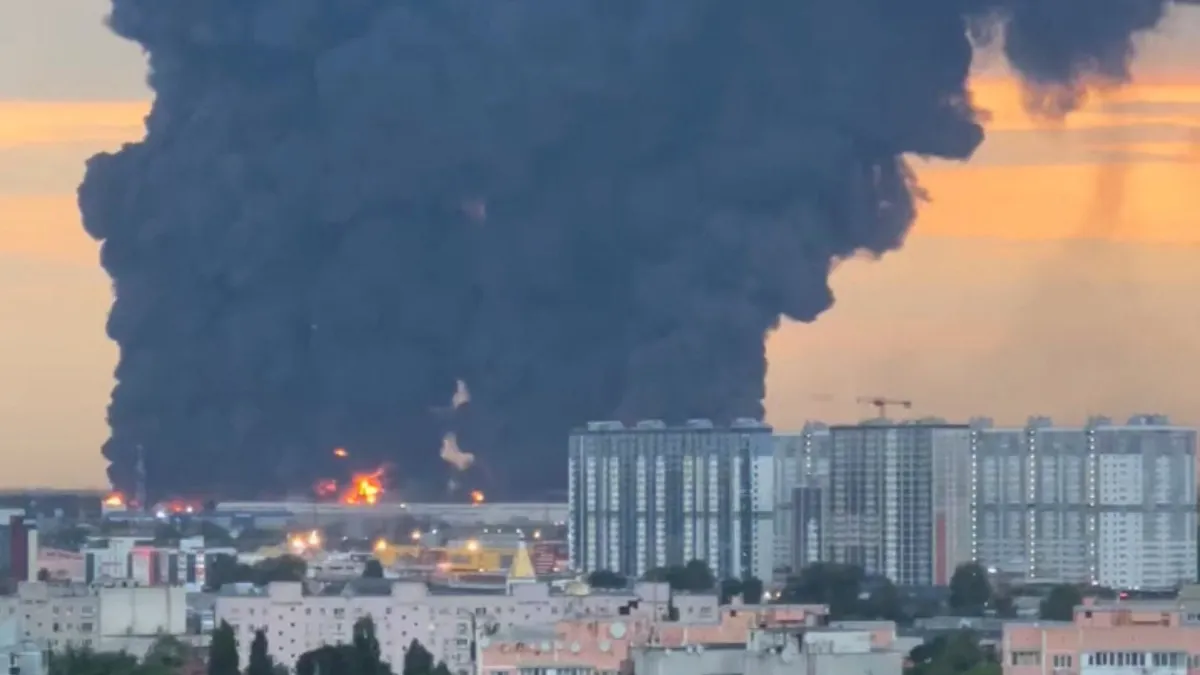
KYIV / MOSCOW — The air war between Moscow and Kyiv has reached an explosive new intensity. Russia launched a punishing overnight wave of ballistic missiles and attack drones across Ukraine, killing at least five people and sparking major fires in the capital. Simultaneously, Ukraine retaliated by executing one of its largest long-range aerial assaults of the war, sending hundreds of drones deep into Russian territory to set fire to a massive logistics hub near Moscow.
The coordinated escalation marks a strategic shift, with both nations aggressively targeting the logistics and supply infrastructure underpinning each other’s war effort. While Russian ordnance focused on Ukrainian energy and industrial facilities, Kyiv’s long-range drones directly struck a massive warehouse belonging to Wildberries—Russia’s largest e-commerce marketplace—bringing the smoke and chaos of the frontline straight to the doorsteps of the Russian capital.
Fire and Fatalities in Ukraine
In Ukraine, the overnight air raid alerts painted a terrifyingly familiar picture as residents endured hours of continuous bombardment. Ukrainian air defense systems scrambled to intercept incoming salvos, successfully downing three Russian missiles and nearly 100 drones. Despite these efforts, several projectiles breached the defensive umbrella, causing widespread damage and civilian casualties across multiple regions.
- Kyiv Market Ablaze: In the capital, emergency crews spent hours battling a massive fire at a local market after it was struck by falling missile debris, leaving at least six people injured.
- Kryvyi Rih Steel Strike: In the industrial city of Kryvyi Rih, a missile strike on a local facility killed two workers and injured 14 others. Moscow claimed the site was being used to manufacture weapon parts.
- Zaporizhzhia Destruction: To the south, a Russian guided aerial bomb completely flattened a residential home in Zaporizhzhia, killing two civilians in their 60s. A fifth death was recorded in Sumy when a civilian vehicle was struck.
Ukrainian President Volodymyr Zelenskyy offered his condolences to the victims’ families, noting that Russia’s relentless barrage continues to exploit a critical domestic shortage of Patriot air defense interceptors.
The 600-Drone Blitz: Moscow Region Hit in Record Assault
As Kyiv burned, Ukraine launched a massive counter-strike aimed directly at the heart of Russia. Moscow Mayor Sergei Sobyanin reported that a staggering 600 Ukrainian drones were launched toward the capital region overnight, describing it as “one of the most massive attacks of recent times.” Russian defense officials claimed to have shot down a third of the fleet, but multiple drones slipped through, causing significant structural damage.
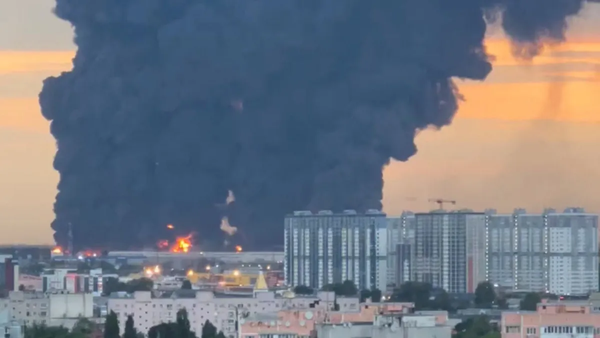
The primary target of the Ukrainian blitz was the village of Koledino, located just 25 miles south of central Moscow. Videos geolocated from the scene showed a towering plume of thick black smoke rising into the sky as a large fire broke out at a 200,000-square-meter logistics hub belonging to Wildberries. Moscow region Governor Andrey Vorobyov confirmed that an 83-year-old man was killed and several others were injured in the surrounding Podolsk area, while a secondary sorting hub in nearby Domodedovo also sustained strike damage.
Why Ukraine is Targeting Wildberries
The attack on Koledino is not an isolated incident; it is part of a deliberate, weeks-long Ukrainian campaign that has already damaged or destroyed an estimated 10% of Wildberries’ total domestic logistics capacity. Often referred to as “Russia’s Amazon,” the e-commerce giant controls the vast majority of Russia’s online retail market.
Kyiv has openly defended its targeting of civilian e-commerce infrastructure, arguing that Wildberries has been heavily weaponized by the Kremlin to support its frontline operations. Ukrainian intelligence claims the company’s massive warehouses are actively being used as logistics facilities to store and distribute sanctioned electronics, navigation microchips, and drone-production components. Furthermore, the platform serves as a primary bulk-purchasing hub for military volunteers buying body armor, tactical radios, and thermal imagers for Russian soldiers.
By striking these mega-warehouses, Ukraine aims to achieve a dual objective: burning military supplies before they can reach the front lines and severing the everyday commercial supply chains of ordinary Russian citizens. As fires continue to burn on the outskirts of Moscow, the message from Kyiv is clear—the illusion of a peaceful life inside Russia is officially over.