
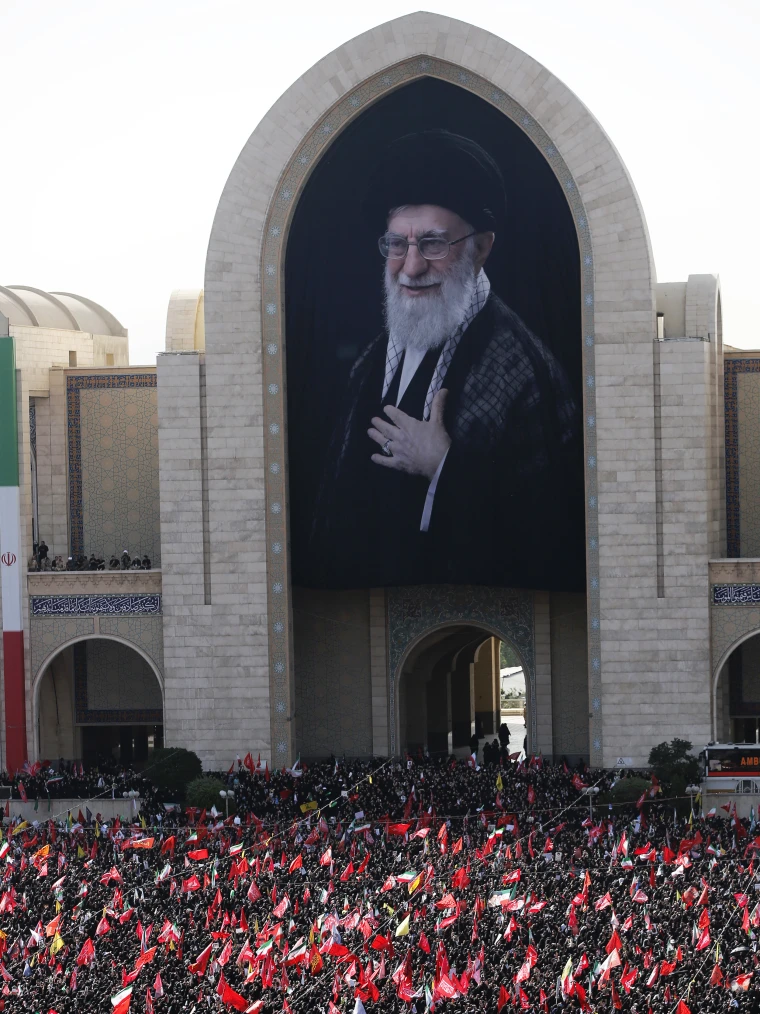
TEHRAN — Moving through a sea of black-clad mourners under a punishing summer heatwave, the flag-draped coffin of Ayatollah Ali Khamenei has transformed the streets of Iran into an intensely political theatre. Four months after the former Supreme Leader was killed in the opening joint U.S.-Israeli airstrikes of the war, the Islamic Republic has launched a sprawling, six-day state funeral designed to project absolute defiance, mask deep internal divisions, and solidify the legitimacy of a battered theocracy.
The extraordinary, highly choreographed spectacle spans multiple cities across Iran and neighboring Iraq, culminating in a burial in his holy hometown of Mashhad. It serves as a high-stakes referendum on the survival of the regime. For a leadership managing an uneasy, fraying ceasefire with Washington while quietly installing his reclusive son, Mojtaba Khamenei, as the new Supreme Leader, the mass mobilization of millions of state loyalists is an essential show of strength to the outside world.
Grief Weaponized as Geopolitics
Inside the vast courtyard of Tehran’s Grand Mosalla mosque, the air thick with incense and synchronized anti-American chants, the political messaging of the funeral was impossible to mistake. Khamenei’s casket lay on a raised dais alongside the smaller coffins of his family members killed in the same February 28 bombing, including his eldest daughter and his 14-month-old granddaughter.
The current political elite—including President Masoud Pezeshkian, Parliament Speaker Mohammad Bagher Qalibaf, and Foreign Minister Abbas Araghchi—stood shoulder-to-shoulder with visiting international dignitaries, using the collective mourning to scream for sovereign vengeance. Senior civilian and military officials explicitly warned Western powers that the pauses in active conflict were not a sign of capitulation, but a tactical period of respect.
The hyper-political atmosphere extended instantly to regional security dynamics. While foreign delegates viewed the caskets, Iranian officials publicly issued a fierce warning to the United Kingdom and France after both European nations suggested deploying warships to patrol the crucial Strait of Hormuz. The regime used the platform to assert its absolute right to regulate the maritime choke point, framing Western naval presence as a dangerous provocation that would not go unanswered.
A Tense Transition and a Missing Leader
The immense crowds, which municipal authorities predicted could ultimately top 20 million across the multi-city route, offer a convenient shield for a regime undergoing an incredibly delicate and tense internal transition. The long delay in burying the former leader was ostensibly forced by the active hostilities of the spring, but it also bought precious time for the clerical establishment to manage the succession crisis.
While state media saturated the airwaves with images of national unity, the most powerful man in Iran remained notably absent from the public view. The new Supreme Leader, Mojtaba Khamenei, did not appear alongside his father’s casket. Officially, the new leader remains in hiding while recovering from injuries sustained in the initial war-starting strikes, but his absence has fueled intense speculation regarding the stability and security of his nascent tenure.
Furthermore, independent analysts point out that the massive, state-orchestrated turnout does not paint a complete picture of the polarized country. The funeral arrives less than a year after security forces executed a brutal, nationwide crackdown on widespread anti-regime protests. In private quarters of the capital, away from the state security cordons, a weary and cynical populace continues to manage daily life under a collapsing domestic economy where basic commodities fluctuate in price by the hour.
The Unbroken Trial of Strength
As the funeral procession prepares to travel down the 10-kilometer route from Imam Hossein Square toward Azadi Square before crossing the border into Shia holy sites in Iraq, the political currency of the event remains the regime’s primary focus. In a modern twist on psychological warfare, President Donald Trump mocked the pause in hostilities from an American campaign rally, suggesting the U.S. had given Iran “a week off for a funeral.”
That dismissive rhetoric from Washington has only hardened the resolve of the hardline faction dominating Tehran. By parading the preserved remains of a leader who spent nearly four decades anchoring his rule on anti-Western ideology, the Islamic Republic is signaling to its regional proxies and global adversaries that its core identity remains unchanged.
The grandeur of the multi-day procession will eventually fade when the former ayatollah is finally laid to rest at the Imam Reza Shrine on Thursday. But as sluggish, back-channel peace talks stall and naval forces position themselves near the Gulf, it is clear that the brutal trial of strength between Iran and the West did not die with Ali Khamenei—it has merely entered its next, unpredictable chapter.