
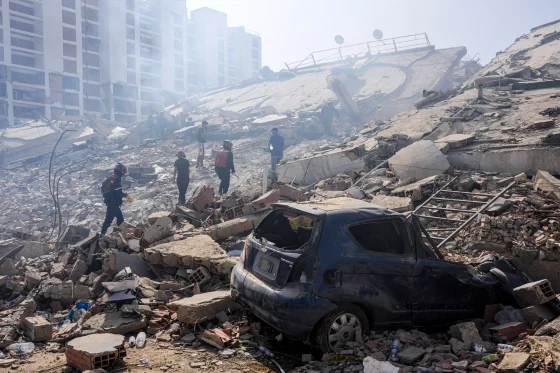
LA GUAIRA, Venezuela — Under the crushing weight of shattered concrete and twisted metal wire, the coastal state of La Guaira has fallen into a heavy, agonizing silence. Every few minutes, a siren sounds, and hundreds of volunteers, neighbors, and exhausted relatives freeze in unison. They are listening. Across the ruined landscape of northern Venezuela, the air is filled with the raw, desperate sound of mothers, fathers, and children screaming the names of their missing loved ones into the cracks of collapsed buildings.
A devastating doublet earthquake—a magnitude 7.2 tremor followed just 39 seconds later by a catastrophic 7.5 magnitude quake—slammed north-central Venezuela, striking near Yaracuy and ripping through Caracas and the coast. It is the most powerful seismic event to strike the nation in over 125 years. While officials have confirmed at least 1,430 deaths, the true scale of the horror lies beneath the ruins of hundreds of flattened apartments and hotels. The United Nations estimates that a staggering 50,000 people remain missing, trapped in total darkness beneath the weight of their former lives.
Digging with Bare Hands
In the seaside city of Macuto, the destruction is near-total. The iconic waterfront Hotel Eduard has been reduced to a heap of smoking debris. Nearby, families stand on mounds of pulverized masonry, using hammers, power tools, and their bare fingernails to cut through slabs of concrete. Public frustration is boiling over as survivors openly ask where the heavy government machinery is.
Outside a collapsed apartment building, Nazareth Jimenez sobbed openly as she watched neighbors claw through the wreckage. Her siblings, nieces, and nephews are all inside. “My God, how are we going to get them out of there?” she murmured, pleading for international help to move the heavy structures. For many, the lack of immediate, heavy specialized infrastructure from the national guard or military has forced communities to become their own first responders, passing chunks of debris hand-to-hand in a race against the clock.
The critical 72-hour window for locating survivors is rapidly closing, yet local and international humanitarian agencies stress that miracles are still possible if trapped victims have pockets of air.
Tears and Miracles in the Ruins
Amidst the overwhelming grief, brief moments of profound hope have kept the exhausted search teams going. In La Guaira, a father named Gallipoli recounted walking 20 miles on foot from Caracas after roads were blocked, desperate to find his son Jofram, his daughter-in-law, and his 4-year-old grandson.
For more than 24 hours, he parsed through the ruins of their seven-story apartment building, fighting a sense of complete helplessness. “I yelled out my son Jofram’s name with the last shred of faith I had left,” Gallipoli recalled. From deep beneath the concrete, a faint whisper answered back. Rescuers ultimately pulled the entire family out alive.
Tragically, such stories are exceptions. Elsewhere in the city, another mother collapsed in shock as the bodies of her 3-year-old and 10-year-old children were pulled from the wreckage, wrapped in blankets, and carried away. “Every person saved is a miracle,” acknowledged Jorge Rodríguez, President of the National Assembly. “We will not hide anything about the scale of this tragedy.”
A Nation Pushed to the Brink
The dual earthquakes have dealt a paralyzing blow to a nation already buckling under a decade of severe economic disarray and political instability. In downtown Caracas, thousands of terrified residents spent the night huddled in public parks, parking lots, and makeshift tents, too traumatized to re-enter any standing structures as dozens of aftershocks continue to rattle the fault lines.
Compounding the crisis, an initial internet and communications blackout severely restricted the flow of information, leaving families abroad in places like Spain and the United States weeping over unverified lists of names shared on social media.
While international rescue teams from Mexico, Spain, the United Kingdom, and the United States have arrived to support the effort, emergency workers admit the sheer volume of collapsed infrastructure is overwhelming. Acting President Delcy Rodríguez has militarized the worst-hit regions to streamline the distribution of water and food. But for the thousands of families still standing vigil over the ruins, politics and logistics matter little. They remain anchored to the debris, calling out into the dust, desperate for a voice to answer back.