
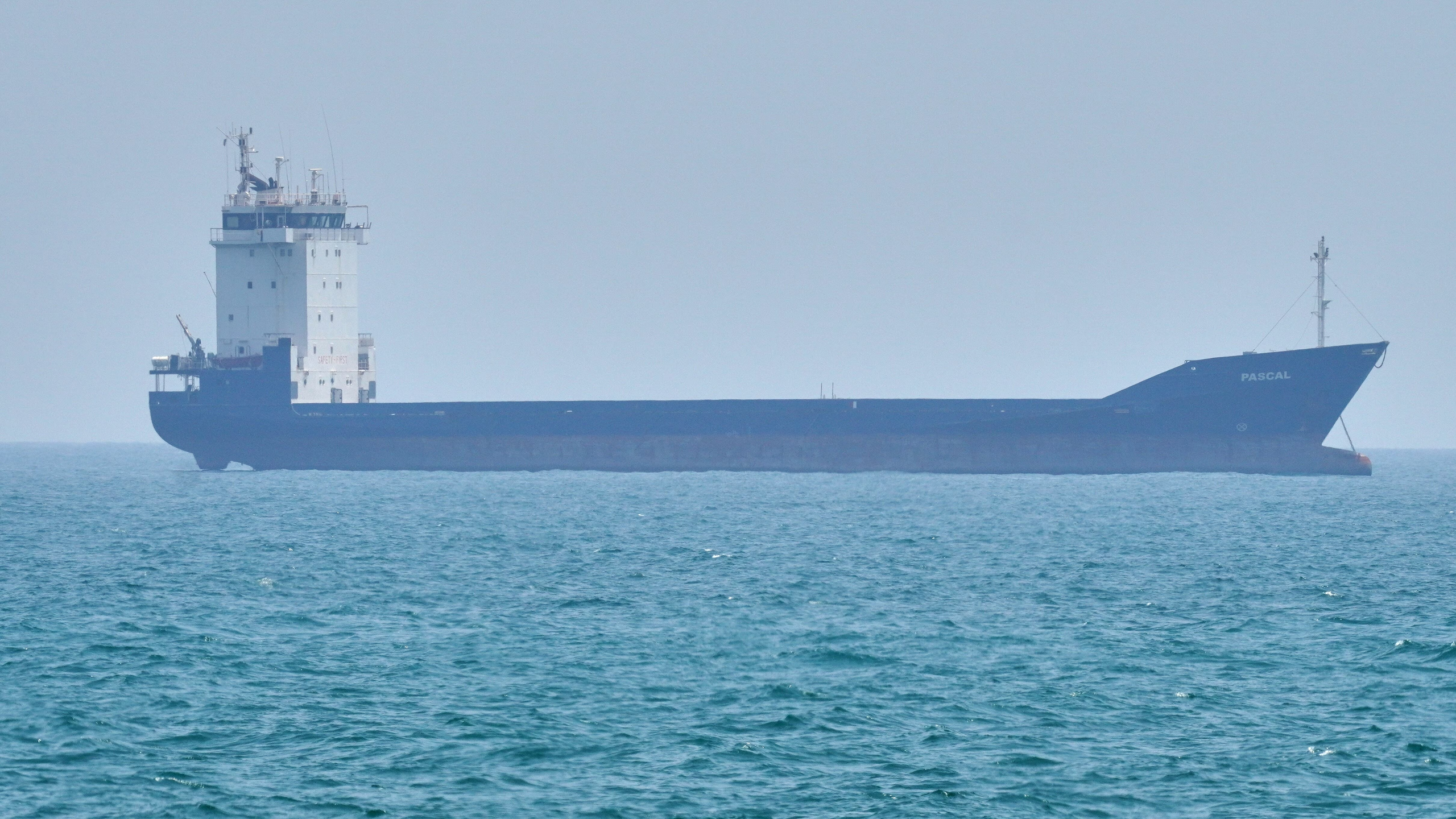
THE GULF OF OMAN — The high-stakes naval blockade of Iran turned kinetic on Sunday when a U.S. Navy destroyer fired upon and seized an Iranian-flagged cargo vessel that attempted to defy orders to halt. It is the first time American forces have used disabling fire to enforce the week-old “zero-entry” zone, signaling a definitive end to the diplomatic patience that has characterized the two-week regional ceasefire.
President Donald Trump announced the seizure on Truth Social, revealing that the USS Spruance (DDG 111) intercepted the merchant vessel Touska in the Gulf of Oman. “The Iranian crew refused to listen, so our Navy ship stopped them right in their tracks by blowing a hole in the engine room,” the President wrote. “Right now, U.S. Marines have custody of the vessel… NO MORE MR. NICE GUY!”
Six Hours of Warning
According to a detailed statement from U.S. Central Command (CENTCOM), the engagement followed a six-hour standoff in the North Arabian Sea. The Touska, which the U.S. Treasury Department notes has a history of sanctioned activity, was transiting toward the Iranian port of Bandar Abbas at 17 knots when it was intercepted.
Military footage released by the Pentagon late Sunday depicts the tense final moments before the shooting. In the audio, a U.S. sailor can be heard over the bridge-to-bridge radio warning the Iranian crew: “Vacate your engine room. We are prepared to subject you to disabling fire.”
When the vessel failed to comply, the Spruance fired several rounds from its 5-inch MK 45 gun into the Touska’s propulsion section. Shortly thereafter, Marines from the 31st Marine Expeditionary Unit (MEU) boarded the smoking vessel via fast-rope. No casualties were reported among the Iranian crew or American forces.
Diplomacy in the Crosshairs
The seizure comes at a perilous moment for the “Islamabad Process.” While President Trump told reporters earlier Sunday that a second round of peace talks could resume in Pakistan “over the next two days,” Tehran has since slammed the door.
Iran’s official news agency, IRNA, reported that the government has declined to join the planned talks, citing “Washington’s excessive demands” and the “continued violation of the ceasefire” represented by the naval blockade. Iranian President Masoud Pezeshkian reportedly characterized the attack on the Touska as an “act of blatant piracy” that makes further negotiation impossible.
A $400 Million-a-Day Stranglehold
The blockade, which began on April 13, has effectively halted Iran’s maritime trade. Financial analysts estimate the operation is costing the Iranian treasury $400 million per day in lost revenue. Experts warn that if the blockade is not lifted by April 26, Iran’s oil fields—currently over-pressurized due to a lack of export outlets—could suffer permanent geological damage.
“We’re offering a very fair and reasonable DEAL,” Trump posted on Sunday. “And I hope they take it because, if they don’t, the United States is going to knock out every single Power Plant, and every single Bridge, in Iran.”
The Narrowing Window
With the original two-week ceasefire set to expire on Tuesday, April 21, the seizure of the Touska serves as a grim punctuation mark to a month of erratic warfare. While Vice President JD Vance and special envoys Steve Witkoff and Jared Kushner remain on standby to travel to Pakistan, the “Islamabad path” appears to be narrowing as the “Hormuz path” grows increasingly violent.
As the Touska is towed toward an undisclosed port under American escort, the world watches the Iranian coastline for the next move. Tehran has vowed retaliation for the attack, raising the specter of a final, all-out confrontation before the Tuesday deadline.