
PARIS, France— The spectacular, minutes-long theft of priceless French crown jewels from the Louvre Museum has led to the first major breakthrough, with French authorities arresting two men suspected of involvement in the brazen daylight robbery that stunned the world last week.
The dramatic arrests took place late Saturday evening, with one suspect apprehended as he was preparing to board an international flight, according to French media reports confirmed by the Paris prosecutor’s office.
The prosecutor’s office, while confirming that arrests had been made, expressed frustration that news of the operation had leaked prematurely, cautioning that the disclosure “can only harm the investigative efforts” to recover the stolen treasures and find all perpetrators.
The Race to Flee
According to reports from Le Parisien and other French outlets, the primary arrest occurred at Paris-Charles de Gaulle Airport at approximately 10 PM on Saturday. The suspect was reportedly attempting to flee the country on a flight to Algeria. A second man was arrested later the same evening in the Seine-Saint-Denis suburb north of Paris. Both men are reportedly in their 30s and were known to police.
The arrests are the culmination of a frantic week-long manhunt involving over 100 investigators from the Paris organized crime squad, who have been piecing together clues from the audacious heist.
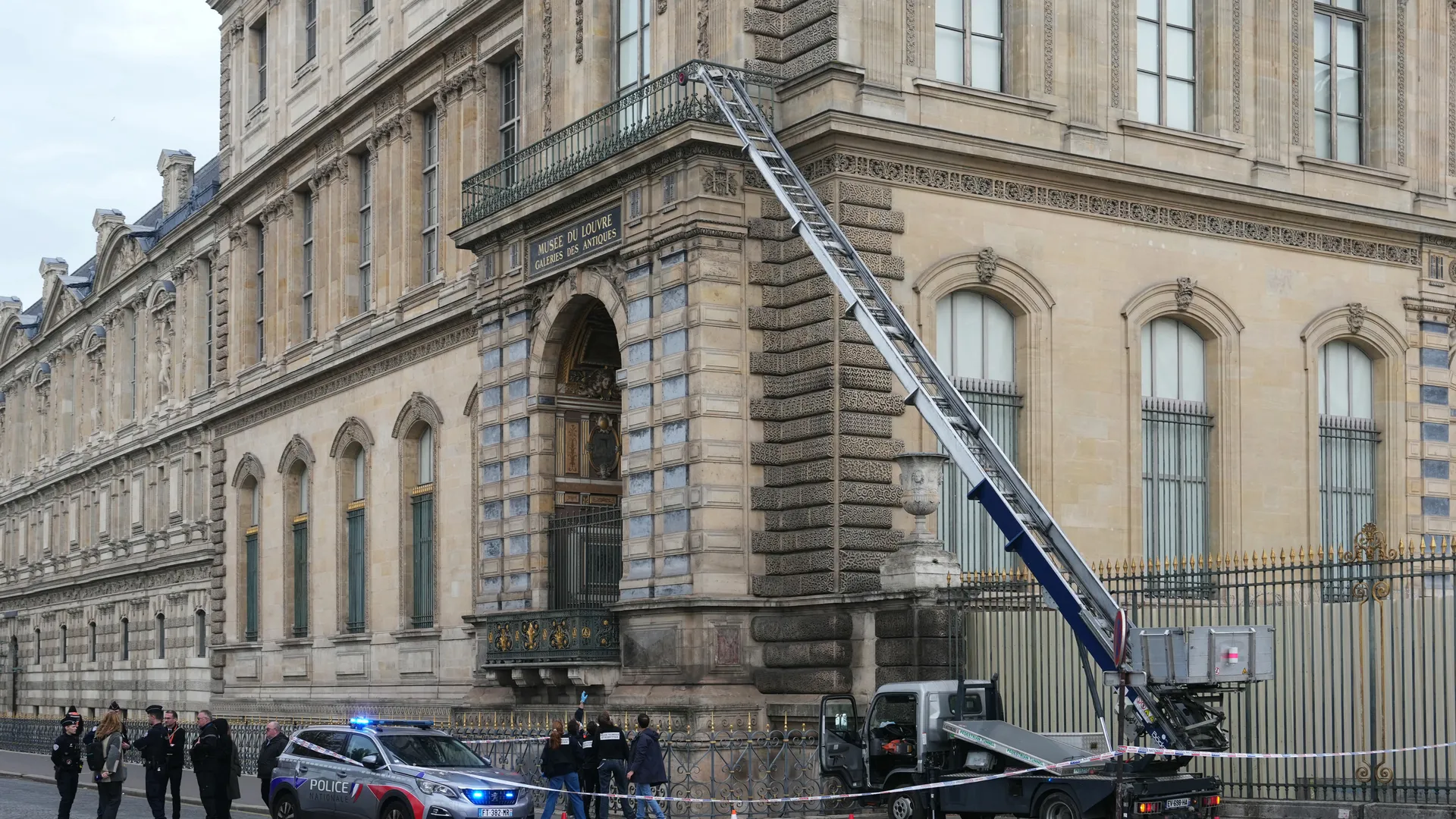
The robbery, which occurred just thirty minutes after the museum opened last Sunday, saw a gang of four men use a vehicle-mounted basket lift to reach an upstairs window of the Apollo Gallery, home to France’s historic collection of crown jewels. Wielding power tools, the thieves smashed their way in, making off with eight pieces of irreplaceable 19th-century haute joaillerie—including a sapphire set worn by French queens and an emerald necklace gifted by Napoleon I to Empress Marie-Louise. The estimated value of the loot is a staggering €88 million (£76 million).
The Security Scrutiny
The speed and audacity of the crime—which was executed and completed in less than eight minutes—exposed significant security lapses at the world’s most-visited museum. Critics and the French public alike voiced outrage that a group could execute such a brazen plan in broad daylight, driving a furniture truck up to the building’s façade unchallenged.
The Louvre’s director, Laurence des Cars, has publicly acknowledged the museum’s “terrible failure,” noting a shortage of exterior security cameras and offering her resignation, which was reportedly refused.
While the arrests provide a measure of vindication for law enforcement, the most critical element remains missing: the jewels themselves. The two suspects are being held for up to 96 hours on charges of “organized theft” and “criminal conspiracy.” Investigators’ major fear is that the historical artifacts have already been broken down into their constituent stones, making them virtually untraceable.
As Paris holds its breath, the focus shifts to police interrogation, with the hope that the detained men will reveal the fate of the nation’s lost imperial history. The ultimate success of the investigation will be judged not on the arrests, but on the recovery of the priceless objects of French heritage.