
LONDON—In an operating theatre at King’s College Hospital, a four-hour brain surgery on Monday transformed a medical procedure into a unique, real-time performance, offering a powerful testament to the precision of modern neuroscience and the resilience of the human spirit.
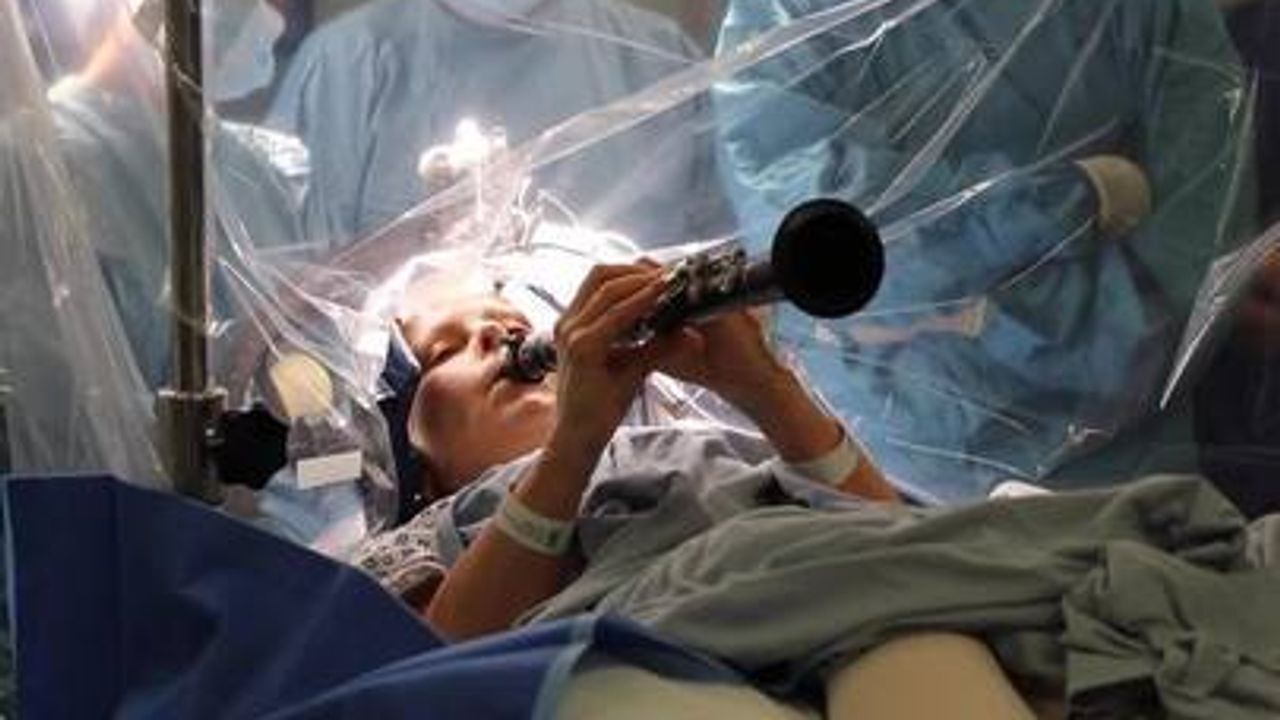
Denise Bacon, a 65-year-old retired speech and language therapist and a devoted clarinettist, played her beloved instrument while undergoing Deep Brain Stimulation (DBS) to alleviate her Parkinson’s disease symptoms. The music served as the ultimate test, providing the surgical team with an immediate, audible confirmation of their success.
An Immediate, Audible Cure
Ms. Bacon was diagnosed with Parkinson’s in 2014, and over the years, the disease’s slowness of movement and muscle stiffness (bradykinesia and rigidity) had forced her to give up cherished hobbies, including playing with the East Grinstead Concert Band five years ago.
The procedure, Deep Brain Stimulation, involves implanting electrodes into targeted areas of the brain to deliver electrical impulses, helping to modulate abnormal brain activity and reduce motor symptoms. Crucially, the operation must be performed while the patient is awake to allow surgeons to monitor their physical responses in real time.
Led by Professor Keyoumars Ashkan, the neurosurgery team made tiny holes in Ms. Bacon’s skull to implant the electrodes, using a specialized navigational frame for absolute precision.
“As a keen clarinettist, it was suggested Denise bring her clarinet into the operating theatre to see whether the procedure would improve her ability to play, which was one of Denise’s main goals for the surgery,” Professor Ashkan explained.
The moment the electrical current was switched on, the results were instantaneous.
“We were delighted to see an instant improvement in her hand movements, and therefore her ability to play,” Ashkan said. Ms. Bacon’s fingers, previously stiff and unresponsive, moved with greater ease across the clarinet keys as she began to play a melody, filling the sterile room with sound and proving the electrode placement was correct.
Reclaiming the Music
For Ms. Bacon, the experience was profound. “I remember my right hand being able to move with much more ease once the stimulation was applied, and and this in turn improved my ability to play the clarinet, which I was delighted with,” she shared following the procedure.
DBS is a long-established, highly effective therapy for controlling the motor symptoms of advanced Parkinson’s disease, but Ms. Bacon’s case illustrates the deeply personal stakes for patients. Restoring the ability to perform a complex, beloved task like playing a musical instrument represents a significant reclaiming of quality of life, moving beyond simply managing a tremor.
With the pulse generator now implanted in her chest, providing continuous and auto-adjusting stimulation to her brain, Ms. Bacon is already noticing improvements in her ability to walk. The amateur musician is now eager to return to her other passions, stating, “I’m keen to get back in the swimming pool, and on the dance floor to see if my abilities have improved there.” Her story highlights the intersection of medical ingenuity and the persistent, life-affirming power of art.