
LONDON — Scientists have, for the first time, pinpointed a specific brain region that functions as an “internal mileage clock,” a landmark discovery that sheds new light on how the mind tracks distance and could have profound implications for understanding neurological disorders like Alzheimer’s disease. The groundbreaking study, published in the journal Current Biology, identifies a precise neural mechanism responsible for our innate sense of how far we have traveled.
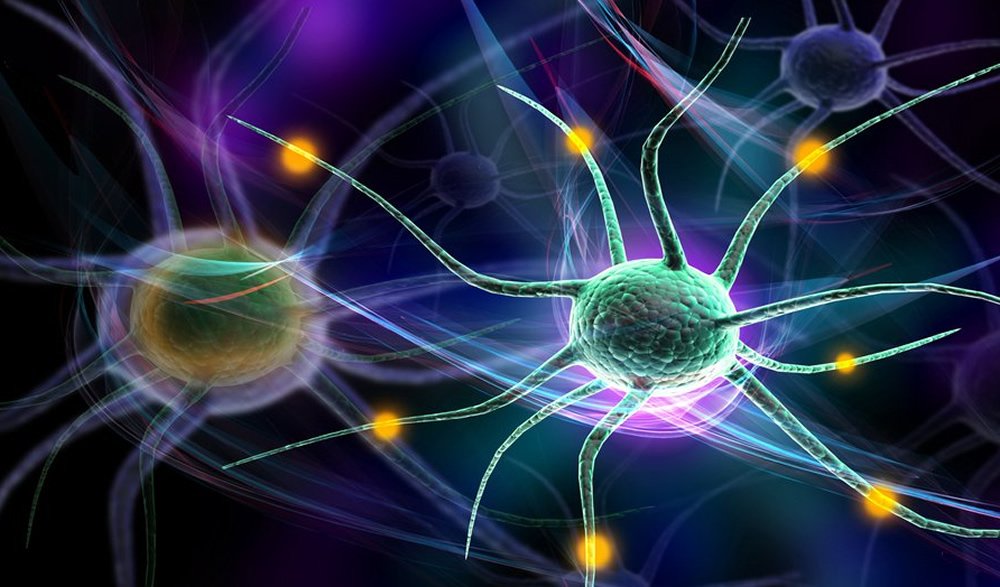
The research, led by Professor James Ainge from the University of St Andrews, centered on a series of experiments with both rats and humans. In the primary experiment, researchers trained rats to run a specific distance in a controlled arena to earn a reward. While monitoring the animals’ brains, they discovered that “grid cells”—a type of neuron in the brain’s entorhinal cortex, a region crucial for navigation—were not only helping the rats map their surroundings but were also firing in a regular, ticking pattern with every few steps they took. The more regular this “ticking” was, the better the animals were at estimating the correct distance.
The scientists then scaled up the experiment for human participants, asking them to perform the same distance-estimation task in a larger arena. Just like the rats, the human volunteers consistently performed the task correctly, confirming that a similar cognitive process was at work. The team found that when the environment was altered to distort the signal from these “mileage-counting cells”—much like when landmarks disappear in dense fog—both humans and rats began to lose their sense of distance and underestimated how far they had traveled. This suggests the brain’s internal odometer is highly susceptible to environmental changes.
This discovery is a significant leap forward in understanding the brain’s “GPS.” While the existence of place cells (which map specific locations) and grid cells (which form a coordinate system for navigating) has been known for years, this study is the first to directly connect the rhythmic firing of grid cells to the ability to accurately gauge distance traveled. This newfound understanding of how the brain navigates could provide critical insights into neurodegenerative diseases, as the entorhinal cortex is one of the very first areas of the brain to be affected by Alzheimer’s.
The research is a substantial step toward understanding how we use our brains in real-world environments. This video, featuring Nobel laureate John O’Keefe, explores the foundational discoveries of place cells, grid cells, and how they function as the “GPS of the brain.”