
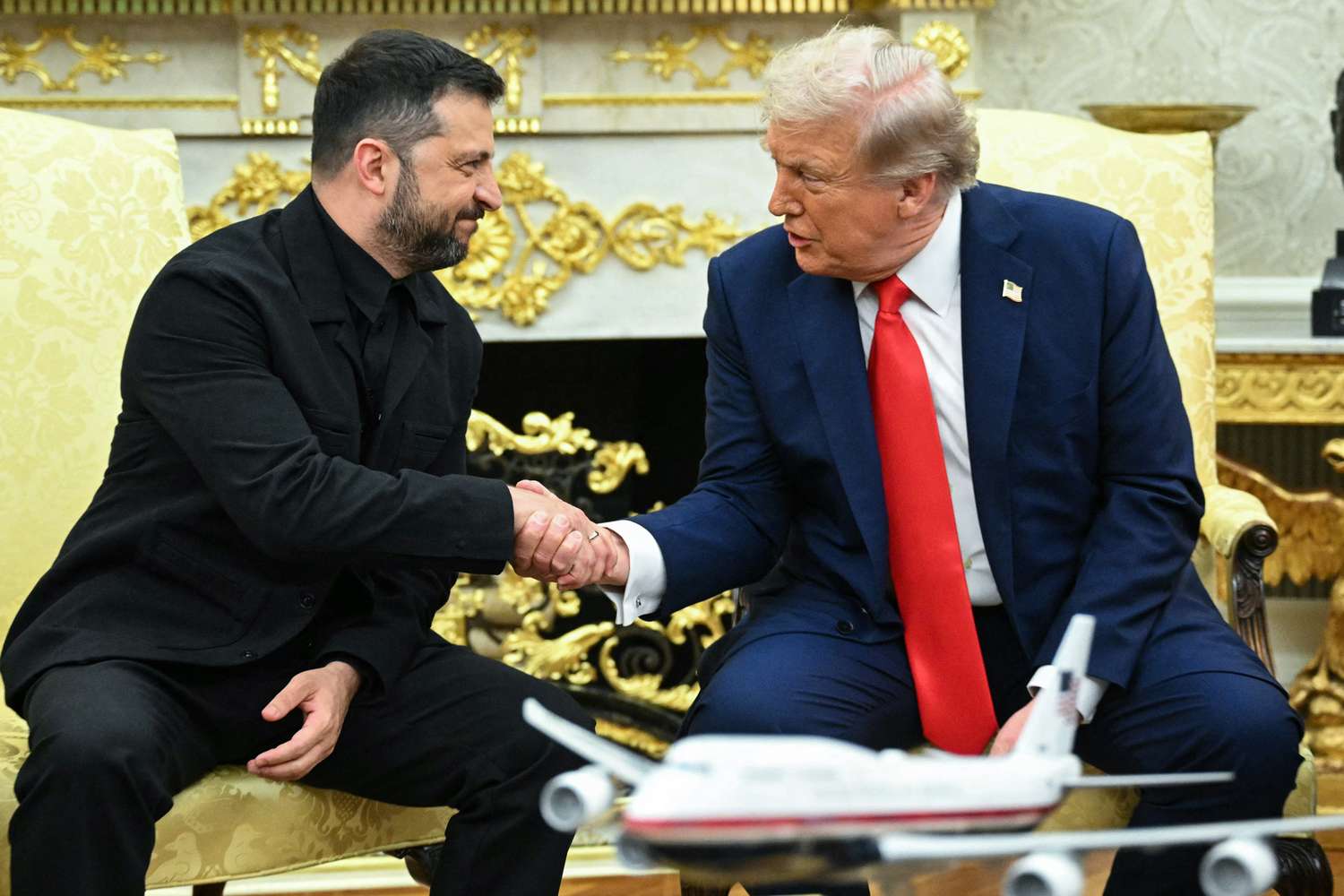
A new layer of uncertainty has been added to the complex diplomatic effort to end the war in Ukraine, as President Donald Trump, just a day after a high-profile meeting with his Ukrainian counterpart, has publicly questioned whether Russian President Vladimir Putin truly “wants to make a deal.” The skepticism from the White House stands in stark contrast to the Kremlin’s reaction, which has largely played down the significance of the Zelensky talks and affirmed its commitment to a separate, direct negotiation with Ukraine.
In an interview with Fox News, President Trump said he was “going to find out about President Putin in the next couple of weeks,” but conceded, “It is possible that he doesn’t want to make a deal.” He also warned that if Putin does not cooperate, “that’s going to be a rough situation” for the Russian leader, a statement that seems designed to increase pressure on Moscow to negotiate in good faith.
The new tone from the White House comes on the heels of a series of events that have left the international community with more questions than answers. Following a summit in Alaska, where Trump and Putin met for the first time since Trump’s return to office, the U.S. President had expressed optimism, claiming the two sides had a “very, very good chance” of a peace agreement. That optimism was followed by a meeting in Washington between Trump, Ukrainian President Volodymyr Zelensky, and key European leaders, which focused on a U.S.-backed plan for security guarantees for Ukraine.
The Kremlin’s reaction to the Washington meeting has been notably reserved. Aides to Putin confirmed that the Russian leader had spoken with Trump by phone, but they made no mention of a trilateral summit involving Zelensky. Instead, they reiterated that Putin and Trump had “spoken in favor of continuing direct talks” between Russian and Ukrainian delegations, with the possibility of “raising the level” of those discussions. This seemingly non-committal stance from Moscow has led many to question whether Putin is merely playing for time, using the diplomatic process to buy his forces more time on the battlefield.
The two sides’ differing interpretations of events have created a confusing and precarious situation. While the Trump administration believes it has secured Putin’s agreement to a meeting with Zelensky, the Kremlin has yet to publicly confirm it. In a hot mic moment during his meeting with French President Emmanuel Macron, Trump was overheard whispering that he thought Putin “wants to make a deal for me,” a belief that suggests he sees the peace process as a personal victory.
While some European leaders have expressed guarded optimism about the new diplomatic path, others have urged caution. German Chancellor Friedrich Merz has stressed that any meeting between Putin and Zelensky must be “well-prepared,” and some analysts have suggested that the current climate of hyped-up expectations is a deliberate attempt to force Putin to be the one to say “no.”
For now, the path to peace remains shrouded in uncertainty. The world watches to see if President Trump can deliver on his promise to end the war, or if he has overestimated Putin’s willingness to make a deal.