
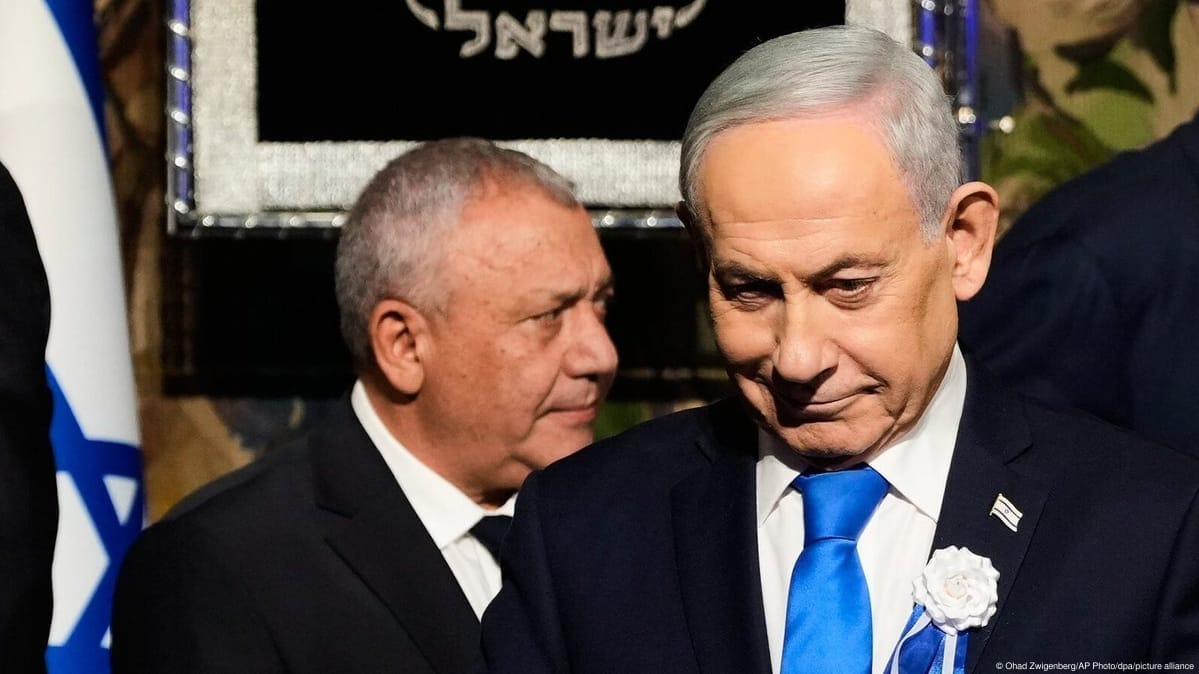
TEL AVIV — Israel’s two bitterest political rivals sat down face-to-face on Sunday morning, November 29, 2026, for emergency coalition negotiations aimed at rescuing the country from a month-long parliamentary stalemate and averting yet another costly snap election.
Caretaker Prime Minister Benjamin Netanyahu and opposition leader Gadi Eisenkot convened at the Defense Ministry in Tel Aviv at 10:00 a.m. local time, beginning their session with a high-level security briefing before turning to the thorny mathematics of power-sharing. The meeting follows a dramatic late-Saturday concession from Netanyahu, who unexpectedly offered to step aside initially and allow Eisenkot—a former military chief—to serve first as prime minister in a rotating national unity government.
The high-stakes gamble comes exactly one week before Eisenkot’s initial 28-day mandate from President Isaac Herzog expires on December 6. While the October 27 general election left both major blocs well short of the 61-seat threshold needed to govern the 120-seat Knesset—with Netanyahu’s religious-nationalist camp holding 53 seats and Eisenkot’s four-party opposition bloc holding 48—Sunday’s talks represent the most serious attempt yet to forge a governing majority.
A Sudden Pivot Under Pressure
For weeks, coalition negotiations had appeared frozen, with Eisenkot accusing Netanyahu’s right-wing Likud party of deliberately stalling to force a repeat vote. On Saturday evening, however, Netanyahu pivoted sharply, citing regional security threats to justify setting aside his insistence on leading the government from day one.
“My responsibility as a leader obligates me to put everything aside, including the principle of the largest party,” Netanyahu wrote on social media, proposing that Eisenkot take the helm first while Netanyahu serves as “alternate prime minister” before rotating back into the top post.
Eisenkot responded swiftly, inviting Netanyahu to “genuine and accelerated negotiations” grounded in a detailed policy framework his centrist Yashar party had sent to Likud days earlier. Crucially, Netanyahu’s sudden flexibility appears driven by quiet progress on the other side of the aisle: Eisenkot has already locked in preliminary coalition agreements with two opposition partners, Yisrael Beiteinu and The Democrats, and is actively exploring pathways to reach 61 seats without Likud—either through a deal with ultra-Orthodox parties or by relying on outside parliamentary support from Israel’s Arab-led lists, which won an unprecedented 19 seats.
Fury and Fracture Inside the Opposition
While former Prime Minister Naftali Bennett—a key figure in Eisenkot’s bloc—welcomed Netanyahu’s rotation offer as the “right decision” and urged serious talks, other veteran opposition leaders reacted with immediate hostility, exposing deep fault lines within the anti-Netanyahu camp.
Former Prime Minister Yair Lapid dismissed Netanyahu’s overture as “yet another transparent con by a serial fraudster who has cheated every partner and broken every agreement,” urging Eisenkot to first swear in an opposition government without Likud before discussing broader unity. Yair Golan, leader of The Democrats, was equally blunt, accusing Netanyahu of trying to cling to power after losing his majority and demanding that the opposition “respect the will of the voters.” Meanwhile, Youssef Jabareen, head of the Arab-majority Joint List, vowed that “this bloodstained, neglectful government must go.”
Deep Policy Chasms Remain
Even if Eisenkot and Netanyahu find a way to overcome decades of mutual distrust—and the lingering memory of Netanyahu’s collapsed 2020 rotation deal with Benny Gantz—the two sides remain separated by profound ideological divides.
Any viable unity pact would require bridging fierce disputes over ultra-Orthodox military conscription, judicial overhaul proposals, and post-war security arrangements across Gaza, Lebanon, and Syria, where Likud continues to demand hardline red lines rejecting Palestinian statehood. With the December 6 deadline looming and the country watching closely, Sunday’s talks in Tel Aviv will test whether political survival and national security can finally outweigh personal animosity—or whether Israel is hurtling toward another round of political paralysis.