
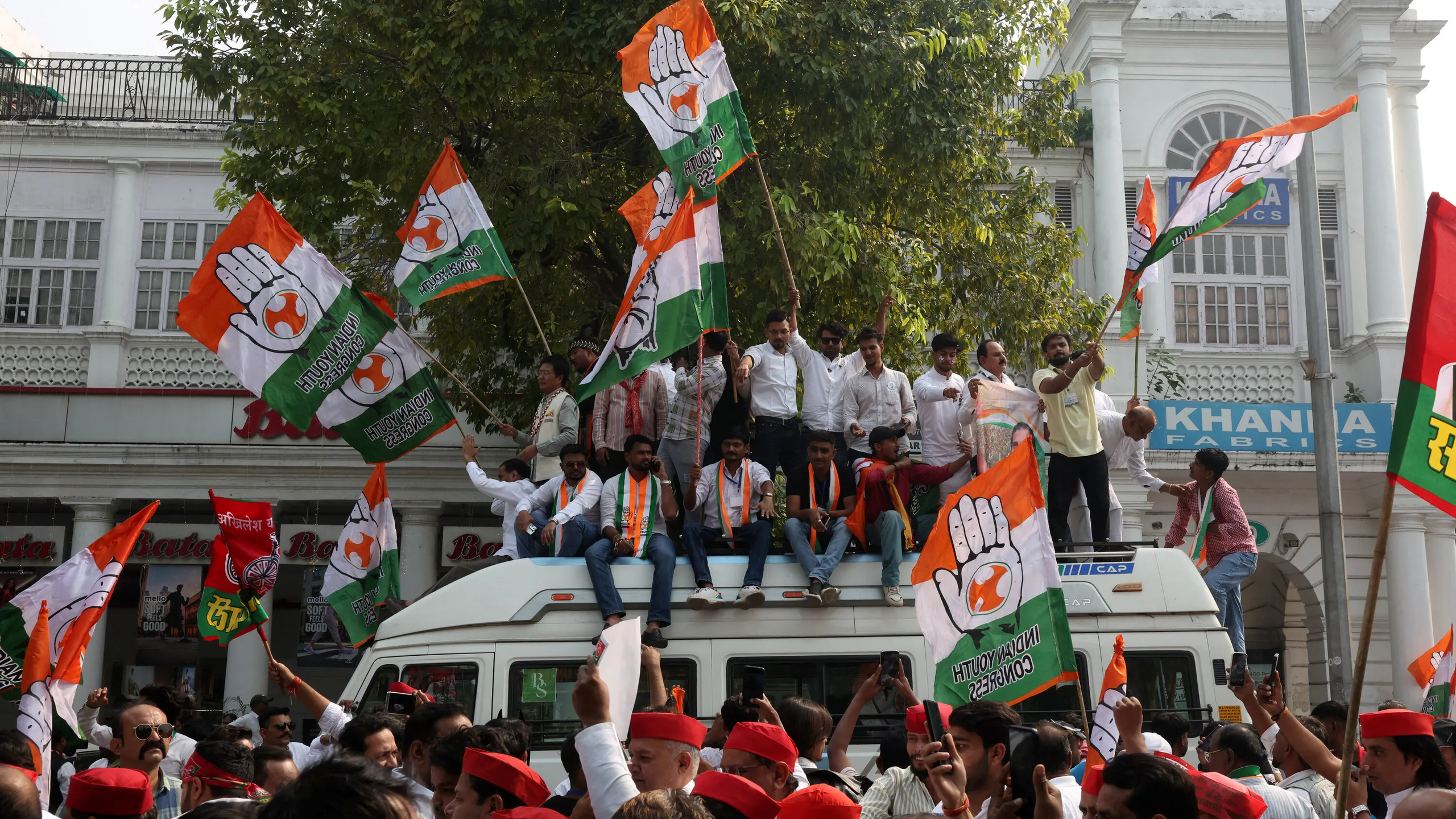
NEW DELHI — In what has rapidly evolved into the most severe institutional crisis for Prime Minister Narendra Modi since taking power in 2014, tens of thousands of opposition supporters, student organizations, and youth activists flooded the capital on Sunday, November 1, 2026.
Led by Congress party chief Rahul Gandhi and the broad opposition alliance known as the INDIA bloc, the historic “Chalo Dilli” (Come to Delhi) march completely paralyzed central parts of the capital. The demonstration culminated at the sprawling Ramlila Maidan, where a dense wall of riot-control vehicles, paramilitary forces, and heavily armed police braced for an assembly that organizers predicted could reach hundreds of thousands.
The unified demand shaking the corridors of power is the immediate resignation of India’s Chief Election Commissioner (CEC), Gyanesh Kumar. The uproar follows a highly controversial nationwide voter roll overhaul—known as the Special Intensive Revision (SIR)—which purged a staggering 130 million names from the electoral rolls, a figure greater than the entire population of Japan.
The ‘Vote Chori’ Controversy
The massive demonstration marks the explosive climax of more than a month of near-daily protests that have gripped major urban centers. The political tinderbox ignited in late September when investigative reports revealed internal fissures within the Election Commission of India (ECI) itself. According to leaked reports, Kumar’s own two deputy commissioners had raised strenuous, formal objections on more than a dozen occasions regarding the methodology, registration procedures, and digital systems used during the purge.
The opposition alliance has weaponized these internal leaks, accusing the CEC of outright “vote chori” (vote theft) and conspiring with the ruling, Hindu-nationalist Bharatiya Janata Party (BJP) to tilt future elections.
A central grievance of the protest movement is that the criteria used for deletion—marking voters as deceased, relocated, or untraceable—disproportionately targeted marginalized groups, rural communities, and minorities, particularly Muslim voters, who traditionally lean away from the BJP. Across the country, millions of citizens suddenly discovered that they and their entire households had been wiped from draft electoral rolls under the false claim that they no longer resided at their lifelong addresses.
A Symbolic Impeachment and Rising Stakes
To escalate their leverage, leaders of the INDIA bloc staged a highly dramatic, symbolic “public impeachment” of Kumar on Saturday evening at the residence of Congress President Mallikarjun Kharge. Presided over by a former speaker of parliament, the mock legislative session saw senior politicians officially present six charges of constitutional betrayal against the election chief, explicitly accusing him of “treason against the nation and the Constitution.”
The political temperature in Delhi rose further as regional leaders leveled severe warnings against the central government. State cabinet ministers arriving from across the country openly warned that the systematic suppression of voting rights threatened to plunge India into the type of extreme, volatile civil unrest recently witnessed in neighboring Bangladesh.
While Prime Minister Modi’s government remains firmly stable and a general election is not constitutionally due until 2029, political analysts emphasize that the sudden, intense convergence of mainstream opposition parties with the aggressive, online-driven youth pressure group known as the “Cockroach Janta Party” presents a formidable, unpredictable challenge to the ruling establishment.
The Administration Digs In
The Modi administration and the Election Commission have aggressively pushed back against the narrative, completely denying any institutional bias or political manipulation. The ECI defended the Special Intensive Revision as a standard, legally mandated housekeeping exercise designed purely to sanitize voting registries by eliminating duplicate and ineligible entries. Officials emphasized that any genuinely eligible voter who was mistakenly removed retains the full legal right to re-enroll.
Cabinet heavyweights also mounted a fierce defense of the election chief. Health Minister Jagat Prakash Nadda dismissed the mass mobilization at Ramlila Maidan as a “carefully orchestrated drama” and a calculated conspiracy manufactured by defeated politicians looking to plunge the nation into total anarchy.
However, with international human rights groups warning that the staggering scale of the deletions raises urgent questions about the fairness of future Indian democratic exercises, the battle over the electoral rolls has transcended routine partisan bickering. It has fundamentally transformed into a high-stakes war over the structural integrity of the world’s largest democracy.