
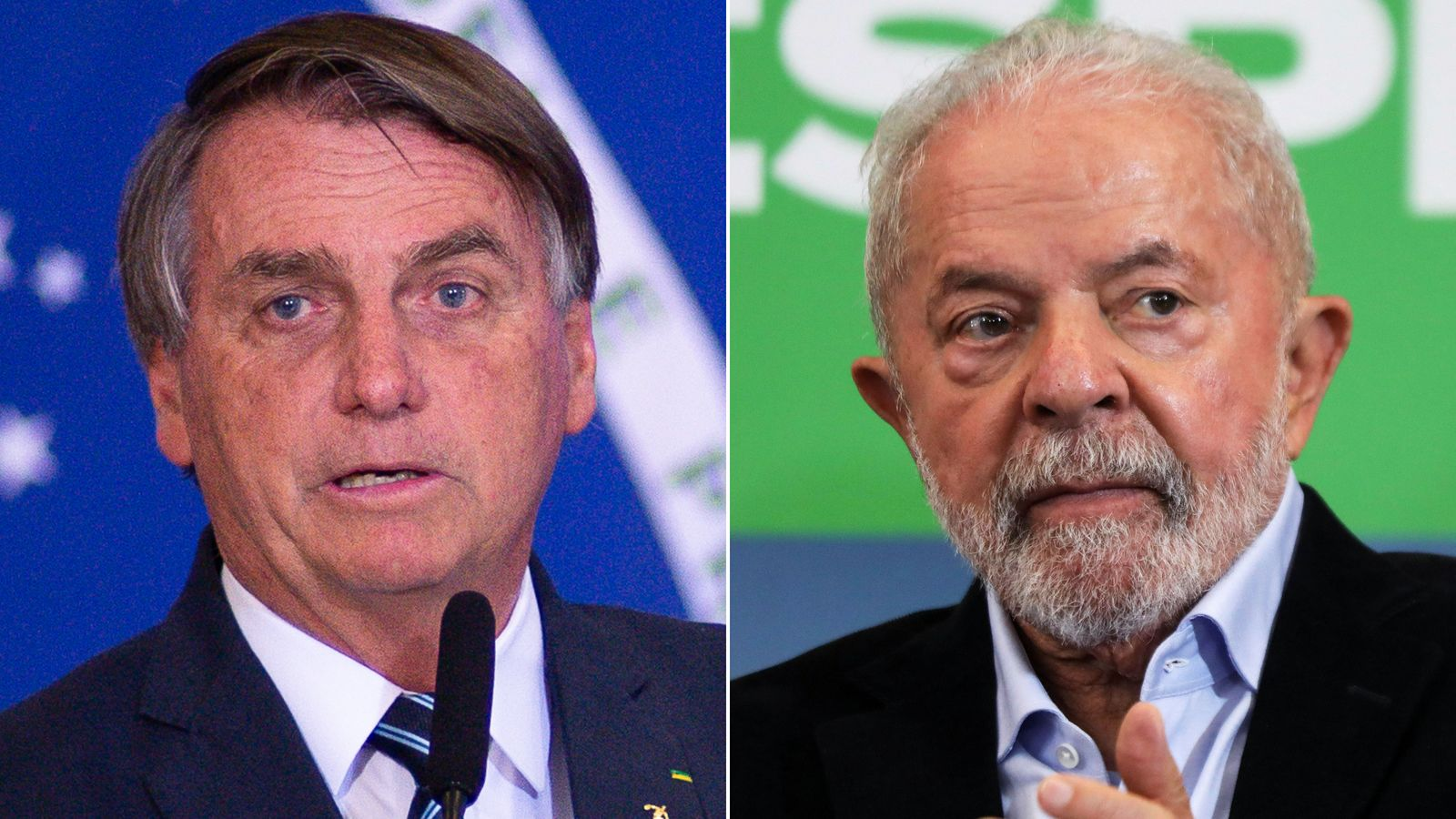
RIO DE JANEIRO — On Sunday, October 25, 2026, nearly 160 million Brazilian voters returned to the polls for a high-stakes presidential runoff. The election presents a stark choice between two diametrically opposed visions for Latin America’s largest democracy: the 80-year-old leftist incumbent, Luiz Inácio Lula da Silva, and 45-year-old right-wing Senator Flávio Bolsonaro. The winner will determine whether the hemisphere’s second-largest economy remains a leftist anchor or aligns with a rising wave of right-wing administrations.
A Historic Shift in Momentum
For Lula, who turns 81 next week, this marks the seventh presidential campaign of his political career. He is seeking an unprecedented fourth non-consecutive term. However, the political landscape shifted dramatically following the first round of voting on October 4, 2026.
Flávio Bolsonaro defied expectations by securing 47% of the first-round vote against Lula’s 45%. According to historical precedent in modern Brazilian politics, no candidate has ever successfully overturned a first-round deficit to win the presidency in the runoff. This dynamic has positioned the younger Bolsonaro, representing the right-wing Liberal Party (PL), as a formidable challenger.
The rise of the younger Bolsonaro occurs while his father, former President Jair Bolsonaro, serves a 27-year prison sentence under house arrest for plotting a coup following his 2022 election loss. A key pledge of Flávio Bolsonaro’s platform is to seek a presidential pardon for his father.
Bitter Debates and Ideological Divides
The closing weeks of the campaign featured intense personal exchanges and sharp policy contrasts, dividing the country along distinct lines:
- Ideology and Vision: Luiz Inácio Lula da Silva, representing the Workers’ Party (PT), centers his campaign on social democracy, reducing economic inequality, protecting the Amazon, and expanding BRICS alliances. Flávio Bolsonaro represents conservatism, advocating for a crackdown on crime, market-driven economic reforms, and closer alignment with the United States.
- Corruption and Transparency: Flávio Bolsonaro targeted the Workers’ Party’s past corruption scandals. In response, Lula challenged the Bolsonaro family to open their banking and telephone records to public scrutiny, a move the senator agreed to only under reciprocal conditions involving Lula’s inner circle.
- Public Safety: Flávio Bolsonaro focused his message on a hardline security agenda, pledging to construct “mega prisons” and expand state forces to reclaim gang-controlled territories.
- The Environment: Environmental policy remains a sharp point of divergence. Under Lula’s current term, deforestation in the Amazon fell by 71%, reaching its lowest levels since 1988. Flávio Bolsonaro has advocated for rolling back these regulations to permit expanded logging, mining, and ranching.
Global Geopolitics Loom Large
The outcome carries significant implications for regional and global alliances. Flávio Bolsonaro maintains a strong pro-U.S. posture and is a close ally of U.S. President Donald Trump, who praised his first-round victory as “very big”.
Conversely, Lula has pursued a foreign policy centered on strengthening ties with China and elevating the global influence of the BRICS bloc. Tensions between the Lula administration and Washington have persisted, underscored by a diplomatic dispute that saw the U.S. revoke the visa of Brazil’s ambassador earlier this year.
According to reports from Al Jazeera and The Guardian, voting began smoothly across the country at 8:00 AM local time. Polls are scheduled to close at 5:00 PM Brasilia time (20:00 GMT), with the Superior Electoral Court (TSE) expected to tabulate the electronic ballots rapidly. Recent polling indicates the two candidates enter the final count virtually neck and neck, making the final outcome highly unpredictable.