
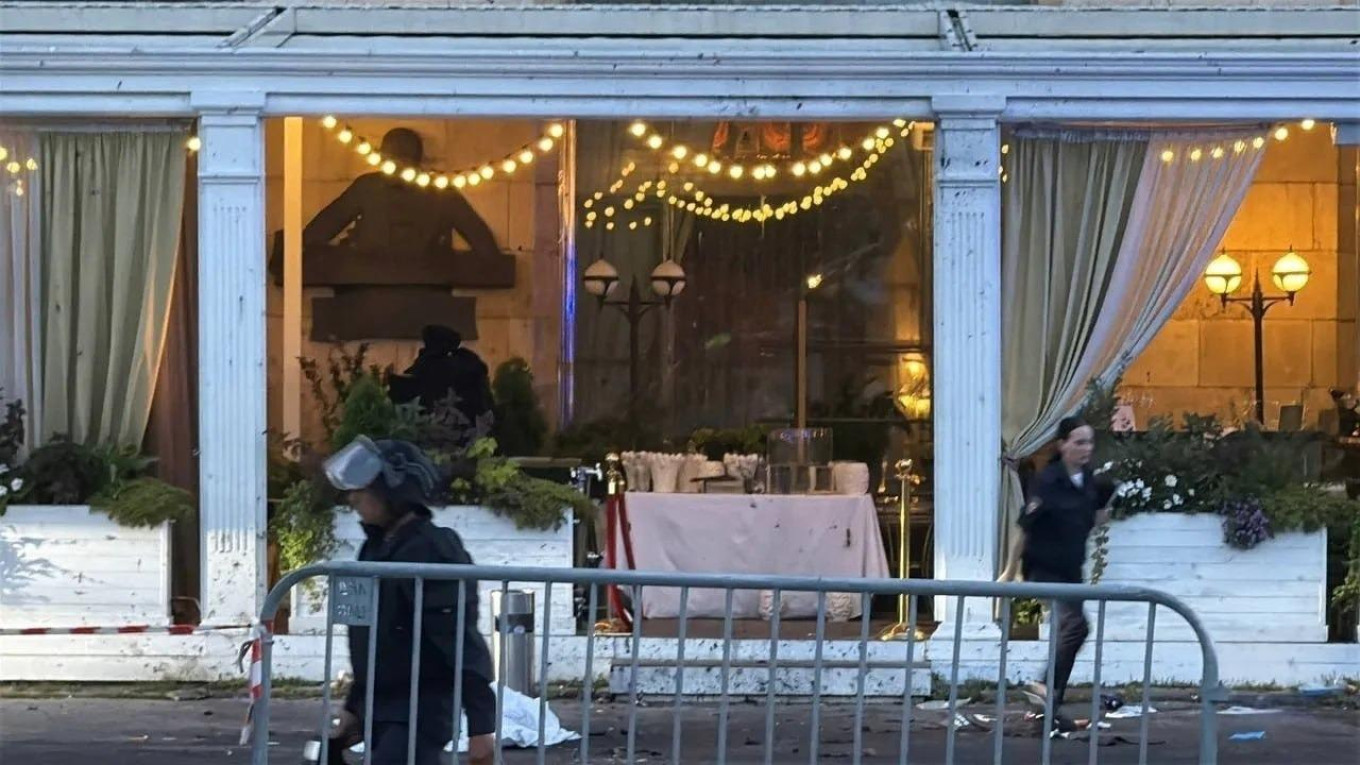
MOSCOW — A devastating suicide or remote-controlled bombing struck the heart of the Russian capital on Saturday evening, killing three people and injuring 21 others outside an upscale Italian restaurant housed inside a iconic Stalin-era skyscraper. The blast has re-ignited deep fears of high-profile, wartime assassinations inside Moscow’s most secure districts.
Russia’s National Anti-Terrorist Committee (NAC) confirmed that the explosion occurred at approximately 8:00 PM local time at the entrance of the Balzi Rossi restaurant on Kudrinskaya Square. According to state news agency RIA Novosti, an unidentified woman carrying a homemade explosive device attempted to penetrate the venue’s security perimeter. When a vigilant security guard blocked her from crossing the threshold, the device detonated violently. The blast instantly killed the woman, the guard, and a nearby restaurant patron.
A Target in the Shadows: A General’s Birthday?
While federal investigators have not officially named the intended target, the circumstances surrounding the venue have fueled intense speculation across the capital.
- The Elite Guestlist: The restaurant had posted an online notice stating it was closed to the public on Saturday for a private function. Local independent monitoring channels, quoting witnesses at the scene, reported that the private party was a birthday celebration for a high-ranking Russian military general.
- The Remotely Triggered Theory: High-ranking investigative sources briefed the Kommersant daily newspaper that the bomb may have been designed to target guests congregating on the restaurant’s summer terrace. Crucially, forensics suspect the device may have been detonated remotely by an outside handler, suggesting the woman carrying the payload may have been an unwitting mule.
Cordoning Off the Stalinist Landmark
The sheer force of the detonation shattered windows and sent shrapnel ripping through the summer cafe area. Because the restaurant sits on the ground floor of one of Moscow’s “Seven Sisters”—the famous Stalin-era skyscraper complexes—federal security services swarmed the central square within minutes, enforcing an immediate grid lockdown.
Ambulances and emergency vehicles lined the Garden Ring road while heavily armed tactical units sealed off nearby transit points, including the Barrikadnaya metro station. A massive evening mass-cyclist event that was scheduled to pass directly through Kudrinskaya Square was abruptly canceled by transit authorities as forensic teams began sweeping the asphalt for evidence.
The Shadow of the War Enters Moscow
The Investigative Committee of Russia has officially opened a formal terrorism investigation. While state officials have notably refrained from pointing immediate blame, the operation mirrors a series of targeted assassinations against Russian military figures, state media personalities, and prominent pro-war figures over the last four years—acts that Moscow has historically blamed on Ukrainian intelligence networks.
Earlier this year, the Federal Security Service (FSB) openly pledged to dramatically step up protection details for senior command personnel following intercepted plots in the capital. Saturday’s security breach proves that despite iron-clad domestic surveillance, the front lines of the conflict can still violently spill onto the doorsteps of Moscow’s elite elite dining rooms.