
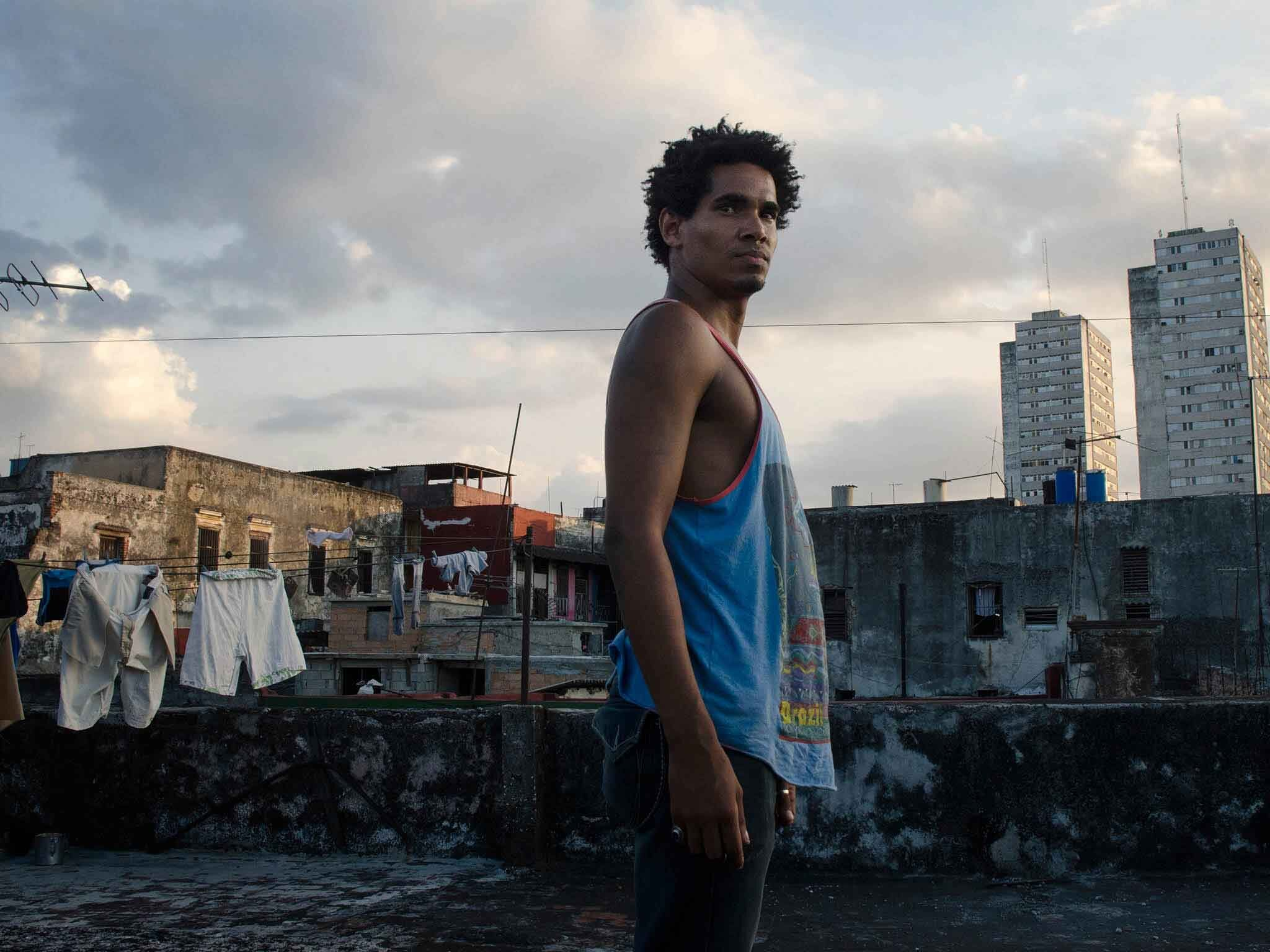
MIAMI — Luis Manuel Otero Alcántara, one of Cuba’s most influential and defiant political dissidents, has arrived in the United States to begin a life in forced exile. The 38-year-old performance artist and leader of the San Isidro Movement touched down at Miami International Airport, concluding a harrowing week of state-enforced isolation that triggered a United Nations investigation.
Stepping onto American soil draped in a Cuban flag, Alcántara carried a broken statue of the Virgin Mary—a piece he described as a symbol of his fractured homeland. “The message is you have to keep fighting,” Alcántara told a cheering crowd of supporters gathered at the Shrine of Our Lady of Charity in Coconut Grove. “You have to keep fighting for liberty.”
Freedom at the Price of Banishment
Alcántara’s arrival in Miami marks the end of a high-stakes diplomatic standoff between Washington and Havana. The artist had spent the last five years inside the maximum-security Guanajay prison near Havana. He was originally arrested in July 2021 as he attempted to join the historic, island-wide anti-government protests that shook the communist regime.
The Cuban government subsequently convicted him of public disorder, contempt, and disrespect toward national symbols, sentencing him to a five-year term. While Amnesty International designated him a prisoner of conscience, Cuban State Security repeatedly offered Alcántara early release on the strict condition that he leave the island permanently. For years, he refused, but supporters confirmed that persistent psychological torture and deteriorating prison conditions ultimately left exile as his only path to survival.
A Week of Secret Detention and UN Alarm
The transition from prisoner to exile was marred by a final act of state intimidation. Alcántara’s official five-year sentence concluded earlier this month, yet instead of being set free, he was secretly moved from Guanajay prison to an undisclosed state security facility.
For over a week, Cuban authorities refused to verify his location, prompting the legal advocacy group Cubalex to file emergency habeas corpus petitions. The situation became so critical that the United Nations Committee Against Enforced Disappearances activated an urgent action protocol, demanding Havana reveal his coordinates. Human rights groups accused the regime of stalling and holding Alcántara hostage while his U.S. humanitarian parole visa was finalized, keeping him in isolation until the moment he was escorted directly onto a Miami-bound commercial flight.
Washington Demands the Release of 700 More
Alcántara’s release has brought immediate reactions from top American officials. U.S. Secretary of State Marco Rubio welcomed the artist’s arrival while sharply condemning the Cuban government’s actions. “The Cuban government’s brutal crackdown is yet another reminder of the unique misery and evil innate to the communist system,” Rubio said in a written statement. Rubio used the high-profile moment to demand the immediate release of over 700 remaining political prisoners still held on the island.
Among those remaining behind bars is Alcántara’s close friend and co-creator of the anti-regime anthem Patria y Vida, rapper Maykel “Osorbo” Castillo Pérez, who continues to serve an eight-year sentence. While Miami’s Cuban exile community celebrates Alcántara’s safety, activists emphasize that his forced banishment underscores the regime’s ongoing strategy of purging the island of its most potent intellectual and artistic voices.