
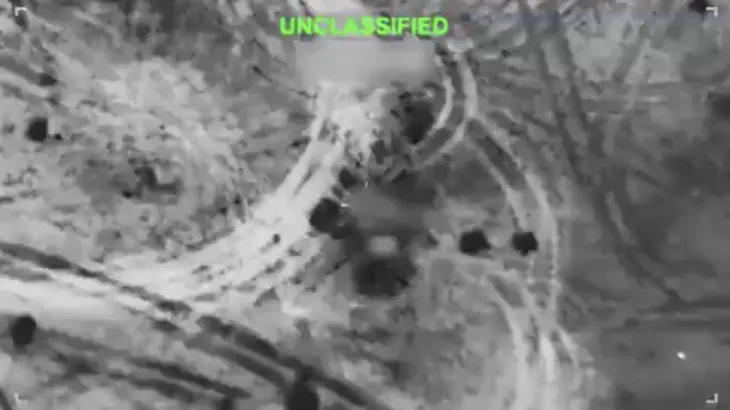
The United States military has unleashed a punishing, heavy wave of air assaults against approximately 140 military targets inside Iran, hours after Tehran officially declared the critical Strait of Hormuz closed “until further notice”. The rapid escalation on Sunday, July 12, 2026, marks the third round of American strikes this week. It has shattered the remnants of a provisional ceasefire and pushed the Middle East to the precipice of an unmanageable regional war.
In a volatile chain reaction, the Islamic Revolutionary Guard Corps responded to the American bombardment by launching a torrent of ballistic missiles and explosive drones at U.S. facilities across the Gulf. State-directed strikes pounded targets in Jordan, Bahrain, Kuwait, Qatar, and Oman, while the United Arab Emirates reported active air defense interceptions over its territory.
The Trigger at the Choke Point
The latest collapse began when Iranian forces targeted a Cyprus-flagged container ship, the M/V GFS Galaxy, as it attempted to navigate the narrow shipping lanes of the strait. Tehran’s naval forces claimed they fired a warning shot at the vessel because it was utilizing an “unauthorized route” deliberately drawn to bypass Iranian maritime authority.
The attack severely damaged the commercial ship, sparking an onboard fire that forced the civilian crew to abandon the vessel in the Gulf of Oman. U.S. Central Command confirmed that the container ship was completely incapacitated and that at least one civilian mariner remains missing at sea.
Following the raid, the Revolutionary Guards announced on state media that the vital maritime corridor—which handles roughly 20 percent of the global oil supply—was sealed to all traffic until the complete termination of American interventions in the region.
Trump Orders a Triple-Digit Retaliation
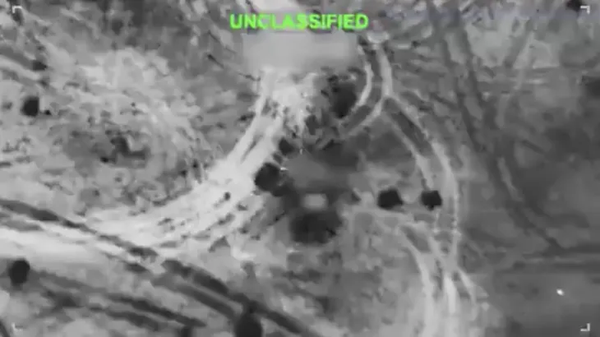
Acting under direct orders from President Donald Trump, U.S. combat aircraft and naval assets retaliated with overwhelming force. The fresh operation targeted more than 300 Iranian military positions across major coastal and inland hubs, triggering powerful explosions in the strategic port cities of Bandar Abbas, Bushehr, Asaluyeh, Sirik, and Jask.
According to military logs released by Central Command, the highly concentrated strikes demolished active missile and drone launch sites, subterranean ammunition bunkers, and coastal surveillance networks. The Pentagon emphasized that the operation was specifically calibrated to degrade Iran’s physical capability to target civilian mariners and hold international waterways hostage.
“Now they pay,” U.S. Defense Secretary Pete Hegseth warned in a brief statement following the conclusion of the air raids. The heavy deployments follow a combative week of warnings, during which Trump declared the initial February ceasefire dead. Trump also posted an explicit ultimatum online, warning that any attempt by Tehran to target American leadership would result in the United States completely decimating the Islamic Republic with thousands of locked-and-loaded missiles.
A Regional Storm Ignites
Tehran’s response was immediate and structurally coordinated, extending the conflict far beyond its own borders. Rejecting the American claims of defensive actions, Iran’s foreign ministry labeled the Western strikes a brutal act of sovereign aggression.
Within hours of the coastal bombings, the Revolutionary Guards executed heavy, synchronized drone and missile strikes targeting the U.S. military footprint throughout the Middle East. The regional counter-offensive hit a U.S. base in Jordan and triggered missile defense sirens across major allied Arab Gulf states. In Tehran, the newly installed Supreme Leader, Mojtaba Khamenei, publicly echoed vows of total retribution for the ongoing Western campaign.
Global energy markets reacted instantly to the military crossfire, with crude oil indices fluctuating sharply as international shipping firms scrambled to reroute multi-million dollar cargo vessels away from the Persian Gulf. While international mediators continue a desperate, back-channel scramble to restore communication lines, the thunder of anti-aircraft fire over the Gulf suggests that the window for a diplomatic resolution has violently slammed shut.