
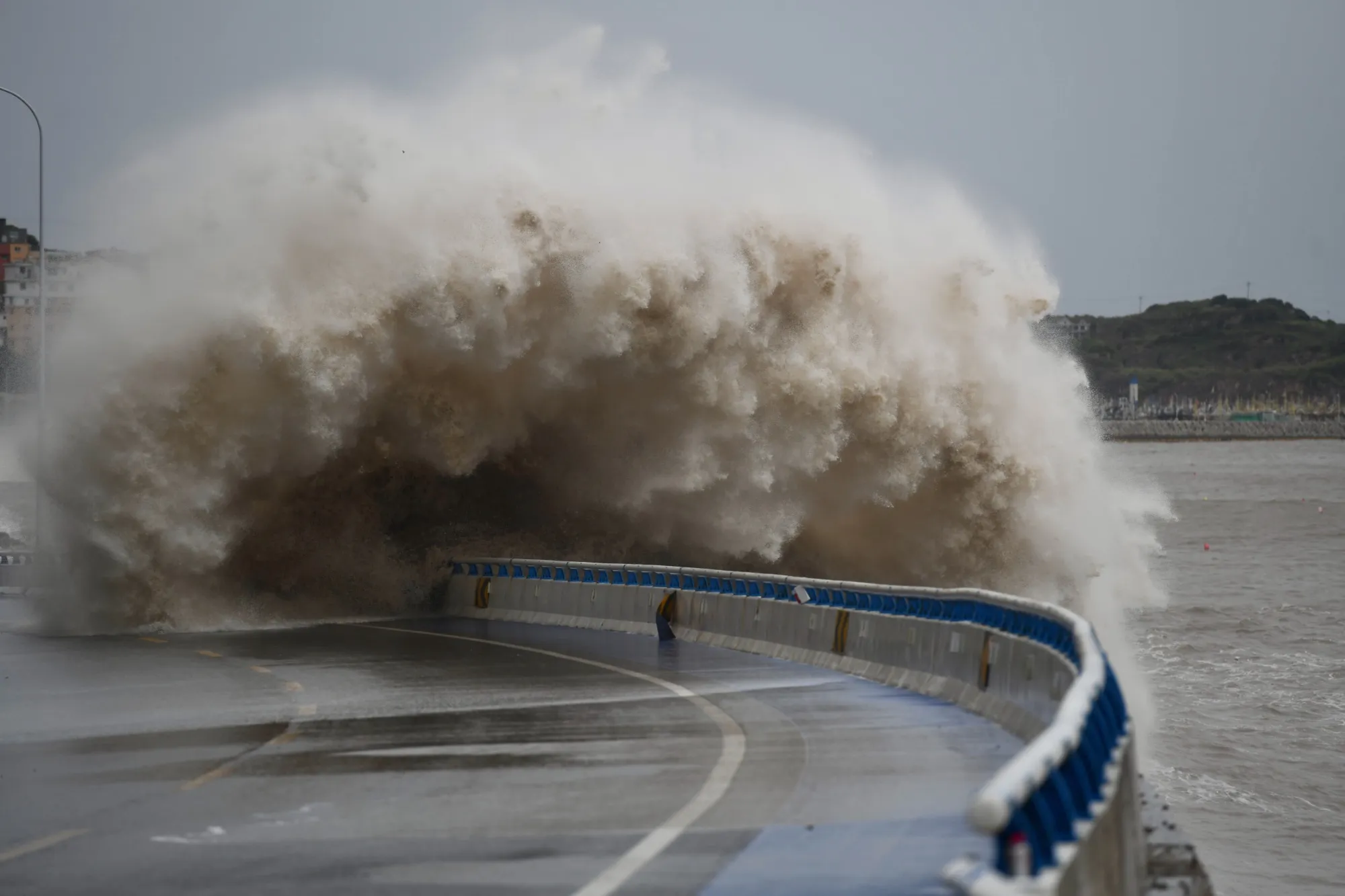
SHANGHAI — In what local authorities are calling the most massive emergency peacetime mobilization in the region’s modern history, China has successfully evacuated nearly two million people from its vulnerable eastern coastline. The unprecedented migration to safety was finalized just hours before a ferocious, maximum-intensity typhoon made a roaring landfall, packing catastrophic winds and threatening to trigger historic flooding across the economic heartland of the Yangtze River Delta.
The administrative machinery of Zhejiang and Jiangsu provinces, alongside the municipality of Shanghai, worked at a breakneck pace to clear entire low-lying coastal villages, vulnerable construction corridors, and thousands of fragile waterfront neighborhoods. The extraordinary domestic defense operation underscores the sheer logistical power of the state as it attempts to insulate tens of millions of citizens from a rapidly destabilizing climate reality.
A Coastline Swallowed by the Sea
The monster storm, categorized as a super typhoon before approaching the coast, pushed a terrifying, multi-meter storm surge over defensive seawalls. Meteorological tracking confirmed the core of the system made landfall with sustained winds screaming past 210 kilometers per hour, effortlessly snapping high-voltage utility poles, shredding commercial billboards, and uprooting ancient trees across urban boulevards.
To prevent structural disasters, maritime regulators ordered more than 35,000 commercial shipping vessels and local fishing trawlers to return immediately to heavily fortified ports. Simultaneously, the Ministry of Transport enacted a total shutdown of the regional transit infrastructure, canceling thousands of high-speed rail trips and grounding all commercial flights at Shanghai’s Pudong and Hongqiao international airports.
For the millions of citizens ordered into inland sports stadiums, public schools, and concrete civic centers, the landfall brought a night of terrifying sound as torrential downpours turned urban highways into rushing canals.
The New Architecture of Displaced Masses
Managing the sudden displacement of nearly two million people has tested China’s emergency response apparatus to its absolute limits. State-directed relief agencies deployed thousands of emergency workers to staff hundreds of hastily assembled temporary shelters, stockpiling millions of rations of food, fresh drinking water, and essential medical supplies.
The evacuation strategy relied heavily on localized block-by-block tracking networks. Community volunteers and local civil servants went door-to-door through vulnerable neighborhoods, ensuring that elderly residents and families with small children were physically escorted onto fleets of government buses bound for higher ground.
While the economic toll of the complete industrial standstill is already projected to reach into the billions of yuan, provincial leadership emphasized that the preservation of human life remains the singular, non-negotiable benchmark of the defensive operation.
A Locked-Down Mega-Region Awaits the Aftermath
As the eye of the typhoon grinds slowly inland, the focus of emergency personnel is shifting toward the looming threat of catastrophic interior flooding. With torrential rains predicted to dump over 500 millimeters of water across saturated river valleys within the next 48 hours, engineers have taken defensive control of regional reservoir networks, executing controlled water releases to prevent devastating dam breaches.
The spectacular, terrifying landfall serves as a vivid reminder of the escalating environmental volatility confronting East Asia’s most densely populated economic hubs. While the heavily reinforced high-rises of Shanghai’s financial district stand firm against the gale-force winds, the vast, empty coastal zones left behind by two million evacuees tell the real story of a nation forced to retreat, adapt, and build walls to survive the fury of an warming ocean.