
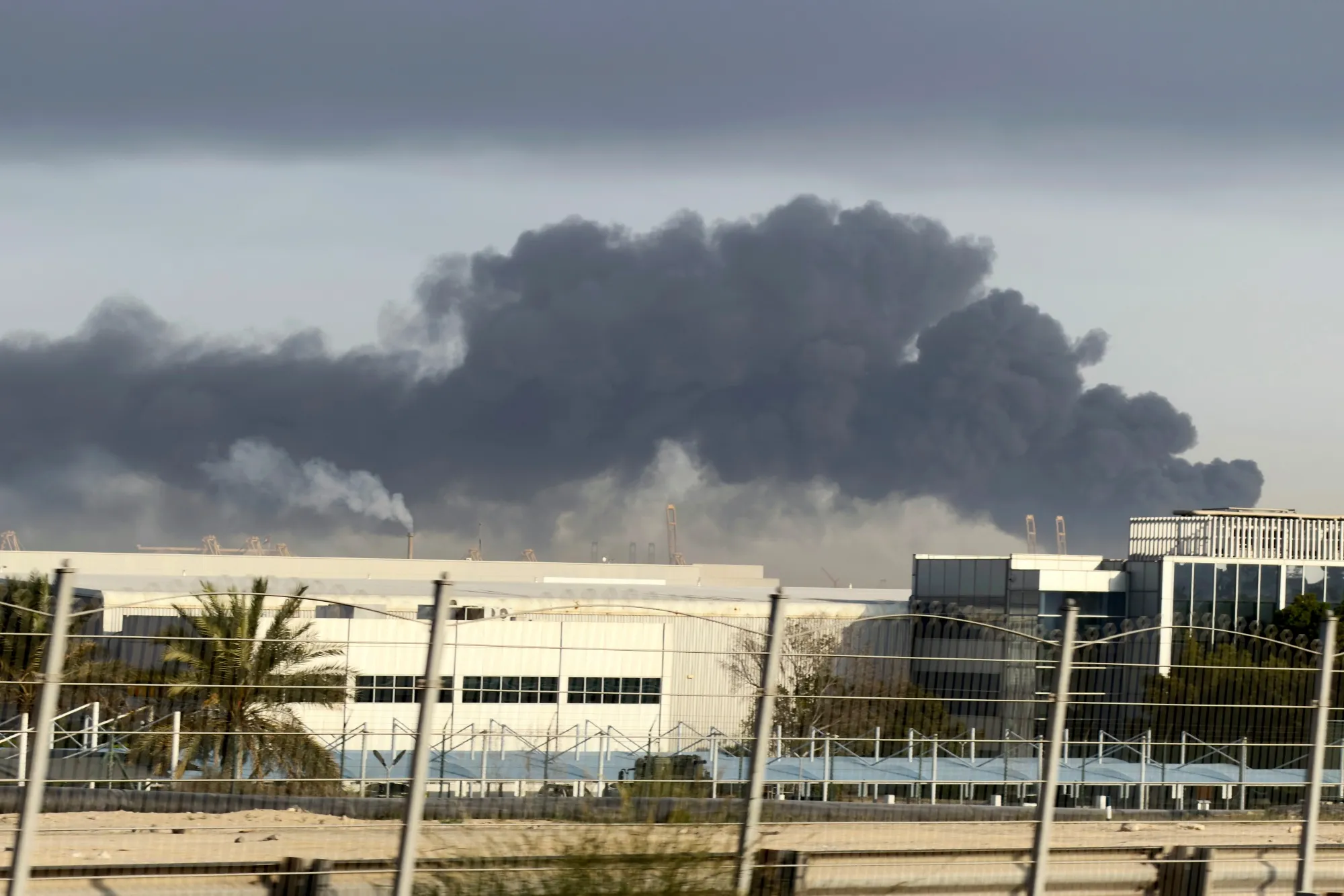
WASHINGTON and TEHRAN — A fragile, two-week-old peace initiative in the Middle East has collapsed into open conflict. The United States and Iran launched a series of high-intensity retaliatory strikes against each other’s assets, trading furious accusations over who shattered the diplomatic agreement meant to halt a four-month-old war.
The rapid breakdown threatens to unravel the Islamabad Memorandum of Understanding signed on June 17, 2026. That agreement established a critical 60-day window for both nations to broker a permanent peace deal and restore commercial shipping through the vital Strait of Hormuz. Instead, the waters of the Persian Gulf and neighboring military bases have transformed into active combat zones.
The Marquee Spark: Clash Over the Choke Point
The latest spiral of violence began when an Iranian drone targeted the M/V Ever Lovely, a Singapore-registered commercial cargo ship transiting the Strait of Hormuz. Tehran defended the operation, asserting that the merchant vessel was using an unauthorized, unapproved shipping route to cross the tight Gulf waterway. Under the interim agreement, Iran claims administrative jurisdiction over passage logistics in the strait, a point it says the U.S. deliberately provoked.
The U.S. response was swift and heavy. Acting on orders from President Donald Trump, U.S. Central Command deployed warplanes to conduct self-defense strikes along Iran’s southern coast. American bombs hit multiple targets near the coastal cities of Sirik and Bandar Abbas, destroying active radar sites, coastal surveillance equipment, and subterranean drone and missile storage facilities.
Central Command described the operation as a powerful, justified response to an unprovoked attack on global maritime commerce. “This unwarranted aggression against commercial shipping by Iranian forces clearly violated the ceasefire,” U.S. military officials said in a public statement.
Tehran Fires Back with Ballistic Missiles
The American air assault prompted an immediate and coordinated counter-strike by Iran’s paramilitary Islamic Revolutionary Guard Corps. Rejecting Washington’s defensive justification, Iran’s foreign ministry condemned the U.S. strikes as a brutal violation of its sovereign territory. Officials lambasted what they called the “treaty-breaking nature” of the American government, arguing that Washington had effectively sabotaged ongoing peace talks.
Hours later, the Revolutionary Guards launched a volley of ballistic missiles and explosive drones at major American military strongholds across the region. According to military communiqués from Tehran, the retaliatory strikes successfully targeted eight key U.S. infrastructure sites. Among the locations hit were the U.S. Navy’s expansive Fifth Fleet headquarters at Port Salman in Bahrain and the strategic Ali al-Salem Air Base in Kuwait.
While Iran’s commanders warned that further Western aggression would face a far broader, crushing response, Bahraini officials publicly condemned the drone strikes as a flagrant danger to regional stability. U.S. defense officials noted that the majority of incoming projectiles were successfully intercepted by integrated air defense shields, minimizing personnel casualties.
A Broken Accord and Global Shockwaves
The military escalation has thrown the broader international diplomatic roadmap into complete disarray. Rushing to contain the diplomatic fallout, U.S. Vice President JD Vance warned that while violence would continue to be met with decisive military force, the diplomatic channels remained open. “If they have disagreements about how the memorandum is being applied, they can pick up the phone,” Vance stated, urging a return to the negotiating table.
However, the political will for compromise is rapidly eroding on both sides. Ebrahim Azizi, the head of the Iranian parliament’s national security commission, publicly declared that the U.S. had shown it possesses zero commitment to the principles of a ceasefire.
The immediate economic consequences of the fighting were felt instantly across global markets. Oil futures surged by more than 3 percent as energy traders reacted to the real-time threat of a prolonged, total closure of the Strait of Hormuz, which handles roughly 20 percent of the world’s petroleum supply.
Compounding the crisis, a parallel, fragile truce between Israel and the Lebanese militant group Hezbollah is also fraying, with recent Israeli drone strikes in southern Lebanon further complicating the regional security puzzle. As warships mobilize across the Persian Gulf, the brief window for a negotiated peace is closing, leaving the Middle East on the precipice of a much larger, unchecked war.