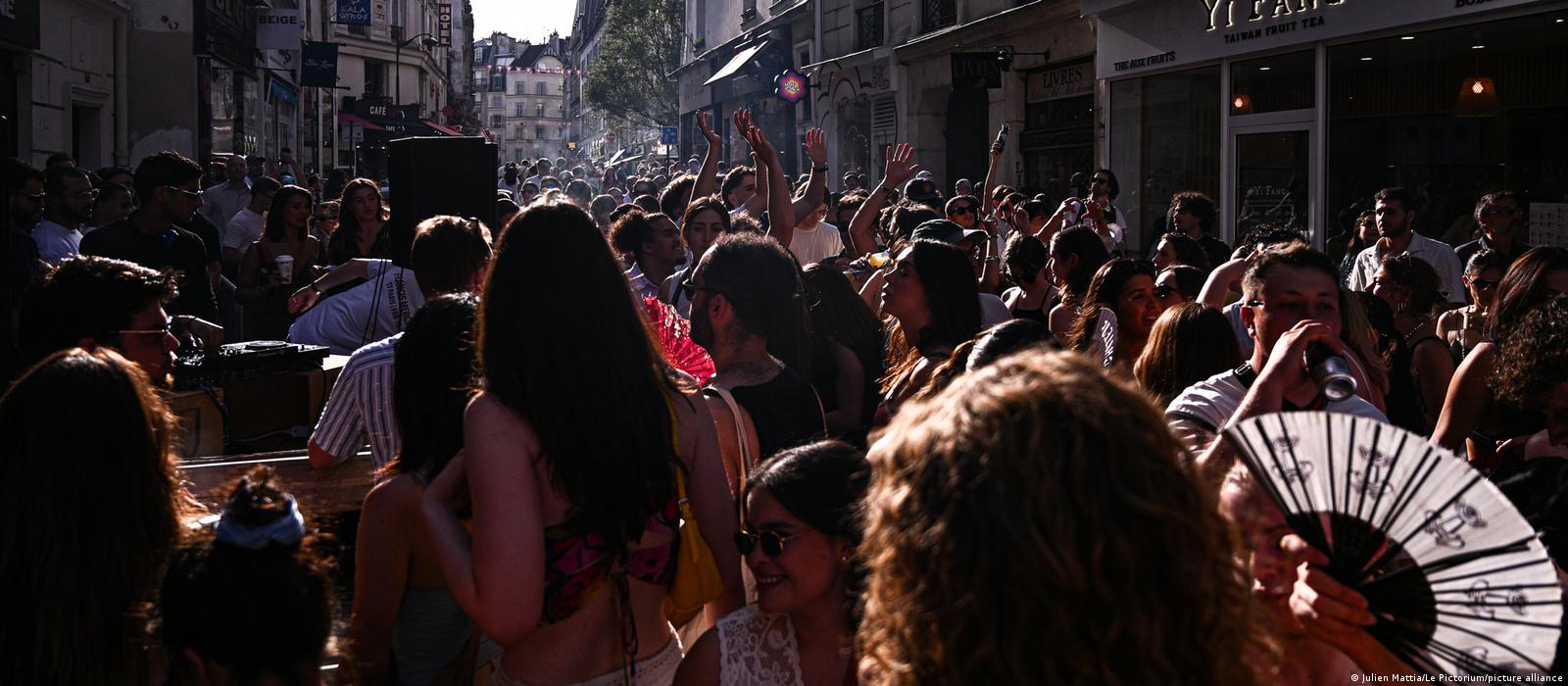
PARIS — France has taken the extraordinary step of banning alcohol consumption across a vast swath of the country during its most celebrated national music festival as a historic and dangerous heatwave pushes temperatures past 40 degrees Celsius. Following an emergency cabinet crisis meeting led by Prime Minister Sébastien Lecornu, the government announced that all public consumption of alcohol would be strictly prohibited starting at noon on Sunday, June 21, 2026, within any administrative department placed under the highest level “red” weather alert.
The sudden, sweeping restriction has cast an unprecedented shadow over the annual Fête de la Musique, a 40-year-old midsummer tradition that typically draws millions of revelers onto the streets of French cities for free, open-air concerts on the summer solstice. With weather agency Météo-France expanding the maximum-severity red alert to 35 departments—including the entire Paris region, the southwest, and Burgundy—health authorities warned that combining heavy drinking with record-shattering ambient heat would trigger an unmanageable wave of medical emergencies.
A Crucial Safeguard for Emergency Services
The legislative intervention represents a direct effort to protect public health and preserve critical healthcare infrastructure as the country enters its most intense period of extreme weather in decades. By ordering regional prefects to issue local bans on public drinking and forbidding state agencies from serving any alcohol at official festival sites, the prime minister’s office is aiming to prevent a surge in severe dehydration and heatstroke cases.
The instructions have been explicitly given to limit alcohol to preserve emergency and healthcare services, noting that emergency personnel must be allowed to focus exclusively on caring for vulnerable citizens. Medical experts have repeatedly emphasized that alcohol actively exacerbates the biological dangers of extreme heatwaves by accelerating dehydration and severely disrupting the human body’s internal temperature regulation mechanisms.
The strict directives arrived just as meteorologists warned that temperatures could peak near 41 degrees Celsius in localized sectors before intensifying further on Monday. According to climate models, the longevity and intensity of this June weather pattern bear a terrifying resemblance to the infamous August 2003 European heatwave, an environmental disaster that resulted in nearly 15,000 heat-related deaths across France.
Enforcing Sobriety in a Crowd of Millions
Implementing a sudden alcohol ban on the day of the Fête de la Musique presents an immense logistical nightmare for French law enforcement. According to official calculations, the red alert zones encompass approximately 26 million residents, plus hundreds of thousands of summer tourists visiting the capital. In Paris alone, where the festival routinely attracts up to two million participants to the banks of the Seine and urban plazas, the Police Prefecture has deployed thousands of additional officers to enforce the temporary rules.
Specific municipal decrees issued across Paris’s arrondissements have established precise perimeters where the transport, possession, and consumption of alcoholic beverages are entirely outlawed on public pathways, low-lying river quays, and pedestrian bridges. While local restaurants, open-air bistros, and permanent bars holding valid permits are still legally allowed to serve seated customers within their designated property lines, the sale of takeaway alcohol or walking through the streets with open containers faces immediate confiscation and fines.
To help urban populations find relief from the sweltering nighttime conditions, municipal authorities have ordered major parks, public gardens, and green spaces to remain open continuously throughout the night, while state railway companies have distributed free water at major transit hubs.
The New Reality of a Warming Continent
The unprecedented disruption to one of France’s most cherished cultural landmarks has sparked a profound national conversation regarding the escalating, tangible impacts of climate change on European societal norms. As school classes face widespread suspension, dozens of regional trains are canceled due to expanding tracks, and outdoor sports events are systematically called off, the reality of a warming continent is directly altering the rhythms of daily life.
While amateur musicians and professional ensembles still took to the streets to perform on Sunday evening, the absence of the festival’s trademark open-air drinking marked a somber turning point for many participants. As the heatwave shows little sign of breaking before late next week, the dry solstice stands as a stark indicator that European governments are increasingly willing to sacrifice economic activity and deeply ingrained cultural traditions in order to safeguard human life against a hostile and changing climate.