
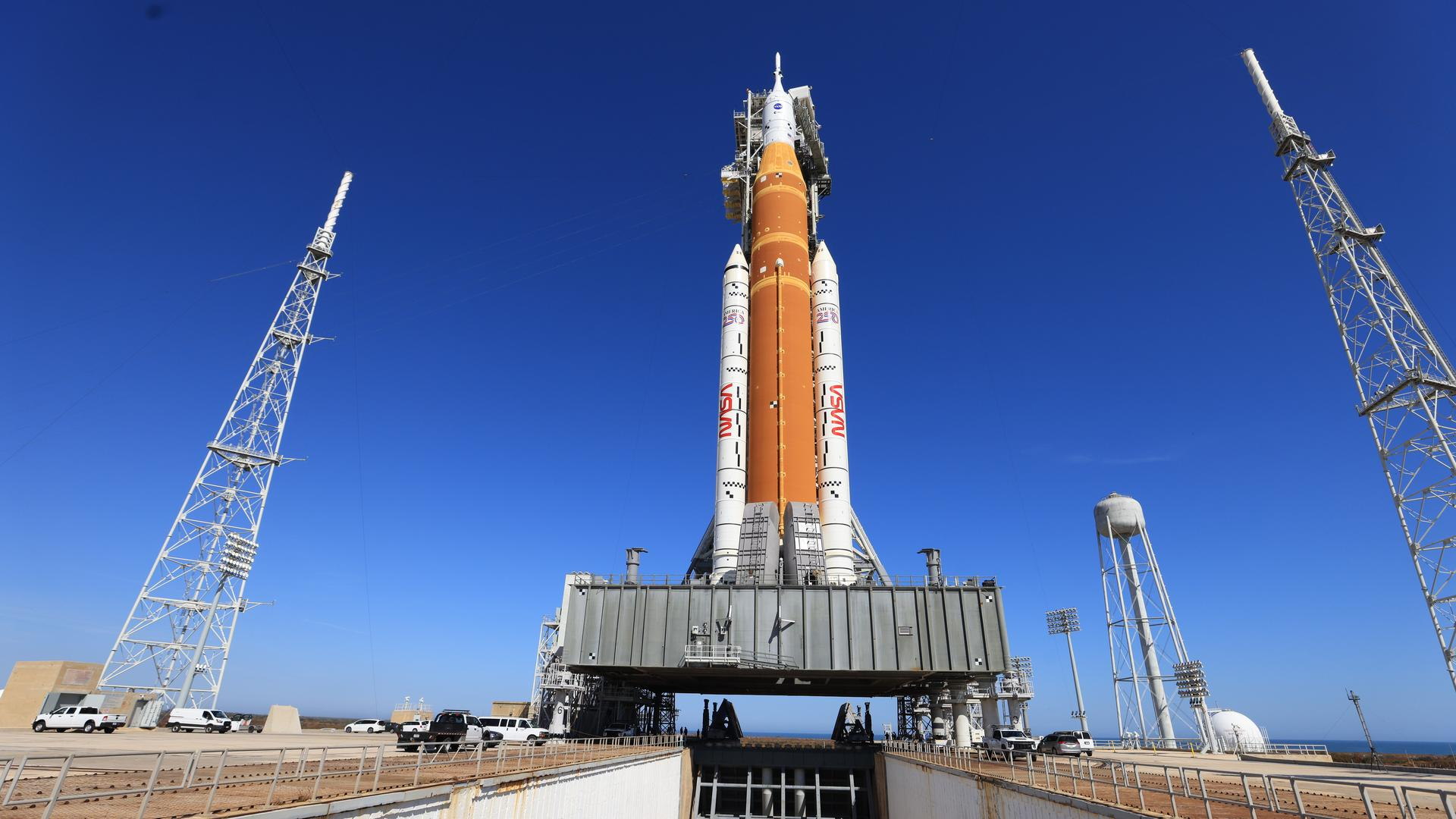
CAPE CANAVERAL, Fla. — In a crushing blow to the global ambition of returning humans to deep space, NASA has officially scrubbed its highly anticipated March launch of the Artemis II mission.
The decision, announced Saturday, February 21, comes just 24 hours after the agency had confidently set a firm target of March 6. The culprit is a critical failure in the helium flow system of the Space Launch System (SLS) rocket’s upper stage—a technical “showstopper” that will force the massive 322-foot vehicle off the launchpad and back into its hangar for repairs.
“This will almost assuredly take the March launch window out of consideration,” NASA Administrator Jared Isaacman announced via X (formerly Twitter). “I understand people are disappointed. That disappointment is felt most by the team who has been working tirelessly to prepare for this great endeavor.”
The Midnight Glitch
The crisis unfolded during routine overnight testing at Launch Pad 39B. Engineers detected an “interrupted flow” of helium within the rocket’s Interim Cryogenic Propulsion Stage (ICPS).
Helium is the unsung hero of rocket science: it is used to purge engines and pressurize fuel tanks, ensuring that volatile propellants flow correctly. Without it, the rocket is effectively a dead weight. Unlike the hydrogen leaks that plagued earlier tests this month, this helium issue appears to involve a faulty valve or connection plate deep within the internal plumbing—components that cannot be accessed safely while the rocket is exposed on the seaside pad.
The Long Road Back (Literally)
The immediate consequence is a rollback. For the next several days, ground teams will prepare the “Crawler-Transporter” to carry the SLS and its Orion capsule four miles back to the Vehicle Assembly Building (VAB).
- The Timeline: Rollback and repairs are expected to take several weeks.
- The New Target: NASA has all but abandoned March. The next viable launch windows open in early to mid-April 2026.
- The Crew in Limbo: The four astronauts—Commander Reid Wiseman, Pilot Victor Glover, Mission Specialist Christina Koch, and Canadian Space Agency specialist Jeremy Hansen—had entered mandatory quarantine just hours before the failure was detected. They have now been released back to their families until a new date is finalized.
A Pattern of Delays
This latest setback is part of a grueling three-year struggle to launch the first crewed lunar mission since Apollo 17 in 1972.
- Early February 2026: A “Wet Dress Rehearsal” was aborted due to a hydrogen leak.
- February 19, 2026: A second fueling test was deemed a “success,” leading to the short-lived March 6 target.
- February 21, 2026: The helium flow failure ends the March dream.
The stakes go beyond mere scheduling. The Artemis II mission—a 10-day flyby around the moon—is the mandatory precursor to Artemis III, the mission intended to land the first woman and first person of color on the lunar surface. With Artemis II slipping further into 2026, the target for the lunar landing has already been pushed to 2028.
The Silver Lining?
Despite the frustration, NASA officials maintain that the “Fire Horse” year is about momentum, not just speed. “We earn our right to fly by being meticulous,” said Launch Director Charlie Blackwell-Thompson. “We’d rather find this on the ground than 200,000 miles away.”
As the SLS prepares for its slow retreat to the hangar, the world’s most powerful rocket remains a symbol of both immense human potential and the unforgiving physics of the cosmos. For now, the moon remains out of reach—but only by a few more weeks.