
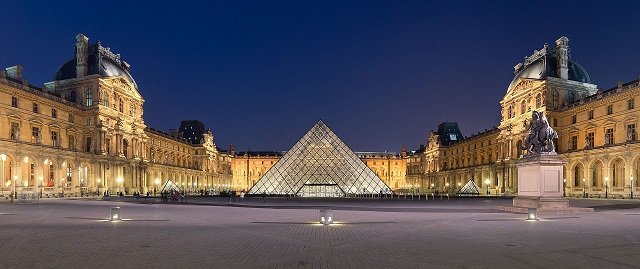
PARIS— In a move of unprecedented urgency and secrecy, the Louvre Museum has quietly transferred its remaining collection of priceless jewels to the subterranean, ultra-secure vaults of the Bank of France, just days after a brazen daylight heist exposed what officials now admit were “woeful flaws” in the museum’s security apparatus.
The clandestine operation, carried out under heavy police escort late Friday, saw the un-stolen artifacts from the famed Galerie d’Apollon—home to the French Crown Jewels—whisked a mere 500 meters across the Right Bank of the Seine. Their new home is the central bank’s “Souterraine,” a massive, multi-level bunker 88 feet beneath the streets of Paris that famously houses 90% of France’s gold reserves.
The decision underscores a national crisis of confidence in the security of France’s cultural heritage, following the stunning October 19th robbery in which masked thieves made off with eight historical pieces, including items belonging to Empress Eugénie and Empress Marie-Louise, with an estimated value of $102 million.
The Shame of the Smash-and-Grab
The robbery was a cinematic humiliation for the world’s most-visited museum. Operating in broad daylight, the thieves used a truck-mounted mechanical lift to reach a first-floor window, then used an angle grinder to smash through a reinforced barrier. They were in and out in less than four minutes, a stunning speed that allowed them to bypass all immediate security responses and escape on motorbikes.
Louvre Director Laurence des Cars, facing intense public and political scrutiny, had already testified to lawmakers that the security system was plagued by “aging infrastructure” and “known and identified weaknesses.” Crucially, she admitted that the only security camera covering the exterior wall where the break-in occurred was pointed in the wrong direction, leaving the thieves an unmonitored blind spot.
The brazen efficiency of the heist, which one lawmaker branded “shameful for our country,” left the French government with one non-negotiable directive: protect what remains at all costs.

An Impenetrable New Home
The transfer to the Bank of France—a highly guarded fortress that has long been a symbol of national fiscal stability—is a drastic but necessary measure. The Souterraine vault is considered one of the most secure places on earth, protected by a seven-ton, flame-resistant concrete door reinforced with steel, and a rotating 35-ton turret designed to prevent any forced entry.
By moving the jewels from the Apollo Gallery, a public exhibition space, to a national treasury vault, the French state is essentially declaring that the historical value of these assets far outweighs their immediate public display value. The move also highlights the unique risk profile of the Louvre, a former royal palace with vast perimeters and an inordinate daily flow of human traffic.
Investigators, meanwhile, remain locked in a “race against time” to recover the stolen objects, now analyzing over 150 DNA, fingerprint, and trace samples left at the crime scene. While they hold a “small hope” of catching the perpetrators before the jewels are disassembled and melted down for their raw materials, the official transfer of the remaining collection serves as a grim acknowledgement of the vulnerability of France’s artistic patrimony.
The treasures may have survived wars and revolutions in their centuries-long history, but a mere eight minutes of modern-day audacity was enough to send them from a museum floor to a bunker deep within the heart of the Republic’s financial might. Their return to public display, authorities concede, is now an open question.