
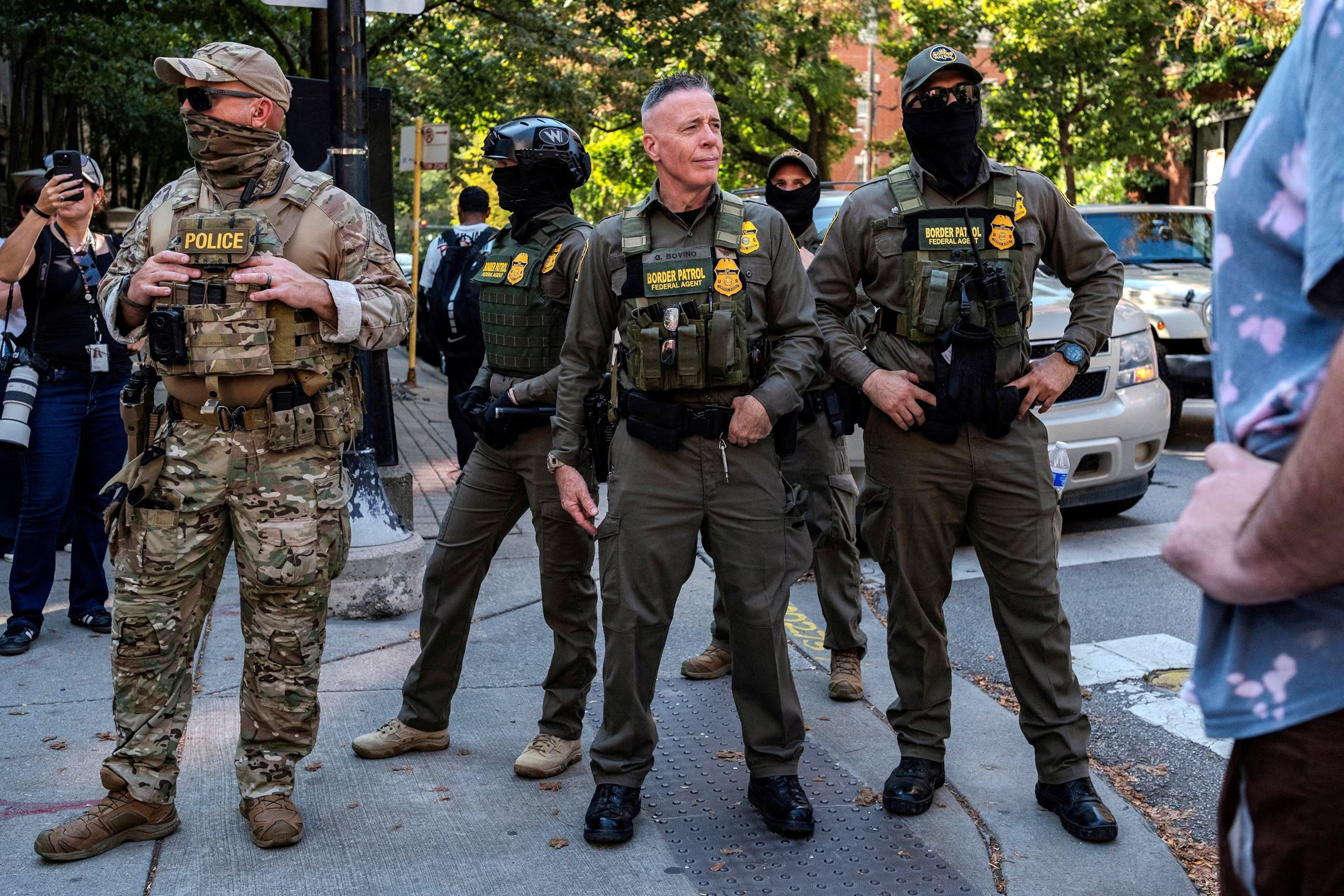
In a dramatic escalation of the federal presence in a Democrat-led city, President Donald Trump has authorized the deployment of 300 National Guard troops to Chicago, a move the White House asserts is necessary to quell “violent riots and lawlessness” and protect federal assets. The decision, which federalizes the Illinois National Guard members, was made over the vociferous objections of state leadership, who denounced the action as an unconstitutional political stunt.
The authorization follows a weekend of tense confrontations between federal agents and protesters, culminating in an incident where Border Patrol agents shot and injured a woman they claim was an armed motorist attempting to ram their vehicles.
The Administration’s Rationale: ‘Lawlessness’ and Protection
White House spokesperson Abigail Jackson confirmed the deployment on Saturday, stating, “President Trump has authorized 300 national guardsmen to protect federal officers and assets. President Trump will not turn a blind eye to the lawlessness plaguing American cities.”
The deployment is specifically targeted to protect federal personnel and facilities, following a surge in immigration enforcement operations by U.S. Immigration and Customs Enforcement (ICE) in the Chicago area. The Department of Homeland Security (DHS) referenced the Saturday shooting incident—in which agents reportedly opened fire on a woman who was part of a group that “boxed in” federal vehicles—as a key trigger for the action.
The deployment to Chicago mirrors similar controversial federal actions in other Democratic-run cities, including Los Angeles and Washington, D.C., where the administration has sought to impose control over local security and immigration policies.
Governor Pritzker’s Fury: ‘An Outrageous and Un-American Ultimatum’
Illinois Governor J.B. Pritzker, a Democrat, was swift and unyielding in his condemnation of the President’s order. He revealed that the state’s National Guard received an ultimatum from the Pentagon: “call up your troops, or we will.”
Pritzker refused the demand and slammed the federalization of the Illinois Guard as an unprecedented overreach. “It is absolutely outrageous and un-American to demand a Governor send military troops within our own borders and against our will,” Pritzker said in a statement. He dismissed the deployment as a “manufactured performance—not a serious effort to protect public safety,” arguing that the move was politically motivated and intended to distract from the administration’s contentious immigration and security policies.
Illinois Lieutenant Governor Juliana Stratton echoed the sentiment, calling the action “intentional cruelty” that would “devastate families and scar our communities.”
A Pattern of Federal Intervention
The Chicago deployment comes just as the Trump administration faced a legal setback in its strategy of dispatching military forces to Democratic-led cities. A federal judge in Oregon issued a temporary restraining order on Saturday, blocking the deployment of 200 National Guard troops to Portland, ruling that the President’s justification was “simply untethered to the facts.”
Unlike a governor’s activation, the federalization of the National Guard places the troops under Title 10 of federal law. This status typically restricts the troops from performing direct law enforcement duties, limiting their role to protecting federal property and supporting federal agents. However, critics, including the ACLU, have voiced concerns that the federal government’s broad mandates have led to National Guard members overstepping those boundaries in other jurisdictions.
The battle over the National Guard in Chicago is poised to become the latest flashpoint in the ongoing legal and political conflict between the federal government and state leaders over executive authority, civil liberties, and the militarization of domestic law enforcement. Governor Pritzker has indicated his intention to challenge the deployment in federal court.