Home Blog Page 3

Iconic T. Rex Skeleton Set to Become the Most Expensive Fossil in Human History

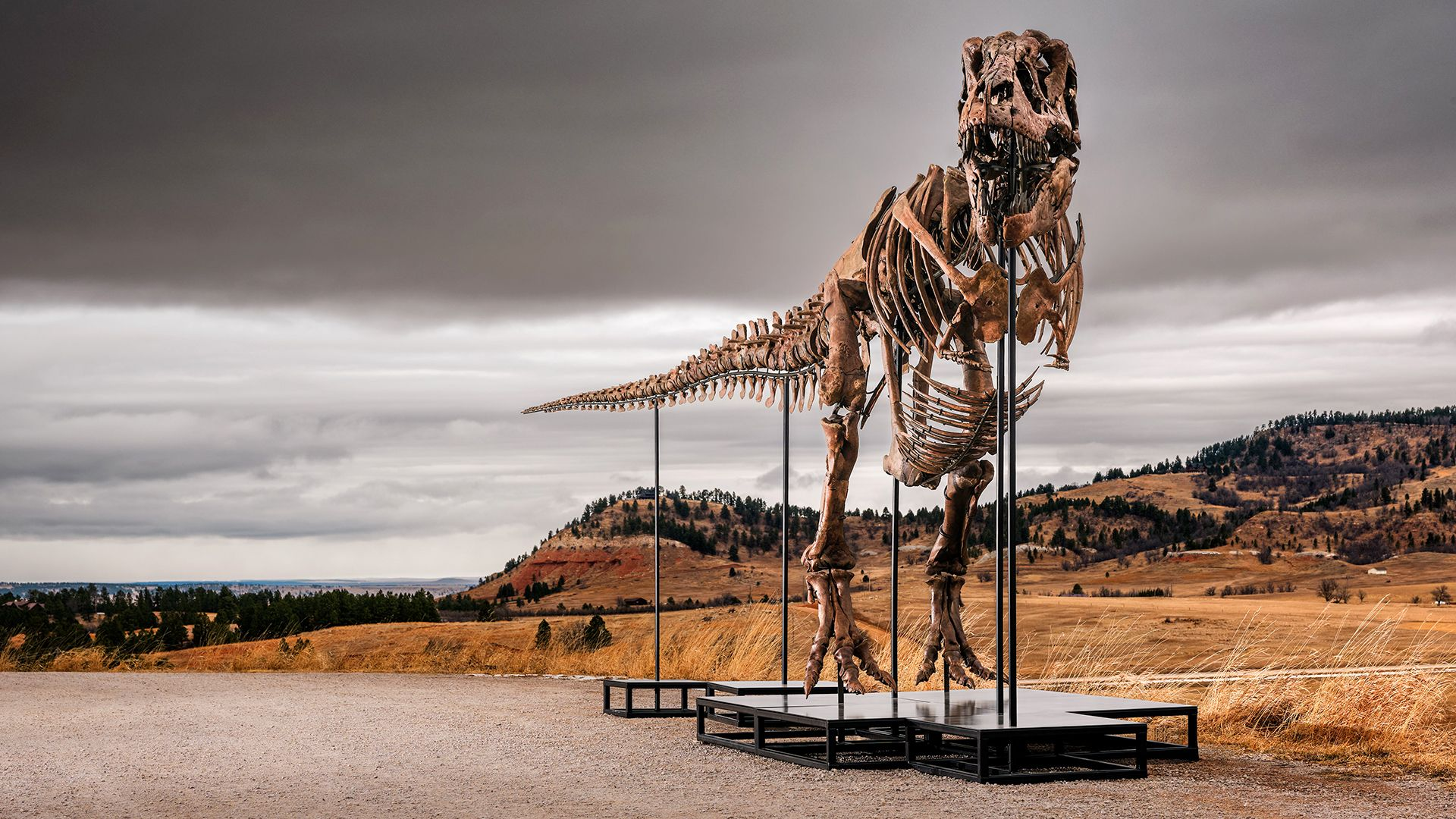
LONDON — The global art and antiquities markets are preparing for an unprecedented paleontological milestone. An exceptionally rare, nearly complete Tyrannosaurus rex skeleton is slated to cross the auction block this autumn, with top appraisers predicting the specimen will shatter all existing benchmarks to become the most expensive fossil ever sold.

The prehistoric icon has been valued at a staggering presale estimate of $120 million to $150 million. If the final hammer matches these jaw-dropping projections, the sale will comfortably eclipse previous world records, where high-profile dinosaur skeletons fetched tens of millions from international museums and anonymous private buyers.


A Marvel of Prehistoric Preservation

Unearthed by commercial paleontologists from a fossil-rich formation in the American West, the skeleton stands as a triumph of natural preservation. Measuring an imposing 40 feet in length and standing 13 feet tall, the specimen boasts an astonishing 72 percent skeletal completeness, including a beautifully intact, menacing skull that still displays pristine, serrated serrations on its razor-sharp teeth.

What elevates this specific T. rex above previous discoveries is the presence of incredibly rare soft-tissue impressions fossilized within the surrounding rock matrix, alongside visible healed bite marks on its ribs—battle scars pointing to a violent encounter with another apex predator some 66 million years ago.

The sheer completeness and narrative power of the skeleton have transformed it from a mere scientific curiosity into the ultimate trophy asset. Wealthy financiers, tech billionaires, and international museum consortia are already mobilizing capital to prepare for what auctioneers are calling a once-in-a-generation acquisition opportunity.


The Ethics of the Gilded Bone Trade

While the upcoming auction has triggered immense excitement among elite collectors, it has also reignited a fierce, long-simmering ethical debate within the international scientific community. Leading paleontologists and academic institutions have voiced deep concern over the increasing commodification of irreplaceable natural heritage.

When significant specimens are purchased by private individuals for display in penthouse boardrooms or private estates, researchers are frequently denied physical access to the bones, effectively locking away crucial data regarding dinosaur evolution, growth rates, and behavior.

Public universities and state-funded museums simply do not possess the financial resources to compete in the nine-figure arena. Academic institutions find themselves entirely priced out of the market, reliant instead on the rare philanthropy of wealthy benefactors who might purchase a fossil and subsequently donate it to a public collection.

The soaring valuations have supercharged the commercial fossil-hunting industry. While landowners celebrate the sudden windfalls, academics warn that the rush for high-value targets can lead to the neglect or destruction of less glamorous, but scientifically vital, micro-fossils and geological contexts.


The Crown Jewel of Alternative Investments

Despite the academic pushback, the market momentum for high-end natural history objects shows no signs of slowing down. Over the past decade, dinosaur skeletons, meteorites, and ancient remains have transitioned from niche scientific curiosities into mainstream alternative assets, aggressively pursued by the same class of investors who trade in masterpieces by legendary painters or rare digital collectibles.

Auction houses have capitalized on this cultural shift, masterfully marketing these ancient titans not as biological specimens, but as the ultimate form of sculpture—prehistoric fine art carved by time itself.

As the countdown to the auction begins, the sky-high valuation of this Tyrannosaurus rex underscores a fascinating paradox of the modern world. Millions of years after ruling the Cretaceous landscape through brute, predatory force, the king of the dinosaurs is poised to conquer a completely different kind of jungle: the cutthroat, hyper-inflated arena of international high finance.



U.S. Launches Massive Wave of Strikes as Iran Chokes Off Strait of Hormuz and Blasts Regional Bases

The United States military has unleashed a punishing, heavy wave of air assaults against approximately 140 military targets inside Iran, hours after Tehran officially declared the critical Strait of Hormuz closed “until further notice”. The rapid escalation on Sunday, July 12, 2026, marks the third round of American strikes this week. It has shattered the remnants of a provisional ceasefire and pushed the Middle East to the precipice of an unmanageable regional war.

In a volatile chain reaction, the Islamic Revolutionary Guard Corps responded to the American bombardment by launching a torrent of ballistic missiles and explosive drones at U.S. facilities across the Gulf. State-directed strikes pounded targets in Jordan, Bahrain, Kuwait, Qatar, and Oman, while the United Arab Emirates reported active air defense interceptions over its territory.

The Trigger at the Choke Point

The latest collapse began when Iranian forces targeted a Cyprus-flagged container ship, the M/V GFS Galaxy, as it attempted to navigate the narrow shipping lanes of the strait. Tehran’s naval forces claimed they fired a warning shot at the vessel because it was utilizing an “unauthorized route” deliberately drawn to bypass Iranian maritime authority.

The attack severely damaged the commercial ship, sparking an onboard fire that forced the civilian crew to abandon the vessel in the Gulf of Oman. U.S. Central Command confirmed that the container ship was completely incapacitated and that at least one civilian mariner remains missing at sea.

Following the raid, the Revolutionary Guards announced on state media that the vital maritime corridor—which handles roughly 20 percent of the global oil supply—was sealed to all traffic until the complete termination of American interventions in the region.

Trump Orders a Triple-Digit Retaliation

Acting under direct orders from President Donald Trump, U.S. combat aircraft and naval assets retaliated with overwhelming force. The fresh operation targeted more than 300 Iranian military positions across major coastal and inland hubs, triggering powerful explosions in the strategic port cities of Bandar Abbas, Bushehr, Asaluyeh, Sirik, and Jask.

According to military logs released by Central Command, the highly concentrated strikes demolished active missile and drone launch sites, subterranean ammunition bunkers, and coastal surveillance networks. The Pentagon emphasized that the operation was specifically calibrated to degrade Iran’s physical capability to target civilian mariners and hold international waterways hostage.

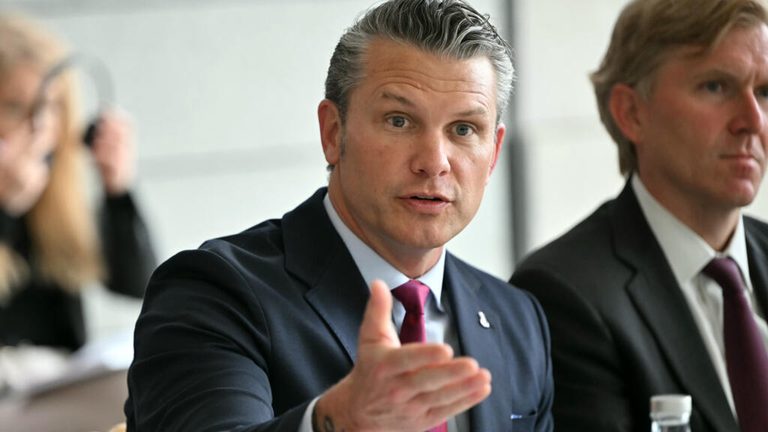
“Now they pay,” U.S. Defense Secretary Pete Hegseth warned in a brief statement following the conclusion of the air raids. The heavy deployments follow a combative week of warnings, during which Trump declared the initial February ceasefire dead. Trump also posted an explicit ultimatum online, warning that any attempt by Tehran to target American leadership would result in the United States completely decimating the Islamic Republic with thousands of locked-and-loaded missiles.

A Regional Storm Ignites

Tehran’s response was immediate and structurally coordinated, extending the conflict far beyond its own borders. Rejecting the American claims of defensive actions, Iran’s foreign ministry labeled the Western strikes a brutal act of sovereign aggression.

Within hours of the coastal bombings, the Revolutionary Guards executed heavy, synchronized drone and missile strikes targeting the U.S. military footprint throughout the Middle East. The regional counter-offensive hit a U.S. base in Jordan and triggered missile defense sirens across major allied Arab Gulf states. In Tehran, the newly installed Supreme Leader, Mojtaba Khamenei, publicly echoed vows of total retribution for the ongoing Western campaign.

Global energy markets reacted instantly to the military crossfire, with crude oil indices fluctuating sharply as international shipping firms scrambled to reroute multi-million dollar cargo vessels away from the Persian Gulf. While international mediators continue a desperate, back-channel scramble to restore communication lines, the thunder of anti-aircraft fire over the Gulf suggests that the window for a diplomatic resolution has violently slammed shut.

White Silk, Arena Lights, and a Man of Honour: Inside Taylor Swift and Travis Kelce’s Historic Madison Square Garden Wedding

NEW YORK — The most anticipated pop-culture prophecy of the decade has officially been fulfilled. On Friday, July 3, 2026, pop megastar Taylor Swift and future Hall of Fame football player Travis Kelce tied the knot in a spectacular, star-studded ceremony. Shuttering one of Midtown Manhattan’s busiest transit corridors for the holiday weekend, the couple gathered roughly 1,000 of their closest friends, family members, and A-list celebrities for an unforgettable night inside the legendary Madison Square Garden.

The world received official confirmation of the nuptials at approximately 7:30 p.m. ET. At that exact moment, the arena’s massive outdoor marquee and giant electronic screens across New York City unexpectedly lit up in a pinkish-lavender glow, flashing the celebratory message: “JUST&T MARRIED!”—a clever, stylized play on the couple’s famous “T&T” initials. As the historic details emerge from the tightly sealed arena, the evening is taking shape as a masterclass in grand spectacle, family loyalty, and delightfully unexpected celebrity cameos.


The Custom Dior Masterpieces

Ditching traditional bridal houses, the couple made a monumental high-fashion statement by wearing matching custom looks from Christian Dior Haute Couture. The garments were designed by Jonathan Anderson, marking the acclaimed designer’s very first time creating a couture wedding dress for a world-renowned celebrity.

Anderson worked intimately with the bride and groom to craft the historic garments. While official photos of the attire remain fiercely guarded, representatives confirmed the meticulously tailored ensembles were paired with custom-made shoes by Christian Louboutin, while the bride completed her look with exquisite Cartier jewelry.


Officiated by Adam Sandler

In one of the evening’s most surprising twists, the person standing at the altar to guide the couple through their vows was none other than Hollywood comedy icon Adam Sandler. The Happy Gilmore actor, who is a close personal friend of Kelce following the athlete’s cameo in his 2025 film sequel, served as the official wedding officiant.

Sandler struck a masterful balance between humor and sincere emotion. Guests reported that the vows were everything the public could have hoped for: real, deeply vulnerable, serious, and silly all at once. Rather than forcing a stiff, traditional protocol, Sandler’s presence anchored the massive arena ceremony in warmth and lighthearted joy.

Taylor Swift Travis Kelce wedding

A Family Affair: No Attendants, Just Brothers

Breaking away from standard wedding traditions, Swift and Kelce opted not to have a large entourage of bridesmaids or groomsmen. Instead, they kept their inner altar circle strictly restricted to their beloved brothers.

  • The Man of Honour: Taylor chose her younger brother, Austin Swift, to stand by her side in the boundary-breaking role of Man of Honour.
  • The Best Man: Travis looked to his brother and New Heights podcast co-host, former NFL star Jason Kelce, to serve as his best man.

The choice to elevate their siblings over a massive celebrity wedding party underscored the deeply rooted family values that have defined the couple’s public romance from the very beginning.


An A-List Guest List and Multi-Million Dollar Generosity

Despite heavy police barricades and stifling summer heat, a massive crowd of dedicated fans huddled outside the stadium doors to watch an endless stream of global icons arrive in immaculate black-tie attire. The guest list featured a cross-pollination of the music, sports, and film worlds, with sightings of Hugh Grant, Gigi Hadid, Ethan Hawke, Jason Sudeikis, and singer Benson Boone. Guests were treated to legendary musical sets, with rock icons Stevie Nicks and Paul McCartney reportedly taking the stage during the lavish reception.

The celebration extended far beyond the walls of Madison Square Garden. In the days leading up to the ceremony, a spokesperson confirmed that the billionaire couple chose to mark their marriage by quietly donating a staggering $26 million to charity. The waves of financial giving were distributed among regional food banks, arts education programs, and pediatric cancer charities—including a $2 million gift to Dolly Parton’s Imagination Library.

As the couple gifts attendees with monogrammed “T&T” handkerchiefs featuring lyrics to her hit song “Blank Space,” the historic New York night draws to a close. In transforming a legendary sports arena into a lavender-lit sanctuary of love, Taylor and Travis proved that even the most scrutinized love story in the world can find its perfect, unforgettable ending.


The Long-Delayed Funeral of Iran’s Slain Supreme Leader Becomes an Intensely Political Referendum

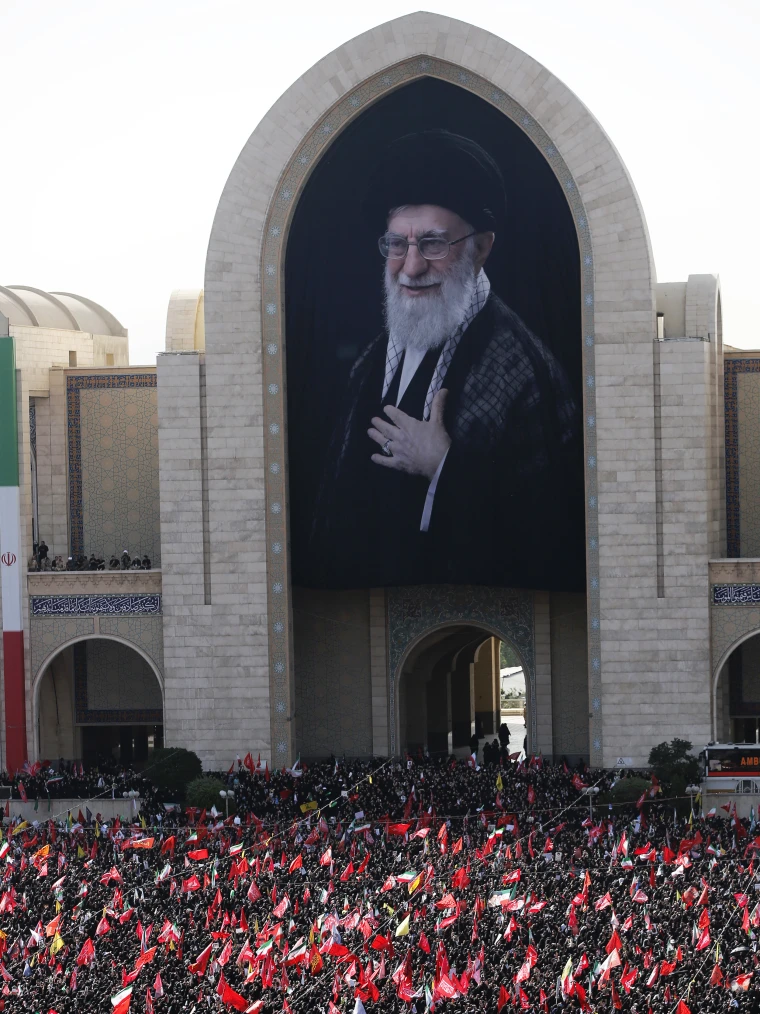
TEHRAN — Moving through a sea of black-clad mourners under a punishing summer heatwave, the flag-draped coffin of Ayatollah Ali Khamenei has transformed the streets of Iran into an intensely political theatre. Four months after the former Supreme Leader was killed in the opening joint U.S.-Israeli airstrikes of the war, the Islamic Republic has launched a sprawling, six-day state funeral designed to project absolute defiance, mask deep internal divisions, and solidify the legitimacy of a battered theocracy.

The extraordinary, highly choreographed spectacle spans multiple cities across Iran and neighboring Iraq, culminating in a burial in his holy hometown of Mashhad. It serves as a high-stakes referendum on the survival of the regime. For a leadership managing an uneasy, fraying ceasefire with Washington while quietly installing his reclusive son, Mojtaba Khamenei, as the new Supreme Leader, the mass mobilization of millions of state loyalists is an essential show of strength to the outside world.

Grief Weaponized as Geopolitics

Inside the vast courtyard of Tehran’s Grand Mosalla mosque, the air thick with incense and synchronized anti-American chants, the political messaging of the funeral was impossible to mistake. Khamenei’s casket lay on a raised dais alongside the smaller coffins of his family members killed in the same February 28 bombing, including his eldest daughter and his 14-month-old granddaughter.

The current political elite—including President Masoud Pezeshkian, Parliament Speaker Mohammad Bagher Qalibaf, and Foreign Minister Abbas Araghchi—stood shoulder-to-shoulder with visiting international dignitaries, using the collective mourning to scream for sovereign vengeance. Senior civilian and military officials explicitly warned Western powers that the pauses in active conflict were not a sign of capitulation, but a tactical period of respect.
The hyper-political atmosphere extended instantly to regional security dynamics. While foreign delegates viewed the caskets, Iranian officials publicly issued a fierce warning to the United Kingdom and France after both European nations suggested deploying warships to patrol the crucial Strait of Hormuz. The regime used the platform to assert its absolute right to regulate the maritime choke point, framing Western naval presence as a dangerous provocation that would not go unanswered.

Iran Ayatollah Ali Khamenei funeral

A Tense Transition and a Missing Leader

The immense crowds, which municipal authorities predicted could ultimately top 20 million across the multi-city route, offer a convenient shield for a regime undergoing an incredibly delicate and tense internal transition. The long delay in burying the former leader was ostensibly forced by the active hostilities of the spring, but it also bought precious time for the clerical establishment to manage the succession crisis.

While state media saturated the airwaves with images of national unity, the most powerful man in Iran remained notably absent from the public view. The new Supreme Leader, Mojtaba Khamenei, did not appear alongside his father’s casket. Officially, the new leader remains in hiding while recovering from injuries sustained in the initial war-starting strikes, but his absence has fueled intense speculation regarding the stability and security of his nascent tenure.

Furthermore, independent analysts point out that the massive, state-orchestrated turnout does not paint a complete picture of the polarized country. The funeral arrives less than a year after security forces executed a brutal, nationwide crackdown on widespread anti-regime protests. In private quarters of the capital, away from the state security cordons, a weary and cynical populace continues to manage daily life under a collapsing domestic economy where basic commodities fluctuate in price by the hour.

The Unbroken Trial of Strength

As the funeral procession prepares to travel down the 10-kilometer route from Imam Hossein Square toward Azadi Square before crossing the border into Shia holy sites in Iraq, the political currency of the event remains the regime’s primary focus. In a modern twist on psychological warfare, President Donald Trump mocked the pause in hostilities from an American campaign rally, suggesting the U.S. had given Iran “a week off for a funeral.”

That dismissive rhetoric from Washington has only hardened the resolve of the hardline faction dominating Tehran. By parading the preserved remains of a leader who spent nearly four decades anchoring his rule on anti-Western ideology, the Islamic Republic is signaling to its regional proxies and global adversaries that its core identity remains unchanged.

The grandeur of the multi-day procession will eventually fade when the former ayatollah is finally laid to rest at the Imam Reza Shrine on Thursday. But as sluggish, back-channel peace talks stall and naval forces position themselves near the Gulf, it is clear that the brutal trial of strength between Iran and the West did not die with Ali Khamenei—it has merely entered its next, unpredictable chapter.

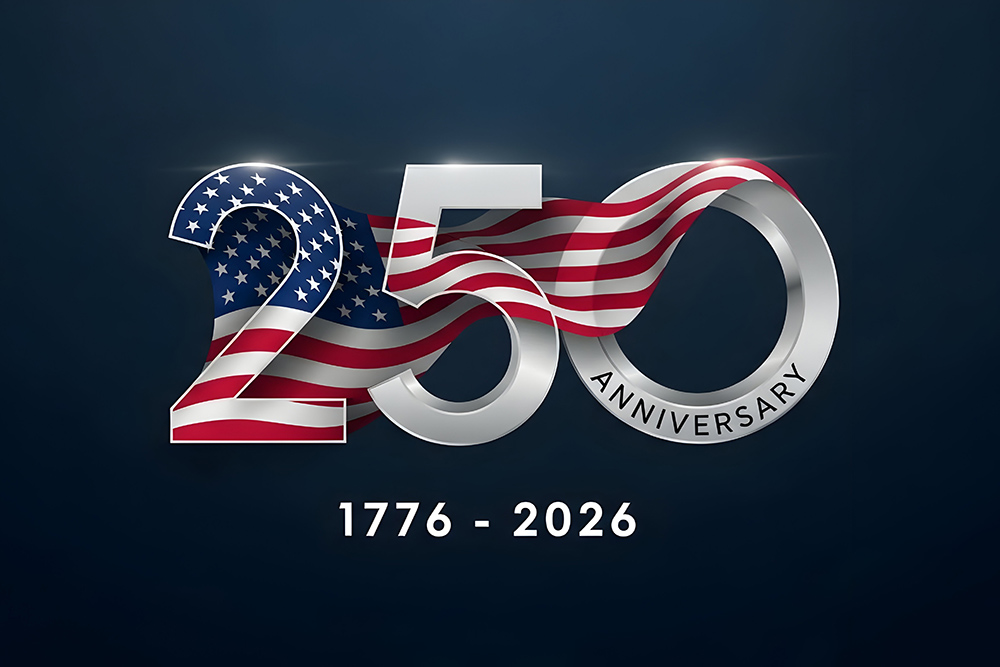
America Marks Its 250th Birthday with Sky-High Pomp and Deepening Climate Crises

Beneath a heavy, amber-tinted sky, the United States of America marked its historic Semiquincentennial on Saturday, July 4, 2026. The 250th anniversary of the nation’s founding was met with an unprecedented display of military flyovers, roaring artillery, and massive fireworks displays that illuminated the National Mall. Yet, the grand celebrations played out against a stark, real-time backdrop of extreme weather that forced millions of Americans to confront a changing continent.

From the sweltering concrete of Washington to the scorched plains of the West, the milestone anniversary served as both a testament to America’s enduring historical legacy and a vivid demonstration of its current environmental and infrastructure challenges. While politicians delivered soaring speeches on democratic resilience, local emergency services spent the holiday managing an onslaught of record-breaking heatwaves, coastal flooding, and wildfire threats.

Thunder on the Mall and Pomp in the Capital

In the nation’s capital, the Semiquincentennial celebrations kicked off with a thunderous multi-service military flyover. Dozens of vintage and cutting-edge aircraft—including roaring F-35 fighter jets and heavy B-2 stealth bombers—streaked across the sky, tracing a path directly over the Lincoln Memorial and the Washington Monument. On the ground, massive crowds of residents and international tourists braved stifling humidity to witness a historic 50-gun “Salute to the Union” executed by the U.S. Army.

As darkness fell, Washington hosted the largest pyrotechnic display in its history. Thousands of shells illuminated the Potomac, painting the sky in vibrant shades of crimson and blue. The visual spectacle was mirrored in major hubs across the Eastern seaboard, including New York City, where a massive flotilla of historic tall ships paraded past the Statue of Liberty earlier in the afternoon.

The festive atmosphere, however, was highly managed. In several major metropolitan centers, local municipalities had to adjust scheduling or implement strict security cordons due to aging electrical grids buckling under the immense demand of seasonal air conditioning and holiday lighting.

America 250th birthday

A Searing Contrast: The Heatwave and the Flames

While the skies above the capital burned with fireworks, the actual ground across a vast swath of the American homeland was experiencing a far more dangerous burn. A historic, multi-state heatwave shattered dozens of all-time temperature records on July 4, stretching emergency infrastructure from the Desert Southwest up into the Pacific Northwest.

In California and Arizona, temperatures soared past 46 degrees Celsius, turning holiday weekend travel into a logistical hazard as car engines overheated on packed freeways and tarmac surfaces softened under the sun.

The extreme heat dried out mountain vegetation, sparking several fast-moving blazes. In Utah and Colorado, planned community fireworks displays were systematically canceled at the last minute by regional governors, replaced instead by synchronized drone light shows to avoid triggering catastrophic wildfires.

On the Atlantic coast, an entirely different environmental phenomenon disrupted plans. In parts of Florida and the Carolinas, high-tide sunny day flooding swamped low-lying coastal roads, forcing holiday parades to reroute away from beachside boardwalks.

A Quarter-Millennium Milestone

The juxtaposition of traditional patriotic pageantry and immediate climate disruptions provided a sobering framework for the country’s 250th birthday. Historians and policy analysts noted that the Semiquincentennial arrived at a unique moment in the American story—a period defined by significant technological achievement but also by deep structural conversations regarding the nation’s future energy and resource security.

In his official address, President Donald Trump lauded the country’s historic journey from a collection of vulnerable colonies to a global economic and military superpower, calling the 250-year milestone a triumph of human liberty.

Yet, as the last smoke from the fireworks drifted away into the warm night air, the enduring image of America’s 250th birthday remained one of a nation operating under pressure. Trapped between the grand ideals of its past and the visceral realities of its changing physical environment, the republic entered its next quarter-century facing a familiar, foundational task: adapting its grand experiment to survive a new and unpredictable era.

U.S. and Iran Trade Heavy Air and Missile Strikes in Bitter Battle over Ceasefire Violations

WASHINGTON and TEHRAN — A fragile, two-week-old peace initiative in the Middle East has collapsed into open conflict. The United States and Iran launched a series of high-intensity retaliatory strikes against each other’s assets, trading furious accusations over who shattered the diplomatic agreement meant to halt a four-month-old war.

The rapid breakdown threatens to unravel the Islamabad Memorandum of Understanding signed on June 17, 2026. That agreement established a critical 60-day window for both nations to broker a permanent peace deal and restore commercial shipping through the vital Strait of Hormuz. Instead, the waters of the Persian Gulf and neighboring military bases have transformed into active combat zones.

The Marquee Spark: Clash Over the Choke Point

The latest spiral of violence began when an Iranian drone targeted the M/V Ever Lovely, a Singapore-registered commercial cargo ship transiting the Strait of Hormuz. Tehran defended the operation, asserting that the merchant vessel was using an unauthorized, unapproved shipping route to cross the tight Gulf waterway. Under the interim agreement, Iran claims administrative jurisdiction over passage logistics in the strait, a point it says the U.S. deliberately provoked.

The U.S. response was swift and heavy. Acting on orders from President Donald Trump, U.S. Central Command deployed warplanes to conduct self-defense strikes along Iran’s southern coast. American bombs hit multiple targets near the coastal cities of Sirik and Bandar Abbas, destroying active radar sites, coastal surveillance equipment, and subterranean drone and missile storage facilities.

Central Command described the operation as a powerful, justified response to an unprovoked attack on global maritime commerce. “This unwarranted aggression against commercial shipping by Iranian forces clearly violated the ceasefire,” U.S. military officials said in a public statement.

Tehran Fires Back with Ballistic Missiles

The American air assault prompted an immediate and coordinated counter-strike by Iran’s paramilitary Islamic Revolutionary Guard Corps. Rejecting Washington’s defensive justification, Iran’s foreign ministry condemned the U.S. strikes as a brutal violation of its sovereign territory. Officials lambasted what they called the “treaty-breaking nature” of the American government, arguing that Washington had effectively sabotaged ongoing peace talks.

Hours later, the Revolutionary Guards launched a volley of ballistic missiles and explosive drones at major American military strongholds across the region. According to military communiqués from Tehran, the retaliatory strikes successfully targeted eight key U.S. infrastructure sites. Among the locations hit were the U.S. Navy’s expansive Fifth Fleet headquarters at Port Salman in Bahrain and the strategic Ali al-Salem Air Base in Kuwait.

While Iran’s commanders warned that further Western aggression would face a far broader, crushing response, Bahraini officials publicly condemned the drone strikes as a flagrant danger to regional stability. U.S. defense officials noted that the majority of incoming projectiles were successfully intercepted by integrated air defense shields, minimizing personnel casualties.

A Broken Accord and Global Shockwaves

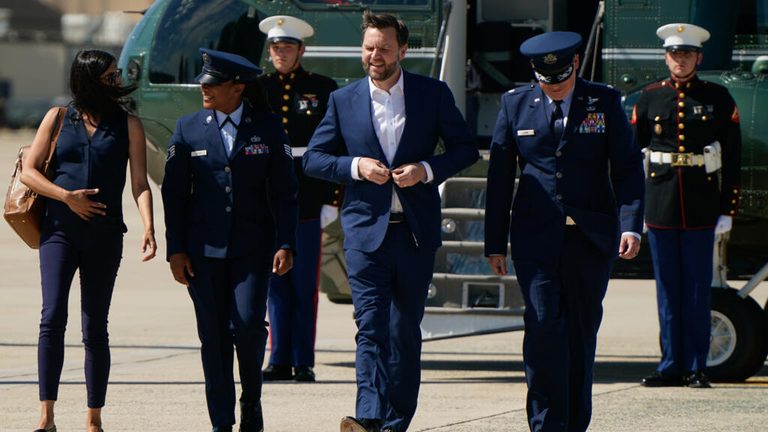
The military escalation has thrown the broader international diplomatic roadmap into complete disarray. Rushing to contain the diplomatic fallout, U.S. Vice President JD Vance warned that while violence would continue to be met with decisive military force, the diplomatic channels remained open. “If they have disagreements about how the memorandum is being applied, they can pick up the phone,” Vance stated, urging a return to the negotiating table.

However, the political will for compromise is rapidly eroding on both sides. Ebrahim Azizi, the head of the Iranian parliament’s national security commission, publicly declared that the U.S. had shown it possesses zero commitment to the principles of a ceasefire.

The immediate economic consequences of the fighting were felt instantly across global markets. Oil futures surged by more than 3 percent as energy traders reacted to the real-time threat of a prolonged, total closure of the Strait of Hormuz, which handles roughly 20 percent of the world’s petroleum supply.

Compounding the crisis, a parallel, fragile truce between Israel and the Lebanese militant group Hezbollah is also fraying, with recent Israeli drone strikes in southern Lebanon further complicating the regional security puzzle. As warships mobilize across the Persian Gulf, the brief window for a negotiated peace is closing, leaving the Middle East on the precipice of a much larger, unchecked war.


Prince Harry Halts Plans to Bring Meghan and Children to UK After Bitter Security Denied

LONDON — A highly anticipated royal family reunion has been thrown into chaos at the eleventh hour. Prince Harry is actively reconsidering his blockbuster plans to bring his wife, Meghan Markle, and their two young children to the United Kingdom. The dramatic, last-minute pivot follows an absolute refusal by British authorities to grant the family taxpayer-funded police protection during their visit.

The Duke and Duchess of Sussex were finalized to arrive in Britain with 7-year-old Prince Archie and 5-year-old Princess Lilibet. The five-day family trip was meticulously designed to mark the one-year countdown to next summer’s Invictus Games in Birmingham and facilitate a poignant first visit for the children to the grave of their late grandmother, Princess Diana. However, a strict ruling issued by the Royal and VIP Executive Committee has effectively paralyzed the travel itinerary, leaving the family’s presence in extreme jeopardy.

The Uncompromising Choke Point of Royal Protection

The sudden operational shift highlights the intractable standoff between the self-exiled prince and the British Home Office. On Friday, Harry’s legal and security teams were formally notified that their application for official armed police security had been decisively rejected.

Under current British law, private bodyguards are strictly prohibited from carrying firearms or accessing national intelligence databases. Harry’s team argues this creates an impossible environment for moving his family safely around the country.

Insiders close to the Duke reveal that the British government is creating conditions that make family travel nearly impossible. Harry remains deeply haunted by historical security breaches and tabloid-driven stalker threats, famously asserting that he refuses to risk his wife being targeted by knife or acid attacks.

The latest denial cements a bitter legal defeat from last year, when British courts dismissed Harry’s appeals to secure regular state-funded bodyguards. The Royal and VIP Executive Committee maintains that because Harry voluntarily stepped back from active royal duties in 2020, he is no longer entitled to the same degree of automatic state defense.

Fractured Roots and the Palace Dilemma

The logistics of the trip were supposed to signal a quiet, strategic truce within the House of Windsor. King Charles III had offered a secure, undisclosed royal residence to host the Sussexes as his personal guests. The arrangement would have allowed the King to spend vital time with his grandchildren, whom he has not seen in person since Queen Elizabeth II’s Platinum Jubilee in 2022.

While Harry remains deeply unsettled by the reality that his children are growing up entirely detached from their British heritage and wider family, his commitment to their physical safety has consistently overridden his desire for reconciliation. The Duke has previously made his red lines clear, noting that he cannot see a world where he risks exposing his family to public scrutiny and security vulnerabilities without state backing.

As the Invictus Games events loom just days away, Harry is faced with a somber, familiar choice. While the Prince will almost certainly travel alone to honor his philanthropic and military commitments, the empty seats beside him on the transatlantic flight stand as a stark reminder of an ongoing rift. Before the unyielding apparatus of British bureaucracy, a Prince’s birthright continues to clash with the reality of his exile.


Historic Heatwave Smashes All-Time Records Across Germany, Denmark, and the Czech Republic

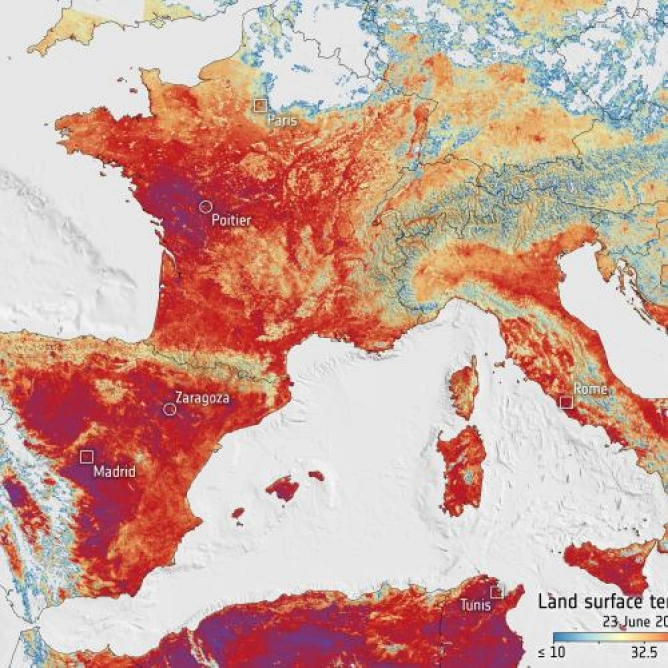
BERLIN — An unprecedented, climate-driven heatwave has rewritten the meteorological history books of Central Europe and Scandinavia, pushing temperatures to dangerous new heights and plunging infrastructure into a state of emergency. As an estimated 150 million people across the continent cope with temperatures exceeding 35 degrees Celsius, national weather agencies confirmed that all-time temperature records fell consecutively in Germany, Denmark, and the Czech Republic.

The extreme weather event, which originated in the Iberian peninsula, has slowly migrated north and east, leaving a trail of heat-related fatalities and buckling highways in its wake. Climate scientists from the World Weather Attribution group issued a stark warning, declaring the system the most severe heatwave ever recorded in the region—an anomaly that would have been virtually impossible just decades ago without human-driven global warming.

Germany Sizzles Under Consecutive Record Highs

For the second day in a row, Germany shattered its national all-time temperature record. The German Weather Service announced a provisional reading of 41.5 degrees Celsius in the eastern community of Möckern-Drewitz, in Saxony-Anhalt. This surpassed the previous record of 41.3 degrees Celsius, which had been set just 24 hours prior in the southwestern city of Saarbrücken.

The historic heat has pushed the nation’s critical transport network to its limits. On the crucial A2 motorway near Berlin, intense, prolonged thermal expansion caused older concrete sections of the highway to expand, buckle, and break apart, forcing authorities to enact emergency full closures. National rail operator Deutsche Bahn urged passengers to postpone all nonessential travel as steel tracks faced deforming risks.

In urban centers like Berlin, police deployed water cannons to spray a cooling mist over wilting crowds in public squares. Meanwhile, emergency services faced a surge in rescue calls, prompting the evacuation of dozens of elderly residents from a nursing home in Dormagen due to failing indoor cooling conditions.

Unprecedented Meltdown in Scandinavia and the Czech Republic

The extraordinary high-pressure system has brought tropical conditions to Nordic countries entirely unaccustomed to sweltering summers. The Danish Meteorological Institute reported a historic high of 37 degrees Celsius in Ødum, located north of Aarhus. The temperature marked Denmark’s warmest day since comprehensive record-keeping began in 1874, breaking a benchmark that had stood for over a century.

Simultaneously, the Czech Republic experienced its hottest day on record. The Czech Hydrometeorological Institute confirmed that a weather station in Doksany, north of Prague, reached a blistering 40.6 degrees Celsius, eclipsing the country’s previous historical high of 40.4 degrees Celsius from 2012.

The extreme heat paralyzed daily life in Prague, leaving city streets unusually deserted as residents sought refuge indoors or at local swimming pools. The capital’s public transport operator ordered tram speeds slowed drastically to avoid the imminent risk of overhead power wires warping and snapping in the ambient heat. Specialized water trucks cruised the asphalt streets, spraying water to artificially cool the pavement and combat rising ground-level ozone concentrations.

A Dangerous New Normal for Europe

Public health officials are voicing growing concern over tropical nighttime conditions, where temperatures have failed to drop below 22 degrees Celsius across much of Central Europe. This lack of nocturnal cooling deprives the human body of its natural ability to recover from daytime heat stress, drastically multiplying the risk of heatstroke and excess mortality among vulnerable demographics.

The logistical strain is compounded by a structural reality: residential air conditioning is historically rare across Germany and northern Europe, leaving millions with no mechanical escape from the oppressive climate.

As weather services warn that temperatures could peak even higher as the system continues its trajectory into Poland and the Balkans, the weekend’s events have intensified the geopolitical debate over the climate crisis. For a continent grappling with buckling infrastructure and hundreds of heat-linked deaths, the shattered records are a clear indicator that the reality of a warming world has arrived at its doorstep.


Why Kim Jong Un Eraser-Traced His Own Mother From North Korea’s Sacred History

In the meticulous, highly curated universe of North Korean state propaganda, silence is never an accident. Over his fifteen years of absolute rule, Supreme Leader Kim Jong Un has spoken publicly about everything from thermonuclear weapons and economic quotas to agricultural harvests and natural disasters. Yet, there is one gaping, inexplicable void at the absolute center of his personal narrative: he has never once publicly uttered the name of his biological mother.

In a totalitarian state where power is justified entirely by hereditary purity, the intentional erasure of Ko Yong Hui is a calculated act of political survival. To elevate her to the status of a national icon—as was done for the mothers of Kim’s father and grandfather—would expose a dark family secret. In the eyes of North Korea’s rigid caste system, Kim Jong Un possesses a deeply controversial, “tainted” bloodline that could undermine the very foundations of his regime.

The Original Sin of the Songbun System

To understand the mandatory secrecy surrounding Ko Yong Hui, one must understand North Korea’s strict social stratification framework known as songbun. This hereditary class system divides the entire populace into loyal, wavering, or hostile tiers based entirely on what their ancestors were doing during the Japanese colonial era and the Korean War.

                   [ THE RULING ILLUSION ]
                              │
       ┌──────────────────────┴──────────────────────┐
       ▼                                             ▼
[ THE MOUNT PAEKTU MYTH ]                     [ THE HIDDEN REALITY ]
• Pure, anti-colonial lineage                 • Mother born in Osaka, Japan
• Sacred revolutionary bloodline              • Classified as lowest "hostile" class
• Source of absolute legitimacy               • A dancer and un-endorsed mistress

Ko Yong Hui was born in 1952 in Osaka, Japan, to ethnic Korean parents before migrating to North Korea in the early 1960s as part of a mass repatriation program. In Pyongyang’s official worldview, Japan remains the ultimate historical villain, and anyone associated with it is automatically relegated to the lowest, most untrustworthy rungs of society.

Furthermore, Ko was a professional dancer in the Mansudae Art Troupe when she caught the eye of former leader Kim Jong Il in the 1970s. She became his companion and mistress, but the relationship was never officially endorsed by the nation’s founder, Kim Il Sung. For the ruling elite to discover that the current supreme commander is the son of a performer born in Japan would have the psychological impact of a nuclear bomb on North Korean society, completely fracturing the illusion of hereditary perfection.

The Bloodline Deficit and Domestic Aggression

The crushing weight of this ancestral deficiency has long reverberated behind the closed doors of the ruling family. According to testimonies from high-profile defectors, Kim Jong Un harbored a deep-seated resentment during his childhood because of how his mother’s background alienated her from the core family leadership.

This psychological trauma has directly shaped his most brutal political purges. Analysts note that Kim’s shocking 2013 execution of his powerful uncle, Jang Song Thaek, was partly driven by historical family grievances. Kim reportedly blamed his uncle for actively blocking Ko Yong Hui from gaining the acceptance and recognition of the family patriarch during the 1980s and 1990s.

Rather than attempting to reinvent his mother’s history through state mythology—a task made impossible by the underground reality that her background is whispered about among the oldest elites—Kim has spent his reign enforcing absolute censorship. State intelligence indicates that even restricted documentary films highlighting her maternal care were quietly recalled and destroyed by authorities to prevent any scrutiny regarding her origins.

Replaced by the Next Generation

This perceived ancestral deficiency also explains one of the most puzzling behavioral patterns of Kim’s tenure: his eagerness to thrust his own wife, Ri Sol Ju, and his young daughter, Ju Ae, into the public spotlight.

Unlike his father, who kept his various companions entirely hidden from public view, Kim Jong Un introduced Ri Sol Ju as his first lady early in his rule. According to external intelligence assessments, Ri hails from a highly respectable, upper-middle-class family in Pyongyang and was educated in classical singing in China, giving her an immaculate pedigree under the songbun system.

By frequently showcasing his wife and daughter at major military parades and state banquets, Kim is attempting to project a traditional, wholesome image of stability that his own childhood lacked. It is a deliberate, forward-looking strategy designed to bury the questions surrounding his own birth by constructing an unassailable, clean lineage for his successors.

The absolute silence surrounding Ko Yong Hui serves as a powerful reminder of the fragile underbelly of North Korean autocracy. Kim Jong Un may command an arsenal of intercontinental ballistic missiles and wield absolute power over millions of lives, but he remains permanently trapped by the immutable rules of his own state’s propaganda. In the end, the most powerful man in Pyongyang cannot afford to honor his own mother, because doing so would expose the reality that the sacred blood of Mount Paektu is mixed with the dust of Osaka.

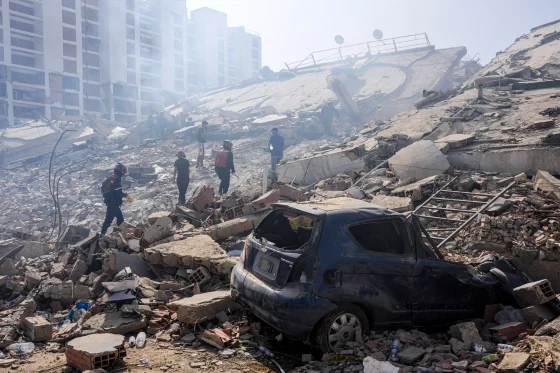
Desperate Families Comb the Rubble as Venezuela’s Twin Quakes Leave Thousands Trapped

LA GUAIRA, Venezuela — Under the crushing weight of shattered concrete and twisted metal wire, the coastal state of La Guaira has fallen into a heavy, agonizing silence. Every few minutes, a siren sounds, and hundreds of volunteers, neighbors, and exhausted relatives freeze in unison. They are listening. Across the ruined landscape of northern Venezuela, the air is filled with the raw, desperate sound of mothers, fathers, and children screaming the names of their missing loved ones into the cracks of collapsed buildings.
A devastating doublet earthquake—a magnitude 7.2 tremor followed just 39 seconds later by a catastrophic 7.5 magnitude quake—slammed north-central Venezuela, striking near Yaracuy and ripping through Caracas and the coast. It is the most powerful seismic event to strike the nation in over 125 years. While officials have confirmed at least 1,430 deaths, the true scale of the horror lies beneath the ruins of hundreds of flattened apartments and hotels. The United Nations estimates that a staggering 50,000 people remain missing, trapped in total darkness beneath the weight of their former lives.

Digging with Bare Hands

In the seaside city of Macuto, the destruction is near-total. The iconic waterfront Hotel Eduard has been reduced to a heap of smoking debris. Nearby, families stand on mounds of pulverized masonry, using hammers, power tools, and their bare fingernails to cut through slabs of concrete. Public frustration is boiling over as survivors openly ask where the heavy government machinery is.

Outside a collapsed apartment building, Nazareth Jimenez sobbed openly as she watched neighbors claw through the wreckage. Her siblings, nieces, and nephews are all inside. “My God, how are we going to get them out of there?” she murmured, pleading for international help to move the heavy structures. For many, the lack of immediate, heavy specialized infrastructure from the national guard or military has forced communities to become their own first responders, passing chunks of debris hand-to-hand in a race against the clock.

The critical 72-hour window for locating survivors is rapidly closing, yet local and international humanitarian agencies stress that miracles are still possible if trapped victims have pockets of air.

Tears and Miracles in the Ruins

Amidst the overwhelming grief, brief moments of profound hope have kept the exhausted search teams going. In La Guaira, a father named Gallipoli recounted walking 20 miles on foot from Caracas after roads were blocked, desperate to find his son Jofram, his daughter-in-law, and his 4-year-old grandson.

For more than 24 hours, he parsed through the ruins of their seven-story apartment building, fighting a sense of complete helplessness. “I yelled out my son Jofram’s name with the last shred of faith I had left,” Gallipoli recalled. From deep beneath the concrete, a faint whisper answered back. Rescuers ultimately pulled the entire family out alive.

Tragically, such stories are exceptions. Elsewhere in the city, another mother collapsed in shock as the bodies of her 3-year-old and 10-year-old children were pulled from the wreckage, wrapped in blankets, and carried away. “Every person saved is a miracle,” acknowledged Jorge Rodríguez, President of the National Assembly. “We will not hide anything about the scale of this tragedy.”

A Nation Pushed to the Brink

The dual earthquakes have dealt a paralyzing blow to a nation already buckling under a decade of severe economic disarray and political instability. In downtown Caracas, thousands of terrified residents spent the night huddled in public parks, parking lots, and makeshift tents, too traumatized to re-enter any standing structures as dozens of aftershocks continue to rattle the fault lines.

Compounding the crisis, an initial internet and communications blackout severely restricted the flow of information, leaving families abroad in places like Spain and the United States weeping over unverified lists of names shared on social media.

While international rescue teams from Mexico, Spain, the United Kingdom, and the United States have arrived to support the effort, emergency workers admit the sheer volume of collapsed infrastructure is overwhelming. Acting President Delcy Rodríguez has militarized the worst-hit regions to streamline the distribution of water and food. But for the thousands of families still standing vigil over the ruins, politics and logistics matter little. They remain anchored to the debris, calling out into the dust, desperate for a voice to answer back.


U.S. and Iran Launch Swiss Peace Talks as Tehran Claims Closure of Vital Strait of Hormuz

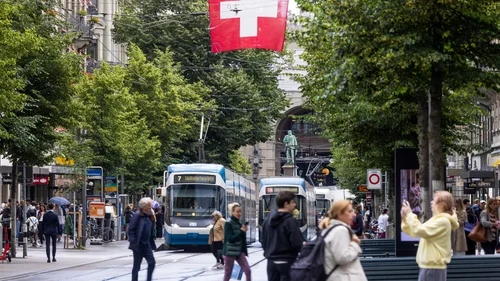
ZURICH — A high-stakes diplomatic gamble is unfolding in the serene valleys of Switzerland as senior officials from the United States and Iran open critical face-to-face negotiations. The face-off comes just hours after Tehran triggered global economic anxiety by declaring the strategically vital Strait of Hormuz entirely closed to maritime traffic.

The technical-level talks represent a crucial bid to solidify a fragile, 14-point interim framework aimed at permanently halting regional warfare. However, the diplomatic summit kicked off in a state of high friction. The delegation from Tehran is wielding a massive economic leverage tool, explicitly warning that negotiations cannot advance while Israel continues its devastating military campaign in Lebanon.

A Diplomatic Tug-of-War in the Alps

A high-level American delegation led by U.S. Vice President JD Vance arrived in Switzerland to establish the architecture for a more durable regional peace accord. The American side is hoping to quickly guide the conversations toward strict technical annexes concerning Iran’s nuclear enrichment capabilities.

The Iranian negotiating team arrived in Zurich with an aggressive posture. Led by parliamentary Speaker Mohammad Bagher Ghalibaf and Foreign Minister Abbas Araghchi, Tehran’s officials have positioned the immediate cessation of violence in Lebanon as an unalterable prerequisite for broader compliance.
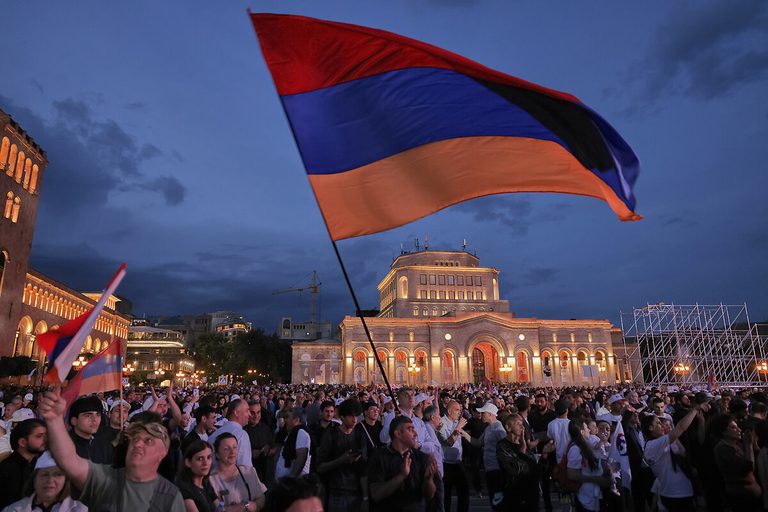
The Iranian military command announced that its Revolutionary Guard naval forces had shut down the waterway. They explicitly cited what they labeled a clear breach of promises by the U.S. and Israel, warning all international merchant vessels to stay clear of the shipping lane. Through emergency radio broadcasts, Iranian commanders warned that any ship attempting unauthorized transit would be classified as a direct military target.
Opposing Realities at the Choke Point

The sudden maritime declaration sent immediate shockwaves through global energy markets, but the Pentagon was quick to issue an absolute denial. U.S. Central Command forcefully dismissed Iran’s claim of control, stating unequivocally that the international shipping lane remains open and unblocked.

Central Command announced that the international shipping lane remains open and unblocked, confirming that American naval assets are heavily monitoring the perimeter to ensure the uninterrupted flow of global commerce. According to verified military logs, at least 55 commercial merchant ships successfully navigated the strait, delivering more than 17 million barrels of crude oil to international buyers despite the threats originating from Tehran.

The maritime dispute intensified further when President Donald Trump weighed in from Washington. Trump fired off a blunt warning, stating that while the interim pact guarantees toll-free travel through the region for 60 days, the United States might ultimately implement its own maritime fees for acting as the guardian protecting Middle Eastern trade if a definitive accord collapses.

The Lever for Lebanon

Independent geopolitical defense analysts note that Iran’s dramatic maneuver in the Persian Gulf is almost certainly a calculated pressure tactic engineered specifically for the Swiss negotiating table. By theoretically holding 20 percent of the world’s liquefied natural gas and oil supply hostage, Tehran is attempting to force Washington to restrain its regional allies.

Despite a nominal ceasefire structure intended to pause hostilities across all fronts, the ground reality remains exceedingly bloody. Over the weekend, localized strikes in southern Lebanon killed dozens of people, prompting immediate retaliatory rocket fire from Hezbollah units.

As negotiators cloister themselves behind closed doors in Switzerland, the stark disconnect between the diplomatic civility in Europe and the threat of maritime warfare in the Gulf underscores the immense volatility of the moment. The unfolding direct talks will serve as a definitive test of whether economic leverage and aggressive posturing will wreck a historic chance at peace, or force both nations toward an enduring compromise.


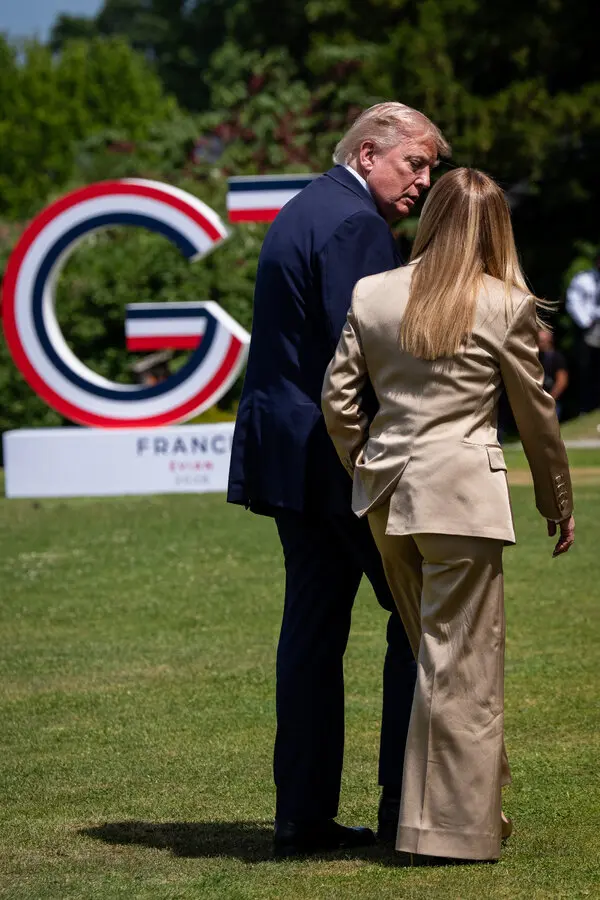
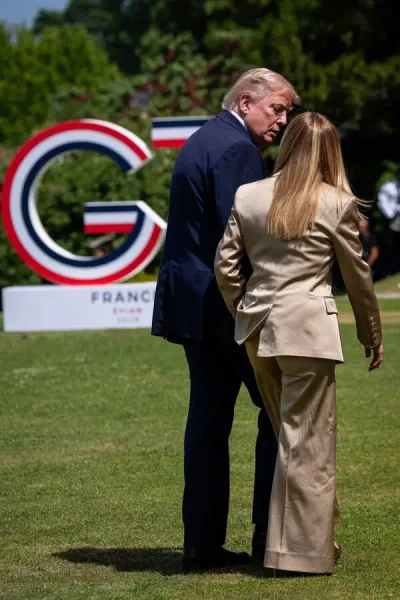
Meloni Tells Trump to ‘Focus on Your Own Popularity’ as G7 Feud Explodes

ROME — The simmering tension between Italy and the United States has erupted into a full-blown diplomatic firestorm. In an extraordinarily candid and public counter-offensive, Italian Prime Minister Giorgia Meloni sharply advised U.S. President Donald Trump to stay out of Italian domestic affairs and instead focus on his own internal political standings.

The scathing remarks from Rome signal a dramatic escalation in a week-long war of words that has stunned foreign policy establishments on both sides of the Atlantic. The verbal warfare marks a stunning fracture between two of the Western world’s most high-profile conservative icons, threatening to rewrite the rules of modern populist alliances.

A War of Words Across the Atlantic

The unprecedented feud began when Trump publicly criticized Meloni’s current economic policies during an interview, characterizing her administration’s recent fiscal adjustments as a retreat from true conservative principles. Trump went so far as to suggest that her shifting stance could alienate her core voters and cost her leadership position.

Meloni chose a major European policy forum to deliver her devastatingly direct rejoinder. Walking up to the microphone, the Italian leader discarded her prepared notes on continental energy security to address the American interference head-on.

“I have great respect for American democracy, but Italy is a sovereign nation that does not take instructions from overseas political campaigns,” Meloni stated, her tone icy and deliberate. “Perhaps the former president should expend his formidable energy focusing on his own shifting popularity numbers rather than attempting to manage the internal dynamics of Rome.”

Populism Collides with Geopolitics

The sharp rupture has sent shockwaves through international diplomatic circles, primarily because Meloni and Trump have historically been viewed as philosophical fellow travelers. Both rose to prominence on highly nationalistic platforms centered on border security, traditional family values, and fierce criticism of globalist institutions.

However, foreign policy analysts note that a deep ideological division has been quietly brewing since Meloni assumed office. The core of the disagreement stems from radically different geopolitical priorities:

  • The Transatlantic Rift: Meloni has meticulously positioned Italy as a staunch, unwavering partner within NATO, consistently supporting severe economic sanctions against Moscow and advocating for increased European defensive integration.
  • The Isolationist Counter-Current: In contrast, Trump’s continuous advocacy for an isolationist foreign policy and his public skepticism regarding the funding of international military alliances have increasingly alarmed European leaders who are managing security threats much closer to home.

According to senior diplomatic aides in Rome, Meloni’s team viewed Trump’s unprompted critique not just as a casual political slight, but as a deliberate attempt to embolden her domestic hard-right rivals within Italy’s volatile ruling coalition.

The Fallout in Washington and Rome

The response from Trump’s political camp was characteristically swift. A senior adviser issued a late-evening statement asserting that Trump’s initial comments were merely an objective observation of economic trends, adding that the former president’s global popularity remained entirely unmatched.

Meanwhile, back in Rome, Meloni’s bold public stance has triggered intense debate across the political spectrum. Her political allies immediately rallied around her, framing her pushback as a necessary and courageous defense of Italian national sovereignty. Conversely, opposition leaders in parliament warned that needlessly alienating a major American political figure could have severe economic and strategic consequences for Italy if the U.S. political landscape shifts in upcoming elections.

As the diplomatic dust settles, the explosive exchange stands as a clear turning point. It demonstrates that when the immediate, hard realities of European continental security collide with the abstract rhetoric of global populist solidarity, even the closest ideological alliances can crack under the pressure.


France Imposes Unprecedented Alcohol Ban at Music Festivals Amid Catastrophic Red Heatwave Alert

PARIS — France has taken the extraordinary step of banning alcohol consumption across a vast swath of the country during its most celebrated national music festival as a historic and dangerous heatwave pushes temperatures past 40 degrees Celsius. Following an emergency cabinet crisis meeting led by Prime Minister Sébastien Lecornu, the government announced that all public consumption of alcohol would be strictly prohibited starting at noon on Sunday, June 21, 2026, within any administrative department placed under the highest level “red” weather alert.

The sudden, sweeping restriction has cast an unprecedented shadow over the annual Fête de la Musique, a 40-year-old midsummer tradition that typically draws millions of revelers onto the streets of French cities for free, open-air concerts on the summer solstice. With weather agency Météo-France expanding the maximum-severity red alert to 35 departments—including the entire Paris region, the southwest, and Burgundy—health authorities warned that combining heavy drinking with record-shattering ambient heat would trigger an unmanageable wave of medical emergencies.

A Crucial Safeguard for Emergency Services

The legislative intervention represents a direct effort to protect public health and preserve critical healthcare infrastructure as the country enters its most intense period of extreme weather in decades. By ordering regional prefects to issue local bans on public drinking and forbidding state agencies from serving any alcohol at official festival sites, the prime minister’s office is aiming to prevent a surge in severe dehydration and heatstroke cases.

The instructions have been explicitly given to limit alcohol to preserve emergency and healthcare services, noting that emergency personnel must be allowed to focus exclusively on caring for vulnerable citizens. Medical experts have repeatedly emphasized that alcohol actively exacerbates the biological dangers of extreme heatwaves by accelerating dehydration and severely disrupting the human body’s internal temperature regulation mechanisms.

The strict directives arrived just as meteorologists warned that temperatures could peak near 41 degrees Celsius in localized sectors before intensifying further on Monday. According to climate models, the longevity and intensity of this June weather pattern bear a terrifying resemblance to the infamous August 2003 European heatwave, an environmental disaster that resulted in nearly 15,000 heat-related deaths across France.

Enforcing Sobriety in a Crowd of Millions

Implementing a sudden alcohol ban on the day of the Fête de la Musique presents an immense logistical nightmare for French law enforcement. According to official calculations, the red alert zones encompass approximately 26 million residents, plus hundreds of thousands of summer tourists visiting the capital. In Paris alone, where the festival routinely attracts up to two million participants to the banks of the Seine and urban plazas, the Police Prefecture has deployed thousands of additional officers to enforce the temporary rules.

Specific municipal decrees issued across Paris’s arrondissements have established precise perimeters where the transport, possession, and consumption of alcoholic beverages are entirely outlawed on public pathways, low-lying river quays, and pedestrian bridges. While local restaurants, open-air bistros, and permanent bars holding valid permits are still legally allowed to serve seated customers within their designated property lines, the sale of takeaway alcohol or walking through the streets with open containers faces immediate confiscation and fines.

To help urban populations find relief from the sweltering nighttime conditions, municipal authorities have ordered major parks, public gardens, and green spaces to remain open continuously throughout the night, while state railway companies have distributed free water at major transit hubs.

The New Reality of a Warming Continent

The unprecedented disruption to one of France’s most cherished cultural landmarks has sparked a profound national conversation regarding the escalating, tangible impacts of climate change on European societal norms. As school classes face widespread suspension, dozens of regional trains are canceled due to expanding tracks, and outdoor sports events are systematically called off, the reality of a warming continent is directly altering the rhythms of daily life.

While amateur musicians and professional ensembles still took to the streets to perform on Sunday evening, the absence of the festival’s trademark open-air drinking marked a somber turning point for many participants. As the heatwave shows little sign of breaking before late next week, the dry solstice stands as a stark indicator that European governments are increasingly willing to sacrifice economic activity and deeply ingrained cultural traditions in order to safeguard human life against a hostile and changing climate.


Israeli Airstrikes Kill Nine in Gaza, Including Al Jazeera Cameraman

DEIR AL-BALAH, Gaza — A wave of deadly Israeli airstrikes shattered the fragile calm across the Gaza Strip, killing at least nine people, including two young children and a veteran cameraman for broadcaster Al Jazeera. The fatal bombardments underscore the staggering, mounting toll of the ongoing conflict and have reignited a furious international debate over the systemic targeting of media personnel in the enclave.

According to Palestinian health officials, the localized strikes hit multiple residential and displacement zones, leaving families to once again dig through blood-stained concrete chunks and smoking rubble in a desperate search for survivors. The high-profile death of the journalist has drawn swift, fierce condemnation from press freedom advocates worldwide, while the Israeli military defended the operation as a targeted counter-terrorism mission.

A Marquee Pierced by Fire

The broadcaster confirmed that Ahmed Wishah, a dedicated cameraman for the Al Jazeera Mubasher channel, was killed when an overnight Israeli strike slammed directly into a residential home in the Bureij refugee camp located in central Gaza. The strike killed Wishah and another individual on the scene, while leaving at least one other Palestinian civilian severely wounded.

In a searing official statement, the Al Jazeera Media Network condemned what it described as the “deliberate and heinous killing” of its staff member, calling it a flagrant violation of international humanitarian law designed to systematically silence the voice of truth. The tragedy bears an exceptionally cruel weight for the network and the family: just two months prior, on April 8, Ahmed’s brother and fellow Al Jazeera correspondent, Mohammed Wishah, was killed in a separate Israeli drone strike on his vehicle. Ahmed marks the 12th Al Jazeera media worker killed in Gaza since October 2023.

The Israel Defense Forces issued a swift counter-narrative, confirming they carried out a precise strike targeting Wishah. A military spokesperson asserted that Wishah was an active member of Hamas’s military wing and posed an immediate threat to troops operating in the area. The military stated that an official report containing further detailed intelligence would follow, though independent press advocacy groups met the immediate, unproven allegations with severe skepticism.

Blood in the Early Hours

Beyond the central camps, the violence tore through families in the northern and southern sectors of the strip. At approximately 2:00 a.m., an unexpected rocket slammed into an apartment building in Gaza City, completely destroying the structure without warning.

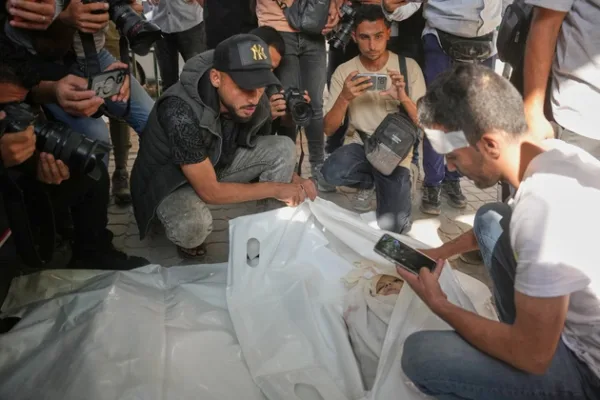
Medical professionals at Shifa Hospital’s morgue received the bodies of two young sisters caught in the blast: 4-year-old Zina Safadi and her 14-year-old sister, Lana. Surviving family members gathered outside the hospital facility, weeping over white body bags. Their cousin, Mohammad Safadi, who sustained head wounds from the flying debris, recounted sitting quietly at home before the ceiling collapsed under the weight of the unannounced explosion.

Simultaneously, a third separate strike targeted a group of displaced families seeking refuge in the sprawling, crowded tent camp of Muwasi in southern Gaza. Officials at Nasser Hospital reported receiving one fatality and eight wounded individuals from the Muwasi encampment, while a fourth strike in Gaza City left four more civilians severely injured.

A Grim Milestone for the Global Press

According to detailed records maintained by local medical professionals and verified by United Nations agencies, the broader conflict has now claimed the lives of over 73,000 Palestinians. While these casualty tracking systems do not differentiate between civilian casualties and combatants, experts note that women and children consistently make up roughly half of all fatalities.

The death of Ahmed Wishah adds another dark chapter to what independent watchdogs call the deadliest conflict for media workers on record. The Committee to Protect Journalists reports that at least 263 Palestinian journalists and media assistants have been killed since the war erupted following the October 7, 2023, Hamas-led incursions into southern Israel.

As international legal institutions and global networks call for urgent, enforceable deterrent mechanisms to protect reporters on the frontlines, the empty lenses left behind in Gaza serve as a grim reminder of a war where even those wearing clearly marked press vests find no sanctuary from the sky.


How Colombia’s Brutal, Escalating Internal Conflict is Defining the Race for the Presidency

BOGOTÁ — As Colombians prepare to head to the polls, the rhythmic machinery of democracy is being drowned out by the familiar, devastating echo of gunfire. A stark and brutal escalation in the nation’s decades-old internal conflict has shattered years of relative calm, transforming the presidential election from a debate over economic reform into an urgent, existential battle over survival and national security.

Across rural departments like Cauca, Arauca, and Catatumbo, a violent surge by sophisticated guerrilla factions and entrenched drug cartels has effectively paralyzed local campaigns. The worsening humanitarian crisis has fundamentally upended the political landscape, shifting voter priorities away from traditional fiscal issues and forcing the leading candidates to draw clear, high-stakes battle lines over how to pacify a fracturing nation.

A Campaign Trail Under Siege

The reality of the security collapse has made traditional campaigning nearly impossible outside major urban centers. In recent weeks, regional political offices have been targeted with improvised explosives, and several local mayoral and congressional allies have survived targeted assassination attempts.

The primary catalyst for the renewed bloodshed is a fierce, multi-front turf war between the National Liberation Army (ELN) and powerful dissident factions of the Revolutionary Armed Forces of Colombia (FARC) who rejected the historic 2016 peace accord. These insurgent groups, alongside heavily armed neo-paramilitary cartels, are fighting for absolute control over strategic drug trafficking corridors, illegal gold mines, and extortion networks left vacant by previous demobilizations.

Human rights organizations operating on the ground report a terrifying spike in forced displacement, rural lockdowns, and the recruitment of minors. For millions of citizens living along the conflict lines, the upcoming vote is not an abstract ideological choice, but a referendum on whether the state can guarantee their right to live.

Two Divergent Paths to Peace

The intensifying violence has polarized the presidential field, leaving voters to choose between two diametrically opposed strategies for restoring order. The stark divide has eliminated room for political compromise, forcing candidates to pitch radically different visions for the country’s defense apparatus.

  • The Strategy of Total Force: On one side, conservative and centrist law-and-order coalitions argue that the current escalation is proof that previous state leniency has failed. Their platform demands an aggressive, military-first approach, promising to deploy elite counter-insurgency battalions, resume controversial aerial fumigation of coca crops, and suspend ongoing peace dialogues until armed groups implement unilateral ceasefires.
  • The Strategy of Structural Reform: Conversely, left-leaning and progressive factions argue that purely military solutions ignore the root socioeconomic causes of the violence. Their counter-strategy emphasizes the complete implementation of agrarian reforms, heavy state investment in marginalized rural infrastructure, and a transition toward voluntary crop substitution, arguing that peace can only be achieved by dismantling the financial incentives of the illicit economy.

The Breakdown of Trust

The escalating combat has also reignited fierce debates over the legacy of the 2016 peace agreement. With large swaths of the countryside experiencing violence reminiscent of the darkest days of the 20th-century civil war, public trust in institutions has worn dangerously thin.

Critics of the current administration argue that a failure to effectively govern territories previously surrendered by rebels allowed newer, more predatory criminal syndicates to take root. Meanwhile, defense analysts note that the current wave of violence is increasingly complex, as modern armed groups operate as decentralized criminal franchises rather than cohesive ideological movements, making them far harder to combat or negotiate with.

As the election approaches, the empty campaign stages in Colombia’s peripheral towns serve as a somber reminder of the challenges ahead. The next leader of the republic will not have the luxury of a political honeymoon; they will inherit a nation where the ballot box is under direct assault, and where the first order of business must be reclaiming the state’s monopoly on force.


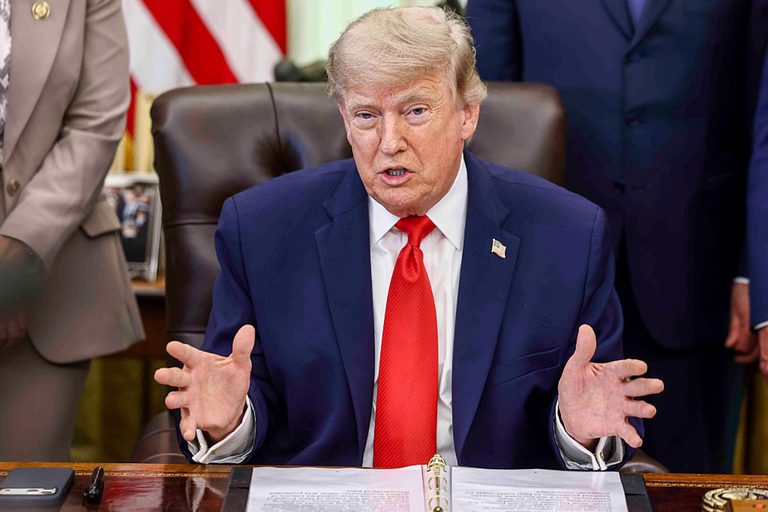
Trump Predicts Imminent Iran Accord as Tehran Urges Caution over Timing

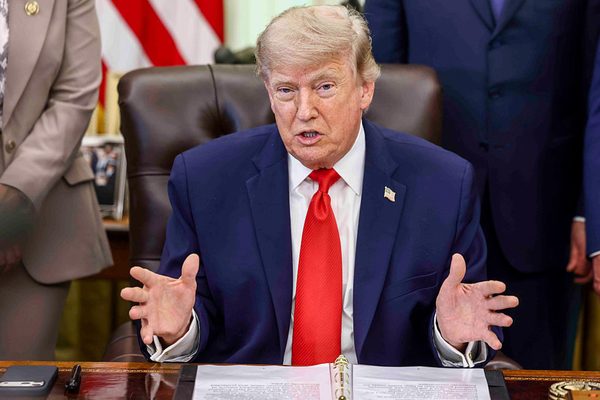
A diplomatic showdown has gripped the international stage as President Donald Trump confidently announced that a historic accord between the United States and Iran would be signed on Sunday, June 14, 2026. Speaking to reporters ahead of a weekend event, Trump claimed that months of back-channel negotiations had finally culminated in a breakthrough deal designed to ease crippling economic sanctions in exchange for strict verifications on Tehran’s nuclear program.

However, the optimistic timeline laid out by the White House was quickly met with skepticism across the globe. Just hours after the president’s remarks, officials in Tehran publicly pushed back, casting deep doubt on whether the remaining technical hurdles could be cleared in time for a weekend signing ceremony.

Conflicting Timelines from Washington and Tehran

The sudden friction highlights the volatile nature of the final hours of international dealmaking. Diplomatic sources suggest that while the broad strokes of the agreement have been ironed out, crucial disagreements persist regarding the exact sequencing of sanctions relief and international inspection schedules.

Trump told a gathering of supporters that the deal was entirely finalized and ready for signatures. He emphasized that the accord would represent a major foreign policy victory, promising to bring long-term stability to the Middle East while protecting American interests.

In sharp contrast, Iran’s Ministry of Foreign Affairs issued a cautious statement acknowledging that substantial progress had been made but emphasizing that a specific date for a formal signing ceremony remained premature. Iranian state media reported that negotiators are still reviewing the finalized legal texts, and officials noted that several highly sensitive points require further internal deliberation before any document is finalized.

European Mediators Call for Patience

The uncoordinated statements have injected fresh anxiety into European capitals, where diplomats have spent months working behind the scenes to facilitate the dialogue. European mediators privately expressed concern that setting hard, public deadlines could inadvertently jeopardize the delicate progress achieved during the secret talks.

Representatives from the United Kingdom, France, and Germany have urged both sides to focus on substance over speed. They noted that rushing a formal announcement before every technical annex is completely verified could create legal loopholes that undermine the durability of the entire pact.

Financial markets have reacted sharply to the unfolding drama, with global oil prices fluctuating wildly as traders weigh the potential return of Iranian crude to the global market against the risk of a last-minute collapse in talks.

The Shadow of Domestic Politics

The diplomatic maneuvering is playing out against a backdrop of intense domestic political pressure within both nations. In Washington, congressional critics from both parties have already voiced deep skepticism, demanding full transparency regarding any concessions made to Tehran and warning against an agreement that fails to address regional ballistic missile programs.

Meanwhile, hardliners in Tehran have consistently warned their own negotiating team against succumbing to Western economic coercion. Analysts suggest that the public pushback from Iranian officials may be partially intended to appease domestic critics and signal that Tehran will not be dictated to by an American legislative or executive timetable.

As the Sunday deadline approaches, the conflicting narratives have transformed what was intended to be a moment of diplomatic triumph into a tense, high-stakes waiting game. Whether the historic text is signed this weekend or delayed by further bureaucratic disputes, the coming hours will determine if decades of deep-seated hostility can finally give way to a verified diplomatic framework.


Switzerland Votes on Direct-Democracy Plan to Cap Population until 2050

GENEVA — Switzerland stands at a historic crossroads as citizens cast their ballots in a high-stakes referendum that could fundamentally reshape the wealthy Alpine nation. The popular vote, dubbed the Sustainability Initiative, presents voters with a radical proposition: legally cap the permanent resident population at 10 million people until the year 2050. Driven by mounting anxiety over rapid demographic growth, the proposal has forced a profound national debate balancing local stability against global economic competitiveness.

The initiative is championed by the right-wing Swiss People’s Party, the largest faction in the federal parliament. To trigger this nationwide referendum under Switzerland’s direct-democracy system, organizers successfully gathered more than 100,000 citizen signatures. Supporters argue that unchecked migration is rapidly eroding the country’s famous quality of life, placing an unsustainable burden on public infrastructure, crowding public transit, driving up rental prices, and diminishing cherished green spaces.

The Mechanics of the Cap

With the current population already hovering above 9.1 million—a significant jump from 7.3 million at the turn of the century—the proposed constitutional amendment introduces strict, legally binding thresholds. If the permanent resident population crosses 9.5 million, the federal government and parliament would be constitutionally mandated to implement immediate emergency measures. These primary interventions would target sharp reductions in asylum approvals and severe restrictions on family reunification permits.

Should the population breach the definitive 10-million ceiling for two consecutive years, the legal ramifications would escalate dramatically. In that scenario, Bern would be legally obligated to terminate its free movement of persons agreement with the European Union. Because this labor pact is the cornerstone of a complex web of bilateral accords, tearing it up would effectively nullify Switzerland’s broader access to the EU single market, which serves as the country’s largest and most vital trading partner.

Economic Alarm Bells

The prospect of a hard population ceiling has sent shockwaves through the Swiss business community. Corporate leaders from global tech hubs and pharmaceutical giants warn that the measure could trigger a severe labor crisis. Multinationals based in Zurich and Basel heavily rely on highly skilled international professionals to maintain their competitive edge. Industry groups caution that cutting off access to the European talent pool would cripple export-oriented sectors and worsen existing workforce shortages in hospitals, care homes, and hospitality.

Independent economic think tanks have added to the urgency, releasing projections that suggest a rigid population cap could reduce Swiss total economic output by as much as 12 percent by the end of the century. The federal council and major business coalitions have strongly urged the public to reject the initiative, characterizing it as an economic self-sabotage that threatens national prosperity and critical European security agreements.

A Finely Balanced Electorate

Despite the warnings of financial isolation, public sentiment remains intensely divided. While initial polling in the spring indicated a comfortable majority in favor of the cap, the final surveys ahead of the vote revealed razor-thin margins as public opinion fluctuated. The debate has noticeably transcended traditional right-wing circles, capturing the attention of moderate and left-leaning voters who feel the tangible pressures of urban density and an escalating cost of living.

As the ballot boxes close across the cantons, the outcome represents far more than a simple adjustment to immigration policy. For the Swiss electorate, today’s verdict is a defining choice about national identity. It forces the country to decide whether it can maintain its status as an economic powerhouse while attempting to pull the brakes on globalization and close its borders to the outside world.

Trump’s Name Stripped from the Kennedy Center After Bitter Legal Battle

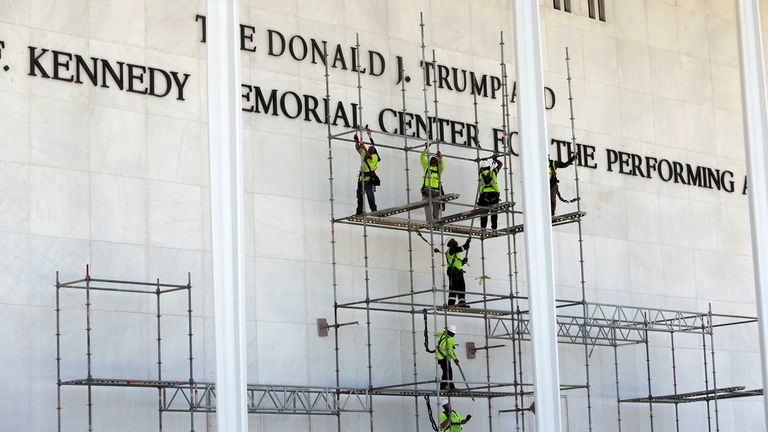
In the dead of night, beneath heavy plastic tarps and delayed by a passing summer thunderstorm, the grand white marble facade of the John F. Kennedy Center for the Performing Arts was quietly restored to its original state. Workers operating behind scaffolding on Saturday, June 13, 2026, meticulously pried away the bronze lettering that had temporarily rebranded the iconic cultural hub as the Donald J. Trump and John F. Kennedy Memorial Center.

The swift, late-night extraction came just hours before a strict noon judicial deadline. It represents a significant legal and symbolic defeat for the president’s aggressive campaign to reshape the nation’s capital. The Department of Justice formally certified to a federal judge that all physical signage, digital branding, and even employee email signatures bearing Trump’s name had been completely erased from the venue.

A Clash of Authority on the Potomac

The extraordinary weekend purge followed a decisive 94-page ruling by U.S. District Judge Christopher Cooper. The judge declared that the Trump-aligned board of trustees had acted unlawfully when they voted to slap the president’s name onto the building six months ago.

“Congress gave the Kennedy Center its name, and only Congress can change it,” Judge Cooper wrote, invalidating the board’s decision. The court further blocked an administrative plan to shutter the entire performing arts complex this July for an abrupt, multi-year renovation project.

Lawyers for the administration launched a flurry of emergency appeals late into Friday night to delay the order. They argued that stripping the name would spark donor confusion and freeze vital fundraising efforts. However, both the district court and a federal appeals court flatly denied the requests, forcing the center’s leadership to comply or face contempt.

Chants, Celebrations, and Political Blowback

Outside the venue, the aesthetic reversal became a highly visible focal point for political resistance. Activists from the group Hands Off the Arts gathered on the plaza, cheering as the scaffolding climbed the walls and chanting “take it down” as the final appeals were rejected.

The original lawsuit was spearheaded by Representative Joyce Beatty, an Ohio Democrat and ex-officio board member, alongside intense public pushback from the Kennedy family. Following the confirmation that the letters had been removed, Beatty celebrated the outcome online, framing it as a victory for the rule of law and public ownership of national monuments.

Conversely, the president did not hide his fury regarding the judicial intervention. In typical fashion, he lambasted the decision on social media, suggesting that the federal government should simply hand the institution over to Congress and claiming the building was suffering from life-threatening structural neglect. In a final bit of Washington irony, Trump’s motorcade drove directly past the freshly scrubbed building on Saturday morning while heading toward his Virginia golf course.

The Battle for Washington’s Aesthetics

The drama at the Kennedy Center is not an isolated architectural dispute, but rather the frontline of a broader, bitter struggle over the historical aesthetic of Washington, D.C. Since the early days of his second term, the president has initiated highly controversial projects aimed at permanently altering the capital’s footprint, including the demolition of the White House East Wing to construct a massive ballroom and ordering large banners of his likeness to hang from prominent federal edifices.

While the administration continues to pursue a formal appeal to potentially reinstall the letters in the future, the empty marble on the Potomac stands as a stark reminder of the limits of executive power. For now, the marquee belongs once again to a single president, proving that even in a deeply divided capital, some names are carved deeper into law than others.


Norway Braces for Verdict in Trial of Crown Princess’s Son

Norway is holding its breath as the country’s most sensational modern legal drama reaches its climax. On Monday, June 15, 2026, judges at the Oslo District Court will deliver their verdict against Marius Borg Høiby, the 29-year-old son of Crown Princess Mette-Marit. Facing a staggering 40 criminal charges, including the alleged rape of four women, domestic abuse, and drug trafficking, Høiby’s fate has gripped the egalitarian nation and cast an unwelcome spotlight on its highly respected monarchy.

The looming judgment comes amid a profound family crisis. While state prosecutors are demanding a prison sentence of seven years and seven months, Høiby sits in high-security remand. His legal team’s desperate, tearful bids to secure his release to be with his critically ill mother—who was recently placed on a waiting list for a lung transplant—were decisively rejected by the court.


A High-Security Waiting Game

Unlike the emotional, tear-filled appearances from early in his seven-week trial, Høiby will not hear his fate in person. Having recently been transferred to the high-security Ila Prison and Detention Centre, he will receive the verdict via video link.

The prosecution’s case centers on patterns of behavior that State Prosecutor Sturla Henriksbø argued showed a profound disregard for whether women consented.

  • Four counts involve women who were allegedly asleep or otherwise incapacitated. In three of these instances, police recovered video evidence of the acts filmed without consent.
  • Høiby has fiercely denied the sexual assault charges, famously telling the court, “I don’t sleep with women who aren’t awake”. His lawyers argue he should be acquitted of rape and receive a lighter 18-month sentence limited only to the offenses he admitted.
  • Høiby has pleaded guilty to minor charges, including trafficking 3.5 kilograms of marijuana, driving without a license, and breaching a restraining order.

Dual Crises: The Palace Under Siege

The trial has played out against a background of acute royal misfortune. Høiby—born four years before his mother’s 2001 marriage to heir-to-the-throne Crown Prince Haakon—holds no official title or public role. Yet, his close ties to the royal household mean the scandal has fundamentally shaken the palace walls.

Adding to the distress is the rapidly deteriorating health of Crown Princess Mette-Marit. Diagnosed with chronic pulmonary fibrosis in 2018, her condition worsened significantly, prompting doctors to list her for a high-risk lung transplant.

Høiby’s emotional pleas to the appeals court—stating that being locked up while knowing his mother was so ill was “unbearable”—were denied. The court ruled that the risk of him reoffending remained too high to permit his release, maintaining his strict isolation ahead of Monday’s historic judicial mechanism.


Shadows Over the Crown

For a monarchy long celebrated for its humility and closeness to the Norwegian public, the trial has proved a grueling ordeal. The first alleged rape charge dates back to 2018 and reportedly occurred at Skaugum, the official estate of the Crown Prince and Princess.

Compounding the royal family’s public relations nightmare, the trial’s closing weeks coincided with the public unearthing of historical emails linking Crown Princess Mette-Marit to the late convicted U.S. sex offender Jeffrey Epstein between 2011 and 2014. The Crown Princess has since issued a public apology, acknowledging a severe error in judgment.

Throughout the process, King Harald V and Crown Prince Haakon have meticulously maintained their distance, insisting that the law must treat Høiby like any other citizen. “The situation is serious,” Queen Sonja starkly told reporters.

As the country awaits Monday’s final decision, the verdict represents more than just a judgment on one man’s actions. For many Norwegians, it will be a defining test of their justice system’s core tenet: that before the law, even those raised in palaces stand on equal ground.

Pope Leo XIV Electrifies Madrid With Anti-War Broadside and Call to Embrace Migrants

MADRID, Spain — A staggering human sea completely paralyzed the heart of the Spanish capital on Sunday.

An estimated 1.2 million faithful packed into the iconic Plaza de Cibeles and its surrounding boulevards. They gathered to hear Pope Leo XIV celebrate a massive open-air Corpus Christi Mass. The event marks the historic apex of the Chicago-born pontiff’s week-long apostolic journey to Spain. This is the first papal visit to the European nation in roughly 15 years.

The sheer scale of the gathering transformed a central plaza—usually reserved for rowdy football celebrations—into a sprawling sanctuary. The crowd included Spain’s King Felipe VI and Queen Letizia sitting in the front rows. Security forces enacted a massive lockdown across central Madrid as pilgrims waved international flags and tossed flower petals at the passing Popemobile.

POPE LEO XIV MADRID MASS SNAPSHOT
┌──────────────────────────────────────┐
│ Cibeles Mass Attendance: 1.2 Million │
│ Youth Vigil Attendance: 500,000      │
│ Key Themes: Anti-War, Migrant Aid   │
│ Upcoming Stops: Barcelona, Canaries  │
└──────────────────────────────────────┘

Stepping Boldly into the Geopolitical Crossfire

The Chicago-born Pope used the high-profile European stage to deliver a pointed message aimed directly at global polarization and the fracture lines of modern international politics.

From the altar, Pope Leo XIV forcefully praised the Spanish government’s vocal opposition to raging global conflicts and its proactive support for asylum seekers. The remarks carry sharp political weight. Spain’s socialist Prime Minister, Pedro Sánchez, has repeatedly clashed with U.S. President Donald Trump over military escalations involving Iran, and with Israel over the devastating war in Gaza.

The Pontiff, who has faced criticism from Washington for his strict anti-war doctrines, doubled down on his defense of international law and multilateralism.

“May Madrid remain a welcoming and inclusive city, where social life is inspired by genuine human values,” the Pope wrote earlier in the city’s official guestbook after being presented with the key to the city. He passionately urged world leaders to stop weaponizing fear and dividing electorates for political gain.

“Be the Sparks of a New Humanity”

The massive Sunday liturgy followed a grueling, emotionally charged weekend for the 81-year-old head of the Catholic Church.

  • The Youth Surge: On Saturday evening, more than 500,000 young congregants packed the area near Real Madrid’s Santiago Bernabéu stadium for a twilight prayer vigil. Leo XIV delivered a blistering message to the youth: “In the face of the emptiness of indifference and compliance, before the violence of war and lies, you must be the sparks of a new humanity.”
  • The Margin of Society: Bypassing traditional elite receptions at the start of his trip, the Pope immediately visited the “CEDIA 24 Horas” shelter in Madrid’s vulnerable Lucero district. There, he spent hours listening to testimonies from unhoused individuals and undocumented West African and Cuban migrants. “Anyone who is in Madrid is from Madrid,” he declared to cheers from the volunteers.

The Road Ahead: Abuse Victims and Border Crisis

The triumphant turnout in Madrid provides a vital wave of momentum for a papacy determined to directly confront the Church’s internal and external crises.

Before leaving the capital, Pope Leo XIV is scheduled to hold a private, closed-door meeting with victims of institutional sexual abuse within the Spanish Catholic Church—a reckoning long demanded by local advocacy groups.

On Tuesday, the papal entourage shifts to Barcelona before flying out to the Canary Islands later in the week alongside Prime Minister Sánchez. There, at Europe’s most volatile maritime border, the Pope will hold a highly anticipated memorial service honoring the thousands of migrants who have lost their lives attempting the perilous sea crossing from West Africa.


The New Battle of Normandy: Hegseth Weaponizes D-Day Anniversary to Blast European Migration ‘Invasion’

COLLEVILLE-SUR-MER, France — Standing on the hallowed ground where Allied forces broke the back of Nazi tyranny, U.S. Defense Secretary Pete Hegseth transformed a solemn military commemoration into a searing geopolitical indictment, accusing European leaders of letting their shores be “stormed” by a modern-day “invasion” of migrants.

The extraordinary rhetorical pivot occurred during the 82nd anniversary of the June 6, 1944, D-Day landings. Speaking at the Normandy American Cemetery, Hegseth explicitly juxtaposed the historic amphibious liberation of Western civilization with today’s Mediterranean migrant corridors.

“Sadly, today, different European beaches are stormed by different dangerous ideologies,” Hegseth declared to a stunned audience of international diplomats, elderly veterans, and military personnel. He explicitly targeted southern and eastern European frontiers, stating, “Beaches in Spain and Italy and Greece and Bulgaria. Boats and men arrive. When will European capitals do something about that invasion? Or is it too late?”

HEGSETH’S NORMANDY ULTIMATUM
  Allied Landings (1944)          Modern Maritime Migrants (2026)
┌──────────────────────────────┐ ┌──────────────────────────────┐
│ Target: Normandy, France     │ │ Targets: Spain, Italy,       │
│ Force: Allied Liberators     │ │          Greece, Bulgaria    │
│ Goal: Overthrow Totalitarian │ │ Hegseth Label: "Invasion of  │
│       Regimes                │ │  Dangerous Ideologies"       │
└──────────────────────────────┘ └──────────────────────────────┘

“Civilizational Erasure” and the Burden of Freedom

The Defense Secretary’s language marks a sharp escalation in the Trump administration’s ongoing diplomatic offensive against European domestic policies. Though Hegseth technically bypassed the specific word “immigration,” his targeted attack on “boats and men” arriving on coastal borders left no room for misinterpretation among regional analysts.

Hegseth warned that the continental liberty purchased with the lives of thousands of American soldiers buried in the surrounding cliffs could ultimately prove temporary. He suggested that post-war European capitals have grown dangerously complacent, heavily weighed down by weak border enforcement, bureaucracy, and political correctness.

“The men who fought and died here restored freedom to Europe,” Hegseth remarked, looking out over the thousands of white marble crosses. “That freedom must be maintained by this generation of leaders and warfighters, or what they fought for was merely temporary.”

A Coordinated Transatlantic Broadside

The fiery Normandy address is not an isolated incident; rather, it represents a highly calculated, multi-pronged administrative strategy. The administration’s current national security doctrine heavily stresses the immediate threat of European “civilizational erasure,” warning that the continent risks becoming entirely unrecognizable within two decades due to demographic shifts.

Hegseth’s remarks closely followed a separate diplomatic incident involving U.S. Vice President JD Vance. Just 24 hours prior, Vance publicly blamed British immigration policies for the fatal stabbing of an 18-year-old student in Southampton, branding it part of a “mass invasion of migrants”.

That claim drew a swift and furious rebuke from British Prime Minister Keir Starmer’s office. 10 Downing Street strongly condemned the White House for “trying to interfere in our democracy and seeking to stir up division on our streets,” particularly after the Crown Prosecution Service confirmed the attacker was actually a British-born citizen.

Shattering the Alliance Protocol

By dragging a deep, polarizing domestic culture war onto one of the world’s most sacred sites of military remembrance, Hegseth has deeply fractured the long-standing, apolitical decorum traditionally observed at D-Day commemorations.

European diplomats present at the event expressed quiet outrage, viewing the speech as a weaponization of history designed to validate far-right and nationalist political factions across the continent. Critics argue that equating desperate asylum seekers fleeing global conflict zones with the totalitarian forces of the Axis powers thoroughly degrades the legacy of the Allied war effort.

Conversely, Hegseth’s message was designed to resonate strongly with a specific domestic political base in the United States, where the administration is aggressively pushing for billions of dollars in new enforcement funding to execute its own domestic border crackdowns. By demanding that European capitals forcefully secure their perimeters or risk losing American security guarantees, Hegseth has fundamentally rewritten the rules of transatlantic diplomacy, transforming a day of historical unity into an arena of bitter division.


Armenians Vote as Moscow Deploys Economic Warfare and ‘Ukrainian Scenario’ Threats to Crush Pro-West Shift

YEREVAN, Armenia — Some 2.48 million registered voters across this landlocked South Caucasus nation are heading to the polls on Sunday, casting ballots in a high-stakes parliamentary election that has transformed into an existential referendum on the country’s geopolitical survival.

Incumbent Prime Minister Nikol Pashinyan and his ruling Civil Contract party are seeking a strong democratic mandate to formally break from Moscow’s orbit and solidify long-term integration with the European Union. However, the election is unfolding under an unprecedented campaign of intimidation from Russia. The Kremlin has deployed aggressive economic blockades, cyber warfare, and overt warnings of military devastation to force the former Soviet republic back into its sphere of influence.

The latest polling data positions Pashinyan’s party in the lead with 32% of the projected vote. Trailing in second place at 11% is the newly formed, staunchly pro-Russian Strong Armenia party, bankrolled by billionaire Samvel Karapetyan, who amassed his fortune in Russia and currently campaigns via his nephew while under house arrest for an alleged coup plot.

ARMENIAN PARLIAMENTARY ELECTION SNAPSHOT (JUNE 7, 2026)
Registered Voters: 2.48 Million | Total Population: 3 Million
│
├── Civil Contract Party (Pro-West / Incumbent): 32%
├── Trust No Political Figure / Undecided: 40%
└── Strong Armenia Party (Pro-Russian / Opposition): 11%

Moscow’s Playbook: Flowers, Cognac, and Coercion

In the final weeks leading up to Sunday’s vote, the Russian agricultural regulator slapped sudden, sweeping bans on critical Armenian exports. Customs checkpoints effectively halted the import of Armenian wine, cognac, flowers, dried fruits, tomatoes, and potatoes into the Russian market. While Moscow claimed the embargoes were sparked by routine sanitary violations, the timing made the political motivation unmistakable.

The European Commission fiercely condemned the blockades, labeling Moscow’s actions “nothing short of economic coercion“. Seeking to neutralize the Kremlin’s leverage, European Commission President Ursula von der Leyen pledged an immediate €50 million emergency package to insulate Armenia’s trade networks and facilitate alternative routes into European markets.

Beyond the border blockades, Russian President Vladimir Putin has driven home Armenia’s deep systemic dependencies, issuing a stark public reminder that Moscow controls the country’s energy infrastructure and provides gas at a subsidized rate of $177.50 per 1,000 cubic meters—compared to European market rates exceeding $600. Putin explicitly warned that any formal bid to join the EU would make continued participation in the Russian-led Eurasian Economic Union (EAEU) customs bloc “impossible by definition,” threatening a total economic collapse.

The Shadow of Karabakh and Bot Warfare

The primary domestic challenge to Pashinyan’s “Real Armenia” doctrine stems from the deep collective trauma of the 2023 Azerbaijani lightning offensive, which resulted in the total collapse of Nagorno-Karabakh and the forced exodus of more than 100,000 ethnic Armenians.

  • The Security Void: Pashinyan’s pivot Westward accelerated after Russian peacekeepers failed to intervene during the Azerbaijani advance. Armenia subsequently suspended its participation in the Russian-led Collective Security Treaty Organization (CSTO), accusing Moscow of betrayal.
  • The Opposition Narrative: The divided pro-Russian opposition—including former presidents Robert Kocharyan and Serzh Sargsyan—has weaponized the loss of Karabakh. They argue that repairing deep military and economic ties with Russia is the only way to safeguard Armenia’s remaining statehood.
  • The Disinformation Barrage: European intelligence monitors tracked a massive Russian disinformation operation code-named “Matryoshka” in the days before the vote. The campaign flooded digital spaces with over 340 deepfake videos falsely claiming Pashinyan was terminally ill and that the government was preparing for an imminent war with Russia.

Voting on a Knife-Edge

Adding to the election-eve turbulence, Armenian state investigators issued six arrest warrants for high-ranking members of the Strong Armenia party on Saturday, charging them with systematic vote-buying operations. The opposition dismissed the legal actions as state-sponsored authoritarian blackmail aimed at sealing a victory.

With nearly 40% of the electorate remaining deeply ambivalent or distrustful of all political factions, the final outcome remains highly volatile. Armenians at the ballot box face a choice far more complex than simple geography: whether they possess the economic resilience to endure Moscow’s immediate financial retaliation in pursuit of a distant European future.


Manhunt Intensifies After Mid-Festival Gunbattle Wounds 12 in Ohio Neighborhood

TOLEDO, Ohio — A major multi-agency manhunt is underway across northwest Ohio after an afternoon gunbattle erupted on the fringes of a crowded summer street festival, wounding at least 12 people and sending thousands of terrified families fleeing for cover.

The mass casualty incident turned Toledo’s historic Old West End Festival—an annual celebration of Victorian architecture, live music, and community parades—into a sprawling crime scene.

According to Toledo Deputy Police Chief Joe Heffernan, the gunfire broke out at approximately 5:37 p.m. at the intersection of Delaware Avenue and Robinwood Avenue. Investigators believe at least two gunmen pulled weapons and began firing directly at one another in the middle of a crowded block party area, turning bystanders into collateral damage.

“This is a perfect example of when bullets start flying, they can go anywhere,” Heffernan said in a late-night press briefing. “They can strike anybody.”

Panic in the Arboretum

Witnesses described an immediate descent into “pandemonium” as the crackle of rapid gunfire overpowered the festival’s musical acts.

Kevin Berry, a local resident and Navy veteran with medical training, was sitting in the neighborhood’s Agnes Reynolds Jackson Arboretum when the first shots echoed through the trees.

“Everybody hit the deck,” Berry said. When he looked up, he saw an abandoned firearm tossed to the ground less than 50 feet away. Leveraging his military training, Berry walked through the chaotic scene to triage victims, finding at least five people bleeding on the grass.

Emergency crews faced immediate gridlock trying to reach the wounded. Because the historic district had been closed off for pedestrian foot traffic, food trucks, and golf carts hours earlier, responding ambulances struggled to navigate the clogged, narrow streets.

TOLEDO FESTIVAL SHOOTING CASUALTY BREAKDOWN
Reference Date: June 7, 2026
│
├── Total Victims Struck: 12
├── Condition Critical: 2
├── Condition Stable: 10
└── Age Range of Victims: 14 to 61 years old

Digital Dragnet Enacted

The 12 victims range in age from a 14-year-old teenager to a 61-year-old adult, with the vast majority of casualties concentrated among young adults in their early 20s.

While hospital officials report that all 12 are currently expected to survive, two victims remain in critical condition in local intensive care units.

No suspects are currently in custody. Detectives are aggressively scouring social media platforms and launching a digital dragnet. Because several hundred people were packed into the intersection when the shooting started, Toledo Mayor Wade Kapszukiewicz implored festivalgoers to search through their smartphones for background footage.

“I know in my heart that footage is out there,” Mayor Kapszukiewicz said, holding up his own cellphone during a press appearance. “I am imploring my fellow Toledoans to look through your cellphone video… and help them catch the people who did this.”

A Broken Tradition

The violence has sent shockwaves through the state, drawing sharp condemnation from Ohio Governor Mike DeWine.

“Summer festivals should be safe spaces for families to spend time together without fear of violence,” Governor DeWine said in an official statement.

The Old West End Festival, currently marking its 53rd year, traditionally serves as the official kickoff to Toledo’s summer cultural calendar. The neighborhood, which boasts one of the largest concentrations of intact Victorian and Edwardian homes in the United States, is now littered with abandoned lawn chairs, toppled coolers, and discarded footwear left behind in the stampede.

George Kral, Toledo’s Public Safety Director, confirmed that city officials and community organizers are meeting to evaluate whether the festival’s secondary events will be permitted to proceed.

“This is one of the most iconic festivals in Toledo,” Kral said. “It’s a shame that something like this had to ruin it.”


Outpaced Response and Vaccine-Resistant Strain Trigger “Deeply Alarming” Ebola Crisis in DR Congo

BUNIA, Democratic Republic of Congo — The international response to a rapidly expanding Ebola epidemic in the eastern Democratic Republic of Congo (DRC) is losing ground to the virus.

Medical charity Médecins Sans Frontières (MSF) issued a stark warning on Saturday, labeling the current trajectory of the disease “deeply alarming” as the rate of infection outpaces containment measures. The declaration came just two weeks after health authorities officially acknowledged the outbreak, revealing an unprecedented velocity of transmission.

“Never before has an Ebola disease outbreak recorded so many cases so soon after its declaration,” stated Dr. Alan Gonzalez, MSF’s deputy director of operations. The warning coincided with an emergency field visit to the hard-hit Ituri province by World Health Organization (WHO) Director-General Dr. Tedros Adhanom Ghebreyesus, highlighting the severity of a crisis the agency has designated a public health emergency of international concern.

The Shadow of a Treatment-Resistant Strain

Epidemiologists trace the explosive scale of the epidemic to a dangerous combination of diagnostic delays and genetic composition. Unlike previous outbreaks dominated by the Zaire or Sudan variants, this outbreak is driven by the rare Bundibugyo species of the virus.

  • Zero Immunological Cover: There are currently no approved vaccines or specific therapeutic treatments for the Bundibugyo strain. Heavy reliance on the preventative vaccines used effectively in past Congolese epidemics is entirely ineffective here.
  • The Diagnostic Blindspot: Initial surveillance failed to flag the virus because localized triage tests primarily screen for the Zaire strain. By the time genetic sequence testing caught up, the virus had already established deep roots across multiple health zones.

The latest field statistics confirm more than 1,000 suspected Ebola cases and at least 246 fatalities across the DRC. Cross-border transmission has already been recorded, with neighboring Uganda confirming nine cases and one death linked to travelers arriving from eastern DRC.

EBOLA BUNDIBUGYO OUTBREAK METRICS (MAY 2026)
Reference Date: May 29-31, 2026
│
├── DR Congo Suspected Cases: 1,000+
├── DR Congo Confirmed Cases: 125 
├── DR Congo Total Deaths: 246+
└── Uganda Confirmed Cases: 9 (1 Death)

A Logistics Chokehold in the Conflict Zone

Containing a highly infectious pathogen requires rapid laboratory feedback and tight ring-isolation. In the northeastern provinces of North Kivu and Ituri, both lines of defense have broken down under logistical strain and regional insecurity.

The primary testing equipment remains centralized in the distant capital of Kinshasa, causing severe processing bottlenecks. Hundreds of patient blood samples sit frozen in regional transit, leaving front-line medical staff incapable of determining who requires strict Ebola isolation and who is suffering from overlapping regional diseases like malaria or dengue fever.

Furthermore, decades of localized militant conflict have forced hundreds of thousands of civilians into densely populated displacement camps around Goma and Bunia. Tracking the essential 21-day contact list of a single patient becomes an operational impossibility when hundreds of families are constantly moving to escape fighting.

The Response Gap

MSF teams are moving rapidly to build temporary field isolation facilities and scale up community-level public health tracking, but personnel on the ground acknowledge they are fighting a defensive action. The arrival of specialized international teams and heavy medical equipment is facing severe delays due to restrictive border controls and limited infrastructure at regional airports.

“The reality today is that nobody knows the true scale and severity of this outbreak,” Dr. Gonzalez warned, noting that official counts represent a fraction of the actual transmission rate. Without immediate interventions to break the laboratory backlog and secure volatile transit corridors, global health officials fear the virus will outrun the human capacity to isolate it.

Colombia Accuses Ecuador of ‘Deliberate Interference’ in Presidential Election Following Right-Wing Tariff Deal

BOGOTÁ — A bitter, months-long trade war between two Andean neighbors morphed into a full-blown geopolitical crisis on Saturday when Colombia’s foreign ministry formally accused Ecuadorean President Daniel Noboa of “deliberate interference” in its democratic process.

The diplomatic rupture ignited less than 48 hours before millions of Colombians head to the polls on Sunday. It followed an extraordinary public declaration by Noboa, who announced a sweeping trade and security agreement reached directly with a right-wing, independent Colombian opposition candidate.

The move, described by regional analysts as a blatant attempt to tip the scales in a highly polarized race, has shattered standard diplomatic protocols and set a tense backdrop for Sunday’s vote.

A Trade Deal for an “Administration-in-Waiting”

The firestorm began on Friday evening when President Noboa took to social media to broadcast details of a private discussion with right-wing Colombian presidential hopeful Abelardo de la Espriella.

Framing the conversation as a dialogue with an administration-in-waiting, Noboa pledged that Ecuador would unilaterally eliminate its punishing security taxes and bilateral tariffs on Colombian imports starting June 1.

In exchange, Noboa claimed he had “confirmed [De la Espriella’s] willingness to promote a real and joint fight against narcoterrorism,” alongside a mutual agreement to extradite Ecuadorean criminals currently residing in Colombia.

ECUADOR-COLOMBIA TRADE WAR TIMELINE (2026)
│
├── January: Noboa imposes a 30% "security tax" on Colombian goods.
├── Feb-March: Tariffs escalate to 50%; Colombia retaliates in kind.
├── April: Tariffs hit 100%, cutting trade; ambassadors recalled.
└── May 30: Noboa bypasses Bogotá to promise candidate De la Espriella tariff relief.

The optics of a foreign head of state negotiating bilateral trade policy with a private citizen on the eve of a national election immediately provoked a furious backlash from the current Colombian administration.

Bogotá Strikes Back

On Saturday morning, Colombia’s Ministry of Foreign Affairs issued a blistering rebuke, fiercely rejecting what it characterized as a calculated intervention by Quito to influence voters.

The ministry thoroughly dismissed Noboa’s presentation of the tariff rollback as a unilateral “goodwill gesture,” revealing instead that the elimination of the security tax stems from a pre-existing resolution mandated by the Andean Community of Nations.

“We reject the misleading presentation of the decision to remove the tariffs as a measure of good faith by the Ecuadorean government,” the statement read. Seeking to neutralize the political leverage handed to the opposition, Bogotá added that it would simultaneously lift its own reciprocal trade barriers, effectively thawing the trade dispute without giving credit to De la Espriella.

The Geopolitical Fault Lines

The dispute underscores a profound ideological rift sweeping through the region.

The outgoing, left-wing administration of Colombian President Gustavo Petro—who by law cannot run for re-election—has spent months locked in a bitter feud with Noboa over border security.

  • The Border Accusations: Ecuador has repeatedly slammed Colombia for failing to police drug trafficking networks along their shared 586-kilometer border, blaming Colombian negligence for a $1 billion trade deficit. Petro has fiercely denied these allegations.
  • The Tariff Escalation: The dispute triggered an aggressive tit-for-tat economic conflict earlier this year. Ecuador hiked tariffs progressively from 30% to 50%, eventually peaking at 100%. Colombia retaliated with equivalent duties and halted energy exports to power-starved Ecuador, forcing both nations to recall their ambassadors in April.
  • The Global Alignment: Noboa, a staunch ally of U.S. President Donald Trump, represents a hardline conservative approach to regional cartels. Conversely, Petro has repeatedly clashed with Washington over counter-narcotics strategies and foreign intervention.

An Uncertain Sunday at the Polls

By using a critical economic lever to bolster De la Espriella, Noboa has fundamentally altered the final hours of the campaign.

De la Espriella is locked in a tight, multi-way battle against progressive Petro ally Iván Cepeda and prominent right-wing Senator Paloma Valencia. While De la Espriella’s camp has framed the Ecuadorean agreement as a masterstroke of forward-thinking statesmanship capable of reviving billions in bilateral commerce, critics view it as an unconstitutional violation of national sovereignty.

As polling stations prepare to open across Colombia, voters are faced with far more than an internal policy choice. Sunday’s outcome will now directly dictate the future of Andean integration, international trade security, and how Colombia navigates its place in a deeply fractured Latin American landscape.