Denmark has decided to tighten the rules of sperm donation after one donor was found to have passed on a rare genetic condition to at least five of the 43 babies he is thought to have fathered.
Neurofibromatosis type 1 (NF1) produces tumors that affect the nervous system, and the affected sperm is thought to have been used in 10 countries.
The sperm bank has been criticized for failing to screen for the condition.
Donors will now only be allowed to donate enough for 12 inseminations.
Denmark has liberal sperm donation policies that appeal to women who want to conceive using artificial insemination.
Denmark has liberal sperm donation policies that appeal to women who want to conceive using artificial insemination
The Copenhagen sperm bank Nordisk Cryobank said it was aware of five babies that had been born with NF1.
The clinic’s director, Peter Bower, told Agence France-Presse that confidentiality rules meant he was unable to give detail on how old the children were, or where they lived.
But he said the donor was known to have provided sperm to women prior to October 2008, in countries inside and outside Europe.
He said Nordisk Cryobank did not stop using the sperm immediately because it could not be sure the donor was responsible for passing on the condition.
The donated sperm was used by 14 different fertility clinics, Danish broadcaster DR reports.
NF1 is caused by a genetic mutation. In half of all cases it is passed from a parent to their child. In other cases, the mutation develops on its own.
It can produce a wide range of symptoms – from unusual skin pigmentation, to serious and disfiguring non-cancerous tumors which can sometimes turn cancerous.
It can also cause learning difficulties, problems with vision, and an abnormally curved spine.
There is no treatment for the condition, but the symptoms can be managed.
A mother of one of the affected children, Mia Levring, condemned the clinic’s actions, saying she was “shaken and shocked”.
Another, Sonja Pedersen, said: “We are dealing with a lot of children, but there is also the economical aspect. They earn a lot of money doing this. And one has a responsibility to make sure that the product, so to speak, is all right.”
The head of the Danish Health and Medicines Authority, Anne-Marie Vangsted, criticized the sperm bank, saying it had failed to withdraw the sperm when it first became aware of the problem.
It is unclear how the donor who passed on NF1 was able to father 43 children, despite Denmark’s current limit of 25.
The new limit of 12 will be introduced from 1 October.
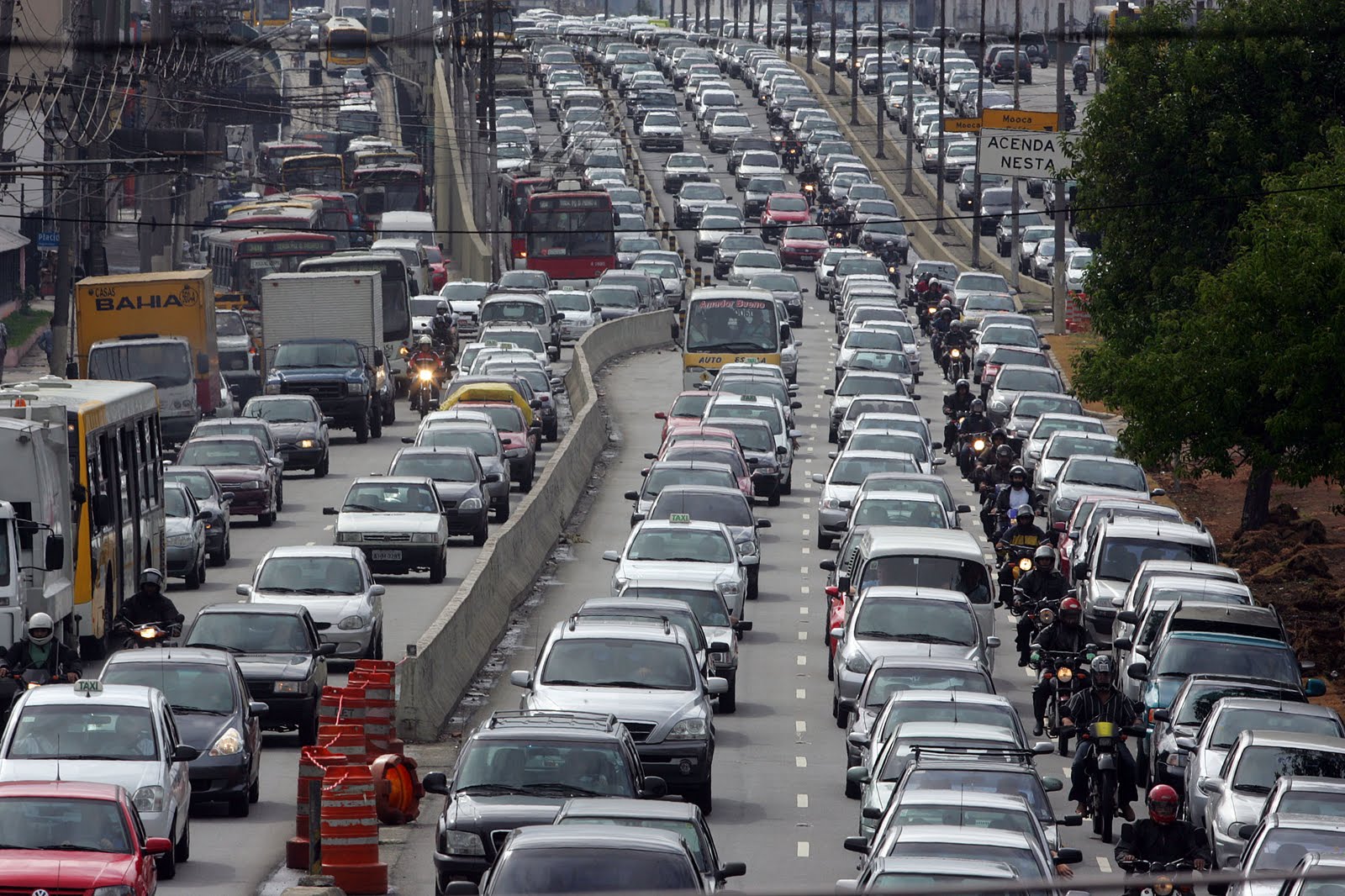
Sao Paolo, Brazil’s biggest city, has some of the worst congestion problems in the world.
Friday evenings are a commuter’s worst nightmare in Sao Paulo.
That’s when all the tailbacks in and out of the city extend for a total of 180 km (112 miles), on average, according to local traffic engineers, and as long as 295 km (183 miles) on a really bad day.
Red brake lights stretch as far back as the eye can see, blinking repeatedly as drivers endure an exasperating stop-and-go journey, which can continue for hours.
“It’s like a sea. A sea of cars,” says Fabiana Crespo, as she slowly navigates the congested streets with her 10-month-old baby Rodrigo.
“For a long time I lived with my family in the south of Sao Paulo and worked on the other side of town.”
“So when I got married, I decided to move to the north of the city to be close to the office, because commuting can make your life hell,” she says.
“But after my first son was born I decided to go back to running the family business which is in my old neighborhood. So I am back to the ordeal crossing the whole city to go to work.”
For Fabiana Crespo it’s a journey that can take more than two hours of her day – each way.
Traffic jams cause problems all over the world, and not just for drivers, but in Sao Paulo they have become more than a nuisance.
Sao Paolo has some of the worst congestion problems in the world
Heavy traffic is an integral part of life and culture in this vast city of more than 11 million people.
“We have become slaves of traffic and we have to plan our lives around it,” says Fabiana Crespo.
By the time she gets back home after another stressful two-hour commute it is already evening, and her husband is waiting with their older child, three-year-old Pedro.
However, she also knows that it is a certain irony that it was in one of those terrible congestions nine years ago that she met the man she would eventually marry.
“I was with a friend in my car and he was in his car also with a friend. In the stop and go of the traffic jam we started driving side by side and then he started looking at me,” says Fabiana Crespo.
After some flirting through the car windows, Mauricio managed to convince Fabiana to give him her phone number. He called, and an enduring love story began.
“I think this is the only thing we can’t complain about in Sao Paulo’s traffic,” she says.
However, for most motorists, the story is one of frustration and local news radios dedicate considerable energy and airtime to ensure motorists are fully up to date.
There is even one station dedicated exclusively to reporting traffic conditions and alternative routes, 24 hours a day, seven days a week.
Since it was set up seven years ago, Sul America Traffic Radio has gathered a large following of listeners who also act as reporters, calling in to update other motorists or to vent their frustrations.
During rush hour, the station has the support of a helicopter while a team of reporters is out on the road, often stuck in traffic themselves.
Among them is Victoria Ribeiro, whose job is to drive around town finding traffic jams – not in itself much of a challenge – and to find ways to escape the mess.
“I have been working with the radio since its beginnings and we can see the traffic is only getting worse, as more cars are coming onto the streets,” Victoria Ribeiro says.
The Brazilian car industry has been breaking successive production records over the last decade, as the income of millions of Brazilians has improved thanks to economic growth.
Owning a car is a widely held aspiration, offering an alternative to the city’s deficient public transport system, and the ultimate proof of belonging to the middle class.
However, while the explosion in car sales was essential to sustain Brazilian economic growth, it has also pushed Sao Paulo’s “sea of cars” to a whole new level.
“It’s like a war, because everybody seems to become very selfish once they are behind the wheel of a car,” says Victoria Ribeiro.
For those who have enough money there is another option – they can literally hover above the problem.
The combination of bad traffic and fear of crime – two major concerns in Sao Paulo – a growing helicopter industry is able to ferry around the super rich or business executives.
“If I hire a helicopter for a few hours I can hop between helipads and have three or four meetings in one day, which would be impossible if I had to move back and forth by car,” says legal consultant Sergio Alcibiades, who uses an air taxi service a few times a month.
“For me this is a tool to make money.”
The owner of Helimart Air Taxi, Jorge Bittar, says his company is enjoying an average growth of 10% per year and has 16 helicopters that rarely stay on the ground for long.
“When it comes to traffic, the worse it gets, the better it is for us.”
There may be opportunities for some but traffic jams also have a negative impact on the economy.
The heavy traffic has a huge impact on the cost of living and doing business says Claudio Barbieri, a professor in engineering and transport expert from the University of Sao Paulo.
“If you have a truck and this truck cannot make more than six to eight deliveries instead of 15 or 20, you need two trucks, so everything becomes more expensive.”
Professor Claudio Barbieri says Sao Paulo has skilled and experienced traffic engineers that somehow manage to get the city to flow, albeit slowly.
“But the big problem is that we Brazilians are terrible with planning and traffic will only become more manageable if we start looking into real long-term solutions.”
But he is also clear that a “more manageable traffic” environment is the best possible scenario that can be achieved.
“No city in the world will ever manage to end congestion because when traffic flows, people are drawn to their cars. The key is to find a balance, the point at which it is worthwhile for commuters to use public transport because it’s faster then driving,” he says.
“That way Sao Paulo needs urgently to invest more in public transport instead of building new roads and expressways that will only be filled up with more cars.”
Alpha Walker and Tamara Diaz, a couple who tried to extort millions of dollars from Stevie Wonder, have pleaded no contest and been sentenced to 292 days in prison in Los Angeles.
But Alpha Walker and his girlfriend Tamara Diaz were released after being sentenced, having already served their time since they were arrested in May.
Alpha Walker was accused of making a video that he said would make the singer “extremely” embarrassed.
He tried to blackmail the star for up to $5 million, Stevie Wonder’s lawyer said.
The couple who tried to extort millions of dollars from Stevie Wonder have pleaded no contest
At a preliminary hearing, a police detective described the video as an 80-minute rant against Stevie Wonder.
It was said to feature the dilapidated home of Stevie Wonder’s dead mother and to show Stevie Wonder’s son, of whom the musician is protective.
A plea of no contest is not an admission of guilt but means the defendant does not contest the charges.
Alpha Walker had previously maintained his innocence and his solicitor Ian Wallach had claimed that he had a constitutional right to make and market the video.
A sting operation involving Stevie Wonder’s solicitor led to the pair’s arrest.
Ian Wallach said a deal was reached after prosecutors encountered trouble proving the extortion case, according to the Associated Press news agency.
He added that the charges were eligible to be reduced to misdemeanors and expunged later if the pair comply with the terms of their release.
Alpha Walker and Tamara Diaz were both ordered to spend three years on probation and told to stay away from the singer and his associates.
Riot police have ringed the Spanish parliament in Madrid as protesters gather for a march against austerity tagged “Occupy Congress”.
Metal barriers have been placed around the building to block access from every possible direction, correspondents say.
Indignants, as the protesters are known, say they are protesting at the “kidnapping” of democracy.
Spain’s provinces have piled pressure on the government with a possible new bailout request and an early election.
Andalucia is considering asking for a 4.9 billion euro ($6.3 billion) emergency credit line from the central government, a spokeswoman for the regional government confirmed for Reuters news agency.
Three other regions – Catalonia, Valencia and Murcia – have already said they will seek emergency funds.
Indignants, as the protesters are known, say they are protesting at the "kidnapping" of democracy
In Catalonia, President Artur Mas called an early election for 25 November, which correspondents say will be a de facto referendum on his demands for greater independence for the province.
There is real concern in Europe that Spain may need an international bailout going beyond the 100 billion euros ($125 billion) pledged by eurozone finance ministers in June to rescue its banks.
Thousands of people have gathered in central Madrid for the march to parliament, due to begin at 17:30.
Buses were reportedly laid on to ferry demonstrators into the capital from the provinces.
One of the main protest groups, Coordinadora #25S, said the Indignants did not plan to storm parliament, only to march around it.
The Coordinadora #25S manifesto reads: “Democracy has been kidnapped. On 25 September we are going to save it.”
Pablo Mendez, an activist from the 15M Indignants movement, told the Associated Press news agency: “This is just a powerful signal that we are sending to politicians to let them know that the Spanish bailout is suicide and we don’t agree with it, and we will try to prevent it happening.”
Another demonstrator, Montse Puigdavall, said: “I’m here because of the situation we are living in now, because of all the social cuts and rights that we have lost, that took a lot of hard work to achieve.
“So we are here because we’re determined not to lose them.”
Under Spanish law, people who lead demonstrations outside parliament that disrupt its business while it is in session may be jailed for up to one year, AFP notes.
Clashes have broken out at previous rallies and marches against the cuts and at least 1,300 police are said to be on duty at the Congress building.
The Spanish government is having to borrow heavily to cope with the effects of a property values collapse, a recession and the worst unemployment rate in the eurozone.
After nine months in government, Prime Minister Mariano Rajoy is still resisting pressure to request a bailout.
His government insists the 100 billion-euro pledge does not constitute an international financial rescue.
If Mariano Rajoy does request a bailout, it may not happen before late October because of a regional election in his home province, Galicia.
Catalonia’s election decision comes days after Mariano Rajoy rejected a request from the wealthy but indebted region to run its own fiscal affairs.
The region is legally barred from holding an actual referendum on independence.
“It is time to take the risk,” Artur Mas told the regional parliament.
“If Catalonia were a state we would be among the 50 biggest exporting countries in the world.”
Social network Myspace has announced its fourth major redesign as it seeks to regain relevance in the face of falling numbers.
Myspace, now part-owned by Justin Timberlake, aims to focus more on music and offer deeper integration with Facebook and Twitter.
But it faces stiff competition from online platforms offering to connect artists and fans.
According to measurement firm comScore, the Myspace audience is 54 million.
This is down from hundreds of millions at its peak in 2005.
Social network Myspace has announced its fourth major redesign as it seeks to regain relevance in the face of falling numbers
A message on the website announced the redesign: “We’re hard at work building the new Myspace, entirely from scratch.”
“But we’re staying true to our roots in one important way – empowering people to express themselves however they want,” the message continued.
It called on fans to join “our brand new community” and offered a sneak preview of the resdesign.
Those interested in joining were asked to leave an email contact and “expect an invite soon”.
The new-look Myspace says it aims to put music at the heart. Users can control audio content from a navigation panel and pair photograph albums with playlists in a kind of social media mix tape to mark any occasion.
A Discover tab within the navigation panel will offer access to trending artists, music, mixes, radio, videos, news, and forthcoming concerts. The items can be dragged into personal folders.
There is also an emphasis on what’s called Artist Pages, with the promise of lots of tracks, albums and videos.
MySpace was sold to Rupert Murdoch’s News Corp empire in 2005.
It paid $580 million for the social network but users and advertisers left the site for rival social sites such as Facebook and Twitter.
The site underwent a major makeover in 2010, rebranding itself as a “social entertainment site”.
But it wasn’t enough and in June 2011, News Corp sold it to online advertiser Specific Media at a huge loss.
A further rebrand after the sale promised it would become “the number one online community music destination”.
Music and media analyst Mark Mulligan said he thought this latest rebrand was the “deepest” yet.
“At its peak, MySpace was a trailblazer for bringing together fans and artists but it faces stiff competition from sites such as TopSpin and Pledge Music which offer artists tools to establish relationships with fans,” he said.
“It can’t just do what they used to do even if they do it better,” Mark Mulligan said.
“It has to offer artists a reason why they would go there rather than on Facebook. It needs to become a social platform for bands and not just an alternative to Facebook,” he said.
Vaginal whitening wash Lactacyd White Intimate, a product that promises to make your private area “safely fairer within four weeks”, has hit the beauty market in Thailand.
Lactacyd White Intimate comes after huge controversy was sparked when 18 Again – an Indian pharmaceutical “vaginal tightening and rejuvenating cream” came onto the market earlier this year.
The latest product’s advert, which is online, on TV and on radio, shows an attractive, fair-skinned young woman complaining about how tight shorts can leave skin looking darker.
Vaginal whitening wash Lactacyd White Intimate promises to make your private area safely fairer within four weeks
The young woman then waltzes off in a tiny pair of white shorts as a voice-over states that the product can help skin become “bright and translucent”.
In a country where fair skin is synonymous with success, skin and body hair whitening products are readily available – and the industry is expected to reap $2 billion this year alone- but this is the first vaginal whitening wash to hit the shelves.
When 18 Again hit the shelves in India, not only did women voice the opinion on Twitter that 18 Again was created by Ultratech purely to cash in on female insecurities, but many criticized the accompanying TV advert.
Curiosity rover has completed its first close-contact science on Mars.
The robot pushed its arm instruments up against a pyramidal rock to assess the atomic elements that were present.
The rock – dubbed “Jake Matijevic” after a late rover engineer – was not expected to have high research value. Rather, it was regarded as an early opportunity to demonstrate the performance of the arm’s “hand lens” and X-ray spectrometer.
Curiosity has now continued driving.
Curiosity rover has completed its first close-contact science on Mars
On Monday, it moved some 42 m (138 ft), the single biggest roll for the robot since landing seven weeks ago in Mars’ equatorial Gale Crater.
The vehicle is endeavoring to get to location that scientists have nicknamed Glenelg, which satellite images have indicated is a junction between three types of geological terrain.
It is at Glenelg that Curiosity will likely use one of its key arm tools – its drill – for the first time.
Even before the rover gets to the junction, it will look for some suitable soil to scoop and deliver to its onboard laboratories for analysis.
NASA’s $2.6 billion mission touched down on the Red Planet on 6 August (GMT).
Much of the time since then has been spent commissioning the immensely complex, six-wheeled machine and its suite of 10 instruments.
The Jake Matijevic investigation allowed the science team to use the X-ray spectrometer (APXS) and the hand lens (Mahli) in unison with the rover’s infrared laser instrument (ChemCam).
The laser, which sits atop the rover’s mast, also determines the chemical composition of targets, and the rock experiment meant researchers could do some cross-calibration of APXS and ChemCam.
Little information has been released by NASA about what it saw, but then the pyramidal rock was not expected to be anything more than a standard lump of Martian basalt.
As the mission progresses, APXS and ChemCam, along with the keen eye of Mahli, will be used to survey the crater’s surface for more interesting rocks. When they identify a fascinating target, it is at that point that the drill will be commanded to acquire a sample for detailed scrutiny in the onboard laboratories.
Curiosity’s mission has been funded for one Martian year (two Earth years) of study. It will try to determine in that time whether past environments at Gale Crater could ever have supported microbial life.
Helen Mirren is to receive an honorary award for achievement in world cinema from the European Film Academy.
“It was discovering the immense diversity of European film-making that gave me an enduring love and respect for the artform,” Dame Helen Mirren said.
“This award is… a meaningful honor. I would be proud to be counted as an actor in the European tradition.”
Helen Mirren is to receive an honorary award for achievement in world cinema from the European Film Academy
The Oscar-winning actress will be a guest at the European Film Awards on 1 December in Malta.
Helen Mirren, 67, won the Academy Award for best actress for her role in The Queen in 2007.
She was nominated for an Oscar again in 2010 for her role as Tolstoy’s wife in The Last Station and is tipped to pick up another nomination next year for playing Alfred Hitchcock’s wife opposite Sir Anthony Hopkins in Hitchcock.
Helen Mirren’s earlier credits include The Long Good Friday, The Cook, The Thief, The Wife and His Lover, The Madness of King George,Gosford Park and Calendar Girls.
It was recently announced that Helen Mirren would revisit her Oscar-winning role as Queen Elizabeth II in writer Peter Morgan’s new play The Audience.
Billy Elliot director Stephen Daldry will direct the West End production next February at London’s Gielgud theatre. The Audience will depict the weekly meetings between the Queen and some of the 12 prime ministers of her reign.
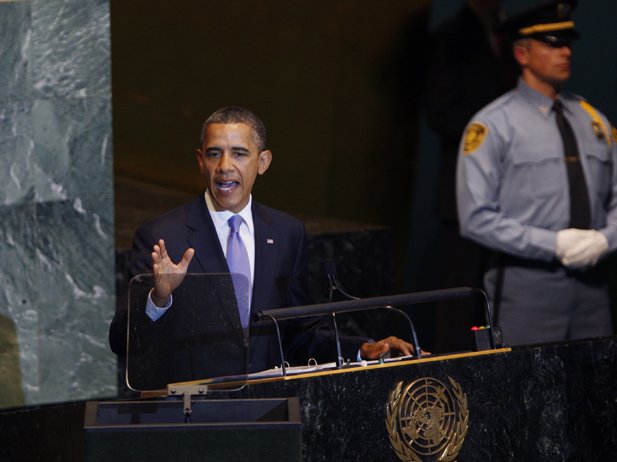
Barack Obama is addressing the UN General Assembly in New York, where he is to say the US will “do what we must” to stop Iran acquiring nuclear weapons.
Six weeks before the US election, Barack Obama is expected to say that a nuclear-armed Iran “is not a challenge that can be contained”.
Barack Obama condemned the violence that erupted over a “disgusting” anti-Islam video as “an attack on UN ideals”.
Unrest across the Middle East is set to dominate discussion the summit.
Recent protests across the Muslim world in response to the US-made video mocking the Prophet Muhammad, as well as Iran’s nuclear programme and the 18-month conflict in Syria, are likely to be high on the agenda.
Barack Obama is addressing the UN General Assembly in New York
Opening the meeting on Tuesday, UN Secretary General Ban Ki-moon described the fighting in Syria as “a regional calamity with global ramifications”.
Ban Ki-moon called for action from the divided UN Security Council and said “the international community should not look the other way as violence spirals out of control”.
“Brutal human rights abuses continue to be committed, mainly by the government but also by opposition forces,” he added.
People did not look to the UN to be simply a mirror reflecting back a divided world, said Ban Ki-moon: Rather, they wanted to see it come up with solutions to problems.
Barack Obama was blunter in his assessment of Syria, saying Bashar Assad’s regime must end.
The US president opened his address with a tribute to the US ambassador to Libya murdered in Benghazi, challenging the UN to affirm that “our future will be determined by people like Christopher Stevens, and not by his killers”.
“Today, we must declare that this violence and intolerance has no place among our United Nations,” he said.
Barack Obama was to vow that “the United States will do what we must to prevent Iran from obtaining a nuclear weapon,” with the backing of “a coalition of countries” holding Tehran accountable.
Although the White House said the president’s address should not be considered a campaign speech, it follows critical remarks about his foreign policy from Republican presidential candidate Mitt Romney.
Mitt Romney condemned Barack Obama’s description of the murder of Christopher Stevens and three other Americans as “bumps in the road”. He has also castigated him for not taking time out to hold talks on Iran during the summit with Israeli PM Benjamin Netanyahu.
Barack Obama has rejected the Israeli leader’s calls for Washington to set Tehran “red lines”.
Benjamin Netanyahu has recently appeared on US television to press for a tougher line on Iran, and he will take the same message to the General Assembly on Thursday.
Tehran says its nuclear programme is for civilian purposes.
On the eve of the assembly, Iranian President Mahmoud Ahmadinejad told a UN meeting that Israel was a “fake regime”, prompting Israel’s UN ambassador, Ron Prosor, to walk out.
Syria’s 18-month conflict is not formally on the General Assembly’s agenda but it is likely to be addressed by several speakers on the opening day. including French President Francois Hollande and Qatari emir Sheikh Hamad bin Khalifa al-Thani.
Francois Hollande, in his first appearance at the assembly, is also expected to call for backing for an international force to be sent to the West African state of Mali to help dislodge Islamist militants who have taken over the north of the country.
The UN Security Council has been unable to reach agreement on the Syria crisis and on Monday UN envoy Lakhdar Brahimi warned that the situation was “extremely bad and getting worse”.
While he did not have a full plan, he said he had “a few ideas”. Lakhdar Brahimi has just visited Damascus as well as refugee camps in neighboring Jordan and Turkey.
Diplomats have played down expectations for Lakhdar Brahimi’s mission, with no sign of fundamental divisions on the council being bridged.
How a girl can quickly (as well as effortlessly and economically) freshen up her work look after a long day in the office, readying herself for a night on the town?
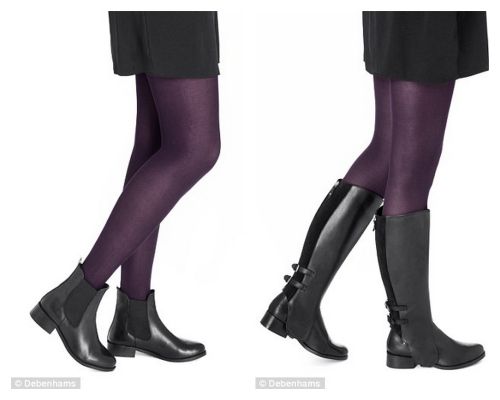
Debenhams may, after all these years, finally have the answer: the 2-in-1 boot.
The unique leather boot – the brainchild of London-based designer Betty Jackson – begins life as the casual Chelsea ankle-high.
In a matter of seconds – and with a little help from a long leather cuff which fastens beneath the foot – it can become a completely different, smarter evening knee-high with buckle detail.
Debenhams 2in1 boots
Available in black and brown, the innovative product costs £120 ($188) and was developed after customer research showed that women wanted a quick and simple solution to shaking up their work look.
Natelle Baddeley, Head of Accessories Design at Debenhams: “This boot is the ultimate choice in footwear for fashion-savvy recessionistas.
“Women are being more and more careful with their cash than before, but still want to invest in great quality and design.
“We wanted to offer our customers that little bit extra, so thought what better than two on-trend, stylish boots for the price of one!”
Kim Kardashian covered her famously curvaceous figure in a grey sleeveless “skorts-suit” while shopping in Miami Beach with a friend.
The bizarre ensemble featured black piping, peplum sides, and from the front, appeared to be shorts, while from the back, appeared to be a skirt.
Kim Kardashian, who turns 32 next month, finished her decidedly modern look with a pair of black peep-toe heeled boots.
Kim Kardashian covered her famously curvaceous figure in a grey sleeveless “skorts-suit” while shopping in Miami Beach
The brunette bombshell was coincidentally stopping into a clothing store called Curves with a male friend.
Earlier, Kim Kardashian had put on a white bathing suit, heavily cinched at the waist, and attempted to take a picturesque walk on the beach with sister Kourtney, who just gave birth to second child Penelope.
The bizarre ensemble featured black piping, peplum sides, and from the front, appeared to be shorts, while from the back, appeared to be a skirt
The most famous Kardashian tweeted to her 16.1 million followers: “Not so relaxing day at the beach today” and included a POV picture of a mob of fans and cameramen rubbernecking to get a better view of the reality star.
The siblings are currently in the holiday region to film their E! reality TV show Kourtney & Kim Take Miami.
The pair will be working on their Dash clothing and accessories shop which they have branches of in New York and California.
The Toys R Us chain is being sued over allegations it stole one of its former partners’ trade secrets to develop its own tablet computer.
Fuhu – the Los Angeles based creator of the Nabi tablet – claims the toy chain copied the design, user-experience and online services of its device.
Toys R Us used to have exclusive rights to sell Fuhu’s machine in the US, but this deal has since lapsed.
A spokeswoman for Toys R Us was unable to comment at this time.
Fuhu is part-owned by the Taiwanese computer-maker Acer, the gadget manufacturer Foxconn and the memory chip producer Kingston.
Fuhu, the creator of the Nabi tablet, claims Toys R Us copied the design for its new tablet Tabeo
It began life as an internet software provider before shifting into the tablet market in November 2011, when it announced it would be selling the Nabi through the Toys R Us and Babies R Us chains in the US.
The machine came pre-installed with popular games including Angry Birds and Fruit Ninja as well as an educational maths-learning program and a painting app.
At the time, a Toys R Us executive said he expected the device to “be a hit with our customers” in the run-up to Christmas.
It also received positive reviews from Time and Wired magazines, among others.
But Fuhu alleges the chain subsequently did “virtually no promotion” and only sold about 20,000 units over the period because it had not ordered more.
Child-targeted tablets proved to be one of the season’s hot categories with rival devices – including the LeapPad Explorer Tablet and the VTech Innotab – selling out in the run up to the holiday.
In January 2012 Fuhu and Toys R Us ended their exclusive agreement.
Eight months later the store announced it would sell its own Android-powered hand-held – the Tabeo – in the US from October.
The announcement followed in the footsteps of another retailer, Amazon, which had seen its own-branded device become a best-seller.
Fuhu claims the Tabeo copied the butterfly-shaped bumper used to protect the Nabi, the device’s software eco-system and the firm’s “business blueprint” in order to release a product ahead of Christmas this year.
“We created a highly innovative product,” said Robb Rujioka, Fuhu’s co-founder.
“Cheap knock-offs will devalue our brand and the children’s tablet category as a whole.”
Fuhu is now demanding all Tabeos be turned over to it as well as unspecified monetary damages.
It has also launched a successor to its original product with improved specifications, which is sold via other retailers.
China’s first aircraft carrier, a refurbished Soviet ship, has entered into service, the Defence Ministry says.
The 300 m (990ft) Liaoning – named after the province where it was refitted – is a refurbished Soviet ship purchased from Ukraine.
For now the carrier has no operational aircraft and will be used for training.
But China says the vessel, which has undergone extensive sea trials, will increase its capacity to defend state interests.
The delivery of the aircraft carrier comes at a time when Japan and other countries in the region have expressed concern at China’s growing naval strength.
Liaoning is a refurbished Soviet ship purchased from Ukraine
China and Japan are embroiled in a row over disputed islands in the East China Sea. Several South East Asian nations are also at odds with China over overlapping territorial claims in the South China Sea.
It also comes weeks ahead of a party congress expected to see the transition of power to a new generation of Chinese leaders.
The Liaoning was formally handed over to the navy at a ceremony attended by top Chinese leaders at Dalian Port, state-run Xinhua news agency said.
“Having the aircraft carrier enter the ranks will be of important significance in raising the overall fighting capacity of our nation’s navy to a modern level,” China’s Defence Ministry said in a statement.
The vessel will “increase [China’s] capacity to defend, develop its capacity to co-operate on the high seas in dealing with non-traditional security threats and will be effective in defending the interests of state sovereignty, security and development”, it added.
The official commissioning of the country’s first aircraft carrier signals China’s status as a rising power.
The country’s Communist leaders are spending billions modernizing their armed forces so they can project military power far beyond China’s borders, our correspondent adds.
The Liaoning, formerly known as the Varyag, was constructed in the 1980s for the Soviet navy but was never completed.
When the Soviet Union collapsed in 1991, the Varyag sat in Ukraine’s dockyards.
A Chinese company with links to China’s People’s Liberation Army (PLA) bought the ship just as Soviet warships were being cut for scrap.
It said it wanted to turn the Varyag into a floating casino in Macau and in 2001 the ship was towed to China.
The Chinese military confirmed in June 2011 that it was being refitted to serve as the nation’s first aircraft carrier.
Analysts say it will take years to outfit the carrier with aircraft and make it fully operational. But Chinese officials say that the Liaoning advances the country’s military modernization.
“The development of aircraft carriers is an important part of China’s national defence modernization, in particular its naval forces, and this aircraft carrier is an essential stepping stone toward its own more advanced aircraft carriers in the future,” China’s Rear Admiral Yang Yi wrote in state-run China Daily newspaper.
The carrier will be mostly used “for scientific research and training missions” so China could build “a more advanced aircraft carrier platform in the future”, he added.
Kim Kardashian went one step further to prove she has the curvy credentials during a visit to Miami Beach on Monday with her sister Kourtney.
While her older sibling – who recently gave birth to her second child Penelope – rocked a white T-shirt and shorts, Kim Kardashian opted for something more attention grabbing.
Sporting a white swimsuit which enabled her ample cleavage, the 31-year-old cinched her waist in with a gold sash which appeared to be wrapped around her midriff several times.
The reality star wore a long sheer shirt dress over the ensemble and it’s a wonder how she was able to breathe.
Kim Kardashian smiled as she made the appearance on the boardwalk followed by fans who recognized her
However, Kim Kardashian smiled as she made the appearance on the boardwalk followed by fans who recognized her.
She carried her cream sandals in one hand and paraded her pins in the high bikini line costume.
In between taking dips in the ocean, the brunette went back to a cabana bed to sit down.
But she soon resorted to laying out on her side to make what was supposed to be a relaxing experience more comfortable.
The siblings are in the holiday region to film their E! reality TV show Kourtney & Kim Take Miami.
The pair will be working on their Dash clothing and accessories shop which they have branches of in New York and California.
Kim Kardashian’s current boyfriend Kanye West appeared on the NYC version of the show while she was happily married to estranged husband Kris Humphries.
The fashion conscious rapper is thought to be behind many of her style choices lately.
An analysis of hundreds of years of eunuch “family” records showed that castration had a huge effect on the lifespans of Korean men.
They lived up to 19 years longer than uncastrated men from the same social class and even outlived members of the royal family.
The researchers believe the findings show male hormones shorten life expectancy.
The study is published in the journal Current Biology.
Castration before puberty prevents the shift from boy to man. One of the scientists involved in the study, Dr. Cheol-Koo Lee from Korea University, said: “The records said that eunuchs had some women-like appearances such as no moustache hair, large breasts, big hips and thin high-pitched voice.”
An analysis of hundreds of years of eunuch "family" records showed that castration had a huge effect on the lifespans of Korean men
Eunuchs had important roles in many cultures from protecting harems to castrati superstar singing sensations. The imperial court of the Korean Chosun dynasty used eunuchs to guard the gates and manage food. They were the only men outside the royal family allowed to spend the night in the palace.
They could not have children of their own, so they adopted girls or castrated boys.
Researchers in South Korea analyzed the genealogical record of these “eunuch families”.
They worked out the lifespans of 81 eunuchs born between 1556 and 1861. The average age was 70 years, including three centenarians – the oldest reached 109.
By comparison, men in other families in the noble classes lived into their early 50s. Males in the royal family lasted until they were just 45 on average.
There are no records for women at the time for comparison.
Dr. Kyung-Jin Min, from Inha University, said: “We also thought that different living circumstances or lifestyles of eunuchs can be attributed to the lifespan difference.
“However, except for a few eunuchs, most lived outside the palace and spent time inside the palace only when they were on duty.”
Instead he thinks the data “provides compelling evidence that male sex hormone reduces male lifespan”.
Women tend to outlive men across human societies. However, theories are hard to test in experiments and the exact reason for the difference is uncertain.
One thought is that male sex hormones such as testosterone, which are largely produced in the testes, could be damaging. The researchers said the hormones could weaken the immune system or damage the heart. Castration would prevent most of the hormone from being produced, protecting the body from any damaging effect and prolonging lifespan.
Dr. Kyung-Jin Min said: “It is quite possible that testosterone reduction therapy extends male lifespan, however, we may need to consider the side effects of it, mainly reduction of sex drive in males.”
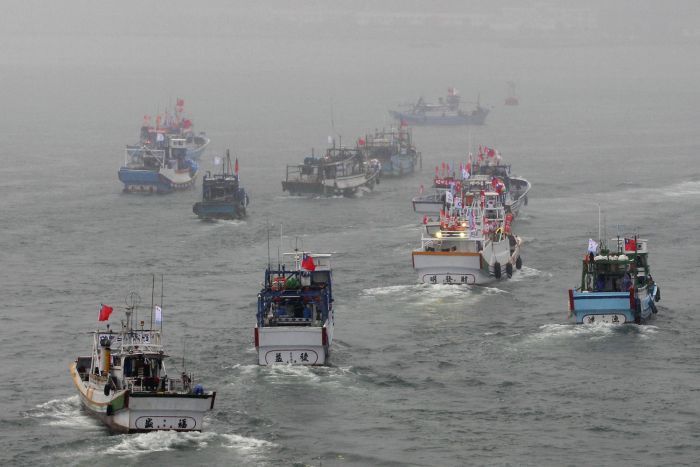
Dozens of Taiwanese boats sailed to disputed East China Sea islands in a brief protest, as top Japanese and Chinese diplomats met in Beijing to ease tensions.
The islands, called Senkaku in Japan and Diaoyu in China, are controlled by Japan but claimed by China and Taiwan.
Tension in the region has been high since Japan’s purchase of the islands from their private Japanese owner.
Taiwanese vessels, including coastguard ships, have now left the area.
Meanwhile Japanese Vice-Foreign Minister Chikao Kawai, who is in Beijing for a two-day visit, is meeting Chinese counterpart Zhang Zhijun, amid a row that has seen anti-Japanese protests in several Chinese cities.
Dozens of Taiwanese boats sailed to disputed East China Sea islands in a brief protest
Chinese surveillance and fishing boats have also been sailing in and out of waters around the islands in recent days, following the Japanese government’s announcement that it had bought the islands.
The row over ownership of the islands has been rumbling for years and has flared sporadically.
A spokesman from Taiwan’s Coast Guard Administration said that 58 fishing vessels arrived in the disputed waters at around 05:00 a.m. local time after setting off from a northern Taiwanese port on Monday afternoon.
The fishing boats were accompanied by several Taiwanese coast guard vessels.
Japan’s coast guard said warnings were issued to the boats and television footage showed water being sprayed towards the Taiwanese ships.
The flotilla turned back towards Taiwan after being in the area for a few hours, reports said.
The move to sail to the disputed area, activists and fishermen said, was to protect fishing rights and access to traditional fishing grounds.
“Fishing rights are more important than sovereignty, but fishing rights also means sovereignty [in this case],” activist Chen Chunsheng, who is organizing the flotilla, told reporters on Monday.
”So for this day on which we negotiate fishing rights, we are willing to be the backing of the government.”
Both China and Taiwan say they have inherited historic sovereignty over the islands.
The Japanese government moved to buy the islands in response to a potentially much more provocative plan by right-wing Tokyo Governor Shintaro Ishihara to buy and develop them using public donations.
The row comes at a time when both China and Japan are facing political changes domestically, making it difficult for either side to be seen as backing down.
Japanese Prime Minister Yoshihiko Noda’s government – already hit by poor figures in opinion polls – is likely to face an election in coming months. China is due to hold a party congress in weeks that will see major changes in the top echelons of leadership.
Arriving in Beijing on Monday, Japan’s envoy Chikao Kawai stressed the importance of bilateral ties.
“Because of the current difficult situation, I plan to explain what Japan is now considering to Zhang Zhijun and listen to what China is considering, for the importance of the relationship between both countries,” he said.
Chinese Foreign Ministry spokesman Hong Lei said Beijing would set out its position: “China will urge Japan to correct their mistakes and make efforts in improving ties,” he said.
A ceremony to mark 40 years of ties with Japan – due on Thursday – has been put off.
Last week, several major Japanese companies briefly suspended operations in China after attacks on shops and car dealerships.
This led to fears over a larger impact on trade between China and Japan, which is worth about $345 billion.
Most Japanese companies have resumed their operations in China. But China’s customs officials are to step up inspection of Japanese air cargo arriving at Beijing airport, said a Kyodo news report citing unnamed Japanese businesses sources.
Scientists have discovered that a harmless virus that lives on our skin could be used as a treatment for acne.
The virus, called a phage, is naturally built to target and kill bacteria that cause acne – Propionibacterium acnes.
Experts at the University of California, Los Angeles (UCLA) and the University of Pittsburgh found 11 different versions of virus in this phage family that had this power.
They plan lab work to see if they can harness it as a therapy.
Scientists have discovered that a harmless virus that lives on our skin could be used as a treatment for acne
Scientists at other research institutes are also interested in phages as an acne treatment.
Lead scientist of the current work, Prof. Robert Modlin, said: “Acne affects millions of people, yet we have few treatments that are both safe and effective.
“Harnessing a virus that naturally preys on the bacteria that causes pimples could offer a promising new tool against the physical and emotional scars of severe acne.”
Acne is caused when hair follicles become blocked with an oily substance called sebum, which the body makes to stop the hair and skin from drying out.
Normally harmless bacteria, such as Propionibacterium acnes, that live on the skin can then contaminate and infect the plugged follicles.
Phages appear to help counteract this.
When the scientists sequenced the DNA coding of the phages, they discovered that as well as sharing most of their genetic material, the viruses all had some key features in common.
All carry a gene that makes a protein called endolysin – an enzyme thought to destroy bacteria by breaking down their cell walls.
And unlike antibiotics, which kill many types of bacteria including “good” ones that live in our gut, phages are programmed to target only specific bacteria.
Co-researcher Dr. Jenny Kim, director of the UCLA Clinic for Acne, Rosacea and Aesthetics, said: “Antibiotics such as tetracycline are so widely used that many acne strains have developed resistance, and drugs like Accutane, while effective, can produce risky side effects, limiting their use.”
Phages could potentially offer a tailored therapy with fewer side effects, the experts told the open access journal of the American Society for Microbiology, mBio.
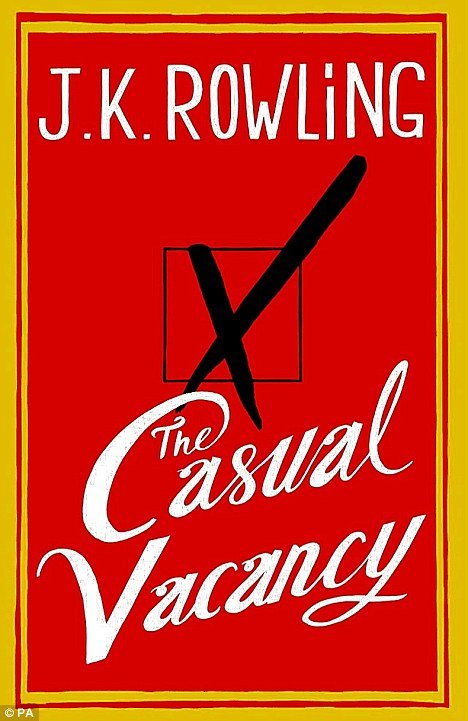
JK Rowling said her next novel would be for adults and it seems she has succeeded.
Days before its official launch, excerpts from JK Rowling’s first book in the post-Harry Potter era have begun to emerge online – and it is clear that it is for grown-up eyes only.
While the full text of The Casual Vacancy is a closely guarded secret, an American journalist who has read it in the offices of publishers Little, Brown has revealed some of the book’s more risqué passages.
Far from her usual wizard descriptions of fantastical battles between good and evil, JK Rowling’s new tale is said to be one of class warfare, prostitution, heroin addiction and teen sexuality.
A female character is introduced with the description that the “leathery skin of her upper cleavage radiated little cracks that no longer vanished when decompressed”.
At another point in the book, the reader meets a “lustful boy” who sits on a school bus “with an ache in his heart and in his b****”.
And the author’s usual fans may also be shocked – if not a little perplexed – by the mention of one girl’s “miraculously unguarded v*****”.
Although some fans may be upset by the direction she has taken, JK Rowling – who has sold 450 million Harry Potter books worldwide, amassing a personal fortune of £560 million ($880 million) – insists she should be free to write about whatever she wants.
“There is no part of me that feels I represented myself as your children’s babysitter or their teacher,” she said.
“I was always, I think, completely honest.
“I’m a writer, and I will write what I want to write.”
The Casual Vacancy, JK Rowling’s first adult book, is due to be published on Thursday
JK Rowling, who has three children, also revealed that she was ready for a change in genre after years of writing magical tales.
“I had a lot of real-world material in me, believe you me,” she told the New Yorker magazine.
“The thing about fantasy – there are certain things you just don’t do. You don’t have sex near unicorns. It’s an ironclad rule. It’s tacky.”
However, JK Rowling, 47, insisted her decision to write for adults was “not that I just wanted to write about… sex”.
“I think there is a through-line,” she added.
“Mortality, morality, [they are] the two things I obsess about.”
JK Rowling said she drew on her own upbringing near the Forest of Dean in Gloucestershire for the novel, in which the middle-class can barely hide their loathing for the inhabitants of a neighboring sink estate.
But locals in her old home village say the portrayal of snobby residents is as much “fantasy” as Harry Potter is.
Residents in Tutshill, a small community on the English side of Chepstow, where JK Rowling used to live, said the author’s childhood could have colored her memory of village life.
JK Rowling has previously said her childhood was unhappy and she couldn’t wait to leave Tutshill.
Her mum suffered from multiple sclerosis and she had a difficult relationship with her father.
Victoria Carter, 50, told the Daily Telegraph: “I think she has a bit of a chip on her shoulder because she didn’t have a very good time in her teenage years.
“Tutshill is neither snobby nor pretentious. If it were, we wouldn’t have lived here for 22 years.”
Her husband, William, 51, a business analyst, added: “She is a fantasy writer, after all. This sounds like another of her fantasies.”
The Casual Vacancy – which is due to be published on Thursday – is already a record breaker, with the novel receiving the largest number of in-store pre-order sales this year, according to Waterstones.
It is also said to have reached well over a million online pre-orders.
Almost every aspect of your behavior, including the way you walk, can have an impact on the way you feel.
If you want to cheer yourself up in an instant, try changing something that you would rarely even notice, such as the way you move across a room.
Research shows there are only six basic walking styles.
Striders, for example, take long steps, walk with a bounce and let their arms swing back and forth.
In contrast, shufflers take small steps and have drooping shoulders.
It was also found people associate each of the styles with different emotions, with ‘striders’ perceived as happy and “shufflers” as sad.
Psychologist Sara Snodgrass, from Florida Atlantic University, wanted to discover whether changing the way people walked would influence how they felt.
While pretending to be conducting a study on the effect of physical activity on heart rate, Sara Snodgrass asked people to take a three-minute walk in one of two ways.
Half of the participants were asked to take long strides, swing their arms, and hold their head high.
The rest took short strides, shuffled, and watched their feet.
After enacting this real-life version of Monty Python’s Ministry Of Silly Walks, everyone rated how happy they felt.
Those who took long strides felt happier than those who shuffled.
So keep your head up, roll your shoulders back and walk tall – you’ll soon have a genuine spring in your step.
Almost every aspect of your behavior, including the way you walk, can have an impact on the way you feel
The six basic walking styles:
The Stride: Long steps with a bounce, arms swinging.
Message: self-confident, independent, successful.
The Shuffle: Small steps: pigeon-toed, drooping shoulders.
Message: meek and disorganized.
The Duckwalk: Toes point out and body swings from side to side.
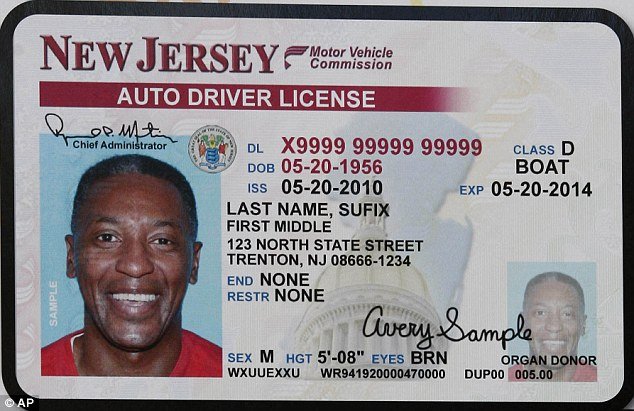
The New Jersey Department of Motor Vehicles has banned smiling during license photos so that their new facial-scanning software can identify drivers more easily.
But the ban, which took effect in January, has many drivers scowling, complaining that they’re entitled to pose how they wish.
“Your picture means a lot; it’s who you are,” said Velvet McNeil, 38, of Sicklerville, N.J., to the Philadelphia Daily News.
“Why should we all look like androids, looking mopey? I know there are some people who don’t have good driver’s licenses, but I actually keep all mine.”
The New Jersey Department of Motor Vehicles has banned smiling during license photos so that their new facial-scanning software can identify drivers more easily
Velvet McNeil went in to renew her license last week in Cherry Hill, but left when she was told to stop flashing her pearly whites.
Mike Horan, spokesman for the New Jersey Motor Vehicle Commission, explained that the new software will help catch identity thieves.
“This helps us weed out fraud,” he said. For example, if someone poses for a new portrait, but it doesn’t match the old one, investigators are notified.
The software works best when there are consistent facial expressions.
“To get an accurate photo, you don’t want an excessively expressive face in the photo,” he said.
Slight smiles, he said, are fine, but “Hey-I-won-the-lottery-type smiles” are not.
Other states like Delaware and Pennsylvania also have the software, but they allow smiling. New Jersey residents will just have to not grin – and bear it.
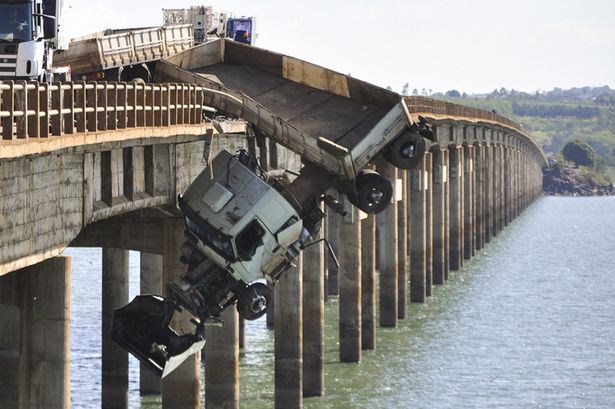
A lorry driver in southern Brazil had a miraculous escape when his vehicle skidded over the guard rail as he crossed Chavantes bridge linking the states of Sao Paulo and Parana.
The driver, Aguinaldo da Silva, said he lost control of his unloaded truck after a car stopped abruptly on the bridge.
It took nearly half an hour for passers-by to rescue him, using a rope to pull him up from his cabin.
A lorry driver in southern Brazil had a miraculous escape when his vehicle skidded over the guard rail as he crossed Chavantes bridge
Aguinaldo da Silva survived uninjured.
Efforts to rescue the lorry on Sunday had to be halted.
“The bridge began to shake and there were fears that it would collapse,” said Valcir Machado, from local website npdiario.com, which broke the news.
Traffic at the 1,500 m-long (0.9 mile) Chavantes bridge – which goes over a big dam on the border between the two states – has been suspended since the accident on Saturday afternoon.
Melanie Griffith celebrated her 55th birthday only last month, but it seems she is not planning on growing old gracefully.
However, with legs likes hers – who could blame her for daring to bare.
Melanie Griffith put her never-ending pins in display in a tiny pair of black shorts earlier this week as she beat the heat in West Hollywood.
The Body Double star, who was running errands, was snapped getting out of her Bentley, greeting photographers with a broad smile.
Melanie Griffith celebrated her 55th birthday last month
Melanie Griffith teamed her look with a striped vest top, exposing a hint of her pink bra, and wore comfortable flat shoes for her outing.
She entered rehab in 2008 after admitting she struggled with a pill addiction.
Since then she has seen to be dedicated to turning her life around and regularly attending yoga classes has played a big part in this.
Melanie Griffith may not be working out just to keep herself energized, though – it’s also doing wonders for figure.
She might have usurped her own mother, Tippi Hedren, to become Queen of Hollywood a few decades ago but she might be about to get a taste of her own medicine.
Dakota, who is Melanie Griffith’s daughter from her short-lived first marriage to Don Johnson, has become hot property in Hollywood, having already starred in films including The Social Network and 21 Jump Street.
The Oscar nominated star is currently on her third marriage but has been struggling to keep up appearances in recent months.
After rumors that her marriage with her Spanish film star husband, Antonio Banderas, was on the rocks, Melanie Griffith tried to quash them the only way she knew how; by pleading with US gossip supremo Perez Hilton on Twitter.
Lena Dunham, Portia de Rossi and Zosia Mamet should think about hiring a new stylist after their abysmal efforts on the red carpet at the 64th Emmy Awards.
Girls creator Lena Dunham, 26, tried her hand at femininity to soften her tomboy pixie cut, but ended up in a lace Prada dress that made her look frumpy – and a lot larger than she actually is.
Unfazed by her fashion faux pas, and her failure to win one of the four categories she was nominated for on Sunday, Lena Dunham chirpily tweeted her way throughout the evening from the Nokia Theatre in LA.
Praising the leading man of the night, Lena Dunham wrote: “Didn’t @jimmykimmel crush it tonight? The perfect old fashioned host swagger, generous yet saucy. A pleasure to behold!”
Lena Dunham ended up in a lace Prada dress that made her look frumpy and a lot larger than she actually is
Similarly, Zosia Mamet didn’t manage to execute a feminine flair on her Bihbu Mahopatra creation.
Zosia Mamet, 24, who plays Shoshanna Shapiro in Dunham’s HBO show Girls, swept her hair from her face in a gelled down side-parting, while looking a little uncomfortable in monochrome gown.
Zosia Mamet didn't manage to execute a feminine flair on her Bihbu Mahopatra creation
And while Portia de Rossi usually excels with her all-American girl look, she opted for something more masculine, posing with wife Ellen DeGeneres in an unusual Maison Valentino jumpsuit.
Portia de Rossi’s look divided fans on Twitter, with many complimenting the lace all-in-one and others ridiculing it.
One user of the social networking site wrote: “My god. WTF convinced Portia de Rossi that an old tea towel was appropriate garb for the #Emmys,” while another described her as “lovely in lace”.
Portia de Rossi opted for something more masculine, posing with wife Ellen DeGeneres in an unusual Maison Valentino jumpsuit
Game of Thrones star Lena Headey chose a bewitching Giorgio Armani dress – and Penny Preville jewels – which had criss-cross spaghetti straps and a sheer bodice to show off her back tattoos.
The gown was complete with theatrical sweeping arms that reached the red carpet, and were something akin to Addams Family martriarch Morticia.
But where Lena Headey failed to inject any color, Julianne Moore stepped in – bravely wearing all yellow.
Credit where it’s due, Julianne Moore, 51, easily defied her half century, but the color block Dior Couture gown was somewhat tent-like as it covered her from her neck to her toes.
Ashley Judd turned a pink dream into a nightmare, with her Carolina Herrera custom raspberry silk gown and giant beehive up-do.
The Missing actress saw the funny side of her extravagant hairstyle, tweeting: “My hair is so grand I am sitting on the floor of the car on our way to the #Emmys!”
And despite her dubious candyfloss creation, Ashley Judd certainly knows how to embrace her curves and had the right idea when it came to accessorizing.
She added: “Most important accessory other than our umbrella on 102 F red carpet? Tigers Milk bar. Snacks are crucial! #Emmys.”
Children should be banned from jumping on trampolines because they are too dangerous, health officials say.
Citing nearly 100,000 injuries in 2009 alone, the American Academy of Pediatrics has also dismissed the recent addition of safety nets around trampolines.
The Academy claims the nets do not make much difference in terms of safety, but instead lull parents into a false sense of security.
“Pediatricians need to actively discourage recreational trampoline use,” Dr. Michele LaBotz, lead author of the new AAP statement and a sports medicine physician at Intermed Sports Medicine in Portland, Oregon, told NBC News.
“This is not a toy. It’s a piece of equipment. We recommend that you not provide it for your family or your neighbors to use. But if you do use one, you need to be aware of the risks.”
Children should be banned from jumping on trampolines because they are too dangerous
Dr. Michele LaBotz added: “I think parents see the soft springy mat and they think it’s safe, like water.
“What they don’t realize is that once you get it to bouncing, especially if there are multiple users, it can be dangerous.
“Bigger kids and adults like to rocket propel up the little kids, getting them to bounce higher than they would otherwise and if the kid comes down wrong, it is the same as falling nine or 10 feet onto a hard surface.”
Data from the National Electronic Injury Surveillance System (NEISS) revealed the 75% of trampoline injuries happen when there is more than one person jumping on one.
And it’s the younger, smaller children at greater risk of significant injuries, including fractures of the legs and worse, the spine.
NEISS reported that 37 to 39% of all its recorded injuries were caused by falls from a trampoline.
Dr. Michele LaBotz also highlighted one study that found one in 200 trampoline injuries cause some kind of permanent neurological damage.
In her experience parents often continue to let their children use a trampoline ever after they have been injured because of it.
“There are a number of families, even those with kids who have had significant injuries, who decide they still want the trampoline as part of what they offer to their children,” Dr. Michele LaBotz said.
Dr. Barbara A. Gaines, director of trauma and injury prevention at the Children’s Hospital of Pittsburgh of the University of Pittsburgh Medical Center, told the news station that parents often think an injury caused by a trampoline is “one of those freak things”.
“But these are not just accident,” she adds.
“There is a pattern to them and there’s something we can do to prevent them. It’s not that we don’t want kids to have fun. But injury shouldn’t be an expected part of childhood.”