Home Blog Page 5

Golden Globes 2026: Five Explosive Head-to-Head Battles Set to Decide the Oscars

BEVERLY HILLS — The 83rd Golden Globes didn’t just hand out trophies Sunday night; they redrew the battle lines for the Academy Awards. In a ceremony marked by high-wattage returns and seismic upsets, the “Gloves” moved past their recent identity crisis to deliver a definitive—and in some cases, disruptive—verdict on the 2026 awards season.
From Paul Thomas Anderson’s dominance to the startling rise of international heavyweights, the night at the Beverly Hilton transformed several “sure things” into nail-biting duels. Here are the five head-to-head battles that will define the road to the Dolby Theatre.


1. The Heavyweights: One Battle After Another vs. Hamnet

While they competed in separate categories Sunday, the looming fight for Best Picture has narrowed to these two titans. Paul Thomas Anderson’s One Battle After Another emerged as the night’s big winner with four awards, including Best Comedy and Best Director. However, Chloé Zhao’s Hamnet pulled off the night’s biggest shock by taking Best Drama over the heavily favored Sinners.

  • The Vibe: It’s a classic clash of styles. Anderson offers a muscular, kinetic action-thriller with “prestige” bones, while Zhao provides a lyrical, devastating literary adaptation.
  • The Edge: PTA has the momentum, but Zhao’s “surprise” win suggests a deep well of support among international voters that could mirror her Nomadland sweep.

2. The New Guard vs. The Legend: Timothée Chalamet vs. Leonardo DiCaprio

The Best Actor in a Musical or Comedy race was expected to be a coronation for DiCaprio in One Battle After Another. Instead, Timothée Chalamet vaulted to the front of the Oscar conversation with a win for his turn as a brash table tennis star in Marty Supreme.

  • The Drama: DiCaprio’s performance is the center of the season’s biggest hit, but Chalamet’s transformative, high-energy work in the A24 chaotic-comedy has captured the “cool” vote.
  • The Spoiler: Don’t ignore Wagner Moura, who won Best Actor (Drama) for the Brazilian thriller The Secret Agent. He is no longer just a “dark horse”; he’s a genuine threat to the Hollywood establishment.

3. The Incendiary vs. The Ingenue: Jessie Buckley vs. Rose Byrne

The Best Actress race is officially a tale of two tones. Jessie Buckley’s “incendiary” portrayal of grief in Hamnet secured her the Drama win, while Rose Byrne took the Comedy prize for the stress-inducing If I Had Legs, I’d Kick You.

  • The Conflict: Buckley is the critics’ darling, but Byrne’s win for a film many described as “more traumatic than funny” shows she has the range that Academy voters historically reward.
  • The Snub: Jennifer Lawrence (Die, My Love) and Jennifer Lopez (Kiss of the Spider Woman) both left empty-handed, leaving the lane clear for a Buckley-Byrne showdown.

4. The Veteran’s Duel: Stellan Skarsgård vs. The Sinners Ensemble

In the Best Supporting Actor category, Stellan Skarsgård (Sentimental Value) pulled off a massive upset against the One Battle After Another duo of Benicio del Toro and Sean Penn.

  • The Narrative: Skarsgård, a veteran who joked in his speech about “not spending six minutes thanking everyone,” is benefiting from a “lifetime achievement” sentiment.
  • The Math: By splitting the vote between Del Toro and Penn, the One Battle stars may have accidentally handed the Oscar to Skarsgård on a silver platter.

5. The Cultural Phenomenon: Sinners vs. The Box Office Achievement

Ryan Coogler’s Sinners was the night’s most curious case. Snubbed for Best Drama and Best Director, it instead took home the Cinematic and Box Office Achievement award and Best Original Score.

  • The Curse: Recent winners of the “Box Office” category (Barbie, Wicked) have famously failed to win the top prize.
  • The Rebound: If Coogler can pivot the narrative from “blockbuster” to “visionary genre-bender,” Sinners could still rally. If not, it risks being relegated to the technical categories.

Operation Hawkeye Strike: U.S. Jets Obliterate ISIS Strongholds in Largest Syria Raid Since Assad’s Fall

In a massive display of aerial reach, the United States military launched a coordinated, large-scale strike across Syria on Saturday, deploying more than 20 aircraft to dismantle the infrastructure of a resurgent Islamic State.

The operation, codenamed Operation Hawkeye Strike, saw U.S. and coalition jets release over 90 precision-guided munitions on at least 35 locations simultaneously. According to U.S. Central Command (CENTCOM), the strikes are a direct “declaration of vengeance” for a December 13 ambush in Palmyra that claimed the lives of two Iowa National Guard soldiers and a civilian interpreter.

“Our message remains strong: if you harm our warfighters, we will find you and kill you anywhere in the world,” CENTCOM said in a statement Saturday. “No matter how hard you try to evade justice.”


Retaliation in the Desert

The strikes, which began around 12:30 p.m. local time, targeted a sophisticated network of weapons storage facilities, command headquarters, and training camps. It marks the second major wave of retaliation ordered by President Trump since the Palmyra attack.

The arsenal utilized in the raid included:

  • F-15E Strike Eagles and A-10 Thunderbolts for precision ground strikes.
  • AC-130J Ghostrider gunships for sustained fire on extremist hubs.
  • MQ-9 Reaper drones for real-time reconnaissance and target tracking.
  • Jordanian F-16s, signaling a deepening regional alliance against the terror group.

Defense Secretary Pete Hegseth echoed the administration’s hardline stance, posting on social media shortly after the mission: “We will never forget, and never relent.”


The Palmyra Catalyst

The current escalation stems from the first deadly attack on American personnel in Syria since the December 2024 overthrow of Bashar al-Assad.

In that incident, a lone ISIS gunman—who had reportedly infiltrated Syrian internal security forces—opened fire on a joint U.S.-Syrian patrol near the UNESCO-listed ruins of Palmyra. The fallen have since become a rallying cry for the Trump administration: Sgt. Edgar Brian Torres-Tovar, 25; Sgt. William Nathaniel Howard, 29; and interpreter Ayad Mansoor Sakat.

While ISIS was officially declared “territorially defeated” in 2019, the group has exploited the political vacuum following the collapse of the Assad regime to regroup in Syria’s vast central desert.


A New Syrian Alignment

The strikes highlight a dramatic shift in Washington’s Middle East strategy. For years, the U.S. relied almost exclusively on Kurdish-led forces in the northeast. However, since the rise of Syrian President Ahmed al-Sharaa, the U.S. has increasingly coordinated with the central government in Damascus, which recently joined the global anti-ISIS coalition.

Just 24 hours prior to the airstrikes, Syrian authorities announced the capture of a high-ranking ISIS military leader in the Levant, suggesting an unprecedented level of intelligence sharing between the Pentagon and the new Syrian administration.

Despite the intensity of Saturday’s raids, officials in Washington warned that Operation Hawkeye Strike is far from over. As ISIS attempts to brand the Sharaa government as “apostates,” the U.S. appears committed to a sustained campaign to ensure the “caliphate” never finds a second home in the post-Assad era.

Dozens Arrested as Protests Over Fatal ICE Shooting Grip Minneapolis

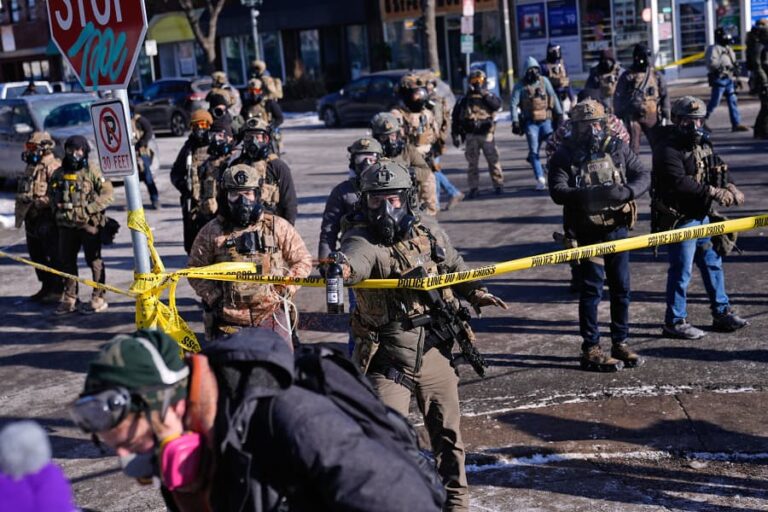
MINNEAPOLIS — The streets of downtown Minneapolis became a cold, chaotic theater of dissent Friday night as a burgeoning “ICE Out” movement clashed with local law enforcement. By Saturday morning, city officials confirmed that at least 30 people had been detained, cited, and released, while one police officer was treated for minor injuries sustained during the unrest.

The demonstrations, which drew an estimated 1,000 people to the Third Street South corridor, were sparked by the Wednesday killing of 37-year-old Renée Nicole Good. A local poet and mother of three, Good was fatally shot by ICE Agent Jonathan E. Ross during a federal immigration operation. While the Trump administration has characterized the shooting as an act of self-defense against “domestic terrorism,” bystander video appearing to show Good steering her vehicle away from the agent has turned Minneapolis into a powder keg of jurisdictional and social tension.


Chaos on Third Street

What began as a somber vigil near the Canopy Hotel quickly escalated into a confrontation as protesters moved toward the Depot Renaissance Hotel. According to Minneapolis Police Chief Brian O’Hara, the evening took a turn when reports surfaced of a vehicle being driven toward a building. While officers found no structural damage, they were quickly surrounded by a “hostile” crowd.

“It was a disciplined and restrained response by our officers,” O’Hara said during a Saturday morning briefing. “But we saw individuals throwing snow, ice, and rocks at our personnel and vehicles. We will not allow the safety of this city to be compromised by those seeking to incite violence.”

The injured officer, who did not require hospitalization, was reportedly struck by a projectile during the dispersal of the crowd. By 1:00 a.m., more than 200 officers, including Minnesota State Troopers and Department of Natural Resources (DNR) agents, moved in to clear the area, resulting in the bulk of the night’s arrests.


The Spark: A City Re-Traumatized

The unrest is not happening in a vacuum. The shooting of Good occurred less than a mile from the site where George Floyd was murdered in 2020, and the heavy presence of nearly 2,000 federal agents in the Twin Cities has many residents feeling like they are living under a state of siege.

The friction is further exacerbated by a bitter public feud between local leaders and the federal government.

  • The Federal Narrative: The White House and DHS Secretary Kristi Noem maintain that Agent Ross was “nearly run over” by a “weaponized vehicle.”
  • The Local Counter-Narrative: Mayor Jacob Frey and Governor Tim Walz have labeled the federal account “propaganda.” Frey notably called the DHS’s version of events “bulls**t” after reviewing social media footage of the encounter.

A Widening Standoff

The legal battle for transparency is also intensifying. On Saturday, three Democratic members of Congress, including Representative Ilhan Omar, were denied entry to the Bishop Henry Whipple Federal Building where ICE is coordinating its local operations. Simultaneously, the Minnesota Bureau of Criminal Apprehension (BCA) announced its “reluctant withdrawal” from the investigation, accusing the FBI of withholding scene evidence and witness statements.

“We have every reason to believe that peace will hold if the truth is allowed to come out,” Governor Walz said, while urging protesters to remain peaceful. “But it is very, very difficult to believe we will get a fair outcome when the state is barred from the room.”

As tens of thousands of people gathered in Powderhorn Park on Saturday afternoon for what organizers are calling the largest anti-ICE rally in state history, the city remains on high alert. With more than 1,000 similar rallies planned nationwide, the “Minneapolis Spark” is no longer just a local crisis; it has become the face of a national reckoning over federal authority.

‘There Wasn’t Even Time for CPR’: Inside the Siege of Iran’s Hospitals as Toll Mounts

TEHRAN — The floors of Imam Khomeini Hospital in Ilam are no longer sanitized white; they are stained with the copper-scented residue of a national uprising.

As night fell on the twelfth day of nationwide protests, the corridors of Iran’s medical centers transformed from sanctuaries of healing into the final, desperate frontlines of a state crackdown. Medics, speaking under condition of anonymity for fear of execution, describe a scene of carnage that has overwhelmed the country’s healthcare system.

“We were receiving dozens of gunshot victims every hour,” said one trauma surgeon in Tehran. “Many were dead on arrival—shot in the head or heart at close range. For some, there wasn’t even time to start CPR. We had to step over bodies to get to those who still had a pulse.”


Hospitals Under Siege

The crisis is not merely a matter of capacity; it is a matter of combat. Reports from Ilam, Tehran, and Shiraz indicate that security forces—including the Islamic Revolutionary Guard Corps (IRGC) and Basij militia—have repeatedly stormed medical facilities to arrest the wounded.

At Imam Khomeini Hospital in Ilam, eyewitnesses described a scene of “total terror” on January 4. Security forces reportedly deployed tear gas inside the wards and used shotguns to force entry, smashing glass doors and beating medical staff who refused to hand over patients.

“They aren’t just coming for the living,” a nurse from Ilam told human rights monitors. “They are seizing the bodies of the dead from the morgue to prevent families from holding public funerals. They want the evidence of their crimes to disappear.”


The Anatomy of a Crackdown

The scale of the casualties is staggering, though a nationwide internet blackout has made precise verification a race against time.

RegionReported Impact (January 2026)Key Incident
Tehran200+ DeadHospitals overwhelmed with gunshot wounds; internet severed to mask toll.
IlamHospital RaidsIRGC forces fired tear gas inside Imam Khomeini Hospital; medics beaten.
LorestanHigh Child FatalityMultiple minors, including 15-year-old Taha Safari, confirmed killed.
ShirazCapacity CrisisBlood supplies exhausted; security forces blocking donations.

The “Shadow Doctors”

Because seeking professional medical help has become a precursor to arrest, a dangerous “shadow” medical network has emerged. Protesters with metal pellet wounds or broken limbs are increasingly avoiding hospitals, opting instead for clandestine treatment in basements and private homes.

“I saw a man who had been shot in the leg with a hunting rifle,” one human rights defender reported. “He was taken to a livestock farm because his family was too afraid of the IRGC presence at the local clinic. He died from an infection that should have been treatable.”

The UN-mandated Fact-Finding Mission on Iran has called the targeting of hospitals a “grave violation of international humanitarian law.” UN officials warned that the use of lethal force in ethnic minority regions, such as Kurdistan and Ilam, has been particularly “brutal and indiscriminate.”


A System at the Breaking Point

Inside the hospitals, the emotional toll on the staff is reaching a tipping point. Medical professionals, bound by an oath to treat everyone, find themselves at odds with a judiciary that has ordered “no leniency” toward those it labels “saboteurs.”

“We are being asked to choose between our patients and our lives,” the Tehran surgeon said. “But when you see a 16-year-old boy bleed out on your table because the special forces wouldn’t let the blood bank delivery through, there is no choice left. There is only grief.”

As the sun rises over a city still smelling of acrid smoke and tear gas, the death toll continues to climb. Rights groups like HRANA and Amnesty International warn that without international intervention, the halls of Iran’s hospitals will continue to serve as a silent witness to a massacre in the dark.

Trump Pitches Venezuela Recovery to Exxon and Energy Titans Amid ‘Uninvestable’ Warnings

In the gilded setting of the White House East Room, President Donald Trump sat before a table of the world’s most powerful energy titans on Friday, dangling the ultimate prize: the world’s largest oil reserves.

His pitch was as ambitious as it was blunt. Following the recent U.S. military operation that led to the capture of Nicolás Maduro, the President called for American oil majors to commit at least $100 billion in private capital to rebuild Venezuela’s shattered infrastructure. The goal? To flood the global market, slash U.S. gas prices to $50 a barrel, and “rebuild a country that has been raped and pillaged.”

“American companies will have the opportunity to eventually increase oil production to levels never seen before,” Trump told the room, flanked by executives from Chevron, ExxonMobil, and ConocoPhillips. “We’re going to be making the decision as to which companies go in. If you don’t want to go, let me know—I’ve got 25 others waiting to take your place.”

But for the man leading the world’s largest publicly traded oil company, the math—and the history—do not yet align with the rhetoric.


‘Twice Bitten’: The Exxon Reality Check

While the President spoke of “total security” and immediate wealth, ExxonMobil Chairman and CEO Darren Woods provided a stark, reality-based counterpoint.

“If we look at the legal and commercial constructs and frameworks in place today in Venezuela, it’s uninvestable,” Woods said, looking directly at the President.

Woods’ skepticism is rooted in a bitter corporate memory. ExxonMobil has seen its assets in Venezuela seized twice—first by the nationalizations of the 1970s and again by the Hugo Chávez regime in 2007. For a company that thinks in decades rather than election cycles, a “third time lucky” approach requires more than just a military presence.

“To re-enter a third time would require some pretty significant changes,” Woods added. “There has to be durable investment protections and a change to the hydrocarbon laws.”


A Divided Industry Response

The meeting revealed a spectrum of corporate appetite for what is being called the “Western Hemisphere’s Marshall Plan.”

CompanyStanceKey Commitment / Constraint
ChevronBullishAlready has 3,000 employees on the ground; pledged to increase production by 50% within 18–24 months.
ExxonMobilCautiousWill send a “technical team” to assess damage but insists the country remains “uninvestable” without legal reform.
ConocoPhillipsLegalisticFocused on recovering $12 billion in outstanding debt from previous expropriations before committing new capital.
ShellIncrementalPrepared to scale up existing 45,000 barrel-per-day operations if the “proper framework” is established.

The “Uninvestable” Obstacles

Reclaiming Venezuela’s oil throne is not merely a matter of turning on a tap. Decades of “petro-socialism” have left the industry in a state of advanced decay.

  1. Infrastructure Collapse: Pipelines are corroded, refineries are rusted shells, and many of the country’s “super-giant” fields have suffered irreversible reservoir damage due to mismanagement.
  2. Economic Math: Experts from Wood Mackenzie suggest that with heavy Venezuelan crude, companies need prices near $80 per barrel to break even on new projects. With Trump pushing for $50 oil, the profit margins for private investors may vanish.
  3. Security Risks: Despite the fall of the Maduro regime, the interior of the country remains a patchwork of paramilitary groups. Trump’s promise of “total safety” likely requires a prolonged U.S. military footprint that many executives fear is politically fragile.

The White House Counter-Offensive

The Trump administration is not waiting for a consensus. Following the meeting, the President signed an Executive Order declaring a national emergency to “safeguard” Venezuelan oil revenue held in U.S. Treasury accounts, ensuring the money is used for “stability” and not seized by the country’s thousands of creditors.

“They don’t need government money; they need government protection,” Trump insisted. He dismissed the need for a financial “backstop” for the companies, stating that the giants sitting around his table “know the risks.”

As the technical teams from Irving and San Ramon prepare to land in Caracas, the world is watching to see if Venezuela will become the greatest comeback story in energy history—or a $100 billion graveyard for American capital.

The $15 Million Heist: How Nicolas Cage’s Stolen ‘Holy Grail’ Became the World’s Most Expensive Comic

It is a story with more twists than a Hollywood thriller: a brazen New Year’s Eve heist, a decade-long disappearance, a “miraculous” discovery in a dusty storage locker, and finally, a record-shattering payday.

On Friday, a pristine copy of Action Comics #1—the 1938 issue that introduced Superman to the world—sold for a staggering $15 million in a private sale. The transaction, brokered by Manhattan-based Metropolis Collectibles, doesn’t just break the record for a comic book; it obliterates it, surpassing the previous $9.12 million mark set only months ago.

But this isn’t just any copy of Superman’s debut. This is the “Cage Copy,” the very book stolen from the home of Oscar-winning actor Nicolas Cage twenty-six years ago.


A Provenance of Mystery and Crime

The “Cage Copy” is legendary among collectors not just for its condition—graded a near-perfect CGC 9.0—but for its cinematic history.

  • 1997: Nicolas Cage, a noted comic aficionado who even named his son Kal-El, purchases the book for $150,000.
  • 2000: The comic is stolen from Cage’s West Los Angeles estate during a holiday party. For eleven years, it remains the most famous “missing person” in the collectibles world.
  • 2011: In a scene straight out of Storage Wars, a man purchases the contents of an abandoned storage unit in Southern California and finds the comic tucked away inside.
  • 2011 (Later): After being identified by experts and returned to a “delighted” Cage, the actor sells the book at auction for $2.16 million—at the time, a world record.

“The theft essentially turned this book into the Mona Lisa of pop culture,” said Stephen Fishler, CEO of Metropolis Collectibles. “When the Mona Lisa was stolen from the Louvre in 1911, it went from being a great painting to a global icon. That is exactly what happened here.”


The Economics of the “Holy Grail”

The $15 million price tag reflects a surging market for high-grade “blue chip” collectibles. As investors look for tangible assets that outpace traditional markets, Action Comics #1 remains the undisputed gold standard.

YearSale PriceContext
1938$0.10Original newsstand price.
1997$150,000Purchased by Nicolas Cage.
2011$2,160,000First sale after recovery.
2024$6,000,000High-water mark for an 8.5 grade.
2026$15,000,000New world record (Private Sale).

Why It Matters

To the uninitiated, paying eight figures for 64 pages of newsprint may seem absurd. However, historians argue that Action Comics #1 is the literal “Genesis” of the modern American mythology. Before this book, there was no Superman, no Batman, and no multi-billion dollar Marvel or DC cinematic universes.

“Without this specific book, the entire superhero genre simply doesn’t exist,” says Vincent Zurzolo, President of ComicConnect. “It is the ultimate survivor. Out of 200,000 copies originally printed, only about 100 are known to survive today. Finding one in this condition is like finding a dinosaur egg that’s still warm.”

The buyer and seller of the $15 million copy have chosen to remain anonymous, but the sale has sent shockwaves through the industry. It signals that even in a digital age, the physical remnants of our cultural origins are more valuable than ever.

As for Nicolas Cage? While he no longer owns the book, his name is forever etched into its pedigree—a fitting legacy for an actor who spent his career playing larger-than-life characters.

Minneapolis Shooting: Forensic Analysis of ICE Body-Worn Footage Ignites Jurisdictional Crisis

MINNEAPOLIS — A chilling 47-second cell phone video, recorded by the federal agent who pulled the trigger, has emerged as the central piece of evidence in the death of 37-year-old Renée Nicole Good. The footage, released amid a deepening standoff between the Department of Homeland Security and Minnesota state officials, provides a raw, first-person perspective of the Wednesday morning shooting that has paralyzed the Twin Cities.

The video captures the final exchange between Agent Jonathan E. Ross and Good, who was sitting in her burgundy Honda Pilot during an immigration enforcement operation. In a moment that has since gone viral for its haunting tone, Good is heard telling Ross through her open window: “That’s fine, dude. I’m not mad at you.”

Seconds later, she was fatally shot.


Tactical Breakdown: The Pivot Point

The footage captures a rapid escalation that legal experts say raises significant questions about federal use-of-force protocols.

As Ross circles the vehicle to record its license plate, the situation remains verbally tense but physically static. The shift occurs when Good engages the vehicle. According to tactical analysts, three distinct movements occur in a four-second window:

  1. The Shift: Good moves the gear lever from reverse to drive.
  2. The Shunt: The vehicle experiences a “driveline shunt,” a slight lurch forward common in older SUVs.
  3. The Turn: Good’s steering wheel is turned sharply to the right, directing the vehicle’s path away from the agent’s standing position.

Despite the vehicle moving away from his direct path, Ross is seen dropping his phone—which continues to record—as three shots are fired. The final frames of the video record a voice, identified by local investigators as Ross, uttering a profanity-laced slur as the SUV rolls into a nearby parked car.


A Conflict of Authority

The release of the footage has done little to bridge the chasm between local and federal narratives. The incident has become a flashpoint for the debate over federal immunity and state sovereignty.

StakeholderOfficial PositionLegal Argument
Federal GovernmentJustified Use of ForceArgues the SUV was used as a “deadly weapon” and the agent feared for his life.
City of MinneapolisExcessive ForceMayor Jacob Frey maintains the video proves the agent was never in the vehicle’s path of travel.
County AttorneyCriminal IntentMary Moriarty has filed for access to the weapon and full unredacted logs, citing state homicide laws.

The “Driveline Shunt” Defense

Forensic experts are now focusing on the physics of the encounter. “When an officer is in high-stress proximity to a heavy vehicle, any movement is perceived as a threat,” says Dr. Elena Vance, a forensic kinesiologist. “However, the video clearly shows the tires were angled away. The ‘lunge’ interpreted by Agent Ross may have been the mechanical engagement of the transmission rather than an attempt to ram him.”

The White House has countered this by labeling the incident an act of “domestic interference,” suggesting that Good’s presence at the scene—intended to document the ICE raid—was a deliberate attempt to obstruct federal officers.


Societal Impact and Civil Unrest

For Minneapolis, the footage is a traumatic reminder of past conflicts between law enforcement and the community. By Friday evening, the intersection where the shooting occurred had been transformed into a memorial, while a few miles away, protesters surrounded the federal building demanding the immediate arrest of Agent Ross.

Because the incident involved a federal officer on active duty, the legal path forward is murky. Under the “Supremacy Clause,” federal agents often claim immunity from state prosecution, a protection that the Minnesota Attorney General’s office is currently preparing to challenge in federal court.

As the FBI continues its internal probe, the city remains on high alert, waiting to see if this 47-second clip will lead to a courtroom or remain a permanent scar on the local landscape.

Empowering US Fleet Organisations With Smarter Trailer Tracking Solutions

0

Running a distribution, construction, or logistics fleet in the US is harder than it has ever been.

Rising diesel prices, stricter windows for delivery, and increased compliance pressures all mean more is asked of fleet operators on a day-to-day basis than at any other point in history. For companies using trailers to move goods around the US — whether they are long-distance international organisations, parcels carriers, delivery companies, or even those working on construction projects — it is crucial to have visibility over all your movable assets. As a result, an increasing number of businesses are turning to smarter ways to find, monitor, and use OS GPS tracking devices for trailers to better protect equipment, reduce losses, and optimise operations.

The Increasing Importance Of Trailer Visibility

Trailers typically move between multiple depots, docks, suppliers, and customer sites. Since they do not always move with the tractor head, trailers are often the most common asset known to be lost. As a result, many fleet-dependent companies are adopting a trailer GPS tracking US system to monitor where assets are, their movement history, and how often they are being used. When combined with wider routing optimisation, asset tracking technologies help reduce wait times, prevent unauthorised use, and keep goods moving across the supply chain.

Telematics As An Essential Tool For Fleets

In the US, telematics has become the backbone of most fleet operations, giving insight into vehicle performance, driver behaviour, route efficiency, and overall asset productivity. With asset tracking solutions, trailer technology lets businesses see a single overview of where all assets are in the supply chain. As a result, if a vehicle breaks down, a consignment is delayed, or a shipment is rerouted, a business can respond quickly and ensure minimal disruption.

For organisations that use a spectrum of different products and services, such as — fuel cards, EV charging, leasing, finance, tyres, telecoms, etc. — telematics can come into its own. Using the data from vehicle location trackers, businesses can activate smarter systems and solutions to help keep compliance simple in the face of changing US regulations. By helping ensure all the data from each of these different sources is gathered and logged appropriately, asset tracking solutions can be used to get a one-stop overview of a number of different systems within a business.

Future-Proofing US Businesses

The US logistics industry is advancing, and many operators in the sector are looking to get ahead in order to ensure the safety, sustainability, and efficiency of their fleets. As many businesses prepare for the future, the utilisation of tracking and telematics in mixed-use trailers, light commercial vehicles, and/or long-haul vehicles has emerged. With the pressure on timing, US operators have noted that the sector as a whole deems the tracking and monitoring of trailers a necessity, rather than a “nice-to-have.” With a mixed-use business comes a more functional, more intuitive approach to fleet performance.

By incorporating tracking devices and telematics capabilities, as well as extra fleet services, into a single, streamlined framework, US companies have witnessed their business enjoy better uptime today, and well into the future as transport and logistics evolve.

Yemen’s Separatist Chief Branded a Traitor as Saudi Jets Strike

ADEN / RIYADH — The fragile alliance that once held southern Yemen together has shattered into a million pieces. In a rapid-fire sequence of political and military escalations on Wednesday, Aidarous al-Zubaidi, the powerful leader of the Southern Transitional Council (STC), was formally expelled from the government and accused of “high treason,” just as Saudi warplanes began pounding his strongholds.

The crisis marks a definitive rupture in the anti-Houthi coalition and signals a perilous new chapter in the Yemeni civil war—one that pits the Saudi-backed central government directly against the UAE-supported separatist movement in a fight for the future of the south.


The ‘No-Show’ at Riyadh

The fuse for Wednesday’s explosion was lit in the early hours at Aden International Airport. Al-Zubaidi was scheduled to board a Yemeni Airways flight to Riyadh for high-stakes “de-escalation” talks with Saudi officials.

  • The Disappearance: While a 50-strong STC delegation boarded the plane, al-Zubaidi did not. Coalition spokesperson Major General Turki al-Maliki announced that the leader had instead “fled to an unknown location,” later identified by supporters as his home province of Al-Dhalea.
  • The Intelligence: The Saudi-led coalition claimed it received “urgent intelligence” that during the flight delay, al-Zubaidi was instead mobilizing armored columns and distributing weapons to “armed gangs” within the interim capital of Aden.
  • The Treason Charge: By morning, the Presidential Leadership Council (PLC)—the executive body of the Yemeni government—issued a blistering decree. It revoked al-Zubaidi’s membership and referred him to the public prosecutor for “high treason with the intent to undermine the independence of the Republic.”
REUTERS/Fawaz Salman

Fire in Al-Dhalea: The Saudi Strikes

The political dismissal was immediately followed by kinetic force. At approximately 4:00 AM, the Royal Saudi Air Force launched a series of “pre-emptive” strikes across Al-Dhalea, al-Zubaidi’s home governorate and ancestral stronghold.

  • The Targets: More than 15 airstrikes targeted military camps and suspected weapons depots in the Zubaid area.
  • The Toll: Local hospital sources confirmed at least six people were killed, including civilians, and dozens were injured in the residential district where the strikes hit.
  • The Resistance: Despite the bombardment, the STC remained defiant. “The President is on the ground in Aden, overseeing his duties,” said an STC official. “He will not be intimidated by an ultimatum of ‘come to Riyadh or we bomb you.'”

A Proxy War Unmasked

The “treason” row is the culmination of a month-long surge in which STC forces seized control of the resource-rich Hadramawt and Mahrah provinces—territories traditionally under Saudi influence.

“Saudi Arabia has chosen the path of treachery and betrayal. There will be immediate and long-term consequences for this unjustified escalation.” — Hani Bin Brek, Vice President of the STC

The conflict has effectively pitted the Gulf’s two most powerful nations against one another. While the United Arab Emirates announced a “voluntary withdrawal” of its forces last week under Saudi pressure, the “command and control” infrastructure it built for the STC remains the most potent military force in southern Yemen.

A Nation on the Brink

As of Wednesday night, the streets of Aden are a maze of checkpoints. The task of “securing” the city has been assigned to Abdulrahman Al-Mahrami, the STC vice-president who remains (for now) part of the PLC, in a desperate attempt by Riyadh to split the separatist leadership.

With al-Zubaidi now a “wanted man” and Saudi jets in the skies over the south, the dream of a unified anti-Houthi front is dead. The question now is whether the south will descend into a “war within a war,” or if al-Zubaidi’s “last stand” in Aden will force a radical redrawing of the map of the Arabian Peninsula.

US Seizes Russian-Flagged Tanker in Atlantic as UK Admits Role in ‘Special Op’

The high-seas hunt for the “shadow fleet” has reached a dramatic, mid-ocean climax. In a coordinated strike that has shattered the silence of the North Sea, U.S. special operations forces seized the Russian-flagged tanker M/T Marinera early Wednesday morning, just as the United Kingdom broke its silence to confirm it provided “essential military support” for the mission.

The seizure, carried out in the treacherous “GIUK Gap” between Iceland and Scotland, brings an end to a 2,500-mile pursuit that began in the Caribbean and has now become a direct maritime flashpoint between Washington and Moscow.


The Raid: Fast-Ropes and Fog

The final interception of the Marinera—formerly known as the Bella 1—was a masterclass in joint-force projection. Despite reports that Russia had dispatched a submarine to protect the vessel, the U.S. moved with lightning speed while the escort was reportedly miles away.

  • The Air Bridge: The operation was launched from British soil, with U.S. special mission aircraft—including U-28A Draco intelligence planes and AC-130J gunships—using Scottish bases like Wick John O’Groats as a tactical springboard.
  • The Boarding: Sources indicate that U.S. Coast Guard law enforcement teams, supported by military personnel, boarded the vessel via helicopter while it was traveling at 8.5 knots toward the Russian port of Murmansk.
  • The Resistance: While the captain repeatedly identified the ship as a “Russian civilian tanker” over radio frequencies, he was served with a U.S. Federal Court warrant for sanctions violations. There were no reports of gunfire during the takeover.

‘Special Relationship’ in Action

In a move that signals a hardening European stance against “sanctions-busting,” British Defence Secretary John Healey confirmed that the Royal Air Force (RAF) and Royal Navy were deeply embedded in the operation.

“Today our UK Armed Forces showed skill and professionalism in support of a successful U.S. interception… This ship is part of a Russian-Iranian axis of sanctions evasion which is fuelling terrorism, conflict, and misery from the Middle East to Ukraine.” — John Healey, UK Defence Secretary

The Ministry of Defence (MoD) confirmed it provided RAF P-8 Poseidon surveillance aircraft to track the vessel’s every turn, while the RFA Tideforce, a naval support ship, provided essential refueling to the U.S. fleet as they cornered the tanker in the freezing Atlantic swells.

Moscow Decries ‘International Piracy’

The Kremlin has responded with cold fury. Russia’s Transport Ministry issued a statement insisting that “no state has the right to use force against vessels duly registered in other jurisdictions,” labeling the seizure a violation of the UN Convention on the Law of the Sea (UNCLOS).

Russian state media outlet RT released footage purveyed to be from the scene, showing U.S. helicopters hovering menacingly over the civilian deck. Moscow has formally demanded that Washington ensure the humane treatment of the Russian crew currently being detained aboard the ship.

The ‘Shadow’ Fleet Exposed

The Marinera is considered a prime example of the “ghost fleet”—aging tankers that hide their identity to transport oil for sanctioned regimes.

  • The Switch: The vessel originally fled a U.S. blockade near Venezuela in December, at which point the crew reportedly painted a Russian flag on the hull and changed its name from Bella 1 to Marinera to seek sovereign protection.
  • The Twin Strike: The seizure was followed hours later by the capture of a second vessel, the M/T Sophia, a “stateless dark fleet motor tanker” intercepted by U.S. Southern Command in the Caribbean.

As the Marinera is now escorted toward a U.S. port for “final disposition,” the message from the Trump administration is unmistakable. With the UK now openly facilitating these seizures, the Atlantic is no longer a safe haven for the shadow economy.

White House Weighs Military Action to ‘Acquire’ Greenland

In a statement that has sent shockwaves through the NATO alliance and redefined the boundaries of 21st-century diplomacy, the White House confirmed Tuesday that it is discussing a “range of options” to acquire Greenland—explicitly refusing to rule out the use of the U.S. military to seize the territory by force.

White House Press Secretary Karoline Leavitt told reporters that the annexation of the world’s largest island is now a “national security priority” for the Trump administration. The announcement follows the stunning weekend raid in Venezuela that captured Nicolás Maduro, a move that analysts say has emboldened the administration to pursue territorial goals once considered unthinkable.


‘Always an Option’: The Commander-in-Chief’s Directive

The rhetoric from the West Wing has shifted from real estate interest to strategic necessity. Leavitt’s Tuesday briefing confirmed that President Trump wants the issue “settled” before the end of his current term.

  • The Military Card: “The President and his team are discussing a range of options to pursue this important foreign policy goal,” Leavitt stated. “Utilizing the U.S. military is always an option at the Commander-in-Chief’s disposal.”
  • The Strategic Vacuum: Deputy Chief of Staff Stephen Miller doubled down on the claim, telling CNN that Greenland is currently “vulnerable” and “covered by Russian and Chinese ships.” He sparked further outrage by questioning the legal basis of Danish sovereignty, asking, “By what right does Denmark assert control over Greenland as a colony?”
  • The ‘Golden Dome’ Defense: The administration views Greenland as the essential foundation for its “Golden Dome” missile defense system, a priority intended to intercept Russian or Chinese projectiles over the Arctic Circle.

‘The End of NATO’: Europe’s Unified Front

The response from Copenhagen and other European capitals was swift and apocalyptic in tone. Danish Prime Minister Mette Frederiksen issued a stark warning that any American military move against a fellow alliance member would effectively dissolve the post-WWII security order.

“If the United States chooses to attack another NATO country militarily, then everything stops. That is, including our NATO, and thus the security that has been provided since the end of the Second World War.” — Mette Frederiksen, Danish Prime Minister

A joint statement from the leaders of France, Germany, Italy, Poland, Spain, and the United Kingdom reaffirmed their “unwavering support” for Danish sovereignty. British Prime Minister Sir Keir Starmer insisted that Greenland’s future is “only” for its people and the Kingdom of Denmark to decide, signaling a rare and profound rift between London and Washington.

Trump Greenland threats

The Venezuela Precedent

The timing of the Greenland push is inextricably linked to the success of Operation Southern Spear in Caracas. Proponents of the administration’s “Maximum Pressure” doctrine argue that the capture of Maduro proves the U.S. can execute surgical strikes to achieve its objectives without triggering a wider regional war.

However, critics argue that Greenland—a peaceful, democratic territory of a NATO ally—presents a fundamentally different moral and legal challenge. Senator Ruben Gallego (D-AZ) has already introduced legislation to prohibit funds for any “hostilities against Greenland,” accusing the President of treating global geography like a “real estate portfolio.”

A High-Stakes Winter

As the sun sets on the Arctic for the long polar night, the tension in the High North is at an all-time high. The U.S. already operates Pituffik Space Base (formerly Thule) in northern Greenland, giving it a permanent military foothold. The fear in Copenhagen is that this base could serve as the “Trojan Horse” for a larger surge of forces.

For now, the White House remains undeterred. “Let’s talk about Greenland in 20 days,” Trump told reporters Sunday. As the deadline looms, the world is left to wonder if the Arctic ice will be the next theater for a presidency that has shown it is willing to shatter every convention of the modern age.

Why Trump’s Venezuela Raid Is a Nightmare for Beijing

For years, China’s “All-Weather Strategic Partnership” with Caracas was the crown jewel of its Latin American ambitions—a high-stakes hedge of oil, loans, and soft power just 1,300 miles from the Florida coast. But as the smoke clears from the U.S. “Operation Absolute Resolve,” Beijing is waking up to a geopolitical reality it long feared: a total upending of the regional order that threatens $60 billion in Chinese investments and challenges its global standing as a “responsible” alternative to American might.

While President Trump celebrates the capture of Nicolás Maduro as a victory for the Monroe Doctrine, for the halls of power in Beijing, the move is a chaotic “black swan” event that leaves China’s Caribbean strategy in tatters.


The $10 Billion Debt Trap

Beijing is not merely a diplomatic observer; it is Venezuela’s largest creditor. Between 2000 and 2023, China poured over $100 billion into the country, and current estimates suggest $10 billion in outstanding debt remains.

  • Restitution Risk: Trump’s vow that the U.S. will “run” Venezuela and prioritize U.S. oil companies has sparked panic among Chinese state-owned banks. There is a very real fear that a U.S.-backed transitional government will “leapfrog” American creditors ahead of Chinese ones, treating Beijing’s loans as “odious debt” used to prop up a dictator.
  • The Sludge Struggle: While Venezuela accounts for only 4% of China’s total oil imports, it provides a unique “sludgy” heavy crude essential for China’s massive road-building and bitumen projects. With U.S. companies poised to take over the Orinoco Belt, Beijing’s “loan-for-oil” deals are effectively dead on the vine.

‘Shadow’ Ships in the Crosshairs

The disruption isn’t limited to the mainland. Just hours after Maduro’s capture, reports emerged of U.S. forces shadowing Chinese-flagged tankers in the Atlantic—vessels suspected of being part of the “shadow fleet” that bypassed sanctions for years.

If Trump follows through on threats to seize these ships, as he did with the M/T Marinera, the confrontation moves from a regional regime change to a direct maritime clash between the world’s two largest economies. For China, which relies on secure sea lanes for its energy security, this high-seas “cat-and-mouse” is an unacceptable escalation.

The Soft Power Counter-Strike

Diplomatically, however, Beijing is already turning the chaos to its advantage.

“While Washington bombs capitals and abducts presidents, China offers loans and infrastructure.”Snippet of the emerging narrative from Chinese State Media

China is positioning itself as the “guarantor of the UN Charter,” using the “extraordinary military operation” in Caracas to contrast its own “non-interference” policy with American “hegemonism.” By calling for an emergency UN Security Council session alongside Russia, Beijing aims to rally the Global South against what it terms the “lawlessness” of the Trump administration.

The Taiwan Shadow

Perhaps the most dangerous byproduct of the Venezuela raid is the precedent it sets in the eyes of Beijing.

  • Decapitation Deterrence: The ease with which U.S. special forces executed a “decapitation strike” against a leadership equipped with Chinese-made radar and defense systems has sent a chill through the People’s Liberation Army.
  • The “Internal” Defense: To prevent any comparisons to Taiwan, Beijing’s Foreign Ministry has been working overtime to clarify that while Venezuela is a sovereign state (and thus the raid was an illegal “kidnapping”), Taiwan is an “internal affair.” Yet, privately, analysts suggest China is watching closely to see if Trump’s appetite for regime change stops at the Western Hemisphere.

The New Cold Front

As Maduro prepares for his day in a New York court, the real trial is happening in the boardrooms of Beijing. For China, the risk of a “quagmire” in Venezuela isn’t just about the money—it’s about whether they can protect their “all-weather friends” from a U.S. President who has proven he is willing to rewrite the rules of global engagement in a single weekend.

US Special Ops Poised for Atlantic Boarding of ‘Shadow’ Tanker

The North Atlantic has become a high-stakes theatre of “maritime cat-and-mouse” as the United States military prepares for a potentially explosive boarding operation to seize a Russian-flagged oil tanker. The vessel, carrying a massive cargo of Venezuelan crude, is currently cutting through the heavy swells near the United Kingdom, pursued by a fleet of U.S. surveillance aircraft and elite special operations assets.

Coming just days after the daring U.S. raid that captured Venezuelan President Nicolás Maduro, the pursuit of the M/T Marinera (formerly the Bella 1) marks the most aggressive enforcement of President Trump’s “Total Blockade” policy to date.


The ‘Shadow’ Hunt: From Caracas to the Cornish Coast

The Marinera has become the ultimate prize in a geopolitical chase that spans two oceans. According to intelligence sources and open-source flight data, the tanker is currently being monitored by U.S. Navy P-8 Poseidon aircraft operating out of RAF Mildenhall in Suffolk, England.

  • The Deception: Originally named the Bella 1 and flagged in Panama, the vessel was sanctioned in 2024 for its role in the “shadow fleet” transporting illicit oil.
  • The Russian Gambit: In a desperate attempt to avoid seizure in December, the crew reportedly painted a Russian flag on the hull and re-registered the ship in Sochi. Russia has since filed a formal diplomatic protest, demanding the U.S. cease its “piracy.”
  • The Arsenal: The arrival of AC-130 gunships, CV-22 Osprey tilt-rotor aircraft, and MC-130J special mission planes at U.K. airbases has signaled that a “non-compliant boarding”—likely involving fast-roping Navy SEALs or Army Rangers—is imminent.

‘Locked and Loaded’ for Seizure, Not Sinking

White House officials, speaking on the condition of anonymity, have indicated that the preference is to seize the ship and its cargo intact. The goal is two-fold: to demonstrate the futility of the “shadow fleet” and to secure the million-plus barrels of oil as “restitution” for the American people.

“We are not looking to create an environmental disaster in the Atlantic. We are looking to bring a criminal vessel to justice. If the Russians want to claim it’s theirs, they can argue that in a New York court.” — Senior U.S. Defense Official

The Russian Response: A Red Line in the Waves?

The Kremlin has warned that any “interference” with a Russian-flagged vessel on the high seas would be considered a “hostile act.” The Marinera is currently in international waters, where maritime law regarding “stateless” vessels and “flags of convenience” is notoriously murky.

  • The Legal Tug-of-War: U.S. prosecutors believe the Russian registry is a “fraudulent veneer” designed to shield a sanctioned asset.
  • The Military Risk: There are unconfirmed intelligence reports that Venezuelan military personnel, disguised as civilians, may be aboard the tanker, potentially armed with man-portable air-defense systems (MANPADS).

A Continental Energy Crisis

As the Marinera nears European waters, the tension is palpable in London and Dublin. The Irish Air Corps has also been observed monitoring the vessel as it passes through Ireland’s Exclusive Economic Zone.

While European leaders have been divided on the U.S. intervention in Venezuela, the prospect of a special forces operation occurring just miles from their shores has sparked intense diplomatic scrambling. If the U.S. moves to board the ship this week, it will confirm a new, muscular reality: the American blockade doesn’t end at the Caribbean—it follows the oil wherever it flows.

Six Dead as Arctic Blast Cripples Europe’s Transport Arteries

PARIS / AMSTERDAM / SARAJEVO—A brutal and relentless cold snap has transformed much of Europe into a perilous landscape of ice and iron, claiming at least six lives and plunging the continent’s aviation and rail networks into a state of “absolute chaos.”

From the sun-starved streets of the French capital to the snow-choked peaks of the Balkans, the first full week of 2026 has been defined by a whiteout that authorities are calling the most severe winter disruption in a generation. As of Wednesday morning, hundreds of flights remain grounded, and thousands of travelers find themselves stranded in terminal halls that have become makeshift shelters.


A Deadly Toll on the Roads

The human cost of the storm has been heaviest in France, where treacherous “black ice” has turned high-speed motorways into skating rinks.

  • The French Tragedy: Five people have been killed in weather-related accidents across France since Monday. In the southwestern Les Landes region, authorities confirmed three deaths in separate highway collisions.
  • The Paris Marne Incident: In a harrowing scene east of Paris, a taxi driver lost his life after his vehicle skidded off a frozen bridge and plunged into the Marne River. His passenger was pulled from the icy waters but remains in critical condition with severe hypothermia.
  • Sarajevo’s Loss: In the Bosnian capital, a woman was killed when a massive tree branch, unable to bear the weight of 40 centimeters of wet snow, snapped and fell on her as she walked through the city.

Aviation in Agony: Schiphol and Paris Paralyzed

For air travelers, the situation has been described as “insane.” Amsterdam’s Schiphol Airport, one of Europe’s busiest transit hubs, has become the epicenter of the crisis.

  • Groundings at Schiphol: More than 600 flights were canceled between Tuesday and Wednesday alone. The Dutch carrier KLM warned that it is nearing a “critical shortage” of de-icing fluid after using 85,000 liters a day to keep its fleet operational.
  • The Paris Scramble: In France, civil aviation authorities ordered the preemptive cancellation of 40% of flights at Charles de Gaulle and 25% at Orly to allow ground crews to fight a losing battle against the accumulating drifts.
  • Stranded Thousands: Social media has been flooded with images of passengers sleeping on airport floors in Amsterdam and London, with some travelers reported being told the next available rebooking could be up to three days away.

A Frozen Infrastructure

Beyond the airports, the infrastructure of Western Europe is buckling under the sub-zero temperatures.

  • The Rail Ghost Town: An IT outage compounded by frozen track points brought the entire Dutch rail network to a standstill on Tuesday. While limited service resumed Wednesday morning, high-speed Eurostar links between Paris, London, and Amsterdam continue to face massive delays.
  • Balkan Blackouts: In Serbia and Romania, heavy snowfall has downed power lines, leaving dozens of mountain villages without electricity or heating.
  • The British Deep Freeze: Britain recorded its coldest night of the winter so far at -12.5°C in eastern England, triggering “amber” cold weather alerts and the closure of hundreds of schools across Scotland and northern England.

The ‘Second Wave’ Warning

The respite may be brief. Meteorological services in France and Germany are bracing for a second storm system expected to hit on Thursday and Friday, potentially adding another 10 centimeters of snow to already buried regions.

French Transport Minister Philippe Tabarot has issued a stark warning to residents of the Île-de-France region: “Do not travel unless it is an absolute emergency. The roads are not just difficult; they are lethal.”

CES 2026: LEGO’s High-Tech ‘Smart Brick’ Sparks Debate Over the Future of Free Play

For nearly a century, the humble 2×4 plastic brick has relied on a singular power source: the child’s imagination. But at this week’s Consumer Electronics Show (CES) 2026, the LEGO Group unveiled a radical evolution that aims to “play back,” sparking both wonder and a growing chorus of unease among child development experts.

The Danish toy giant’s new “Smart Play” system centers on the LEGO Smart Brick—a standard-sized piece packed with more sensors than a modern smartphone. While the company bills it as a screen-free way to bridge the physical and digital worlds, critics worry that by giving the bricks a “brain,” LEGO may be taking the “mind” out of playtime.


The Tech Inside: A Computer in Every Stud

The Smart Brick is a masterpiece of miniaturization. Beneath the familiar plastic pips lies a custom-designed ASIC chip smaller than a single LEGO stud. This “Play Engine” transforms a static model into a reactive, spatially aware entity.

  • The Senses: Each brick contains an accelerometer, an ambient light sensor, and a microphone. It can detect if it is being flown, crashed, or even if a child “blows” on it to extinguish a fire.
  • The Mesh: Using a proprietary “BrickNet” Bluetooth protocol and near-field magnetic coils, the bricks are aware of each other’s 3D orientation. Two Star Wars ships don’t just sit on a shelf; they “know” when they are facing off, triggering synchronized laser sounds and engine roars.
  • The Soundscape: Eschewing tinny recordings, an onboard synthesizer generates real-time audio. When a Smart Minifigure like Darth Vader is placed near the brick, it recognizes his “personality,” triggering the iconic breathing or the “Imperial March.”

‘Scripted’ vs. ‘Spontaneous’: The Expert Backlash

While tech enthusiasts at CES have hailed the Smart Brick as the “biggest innovation since the Minifigure,” child advocacy groups and play experts are raising red flags.

“The magic of LEGO has always been its silence,” says Dr. Helena Rossi, a developmental psychologist specializing in creative play. “When a child moves a plastic plane, they make the ‘whoosh’ sound. They decide if it’s a jet, a dragon, or a time machine. When the brick does the ‘whooshing’ for them, it shifts from an open-ended tool to a scripted experience.”

The advocacy group Fairplay issued a statement calling the tech “completely unnecessary,” arguing that providing pre-programmed responses could stifle the very “perseverance and problem-solving” that LEGO prides itself on fostering.

The March 1 Launch

LEGO is leaning heavily into its most powerful franchise for the platform’s debut. Three “All-in-One” Star Wars sets will launch on March 1, 2026, with prices reflecting the high-tech interior:

SetPiecesSmart FeaturesPrice
Darth Vader’s TIE Fighter4731 Smart Brick, 1 Smart Figure, Engine Roar$70
Luke’s Red Five X-Wing5841 Smart Brick, 2 Smart Figures, 5 Tags$100
Throne Room Duel & A-Wing9622 Smart Bricks, 3 Smart Figures, Music$160

The ‘Screen-Free’ Defense

LEGO’s Chief Product Officer, Julia Goldin, defended the move, emphasizing that the system is entirely screen-free. “We wanted to enhance the magic without pulling kids into digital worlds,” she told reporters. “There is no camera, no voice recording, and no AI. It is purely about making the physical model feel alive in the child’s hand.”

However, with rumors already swirling of LEGO Pokémon sets utilizing the technology later this summer, the toy industry is watching closely. If the Smart Brick succeeds, it could redefine “the system in play” for the next century. If it fails, it may be remembered as the moment the world’s most famous toy tried too hard to be “smart” for its own good.

Marco Rubio Tempers Trump’s Rhetoric as Maduro Faces Manhattan Judge

As the sun rises over the Manhattan skyline this Monday morning, the most high-profile prisoner in the world is preparing for a journey under heavy guard from a Brooklyn detention cell to the Southern District of New York. Nicolás Maduro, the deposed leader of Venezuela, is scheduled to make his initial appearance in federal court today—a moment that marks a staggering escalation in American foreign policy.

Seeking to define the legal boundaries of the weekend’s lightning raid, Secretary of State Marco Rubio launched a multi-network diplomatic offensive Sunday, insisting that the United States is not “at war” with Venezuela. His comments appeared aimed at walking back President Trump’s earlier, more expansive vow that the U.S. would “run” the oil-rich nation.


The ‘Narcotics’ Defense

Appearing on NBC’s Meet the Press and ABC’s This Week, Rubio framed the military operation that snatched Maduro from Caracas not as an act of international aggression, but as a domestic law enforcement mission targeting a criminal organization.

  • “Not a War”: Rubio emphasized that the mission was a surgical “capture and arrest” based on a 2020 narco-terrorism indictment. “We are at war against drug trafficking organizations,” Rubio said. “We are not at war against the people of Venezuela.”
  • No Troops on the Ground: The Secretary of State clarified that while special forces conducted the two-hour raid, there are currently “no U.S. forces on the ground” occupying Venezuelan cities.
  • The “Oil Quarantine”: Instead of a military occupation, Rubio described a policy of “maximum leverage” through a naval blockade. “It’s running policy,” he told NBC, explaining that the U.S. will use its “oil quarantine” to force the remaining leadership in Caracas—now led by interim President Delcy Rodríguez—to expel Iranian and Hezbollah influence.

Manhattan Under Siege: The Monday Arraignment

Across the river in Manhattan, the Foley Square courthouse has been transformed into a fortress. Maduro, who arrived at the Metropolitan Detention Center (MDC) in Brooklyn late Saturday, is expected to be formally charged with conspiracy to commit narco-terrorism and cocaine importation.

  • The Charges: The unsealed indictment alleges Maduro headed the “Cartel of the Suns,” a criminal organization that used the Venezuelan state apparatus to flood the U.S. with cocaine as a “weapon” against the American people.
  • The Security: NYPD and U.S. Marshals have cordoned off several blocks around the courthouse. Snipers have been spotted on rooftops, and NYPD divers are reportedly patrolling the East River—a level of security usually reserved for the UN General Assembly.
  • The “Happy New Year” Defiance: Maduro remains defiant. Upon landing in New York, he reportedly looked at cameras and muttered, “Good night, happy new year,” a surreal greeting from a man facing life in a U.S. prison.

The Domestic Backlash

While Republican hawks like Senator Tom Cotton have praised the “decisive action,” the White House is facing a firestorm of criticism from Congressional Democrats and constitutional scholars.

“Maduro is a tyrant, but Trump has placed American servicemembers at risk with an unauthorized attack. The President does not have a ‘blank check’ to launch invasions without the People’s House.” — Senator Tim Kaine (D-VA)

Rubio dismissed these concerns Sunday, arguing that the President “retains optionality” to act against “imminent and urgent threats.” He signaled that the U.S. will give the remaining Venezuelan military “time to make the right decision” before considering further military action.

A High-Stakes Gavel

When the gavel falls in Manhattan later today, it will be the first time in history a former head of state has been forcibly brought to the U.S. to face criminal charges while his government remains—at least partially—in power.

The world will be watching to see if Maduro enters a plea or uses the courtroom as a platform to denounce “Yankee imperialism.” For the Trump administration, the goal is simple: transform a geopolitical rival into a common criminal.

Danish PM Issues Ultimatum to Trump Over Greenland ‘Threats’

COPENHAGEN, DENMARK—The diplomatic ice sheet between the United States and its Nordic allies has fractured deeper than ever before, as Danish Prime Minister Mette Frederiksen issued a stern, unprecedented ultimatum to President Donald Trump on Sunday: “Stop the threats” against Greenland.

In a sharply worded statement that breaks with decades of diplomatic protocol between the NATO allies, Frederiksen categorically rejected President Trump’s renewed assertions that the U.S. “absolutely” needs the autonomous territory, warning that Washington has “no right to annex” any part of the Danish Kingdom.

The confrontation comes amid heightened global anxiety following the U.S. military’s lightning raid in Venezuela, a move that has left European capitals fearing that the White House’s new doctrine of “sovereign acquisition” might turn northward.


The Trigger: A Flag, A Post, and an Interview

The diplomatic firestorm was ignited by a one-two punch of provocative signaling from the Trump inner circle this weekend.

  • The ‘SOON’ Post: On Saturday, Katie Miller, wife of Deputy Chief of Staff Stephen Miller, posted an image on X (formerly Twitter) depicting an American flag draped over the entirety of Greenland’s landmass. The caption consisted of a single, chilling word: “SOON.”
  • The Atlantic Interview: Hours later, in a telephone interview with The Atlantic, President Trump doubled down on his long-standing ambition. “We do need Greenland, absolutely,” the President declared. “We need it for defense.” Crucially, when pressed on methods, he refused to rule out the use of “economic or military pressure” to secure the island, citing the recent success in Venezuela as proof of American resolve.

‘Disrespectful’ and Dangerous

Frederiksen’s response was immediate and fierce, signaling that Copenhagen views the latest rhetoric not as bluster, but as a genuine security threat.

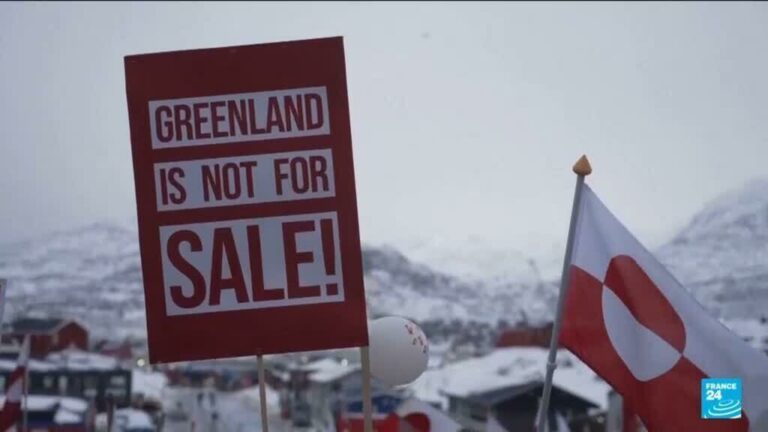
“I need to say this very directly to the United States: It makes absolutely no sense to talk about it being necessary for the United States to take over Greenland,” Frederiksen stated. “I therefore strongly urge the United States to stop the threats against a historically close ally and against another country and another people who have very clearly stated that they are not for sale.”

Greenland’s Premier, Jens-Frederik Nielsen, joined the chorus of condemnation, labeling the social media post by Miller as “disrespectful” and a violation of the mutual respect that should define relations between allies. “Relations between nations… are not built on symbolic gestures that disregard our status and our rights,” Nielsen wrote.

The Venezuela Shadow

The timing of the dispute has amplified the alarm. The recent U.S. capture of Venezuelan President Nicolás Maduro has fundamentally altered the geopolitical calculus, with allies no longer certain that Washington will respect traditional boundaries of sovereignty.

Defense analysts suggest that the appointment of Louisiana Governor Jeff Landry as a “Special Envoy to Greenland” in December was the first concrete step in an operational plan. Landry has openly thanked the President for the opportunity to “make Greenland a part of the U.S.,” a mandate that Denmark formally rejects.

The Arctic Stakes

For the Trump administration, the acquisition of Greenland is viewed as a strategic necessity to counter Russian and Chinese influence in the Arctic and secure vast deposits of rare earth minerals. The island already hosts the Pituffik Space Base, the U.S. military’s northernmost installation.

However, for Denmark and the 57,000 people of Greenland, the island is not a strategic asset to be traded, but a home. As the “America First” foreign policy takes an increasingly expansionist turn, the Kingdom of Denmark finds itself on the front line of a new kind of cold war—one fought not against enemies, but against its oldest ally.

All 40 Victims of Crans-Montana Fire Identified as Switzerland Mourns

CRANS-MONTANA, SWITZERLAND—The “terrible uncertainty” that has haunted this Alpine resort for four days finally gave way to a crushing reality on Sunday evening. Swiss authorities announced they have successfully identified all 40 victims of the New Year’s Eve inferno at Le Constellation bar, revealing a heartbreaking toll that has decimated a generation of local youth and touched families across Europe.

Valais cantonal police confirmed that forensic teams, working around the clock with DNA samples and dental records due to the severity of the blaze, have completed the identification process. The final list paints a somber picture of a celebration that turned into a “death trap” for the young and the hopeful.


A Generation Lost: The Profile of the Fallen

The victims—half of whom were minors—represent a vibrant cross-section of Europe’s youth. Of the 40 confirmed dead, the majority were teenagers between the ages of 14 and 18.

  • The Youngest: A 14-year-old Swiss girl is the youngest victim identified.
  • The Nationalities: The tragedy has left a mark across several borders:
    • Switzerland: 18 citizens, including two 15-year-old girls and several young men aged 16–21.
    • France: 8 nationals, including a 39-year-old and several students in their early 20s.
    • Italy: 2 teenagers aged 16, including 17-year-old golf prodigy Emanuele Galeppini, the first victim to be named.
    • Global Reach: Victims also include a dual Italian-Emirati citizen (16), a Romanian student (18), and citizens from Turkey, Belgium, and Portugal.

‘Partying in Paradise’: The Families Speak

For many, the formal identification was merely a confirmation of a nightmare they had lived since the first sparks hit the foam-clad ceiling.

“Our Arthur has now left to party in paradise. We can start our mourning, knowing that he is in peace and in the light.” — Laetitia Brodard, mother of 16-year-old victim Arthur Brodard

On Sunday afternoon, hundreds of mourners, led by grief-stricken parents and classmates, marched in near-total silence from a memorial Mass at the Chapelle Saint-Christophe to the blackened husk of the bar. The silence was broken only by the sound of boots on snow and a sudden, sustained burst of applause as white roses were laid at the site where the “Sky Symphony” of sparklers turned into a wall of fire.

The Investigation Hardens

As the names are released to families, the focus of the Valais Attorney General, Béatrice Pilloud, has shifted toward criminal accountability.

  • The Managers: Jacques and Jessica Moretti, the French couple who managed Le Constellation, remain under investigation for negligent homicide and negligent arson.
  • The “Kill Zone”: Investigators are examining witness reports that an emergency exit was permanently blocked and that the basement’s soundproofing material was a “toxic accelerant.”
  • National Mourning: Swiss President Guy Parmelin has declared Friday, January 9, a national day of mourning. At noon that day, church bells will toll across all 26 cantons, followed by a minute of silence.

A Legacy of Safety

The identification of the final 16 victims on Sunday marks the end of the forensic phase, but the soul-searching for Switzerland is just beginning. The tragedy has already sparked calls for a nationwide ban on “bottle service pyrotechnics” and a radical overhaul of fire safety inspections in Alpine nightclubs.

For the 119 survivors—many of whom remain in specialized burns units in Lausanne, Zurich, and Lyon—the road to recovery is long. But for the 40 families now preparing for funerals, the light of the new year has been permanently dimmed.

Global Outcry and Accolades Follow US Lightning Strike on Venezuela

The capture of Nicolás Maduro by U.S. forces has triggered a diplomatic earthquake, splitting the international community into camps of fierce condemnation, cautious neutrality, and celebratory endorsement. As the UN Security Council prepares for an emergency session on Monday, the global reaction highlights a deepening rift between those prioritizing “democratic legitimacy” and those defending the “sanctity of sovereignty.”

From Moscow to Buenos Aires, the world’s power centers are grappling with the reality of a revived Monroe Doctrine and the most significant unilateral U.S. military intervention in decades.


The ‘Axis of Outrage’: Russia, China, and Iran

The sharpest rebukes came from Moscow and Beijing, both of whom have significant economic and geopolitical stakes in the Maduro regime.

  • Russia: The Foreign Ministry condemned the operation as an “act of armed aggression,” calling for Maduro’s immediate release. “The pretexts used to justify these actions are untenable,” a Kremlin spokesperson stated, warning that the raid sets a “dangerous precedent” for international order.
  • China: Beijing expressed deep “shock” at what it termed “hegemonic behavior.” A spokesperson for the Chinese Foreign Ministry emphasized that “no country has the right to use force to overthrow the leader of a sovereign state,” urging Washington to return to the principles of the UN Charter.
  • Iran: Tehran labeled the capture a “blatant breach of international law,” with military commanders warning that American “arrogance” would eventually meet a regional response.

South America: A Continent Cleaved

In Latin America, the reaction followed sharp ideological lines, reflecting the region’s long and painful history with U.S. intervention.

  • The Critics: Brazilian President Luiz Inácio Lula da Silva led the continental opposition, stating the U.S. had “crossed an unacceptable line.” Colombian President Gustavo Petro and Mexican President Claudia Sheinbaum echoed these sentiments, with Petro warning that “without sovereignty, there is no nation.”
  • The Supporters: Conversely, Argentine President Javier Milei celebrated the news with his trademark fervor, posting “Liberty advances!” on social media. Ecuador’s Daniel Noboa also welcomed the move, stating that the time has come for “narco-criminals” to face justice.
Nicolas Maduro captured

The ‘European Tightrope’ and the UN

In Europe and at the United Nations, the rhetoric has been more measured, attempting to balance a distaste for Maduro’s rule with a commitment to the “rules-based order.”

“The EU has repeatedly stated that Mr. Maduro lacks legitimacy… however, under all circumstances, the principles of international law and the UN Charter must be respected.”Kaja Kallas, EU Foreign Policy Chief

  • United Kingdom: Prime Minister Sir Keir Starmer took a cautious stance, stating that while the UK “sheds no tears” for the end of the Maduro regime, it remains imperative to “establish the facts” regarding the legality of the military action.
  • France and Spain: Both nations expressed “great concern” over the use of force, calling for a “dialogued and democratic transition” rather than a solution imposed by external military might.
  • United Nations: Secretary-General António Guterres is reportedly “deeply alarmed,” with his spokesperson warning that the operation threatens regional stability.

The Monday Showdown

The UN Security Council is scheduled to meet at 10:00 AM on Monday at the request of Colombia, with the backing of Russia and China. The session is expected to be one of the most contentious in recent years, as the U.S. prepares to defend the legality of its “narco-terrorism” warrants against the broader international principle of non-intervention.

As Maduro remains in federal custody in Brooklyn, the world’s leaders are forced to answer a singular, uncomfortable question: In the 21st century, does the removal of a dictator justify the suspension of international law?

The Daring Midnight Playbook That Netted Maduro

It was an audacious gamble, months in the making, and executed with the chilling precision of a Hollywood thriller. The capture of Venezuelan President Nicolás Maduro in the pre-dawn hours of Saturday was no random snatch; it was the culmination of an intelligence masterpiece, involving everything from shadowy informants and high-altitude drones to, remarkably, the surgical use of blowtorches, according to a composite picture emerging from U.S. and Venezuelan sources.

Operation Absolute Resolve, as the Pentagon code-named it, leveraged years of embedded intelligence and a network of disenchanted Venezuelan insiders, providing the precise coordinates that allowed Delta Force to pluck the strongman from his fortified residence as missiles rained down across Caracas.


The ‘Ghost’ in Fuerte Tiuna: Embedded Intelligence

Key to the operation’s success was intelligence gathered over years, not weeks. U.S. assets had deeply penetrated Venezuela’s military and security apparatus, particularly within the vast Fuerte Tiuna military complex.

  • The Blueprint: Informants provided detailed schematics of the presidential residence, including blind spots in security camera coverage, the layout of the underground bunkers, and even the precise location of Maduro’s private chambers.
  • The Inner Circle: A crucial breakthrough came in late summer 2025, when a high-ranking member of Maduro’s personal security detail—a “ghost,” as one U.S. intelligence official termed him—began providing real-time updates on the President’s movements and the fluctuating readiness of his personal guard, the Guardia de Honor Presidencial.
  • The “Sleep Pattern” Analysis: Delta Force knew Maduro’s routines, including his tendency to work late into the night and his preferred “sleep sanctuary” within his compound, thanks to this insider.

Eyes in the Sky: Drones, Satellites, and a Moment of Dark

As the clock ticked past 1:00 AM local time, the skies over Caracas were far from silent. U.S. intelligence assets established complete air dominance before the first strike.

  • Sentinel Drones: High-altitude RQ-4 Global Hawk drones provided persistent surveillance, feeding live imagery to command centers. Lower-flying, stealth RQ-170 Sentinels allegedly tracked key personnel movements around Maduro’s compound.
  • Satellite Pinpoint: U.S. military satellites were crucial for directing precision strikes on air defense sites and communication nodes.
  • The “Dark” Window: Critically, U.S. cyber warfare units executed a localized digital blackout, plunging key sectors of Caracas, including the Fuerte Tiuna complex, into a tactical “dark” window during the initial missile barrage. This isolated the target and prevented immediate military coordination.
A photograph which U.S. President Donald Trump posted on his Truth Social account shows what he describes as Venezuelan President “Nicolas Maduro on board the USS Iwo Jima” amphibious assault ship, currently in the Caribbean Sea January 3, 2026. The image appears to be taken from a printed photograph, as white edging can be seen around the image. What appears to be the letters DEA can be seen on a black uniformed person next to Venezuelan president Maduro. U.S. president Trump said DEA officials were involved in the operation. Verifying the location was not immediately possible as the photograph is tightly cropped. But the patterning of grey hairs within Maduro’s mustache matched recent imagery of him. @realDonaldTrump/Handout via REUTERS THIS IMAGE HAS BEEN SUPPLIED BY A THIRD PARTY. THIS PICTURE WAS PROCESSED BY REUTERS TO ENHANCE QUALITY. AN UNPROCESSED VERSION HAS BEEN PROVIDED SEPARATELY. TPX IMAGES OF THE DAY

The Blowtorch Breach: Silent Entry

Once the skies were clear and the initial strikes had softened defenses, the ground operation began. The choice of Delta Force was deliberate; their training in direct action and hostage rescue made them uniquely suited for a “capture, not kill” mission.

  • The Infiltration: Using silence and speed, teams were reportedly inserted via stealth helicopters at multiple points around Maduro’s residence.
  • The “Hot Cut”: Sources indicate that the entry into Maduro’s specific secure living area was achieved not through explosive breaching, which would have risked injury to the target, but through the precise, quiet work of blowtorches. This allowed operators to cut through reinforced steel doors and vault walls, bypassing electronic locks and alarms in a “surgical hot cut.”
  • The Handcuffs: It was during this silent breach that Maduro, reportedly caught entirely off guard, was found and quickly secured, along with First Lady Cilia Flores. The entire ground operation, from insertion to extraction, lasted less than 20 minutes.

The Dash to the Coast

With Maduro secured, the exfiltration was equally critical. The pair was moved rapidly to a pre-positioned helicopter, which then flew them to a U.S. Navy vessel in the Caribbean—likely the USS Iwo Jima, an amphibious assault ship with advanced medical and command facilities—before being flown directly to New York.

The “ghost” informant and the blowtorches represent the audacious blend of cutting-edge technology and old-school espionage that brought down a regime leader. While the geopolitical fallout of Maduro’s capture is just beginning, the story of how he was taken will undoubtedly be taught in special operations war colleges for decades to come.

Handcuffed Maduro Lands in New York as Trump Declares US Will ‘Run’ Venezuela

In a cinematic and tectonic shift in global power, deposed Venezuelan leader Nicolás Maduro was “perp-walked” through a federal facility in Manhattan late Saturday, just hours after a lightning U.S. Delta Force raid snatched him from his Caracas compound.

The image of the 63-year-old strongman—handcuffed, wearing sandals and a black hoodie, and flanked by DEA agents—shattered a decade of socialist defiance. In a surreal exchange captured on video by the White House, Maduro looked at onlookers and said in English, “Good night, happy new year,” before being processed into the Metropolitan Detention Center (MDC) in Brooklyn.


‘We’re Going to Get the Oil Flowing’

Speaking from a podium at his Mar-a-Lago resort, President Donald Trump wasted no time outlining a radical vision for the captured nation. Abandoning traditional diplomatic caution, Trump asserted that the United States would effectively oversee Venezuela during an indefinite “safe, proper, and judicious” transition.

  • The Provisional Command: Trump announced he is “designating people” from his cabinet, including Secretary of State Marco Rubio and Defense Secretary Pete Hegseth, to oversee Venezuelan affairs.
  • Energy Takeover: The President signaled a massive return of American corporate power to the Orinoco Belt, home to the world’s largest oil reserves. “We’re going to have our very large United States oil companies go in, spend billions of dollars, fix the badly broken infrastructure,” Trump said. “We’ll be selling large amounts of oil.”
  • The Monroe Doctrine Revived: The administration framed the mission, codenamed Operation Absolute Resolve, as a final enforcement of American primacy in the Western Hemisphere, intended to purge “narco-terrorist” influences and foreign rivals like Russia and China from the region.

A City in Chains: The Night of the Raid

The capture was the climax of a massive U.S. military buildup that had been quietly escalating since August.

According to Pentagon sources, Delta Force operators infiltrated the Fuerte Tiuna military complex—Venezuela’s high-security heart—around 2:00 a.m. while U.S. airpower conducted “suppression strikes” on nearby military barracks and airfields. Maduro and First Lady Cilia Flores were seized at their residence and whisked to the USS Iwo Jima before being flown to New York.

The ‘Legitimacy Trap’ in Caracas

While Maduro sits in a Brooklyn cell, a dangerous power vacuum has opened in Caracas.

  • The Interim Order: The Venezuelan Supreme Court, still populated by loyalists, has ordered Vice President Delcy Rodríguez to assume the presidency. Rodríguez has condemned the capture as a “barbaric kidnapping” and demanded “proof of life.”
  • The Opposition Snub: In a surprise move, President Trump appeared to distance himself from long-time opposition leader María Corina Machado. Despite her calls for Edmundo González to take power, Trump claimed she “does not have the support” to govern, suggesting he might instead seek a “cooperative” transition with figures already within the country.
  • The Global Backlash: China and Russia have issued blistering condemnations, with Beijing demanding Maduro’s immediate release. Meanwhile, the UN Security Council is set to meet for an emergency session on Monday.

The Trial of the Century

Maduro and Flores face a superseding federal indictment for narco-terrorism, corruption, and weapons charges. Legal experts note that the MDC Brooklyn currently houses members of the Tren de Aragua, the Venezuelan gang Trump has vowed to dismantle.

As New York City prepares for an unprecedented security operation around the Manhattan federal court, the “Man of Steel” finds himself in a position few thought possible: an inmate in the city he once railed against, awaiting a trial that marks the end of an era for the Bolivarian Revolution.

US Launches Massive Strikes on Venezuela, Captures Nicolas Maduro and His Wife in Lightning Raid

CARACAS / WASHINGTON—In a stunning military operation that has reshaped the geopolitics of the Western Hemisphere overnight, U.S. special forces have captured Venezuelan President Nicolás Maduro following a “large-scale strike” across the South American nation.

President Donald Trump announced the success of the mission, codenamed Operation Southern Spear, in a series of pre-dawn posts on Truth Social Saturday morning. “The United States of America has successfully carried out a large-scale strike against Venezuela and its leader, President Nicolas Maduro, who has been, along with his wife, captured and flown out of the Country,” Trump declared. “A new dawn for Venezuela!”


Midnight in Caracas: 30 Minutes of Fire

The operation began at approximately 1:50 a.m. local time, when a barrage of precision missiles and low-flying aircraft shattered the silence of the Venezuelan capital. Residents reported at least seven massive explosions that knocked out power across southern Caracas and illuminated the night sky over the Caribbean coast.

  • The Targets: U.S. strikes focused on critical military infrastructure, including the Fuerte Tiuna military complex—the largest in the country—and the Generalissimo Francisco de Miranda Air Base. Communication antennas and port facilities in La Guaira were also disabled to prevent a coordinated counter-response.
  • The Raid: While airstrikes suppressed air defenses, elite Delta Force operators reportedly executed a surgical ground raid to apprehend Maduro and First Lady Cilia Flores.
  • The Capture: Trump confirmed that the couple had been “captured and flown out of the country” to face justice in the United States for long-standing criminal indictments related to “narco-terrorism.”

‘Maximum Pressure’ Reaches its Zenith

The intervention marks the first direct U.S. military regime change in Latin America since the 1989 invasion of Panama to depose Manuel Noriega. It follows months of an escalating naval blockade in the Caribbean, where the USS Gerald R. Ford and the USS Iwo Jima had been intercepting oil tankers and “drug-running” vessels.

“He will now—finally—face justice for his crimes. The era of the narco-state is over.” — Christopher Landau, U.S. Deputy Secretary of State

A Nation in ‘External Commotion’

In the wake of the President’s disappearance, Venezuelan Vice President Delcy Rodríguez appeared on state television to denounce what she called a “criminal imperialist aggression.” Demanding “proof of life” for Maduro, she declared a state of “External Commotion” and ordered the “massive deployment” of all remaining military assets.

However, the rapid decapitation of the Venezuelan leadership appears to have left the military’s top brass in disarray. While Defense Minister Vladimir Padrino López urged “national resistance,” there were no immediate reports of a significant counter-attack against U.S. assets in the region.

The International Fallout

The global reaction has been swift and polarized:

  • The Critics: Colombian President Gustavo Petro and leaders in Cuba and Russia have condemned the strikes as a violation of the UN Charter and a “colonial war.”
  • The Supporters: Key GOP figures, including Secretary of State Marco Rubio, signaled that the military phase of the operation is largely complete. “No further action is anticipated now that Maduro is in U.S. custody,” stated Senator Mike Lee.
  • The Market: Oil prices spiked in early Saturday trading as traders processed the potential loss of Venezuelan heavy-sour crude from the global market.

What Comes Next?

As smoke still rises from military hangars in Caracas, the focus shifts to Miami, where Maduro is expected to be arraigned. President Trump has scheduled a press conference at Mar-a-Lago for 11:00 a.m. local time to provide further details on the “brilliant” planning behind the raid.

For the millions of Venezuelans who have fled the country under Maduro’s rule, the news is a tectonic shift. But for those still in the country, the coming days will be defined by a “tense calm” as the world watches to see if the removal of the man at the top will lead to a transition toward democracy or a chaotic power vacuum.

Zelensky Taps Spy Chief Budanov to Purge Presidential Office

KYIV, UKRAINE—In a dramatic “midnight reshuffle” aimed at salvaging public trust and securing Western aid, President Volodymyr Zelensky has appointed the nation’s top spy, Kyrylo Budanov, as the new Head of the Presidential Office. The promotion of the enigmatic military intelligence chief follows the sudden resignation of Andriy Yermak, who stepped down Monday amid a widening corruption scandal that threatened to derail Ukraine’s crucial winter diplomatic offensive.

The appointment of Budanov—a man more accustomed to clandestine sabotage than civil administration—marks the most significant restructuring of the Ukrainian government since the start of the full-scale invasion. It signals Zelensky’s intent to put the presidency on a “permanent war footing” while conducting a ruthless internal purge of “profiteers and parasites.”


The Fall of the ‘Gray Cardinal’

The departure of Andriy Yermak, long considered the most powerful man in Ukraine behind the President, sent shockwaves through the halls of Bankova Street. While Yermak has not been personally charged, the “corruption row” centered on his inner circle:

  • The Procurement Scandal: A series of investigative reports revealed that high-level officials within the Presidential Office had allegedly facilitated over-inflated defense contracts, skimming millions from funds intended for winter uniforms and drone components.
  • The ‘Palm Beach’ Pressure: Sources close to the administration suggest that the move was accelerated by pressure from Washington. During recent peace talks in Florida, the Trump administration reportedly made “institutional transparency” a prerequisite for the proposed $800 billion reconstruction fund.
  • The Resignation: In a terse statement, Yermak said he was stepping aside to “prevent the shadows of suspicion from obscuring the President’s light.”

Enter the ‘Assassin-in-Chief’

By choosing Kyrylo Budanov, the 39-year-old head of the GUR (Military Intelligence), Zelensky is signaling a shift from political diplomacy to “intelligence-led governance.” Budanov is a cult figure in Ukraine, known for his stoic demeanor and for reportedly surviving more than a dozen Russian assassination attempts.

“The time for politics is over. The time for results is now. General Budanov knows how to find the enemy—whether that enemy is across the trenches or sitting in an office in Kyiv.” — Volodymyr Zelensky, National Address

The ‘Budanov Doctrine’ at Bankova:

  1. The Internal Audit: Budanov’s first order was reportedly the immediate “security vetting” of all 400+ staff members within the Presidential Office.
  2. The Military Bridge: His appointment closes the gap between the civilian presidency and the military high command, streamlining decision-making as Ukraine prepares for a potential New Year’s offensive.
  3. The Anti-Corruption ‘Sabotage’: Known for his “unorthodox” methods against Russian targets, Budanov is expected to treat internal corruption as a form of state treason, utilizing intelligence tools to track illicit financial flows.

A Risky Gambit for Democracy

While the move has been cheered by many rank-and-file soldiers and anti-corruption activists, some constitutional experts in Kyiv are raising red flags.

  • The Militarization of Governance: Critics argue that placing a career intelligence officer in a civilian administrative role blurs the lines of democratic oversight.
  • The ‘Shadow State’: There are concerns that Budanov’s penchant for secrecy may make the Presidential Office even less transparent, even if it becomes more “honest” in its spending.

The International Verdict

The reaction from Western capitals has been cautiously optimistic. A spokesperson for the European Commission stated that Brussels “welcomes any step that strengthens the integrity of Ukrainian institutions,” while U.S. officials noted that Budanov’s “proven track record of efficiency” is exactly what is needed to manage the influx of reconstruction capital.

As Budanov moves his maps and encrypted terminals into the grand offices of the presidency, the message to Kyiv’s elite is clear: the “Man in the Shadows” is now the gatekeeper, and the era of the “political fixers” is officially over.

Trump Warns US Will ‘Rescue’ Protesters if Tehran Unleashes Deadly Crackdown

In a pre-dawn ultimatum that has pushed the Middle East to a hair-trigger, President Donald Trump warned Friday that the United States is “locked and loaded” to intervene in Iran if the Islamic Republic’s security forces continue to use lethal force against a burgeoning nationwide protest movement.

The warning, delivered via Truth Social at approximately 3:00 AM Eastern Time, marks the first time the 47th President has explicitly threatened military action on behalf of Iranian demonstrators. “If Iran shoots and violently kills peaceful protesters, which is their custom, the United States of America will come to their rescue,” Trump wrote. “We are locked and loaded and ready to go.”


A Week of Fire and Fury

The President’s remarks come as Iran enters its sixth consecutive day of unrest—the largest wave of demonstrations since the “Woman, Life, Freedom” movement of 2022. What began as a strike by shopkeepers in Tehran over the collapse of the rial has transformed into a sweeping political rebellion.

  • The Death Toll: At least seven protesters have been confirmed killed by security forces since Thursday. Reports of live fire have emerged from the cities of Lordegan, Azna, and Qom, the latter a traditional clerical stronghold.
  • The Economic Catalyst: The Iranian rial plummeted to a record low of 1.4 million to the US dollar on Sunday, effectively vaporizing the savings of the middle class and triggering hyperinflation.
  • The Nuclear Backdrop: Tensions were already at a boiling point following a meeting last Sunday between Trump and Israeli Prime Minister Benjamin Netanyahu. Trump warned that any attempt by Tehran to rebuild its nuclear facilities—which were struck by U.S. and Israeli forces in June 2025—would be met with “obliteration.”

‘Any Hand Will Be Cut Off’: Tehran Strikes Back

The response from the Islamic Republic was swift and characteristically defiant. Within hours of Trump’s post, Ali Larijani, the secretary of Iran’s Supreme National Security Council, warned that American interference would “mean destabilizing the entire region.”

“Trump should know that U.S. interference… will lead to the destruction of America’s interests. The American people should be mindful of their soldiers’ safety.” — Ali Larijani, Secretary of Iran’s National Security Council

Iranian military commanders echoed this sentiment, declaring that U.S. bases in Qatar, Bahrain, and the UAE—already within range of Iran’s ballistic missile arsenal—are now “legitimate targets.” Ali Shamkhani, a top adviser to Supreme Leader Ayatollah Ali Khamenei, added that any “interfering hand” that nears Iran’s security “will be cut off with a response that induces regret.”

A Policy of ‘Maximum Support’

Unlike past U.S. administrations that hesitated to back Iranian activists for fear of delegitimizing them as “Western puppets,” the current White House appears to have embraced a policy of total, public alignment with the streets.

  • UN Pressure: Mike Waltz, the U.S. Ambassador to the UN, reiterated that Washington “stands with Iranians in the streets” against a “radical regime that has brought them nothing but economic downturn and war.”
  • No Troop Movement (Yet): Despite the “locked and loaded” rhetoric, Pentagon officials confirmed Friday that there have been no major changes to U.S. troop levels in the region. However, the Navy’s 5th Fleet remains on high alert in the Persian Gulf.
  • The Digital Battle: The State Department has reportedly authorized the deployment of additional satellite internet terminals to help protesters bypass Tehran’s periodic internet blackouts.

The ‘Red Line’ in the Sand

As burials for those killed in the Lorestan and Isfahan provinces began on Friday, they quickly morphed into fresh anti-government marches. The central question now is whether Trump’s threat will act as a deterrent or a catalyst.

Security analysts warn that if the Iranian Revolutionary Guard Corps (IRGC) interprets Trump’s tweet as a sign that a U.S.-led regime change is imminent, they may opt for a “Tiananmen-style” suppression to crush the movement before foreign intervention can materialize.

For the people of Iran, the “rescue” promised by Washington is a high-stakes gamble. For the world, it is a reminder that the “Maximum Pressure” campaign has entered its most volatile chapter yet.

Swiss Bar Fire: How Sparklers on Champagne Bottles Ignited the Crans-Montana Inferno

CRANS-MONTANA, SWITZERLAND—It was intended to be the ultimate New Year’s Eve “show”—a parade of premium champagne bottles, held aloft by staff and adorned with shimmering, hissing sparklers. But in the crowded basement of Le Constellation, a premier bar in the Swiss Alpine resort of Crans-Montana, that moment of vanity transformed into one of the deadliest tragedies in Swiss history.

Authorities confirmed on Friday that 40 people were killed and 119 injured in the blaze that tore through the venue at approximately 1:30 AM on New Year’s Day. As forensic teams sift through the charred remains of the upscale bar, investigators have zeroed in on the “sparkling candles” as the primary catalyst for the disaster.


‘Seconds from Disaster’

The Valais Canton Attorney General, Béatrice Pilloud, told a packed press conference in Sion that evidence from social media footage and witness testimony points to a single, fatal mistake.

  • The Ignition: Video recovered from survivors’ phones reportedly shows a female bartender, perched on a colleague’s shoulders, waving bottles of champagne topped with lit sparklers.
  • The Ceiling: The sparks, which can reach temperatures of over 1,000C (1,832F), came into direct contact with the low basement ceiling.
  • The Flashover: Within seconds, the ceiling—clad in what investigators believe was highly flammable acoustic foam and wood—ignited. “From there, a rapid, very rapid and widespread conflagration ensued,” Pilloud stated.

A Death Trap of Foam and Fear

The intensity of the fire was exacerbated by the basement’s architecture and the materials used in its recent renovations. Witnesses described a scene of “total horror” as the fire triggered a flashover, releasing a wall of combustible gases that incinerated everything in its path.

  • The Single Exit: Survivors recounted a desperate crush as hundreds of revelers—mostly teenagers and young adults in their 20s—scrambled toward a single, narrow staircase.
  • The Heroic Escape: 16-year-old Axel Clavier, a visitor from Paris, told reporters he escaped by smashing a plexiglass window with a table. Others were seen leaping through windows as their clothes “melted onto their skin.”
  • The Soundproofing: A major focus of the probe is the polyurethane foam used for soundproofing. Investigators are checking if the material met Swiss fire codes or if it acted as an accelerant.

National Mourning and Legal Reckoning

As the town of Crans-Montana prepares for a day of national mourning on January 9, the legal consequences for the bar’s management are beginning to loom. The two French managers of Le Constellation have already been interviewed by police.

Attorney General Pilloud warned that if criminal liability is found—including violations of capacity limits or the unauthorized use of pyrotechnics—charges of negligent homicide and negligent arson will be filed. “Nothing can be told to the families until we are 100% sure,” added Mathias Reynard, president of the Valais government, noting that DNA and dental records are currently being used to identify bodies burned beyond recognition.

A Warning to the Nightlife Industry

The tragedy has sparked an immediate debate over the safety of “bottle service” pyrotechnics, a staple of high-end nightclubs worldwide. Critics argue that the practice of using “Bengal candles” in confined spaces with low ceilings is a disaster waiting to happen.

For now, the upscale streets of Crans-Montana are quiet, save for the flickering candles and floral tributes left outside the blackened husk of Le Constellation. A night that began with the pop of corks and the hiss of sparklers has ended in a silence that will haunt the Alps for generations.