
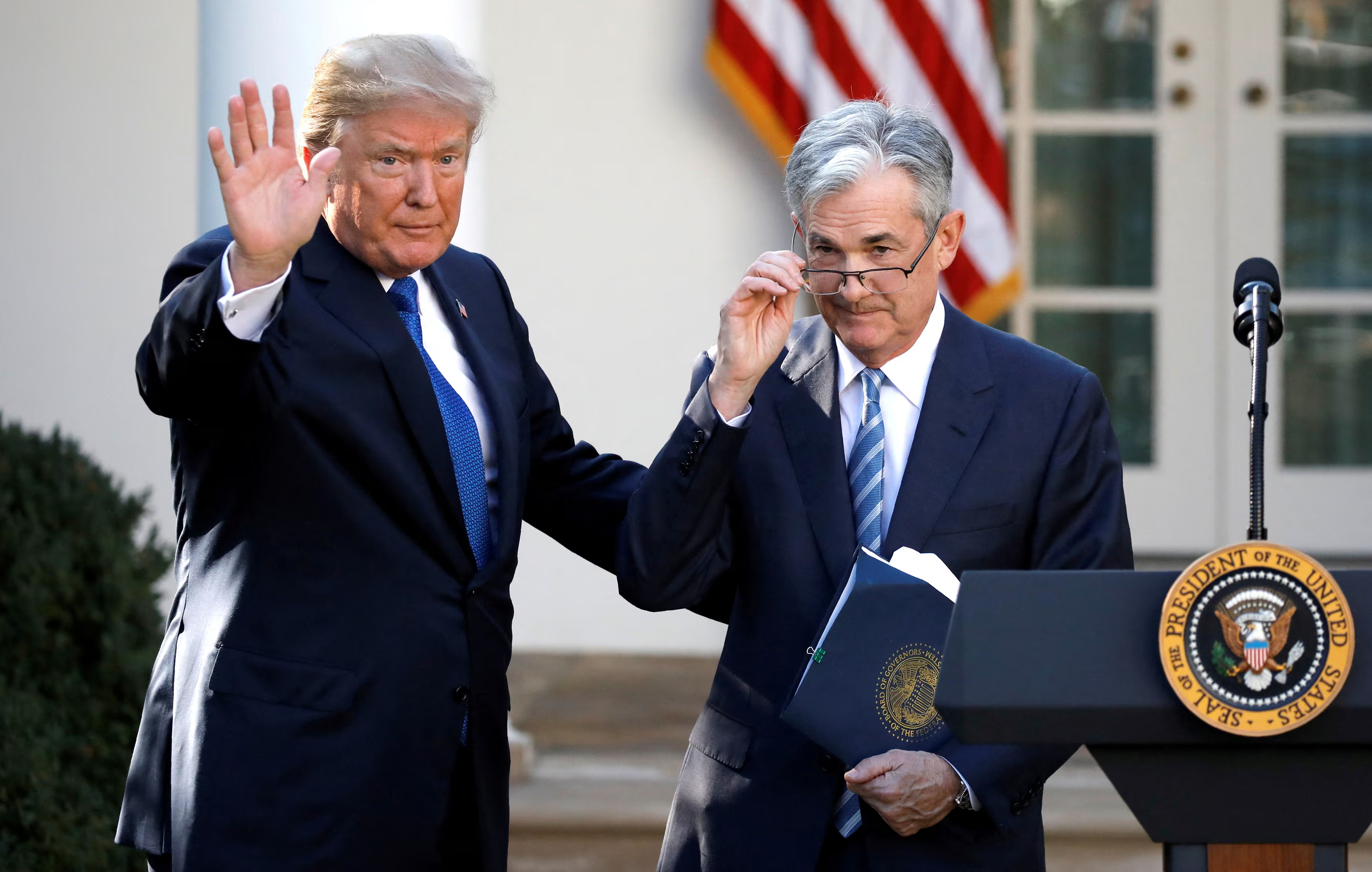
President Donald Trump today stated it is “highly unlikely” he will dismiss Federal Reserve Chairman Jerome Powell, walking back speculation that had sent tremors through financial markets. The public assurance, delivered during an Oval Office meeting, came less than 24 hours after reports emerged that the President had privately polled Republican lawmakers on the prospect of ousting the head of the nation’s central bank.
The relationship between President Trump and Chairman Powell has been notoriously fraught, marked by frequent public clashes over interest rate policy. Trump has long advocated for lower rates to stimulate economic growth, a stance often at odds with the Fed’s independent mandate to control inflation and maximize employment.
“I talked to them about the concept of firing him,” President Trump said of a Tuesday night White House meeting with House Republicans, who were primarily gathered to discuss cryptocurrency legislation. “Almost every one of them said I should. But I’m more conservative than they are.” He then added that dismissing Powell was “highly unlikely — unless he has to leave for fraud.”
This new caveat from the President introduces a fresh line of attack against Powell. White House and administration officials have recently accused Powell of mismanaging a $2.5 billion renovation project at the Federal Reserve’s Washington headquarters. While there has been no public evidence of fraud, President Trump himself, in remarks to reporters, deemed the renovation cost “disgraceful” and implied it could be grounds for dismissal.
Markets, which had shown volatility earlier in the day on initial reports of a potential firing, largely stabilized after President Trump’s “highly unlikely” comment. The S&P 500, which had dropped, trimmed its losses, while Treasury yields, though swinging, remained relatively calm.
The legal authority for a President to fire a Federal Reserve Chair is highly debated and largely untested. While the President appoints the Chair, the law specifies that a chair can only be removed “for cause,” a term traditionally interpreted as misconduct or dereliction of duty, not policy disagreements. Any attempt to fire Powell on grounds related to monetary policy would almost certainly face immediate legal challenges and spark a constitutional crisis, severely undermining the Fed’s cherished independence.
Senate Republicans, generally more guarded on the issue than some of their House counterparts, have largely backed Powell’s performance, even as they await an inspector general’s review of the construction project. Senator Thom Tillis (R-N.C.), a member of the Senate Banking Committee, warned that if Powell were dismissed, “you are going to see a pretty immediate response,” adding that making the Fed “another agency in the government subject to the president” would be “a huge mistake.”
Powell, originally nominated by Trump in 2017 and then nominated for a second term by President Joe Biden in 2022, has repeatedly stated his intention to serve out his term, which runs through May 2026.
Despite the President’s latest reassurance, the episode underscores the persistent tension between the White House and the independent central bank. The new focus on the Fed’s building renovation project highlights President Trump’s continued search for leverage over Powell, ensuring that the fate of the nation’s top banker remains a closely watched saga in Washington and on Wall Street.