
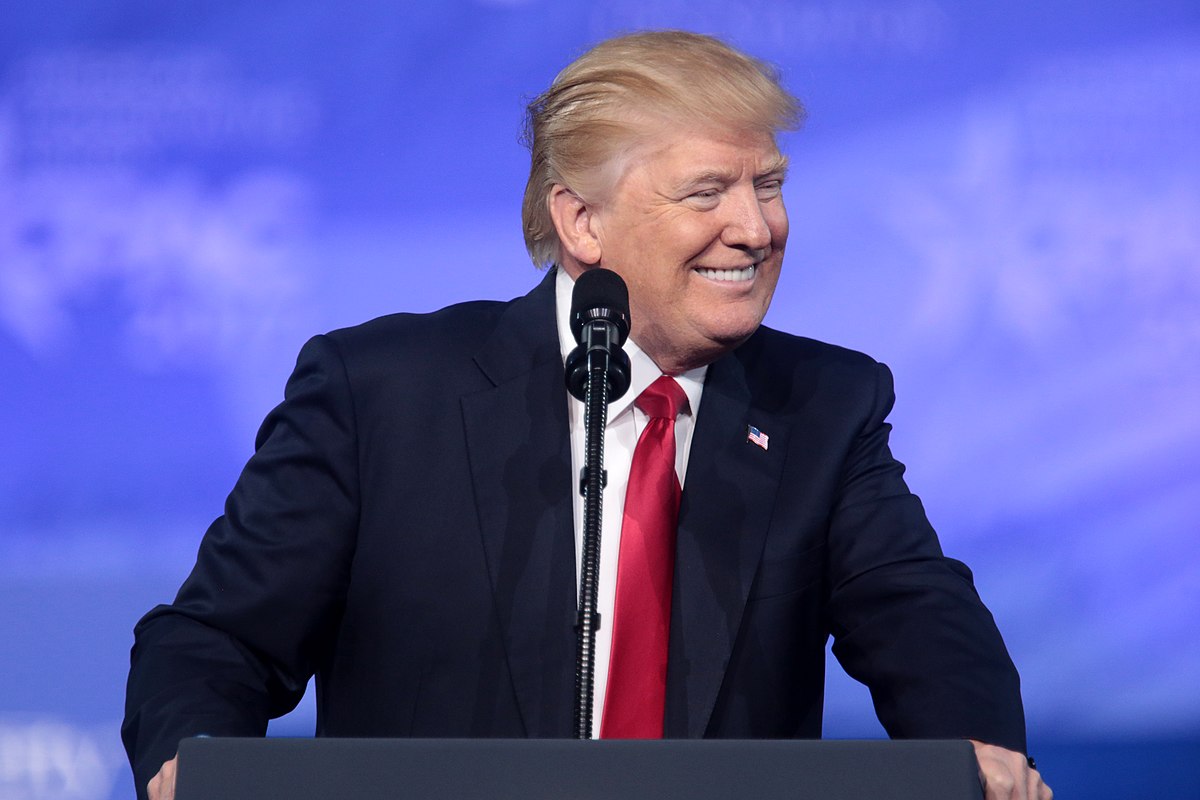
n a surprising pivot from his characteristic “America First” trade belligerence, President Donald Trump has temporarily delayed the implementation of a new wave of tariffs, a move that signals a strategic pause in the face of increasingly unified global pushback. The decision suggests that even as the President brandishes his economic weaponry, the rest of the world is learning to play hardball, making unilateral trade actions a more costly and complex proposition.
The delay, announced quietly by the Commerce Department late yesterday, specifically targets a previously threatened expansion of tariffs on certain goods from key trading partners, including segments of the European Union, Canada, and specific Asian economies. While the White House offered no immediate explanation for the postponement, sources close to the administration suggest it stems from a recognition of mounting international pressure and a desire to avoid an all-out trade war on multiple fronts simultaneously.
“This delay is less about a change of heart and more about strategic recalculation,” commented Dr. Eleanor Vance, a trade policy expert at the American Enterprise Institute. “The administration is realizing that its most aggressive tariff tactics are now being met with coordinated, proportionate retaliation, which makes the economic pain bilateral, not just unilateral for the targeted nations.”
Indeed, the past several months have seen a marked hardening of global resistance to Trump’s tariff policies. The European Union, for instance, has repeatedly threatened, and in some cases implemented, reciprocal tariffs on iconic American goods, directly targeting politically sensitive industries in U.S. states. Canada and Mexico have also signaled their readiness to retaliate against any new tariffs, particularly in critical sectors.
The move comes amidst a complex economic landscape. While President Trump continues to hail the benefits of his existing tariffs, a range of U.S. industries and agricultural sectors have voiced concerns about rising input costs, diminished export markets, and supply chain disruptions. The recent “Big Beautiful Bill” aimed at stimulating domestic growth also relies on a stable international trade environment, which perpetual tariff threats undermine.
“Our members have been clear: uncertainty is bad for business,” stated a spokesperson for the National Association of Manufacturers. “Any move that reduces trade friction and provides predictability is welcome, but a permanent resolution is what’s truly needed.”
The delay can also be viewed through a geopolitical lens. With the Israel-Iran conflict simmering and other global challenges demanding attention, the administration may be seeking to de-escalate trade tensions to focus on more pressing foreign policy matters. Furthermore, the 20% tariffs recently imposed on Vietnam, while distinct, may represent a strategic shift towards targeted agreements rather than broad-stroke tariff hikes against established allies.
While President Trump has not softened his rhetoric on fair trade or his willingness to use tariffs as leverage, this delay signals a pragmatic recognition that the global economic landscape is responding differently to his pressures than perhaps initially anticipated. The rest of the world, it seems, is no longer simply absorbing the blows but is delivering its own counter-punches, forcing Washington to rethink its next move in the high-stakes game of international trade. The “Art of the Deal” may now require a more nuanced brushstroke.