
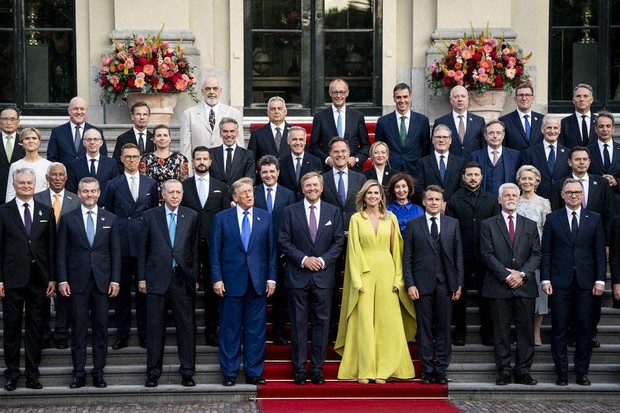
The political winds of Europe blew decidedly towards The Hague today as world leaders converged for the highly anticipated 2025 Summit, yet much of the diplomatic buzz centered not on the formal agenda, but on a carefully orchestrated charm offensive from NATO Secretary-General Mark Rutte towards U.S. President Donald Trump. The public display of flattery, delivered amidst swirling anxieties about the future of the transatlantic alliance, underscored the precarious tightrope walked by European leaders eager to secure American commitment to global security.
The summit, hosted in the historic Dutch city, was intended to tackle pressing issues from global trade imbalances to climate change and the ongoing conflict in Ukraine. However, with President Trump making his impactful return to the international stage, the focus quickly shifted to the dynamics of his relationships with key allies, particularly given his past criticisms of NATO and demands for increased burden-sharing.
Secretary-General Rutte, a seasoned politician widely considered a contender for the next Secretary-General of NATO, wasted no time in setting the tone. In remarks delivered upon President Trump’s arrival and reiterated during early bilateral meetings, Rutte lauded Trump’s “visionary leadership” and credited him with “strengthening the alliance by ensuring all members meet their responsibilities.” He notably praised Trump for “making Europe realize the necessity of robust defense spending,” a clear nod to Trump’s long-standing grievances about what he perceived as inadequate contributions from European members.
“President Trump’s insistence on equitable burden-sharing has undoubtedly made NATO a stronger, more resilient alliance,” Rutte stated, standing alongside a stone-faced Trump. “His leadership has prompted a crucial awakening, ensuring that NATO remains the cornerstone of collective security.”
The effusive praise from Rutte, known for his pragmatic and often direct style, was a palpable attempt to pre-empt potential friction and foster a cooperative spirit with the American leader. Sources within diplomatic circles suggest the strategy is designed to create a more agreeable environment for discussions on critical issues, including sustained support for Ukraine and managing escalating tensions in the Middle East.
However, not all leaders appeared entirely comfortable with the overt courting of Trump. While publicly maintaining diplomatic courtesies, some European delegations privately expressed concerns that such overtures could be perceived as capitulation rather than genuine partnership. German Chancellor Friedrich Merz and French President Emmanuel Macron, both of whom have stressed the importance of European strategic autonomy, were observed in earnest conversation with their aides after Rutte’s remarks.
The summit’s formal agenda is set to include intense discussions on the Israel-Iran conflict, which has taken center stage in global headlines. Leaders will also delve into strategies for countering Chinese economic influence and strengthening global supply chains. Yet, the undercurrent of these discussions will undoubtedly be shaped by the imperative of maintaining a cohesive front with the United States, even if it requires a delicate dance of diplomacy and deference.
As the summit progresses, the world will be watching closely to see if Secretary-General Rutte’s diplomatic charm offensive proves successful in stabilizing transatlantic relations and ensuring a united approach to the myriad crises facing the globe. The Hague Summit of 2025 is shaping up to be less about a grand declaration of unity and more about the intricate art of managing powerful personalities and divergent national interests.