
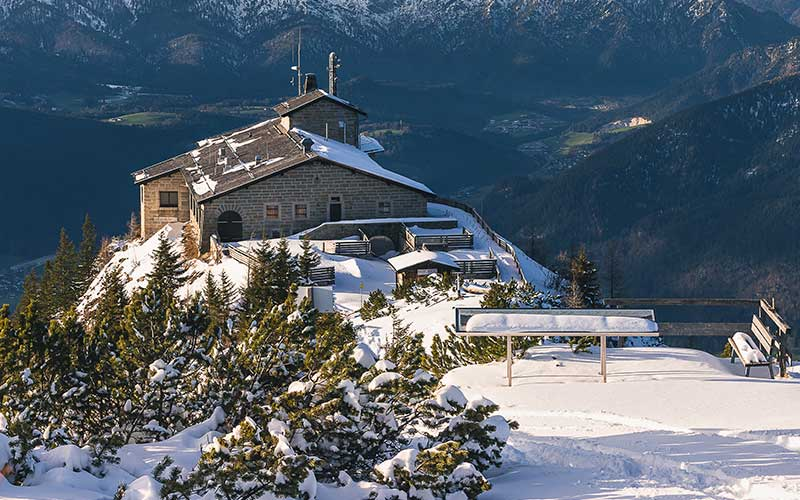
BERCHTESGADEN, Germany — High in the spectacular, snow-dusted peaks of the Bavarian Alps, helicopters have spent the week ferrying scaffolding and protective barriers up to a jagged ridge 1,834 meters above sea level. They are racing against an oncoming alpine winter to secure a smoldering shell of stone and granite.
The Kehlsteinhaus—known internationally as the Eagle’s Nest—was gutted by a suspected arson attack on the evening of October 23, 2026. For over seven decades, it stood as one of the last remaining structural relics of Adolf Hitler’s dictatorship. Now a roofless, blackened ruin, the site has ignited a fierce national debate over how a modern, democratic Germany should handle the physical ghosts of the Nazi regime.
The authorities have detained a 33-year-old man with a history of mental illness in a secure psychiatric facility on suspicion of arson, leaving the exact motive unclear. However, the physical destruction of the site has opened an ideological vacuum that historians, politicians, and local operators are struggling to fill.
Rebuild from Scratch or Return to Nature?
Unlike Hitler’s nearby Berghof mansion, which was demolished in 1952 to prevent neo-Nazi pilgrimages, the Eagle’s Nest survived the war and operated as a popular mountain restaurant and tourist attraction welcoming up to 350,000 visitors a year. Following the fire, the debate over its future has crystallized into three main proposals:
- Total Eradication: Historians like Sir Richard J. Evans argue for clearing the rubble and returning the peak to its natural state, pointing to Berlin’s permanent burial of Hitler’s suicide bunker beneath a playground.
- Reconstruction: Bavarian officials favor rebuilding the structure to avoid leaving an unsightly ruin on the landscape, though critics warn a literal restoration creates “fake history” by mimicking intimidating Nazi architecture.
- The Compromise: Preservationists suggest documenting the fire-damaged ruins and blending them into a modern educational memorial, a path endorsed by Sven Keller of the nearby, untouched Obersalzberg Documentation Centre.
A Toxic Symbol in a Rising Right-Wing Climate
The dilemma is heightened by a modern political climate marked by far-right resurgences, such as recent regional efforts to block Holocaust memorial Stolpersteine. Scholars like Isabel Heinemann of Munich’s Ludwig-Maximilians-Universität stress Germany’s ongoing obligation to responsibly process its history.
Bavaria’s Ministry of Culture has convened an expert commission to decide the site’s fate, leaving the blackened skeleton of the Kehlsteinhaus as a stark emblem of an unfinished confrontation with the past.