
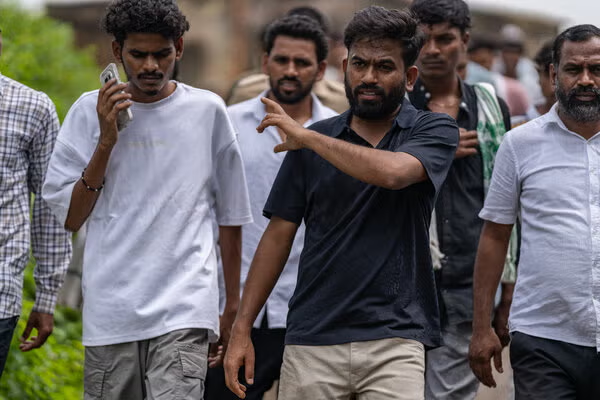
New Delhi is bracing for a second wave of massive street demonstrations following a late-night court order that released the top leaders of the Cockroach Janta Party (CJP) under stringent peace bonds. The capital remains under a heavy security blanket as the Gen Z-led movement vows to push forward with its “Season 2” campaign, demanding the resignation of India’s Chief Election Commissioner.
A Delhi magistrate ordered the release of CJP founder Abhijeet Dipke alongside senior leaders Saurav Das and Ashutosh Ranka early Sunday morning. The core leadership team was bound by a strict condition to maintain peace for one year. Minutes after their release, the group’s official account on X issued a defiant decree: “Cockroaches never die”.
The Flight-Deck Detentions
The sudden judicial release follows an extraordinary show of force by Delhi Police on Saturday. Intent on preventing the decentralized youth movement from reaching its designated assembly point at Jantar Mantar, security forces executed highly orchestrated pre-emptive detentions.
Law enforcement officers boarded a commercial flight arriving from Mumbai, detaining Dipke directly from his passenger seat before he could set foot in the capital.
- Mass Roundups: Media and police reports indicate that between 2,000 and 7,000 demonstrators were detained across the metropolitan area on Saturday alone.
- The Capital Lockdown: To paralyze the youth mobilization, authorities cancelled long-distance trains, shut down dozens of critical metro stations, and implemented a rare mobile internet blackout across central Delhi districts.
- Influencer Released: Popular social media influencer Dhruv Rathee, who was swept up in the dragnet, was released past midnight under an administrative condition barring him from joining further rallies.
From Online Satire to Systemic Threat
The Cockroach Janta Party takes its bizarre moniker from remarks made by India’s Chief Justice, who reportedly likened certain unemployed young citizens to “cockroaches”. What began as an online satirical movement quickly mutated into a highly organized youth pressure group.
The movement secured its first major political victory over the summer when a series of massive street protests over leaked exam papers forced the high-profile resignation of Prime Minister Narendra Modi’s education minister.
The current phase of the uprising targets Chief Election Commissioner Gyanesh Kumar over a controversial nationwide voter roll revision. CJP leadership points to official Election Commission data showing that roughly 130 million names have been expunged from the electoral registers during recent verification rounds.
While the ruling Bharatiya Janata Party (BJP) and the Election Commission fiercely reject any allegations of manipulation, the CJP and broader opposition groups argue that the deletions disproportionately strip minorities and young voters of their franchise.
A Strained Peace
Though municipal authorities reopened metro stations and restored mobile data services on Sunday morning, thousands of heavily armed police and paramilitary personnel continue to man massive metal barricades dividing the city centre.
The newly signed one-year peace bonds place the CJP core leadership in a delicate tactical bind. However, with student bodies, civil rights activists, and regional farmer unions actively answering the group’s digital call to converge on New Delhi, the government’s reliance on mass detentions has failed to extinguish the underlying friction.
The “cockroach” movement has shown it can survive the digital vacuum of internet blackouts and the physical isolation of prison vans—and the streets of Delhi are preparing for what comes next.