
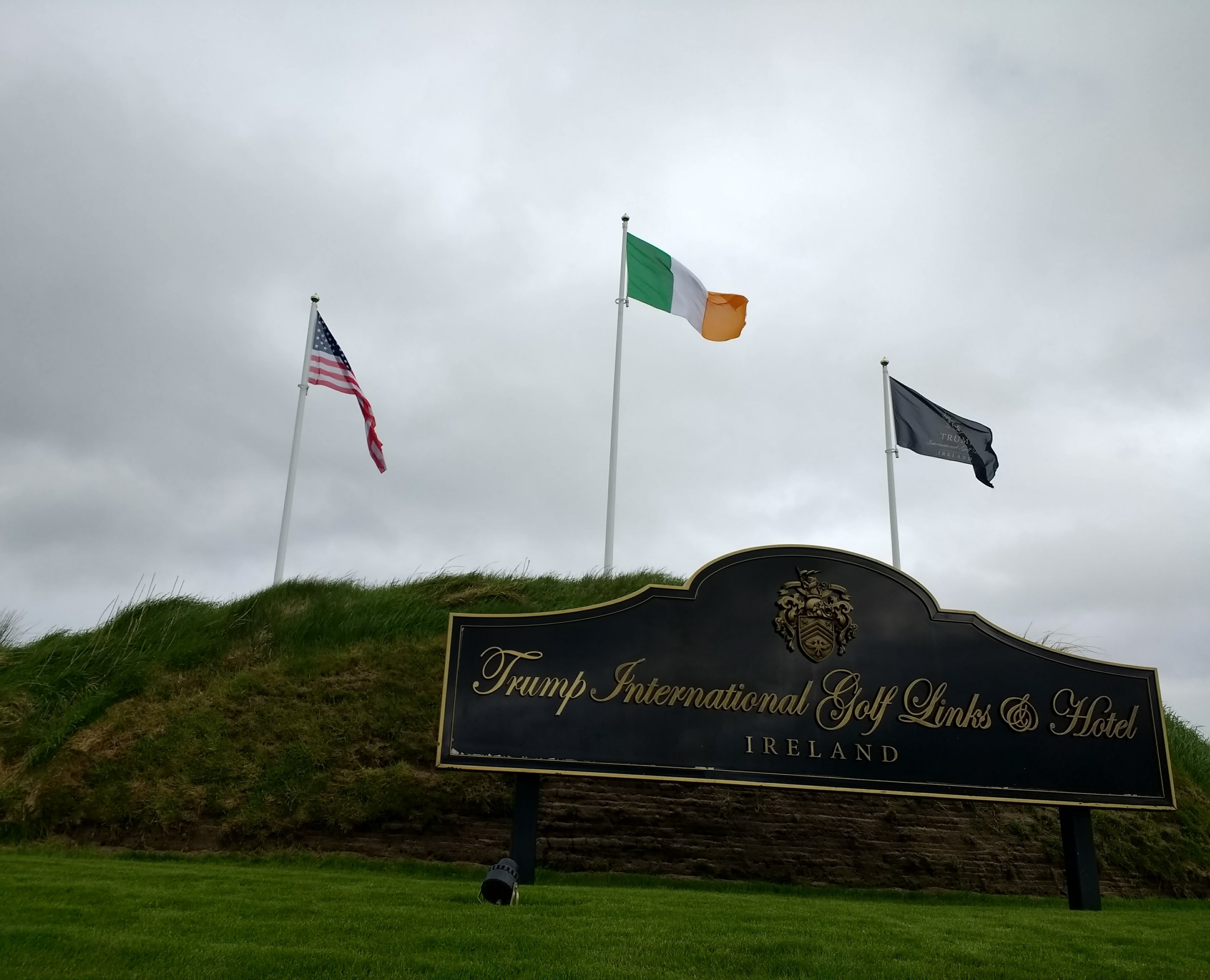
Donald Trump’s sudden, norm-shattering endorsement of a united Ireland was less about redrawing European borders and more about securing domestic political territory back home. Speaking during a high-profile visit to Dublin, the U.S. President broke with decades of carefully guarded American diplomatic neutrality by declaring that Irish reunification would be “fantastic” and “a very cool thing”.
While the unscripted remarks sent immediate shockwaves through London and Belfast, seasoned political observers recognized a familiar playbook. By wading into one of Europe’s most delicate constitutional questions, Trump was playing directly to a powerful, emotionally charged constituency across the Atlantic: Irish-American voters.
Kicking the Can in Dublin
Diplomatic protocol usually dictates that visiting U.S. presidents tread lightly around the constitutional future of Northern Ireland, strictly deferring to the mechanisms of the 1998 Good Friday Agreement. Trump took a different approach. Sitting alongside Irish Taoiseach Micheál Martin, he leaned into the microphone to declare that he would “love to see it unified”.
The ripples were instantaneous:
- The Unionist Backlash: Pro-British unionists in Northern Ireland swiftly rejected the commentary. Democratic Unionist Party (DUP) leader Gavin Robinson reminded the president that Northern Ireland’s future would be decided by its own people, “not by commentary in London, Dublin or Washington”.
- The British Rejection: Down in London, Prime Minister Andy Burnham’s administration held firm, reiterating that a border poll remains completely “off the table”.
- The Tory Outrage: Opposition leader Kemi Badenoch targeted the intervention as “deeply unhelpful” and accused Trump of inflaming historic tensions.
Yet, the clue that Trump was looking past his immediate European hosts came shortly after the initial press conference. Delivering a speech at the U.S. Ambassador’s residence, he immediately returned to the topic. It was billed as a 20-minute address to Irish and Irish-American business leaders, but it quickly transformed into a sprawling, 40-minute domestic campaign speech.
The Transatlantic “Weave”
Using a freewheeling rhetorical style he famously dubs “the weave”, Trump pivoted away from local Irish concerns to air purely American grievances. He lambasted congressional Democrats, boasted about domestic border enforcement, and aggressively criticized the UK for what he characterized as a lack of military support in his ongoing conflict in Iran.
By framing Irish unity as an ultimate, inevitable “deal,” Trump wasn’t attempting to broker an immediate diplomatic breakthrough in Western Europe. Instead, he was generating potent media clips for conservative and diaspora networks back in the United States.
The strategy carries distinct domestic advantages:
- The Diaspora Appeal: Millions of Americans claim Irish heritage, a demographic that holds significant cultural and political sway in critical swing states across the Northeast and Rust Belt.
- The Populist Contrast: Endorsing a united Ireland allows Trump to position himself as an anti-establishment figure who isn’t beholden to traditional diplomatic consensus or the sensibilities of the British political establishment.
- The Local Distraction: The bold headline effectively drowned out the noise of more than 10,000 protesters marching through central Dublin to object to his foreign policies and presence in the country.
A Rhetorical Reality Check
For all the anxiety generated in the UK parliament, few expect the White House to pivot toward an active, aggressive policy of forcing Irish reunification. Historically, Washington’s role has been that of a neutral guarantor of peace rather than an active participant in partition politics.
Trump himself acknowledged the friction, noting with characteristic nonchalance that “the UK will have something to say about it”. But for a leader whose primary focus rarely drifts far from his domestic base, the immediate diplomatic fallout in Belfast is an acceptable price to pay for a headline that lands perfectly on the other side of the ocean.