
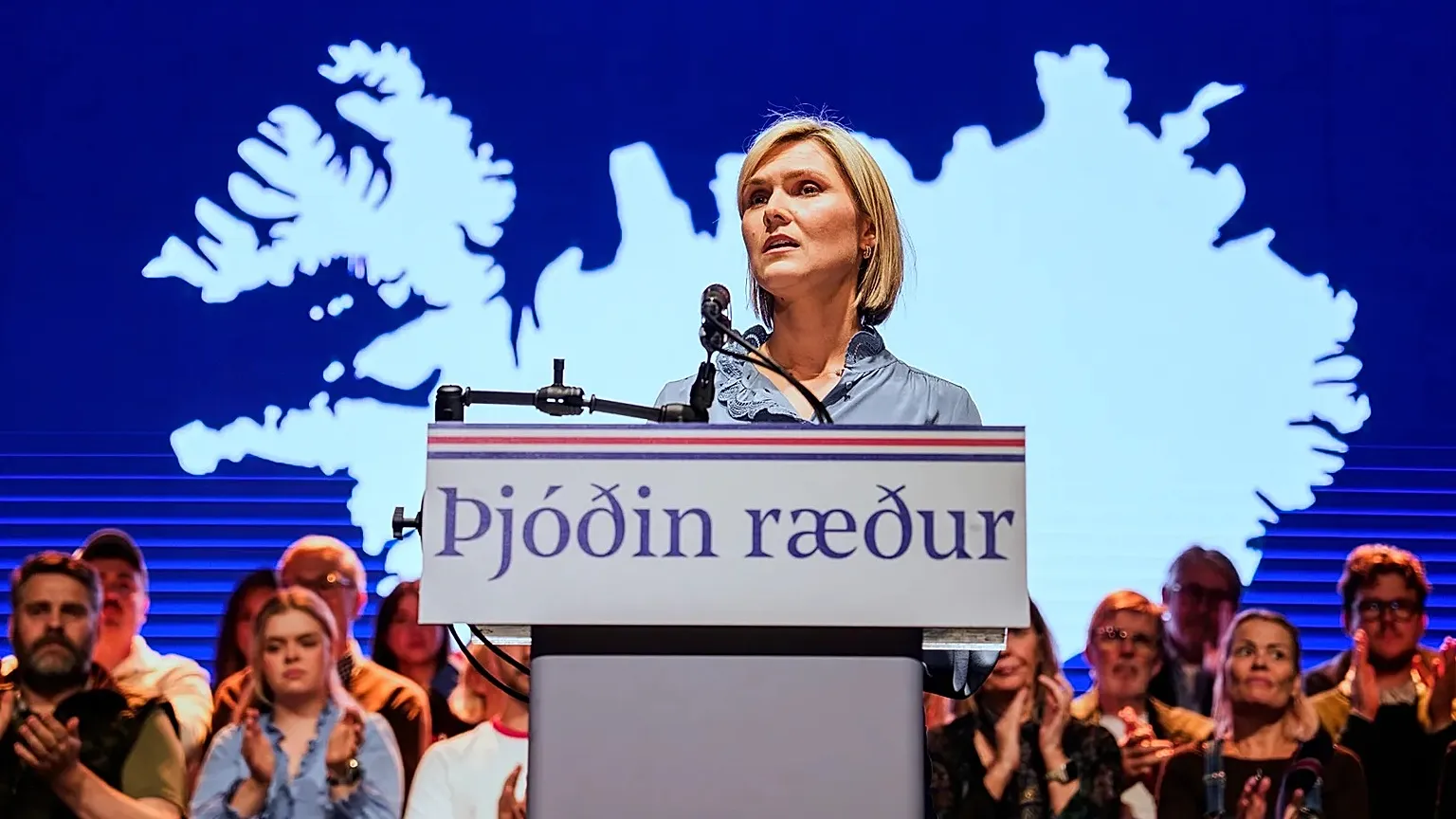
REYKJAVÍK — Icelanders have decisively voted to keep the European Union at arm’s length, delivering a stinging defeat to their pro-EU government and freezing any immediate prospects of integrating the strategic Arctic nation into the European bloc.
With ballot counting nearing its final stages on Sunday, data from public broadcaster RÚV showed the “No” camp securing 52.5% of the vote, compared to 47.5% for the “Yes” camp. With only a fragment of ballots left to count in a single, eurosceptic-leaning voting district, the margin—amounting to roughly 9,500 votes—is mathematically irreversible.
The result shuts the door on a “now or never” push by Prime Minister Kristrún Frostadóttir’s centre-left coalition, which had gambled on global instability to coax voters toward Brussels. Instead, the fiercely independent island nation of 400,000 chose to protect its most sacred economic engine: its pristine Atlantic fishing waters.
A Clash of Fears: Cod vs. Geopolitics
The weekend referendum was not a direct vote on joining the EU, but rather a mandate on whether to reopen formal accession negotiations, which were abruptly frozen 13 years ago in 2013.
The campaign exposed deep ideological divides across the volcanic island:
- The Sovereignty Argument: “No” campaigners successfully framed EU entry as an existential threat to domestic sovereignty. Under the EU’s Common Fisheries Policy, Iceland would have been forced to cede direct control over parts of its highly lucrative fishing grounds, which account for nearly 40% of the country’s total exports.
- The Security Argument: The “Yes” campaign, backed by the Social Democratic Alliance, leveraged anxieties over an increasingly volatile world. Proponents warned of Russia’s aggressive maritime maneuvers in the North Atlantic and openly cited concerns over U.S. President Donald Trump’s rhetorical threats regarding the annexation or targeting of neighboring Greenland.
- The Economic Promises: Pro-EU factions also argued that adopting the euro would finally stabilize the island’s famously volatile currency, the króna, and tame chronically high interest rates.
Ultimately, the defense of the maritime borders resonated louder than the abstract promises of continental stability.
A Cold Shower for Brussels
The outcome is a severe diplomatic disappointment for the European Union. Officials in Brussels had viewed Iceland as a wealthy, low-risk candidate whose integration would be relatively seamless, given that the country is already deeply integrated into Europe through the Schengen border-free zone and the European Economic Area (EEA).
Iceland EU Referendum Results (Near Final Tally)
[═══════════════════ NO: 52.5% ═══════════════════]
[═════════════════ YES: 47.5% ═════════════════]
Total Lead: ~9,500 votes (Source: RÚV)
Bringing Iceland into the fold would have drastically expanded the EU’s strategic footprint in the Arctic circle at a time when melting ice caps are opening up new trade routes and intensifying a shadow resource war between the West, Russia, and China.
Frostadóttir’s Gamble Deflated
Prime Minister Frostadóttir had explicitly stated prior to the vote that a “No” result would effectively put all EU speculation aside for the foreseeable future. After casting her ballot in Reykjavík, she insisted her government would continue its work regardless of the outcome, but political analysts agree the rejection severely dampens her coalition’s forward momentum.
By opting for the status quo, Iceland maintains its unique geopolitical posture—firmly embedded in NATO and the European marketplace, but fiercely autonomous over the waters that built the modern nation. For Brussels, the expansion map remains frozen; for Reykjavík, the message to the world is clear: Iceland’s sovereignty is not for sale.