
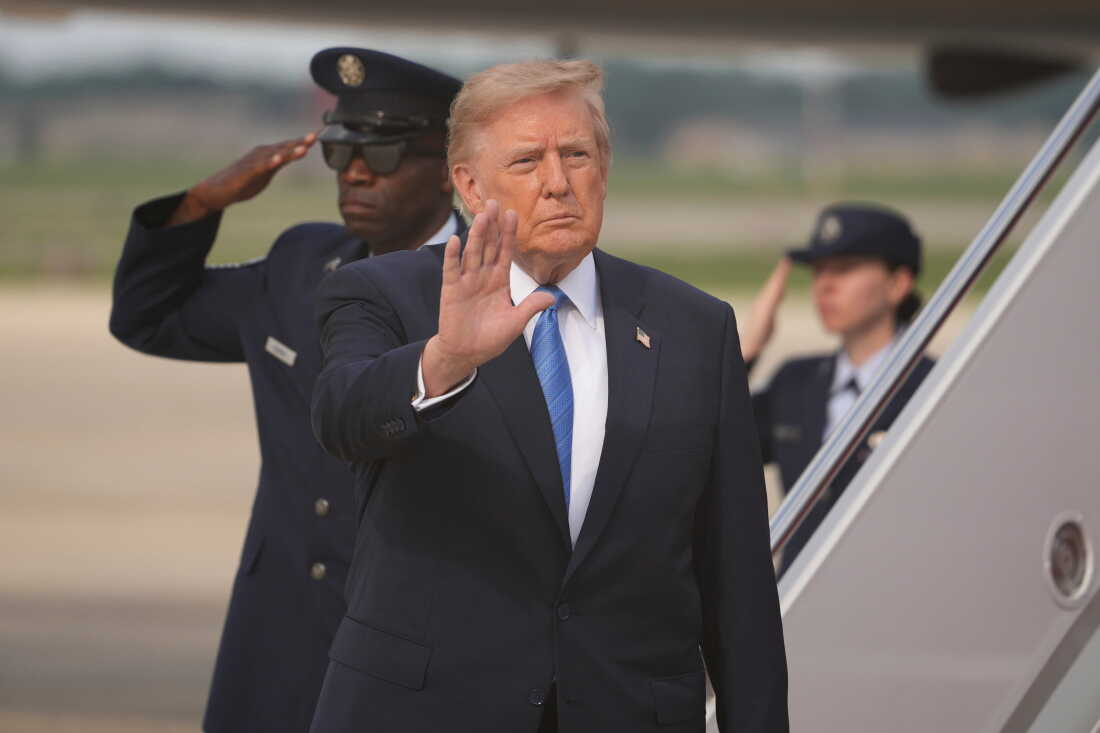
In a stunning geopolitical maneuver that redraws the global energy map, President Donald Trump announced that the United States has secured majority control over more than 65 billion barrels of Venezuela’s proven oil reserves.
Trump hailed the accord as “THE BIGGEST OIL DEAL IN WORLD HISTORY,” claiming it will more than double American oil reserves and drastically slash domestic gasoline prices.
The agreement, which grants a 100-year concession to a joint venture controlled 55% by the U.S. government, represents a historic restructuring of South American sovereignty. It comes nearly nine months after a clandestine U.S. special forces operation authorized by Trump abducted Venezuelan President Nicolás Maduro from Caracas, paving the way for a Washington-backed interim government.
The Architecture of the Deal
The sweeping pact was quietly brokered by Secretary of State Marco Rubio and Defense Secretary Pete Hegseth, who negotiated directly with Venezuela’s interim President, Delcy Rodríguez, alongside private corporate stakeholders.
- The U.S. Stake: Washington will maintain a 55% controlling interest in a joint venture operated by an experienced private partner.
- The Venezuelan Kickback: Caracas retains technical ownership of the natural resources. Under the framework, $19 from every barrel sold to the U.S. will flow back to the Venezuelan treasury, potentially generating up to $209 billion annually for the cash-strapped nation.
- The Corporate Lifeline: Major Western oil conglomerates, including Chevron, are expected to invest at least $100 billion to modernize 17 strategic fields and eight greenfield blocks.
In a late-night address, Interim President Rodríguez defended the agreement as an essential “economic revival” tool. She noted it allows Venezuela to leverage elite capital and technology to rescue an infrastructure decimated by years of sanctions and mismanagement.
Political Pressures at the Pump
Trump’s triumphalism comes at a time of severe domestic vulnerability. The timing of the announcement is explicitly tethered to upcoming U.S. midterm elections, with the administration facing immense public anger over soaring energy costs.
U.S. Gasoline Prices (AAA Data)
Year-Over-Year Surge
[═════════════════ 27% Increase ═════════════════]
Current Average: $4.09/gallon
Domestic pump prices have spiked to a national average of $4.09 per gallon—a 27% year-over-year jump fueled directly by disrupted crude supplies in the Strait of Hormuz amid the ongoing U.S. war with Iran. By embedding American energy security into the Orinoco Belt, the White House hopes to insulate voters from Middle Eastern shocks.
Field of Skeptics
Despite the administration’s claims that the deal was secured “at no cost to the American Taxpayer,” energy analysts and legal experts have greeted the declaration with severe skepticism.
- The Refining Mismatch: Venezuela’s reserves primarily consist of “heavy, sour” crude. This dense, sulfurous oil requires highly specialized, complex refining to turn into commercial gasoline—a sharp contrast to the “light, sweet” crude typically produced by U.S. shale.
- The Sovereign Risk: The deal is already being fiercely denounced by both sides of the traditional Venezuelan political spectrum. Legal scholars warn that any future shift in Caracas’s fragile political landscape could prompt immediate constitutional challenges and nationalization threats to the 100-year concession.
- The Shadow of Iraq: International observers have noted that the sheer scale of the agreement exceeds the level of administrative control the U.S. exerted over Iraqi oil revenues following the 2003 invasion, raising sharp questions about long-term geopolitical stability.
The New Imperial Energy Order
With the formal signing ceremonies scheduled for next week, the Trump administration has signaled an aggressive return to explicit resource-driven foreign policy. Whether this historic text translates into actual flowing crude remains dependent on billions in corporate investments. For now, Washington has sent an unmistakable message to global markets and rivals like China and Russia: the Western Hemisphere’s energy powerhouse is under new management.