
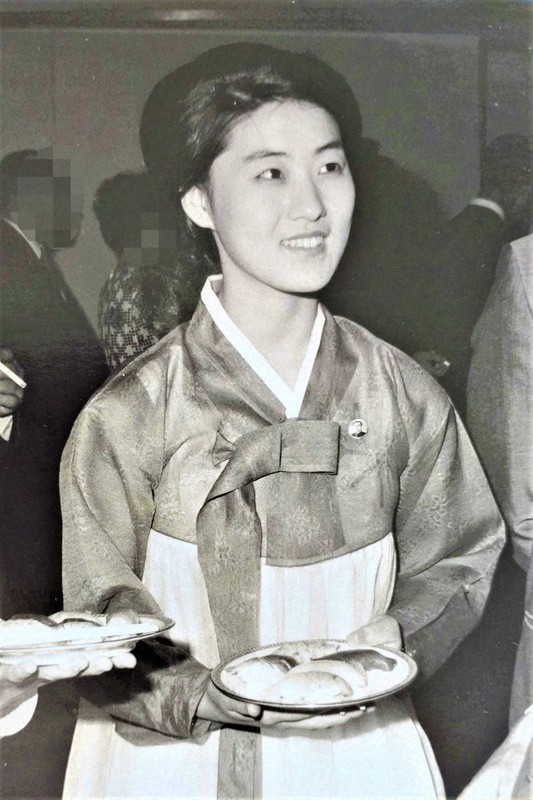
In the meticulous, highly curated universe of North Korean state propaganda, silence is never an accident. Over his fifteen years of absolute rule, Supreme Leader Kim Jong Un has spoken publicly about everything from thermonuclear weapons and economic quotas to agricultural harvests and natural disasters. Yet, there is one gaping, inexplicable void at the absolute center of his personal narrative: he has never once publicly uttered the name of his biological mother.
In a totalitarian state where power is justified entirely by hereditary purity, the intentional erasure of Ko Yong Hui is a calculated act of political survival. To elevate her to the status of a national icon—as was done for the mothers of Kim’s father and grandfather—would expose a dark family secret. In the eyes of North Korea’s rigid caste system, Kim Jong Un possesses a deeply controversial, “tainted” bloodline that could undermine the very foundations of his regime.
The Original Sin of the Songbun System
To understand the mandatory secrecy surrounding Ko Yong Hui, one must understand North Korea’s strict social stratification framework known as songbun. This hereditary class system divides the entire populace into loyal, wavering, or hostile tiers based entirely on what their ancestors were doing during the Japanese colonial era and the Korean War.
                   [ THE RULING ILLUSION ]
                              │
       ┌──────────────────────┴──────────────────────┐
       ▼                                             ▼
[ THE MOUNT PAEKTU MYTH ]                     [ THE HIDDEN REALITY ]
• Pure, anti-colonial lineage                 • Mother born in Osaka, Japan
• Sacred revolutionary bloodline              • Classified as lowest "hostile" class
• Source of absolute legitimacy               • A dancer and un-endorsed mistress
Ko Yong Hui was born in 1952 in Osaka, Japan, to ethnic Korean parents before migrating to North Korea in the early 1960s as part of a mass repatriation program. In Pyongyang’s official worldview, Japan remains the ultimate historical villain, and anyone associated with it is automatically relegated to the lowest, most untrustworthy rungs of society.
Furthermore, Ko was a professional dancer in the Mansudae Art Troupe when she caught the eye of former leader Kim Jong Il in the 1970s. She became his companion and mistress, but the relationship was never officially endorsed by the nation’s founder, Kim Il Sung. For the ruling elite to discover that the current supreme commander is the son of a performer born in Japan would have the psychological impact of a nuclear bomb on North Korean society, completely fracturing the illusion of hereditary perfection.
The Bloodline Deficit and Domestic Aggression
The crushing weight of this ancestral deficiency has long reverberated behind the closed doors of the ruling family. According to testimonies from high-profile defectors, Kim Jong Un harbored a deep-seated resentment during his childhood because of how his mother’s background alienated her from the core family leadership.
This psychological trauma has directly shaped his most brutal political purges. Analysts note that Kim’s shocking 2013 execution of his powerful uncle, Jang Song Thaek, was partly driven by historical family grievances. Kim reportedly blamed his uncle for actively blocking Ko Yong Hui from gaining the acceptance and recognition of the family patriarch during the 1980s and 1990s.
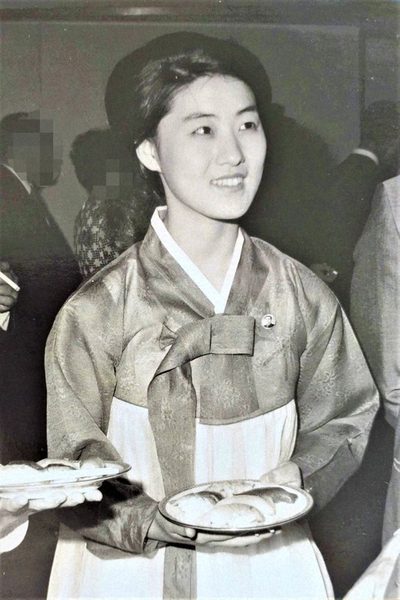
Rather than attempting to reinvent his mother’s history through state mythology—a task made impossible by the underground reality that her background is whispered about among the oldest elites—Kim has spent his reign enforcing absolute censorship. State intelligence indicates that even restricted documentary films highlighting her maternal care were quietly recalled and destroyed by authorities to prevent any scrutiny regarding her origins.
Replaced by the Next Generation
This perceived ancestral deficiency also explains one of the most puzzling behavioral patterns of Kim’s tenure: his eagerness to thrust his own wife, Ri Sol Ju, and his young daughter, Ju Ae, into the public spotlight.
Unlike his father, who kept his various companions entirely hidden from public view, Kim Jong Un introduced Ri Sol Ju as his first lady early in his rule. According to external intelligence assessments, Ri hails from a highly respectable, upper-middle-class family in Pyongyang and was educated in classical singing in China, giving her an immaculate pedigree under the songbun system.
By frequently showcasing his wife and daughter at major military parades and state banquets, Kim is attempting to project a traditional, wholesome image of stability that his own childhood lacked. It is a deliberate, forward-looking strategy designed to bury the questions surrounding his own birth by constructing an unassailable, clean lineage for his successors.
The absolute silence surrounding Ko Yong Hui serves as a powerful reminder of the fragile underbelly of North Korean autocracy. Kim Jong Un may command an arsenal of intercontinental ballistic missiles and wield absolute power over millions of lives, but he remains permanently trapped by the immutable rules of his own state’s propaganda. In the end, the most powerful man in Pyongyang cannot afford to honor his own mother, because doing so would expose the reality that the sacred blood of Mount Paektu is mixed with the dust of Osaka.