
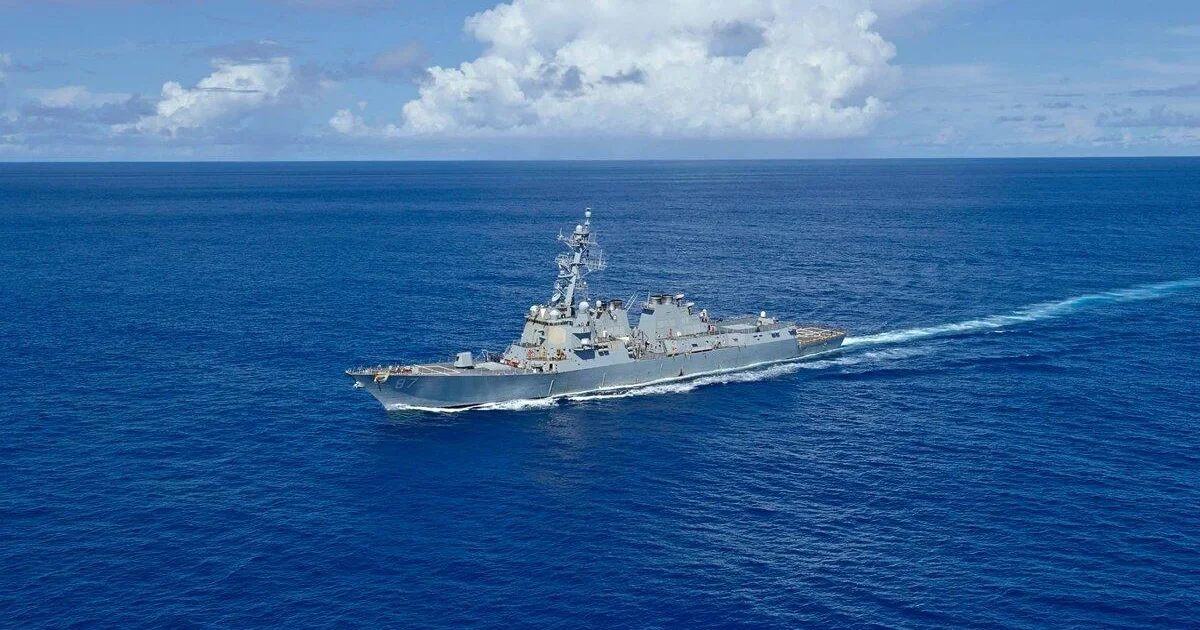
WASHINGTON – In a dramatic escalation that has pushed a month-long ceasefire to the brink of collapse, President Donald Trump announced on Monday that the U.S. military “shot down” seven Iranian “fast boats” in the Strait of Hormuz. The strikes mark the most violent engagement between the two nations since a truce was established in early April, as the U.S. began a high-stakes mission to reopen the world’s most critical oil corridor.
Writing on Truth Social, President Trump declared that the Iranian vessels were neutralized after they targeted commercial shipping, including a South Korean cargo vessel, trying to traverse the waterway. “We’ve shot down seven small Boats or, as they like to call them, ‘fast’ Boats. It’s all they have left,” the President stated, warning that any further interference would result in Iranian forces being “blown off the face of the Earth.”
The Launch of “Project Freedom”
The naval clash coincided with the debut of Project Freedom, a U.S.-led initiative designed to guide hundreds of merchant ships stranded in the Persian Gulf since the start of the 2026 Iran war. While the Pentagon clarified that the mission does not involve formal military “escorts,” it utilizes a “broad defensive package” including guided-missile destroyers and over 100 aircraft to clear a path through the blockade.
The first successes of the operation were reported late Monday:
- Maersk Breakthrough: The Danish shipping giant confirmed that one of its US-flagged vessels, the Alliance Fairfax, successfully exited the strait under U.S. protection—its first movement since February.
- Defensive Shield: U.S. Central Command (CENTCOM) reported that Apache and Seahawk helicopters clinicaly eliminated the Iranian boats after they launched multiple cruise missiles and drones at U.S. assets.
- Blockade Remains: Despite the humanitarian framing of Project Freedom, CENTCOM chief Admiral Brad Cooper emphasized that the U.S. naval blockade of Iranian ports remains in full effect and is “exceeding expectations.”
A Regional Firestorm
The violence in the Strait quickly radiated across the Gulf. The United Arab Emirates (UAE) reported a series of “treacherous” Iranian strikes, claiming its air defenses engaged 19 missiles and drones. One drone attack reportedly ignited a large fire at the Fujairah Oil Industry Zone, the UAE’s largest oil port, leading to at least three injuries.
In response to the deteriorating security situation:
- Remote Learning: The UAE Ministry of Education has ordered all schools and nurseries to move to remote learning until at least Friday.
- Oman Casualties: State media in Oman reported that a residential building near the coast of the strait was struck, wounding two expatriate workers.
- Tehran’s Defiance: Iranian military officials have denied the sinking of their vessels, instead claiming they successfully turned back a “Zionist-American” destroyer with warning shots near Jask Island—a claim the U.S. military has flatly rejected as “baseless.”
A Truce in Name Only
The exchange of fire has cast a long shadow over the future of the April 8 ceasefire. While President Trump told reporters the war is “working out very nicely” and suggested negotiators are becoming “more malleable,” the reality on the water suggests a return to active hostilities.
With global oil prices reacting sharply to the news, the international community is now looking toward a Tuesday morning press conference by Defense Secretary Pete Hegseth and General Dan Caine for clarity on whether “Project Freedom” will lead to a broader resumption of the bombing campaign inside Iran.