
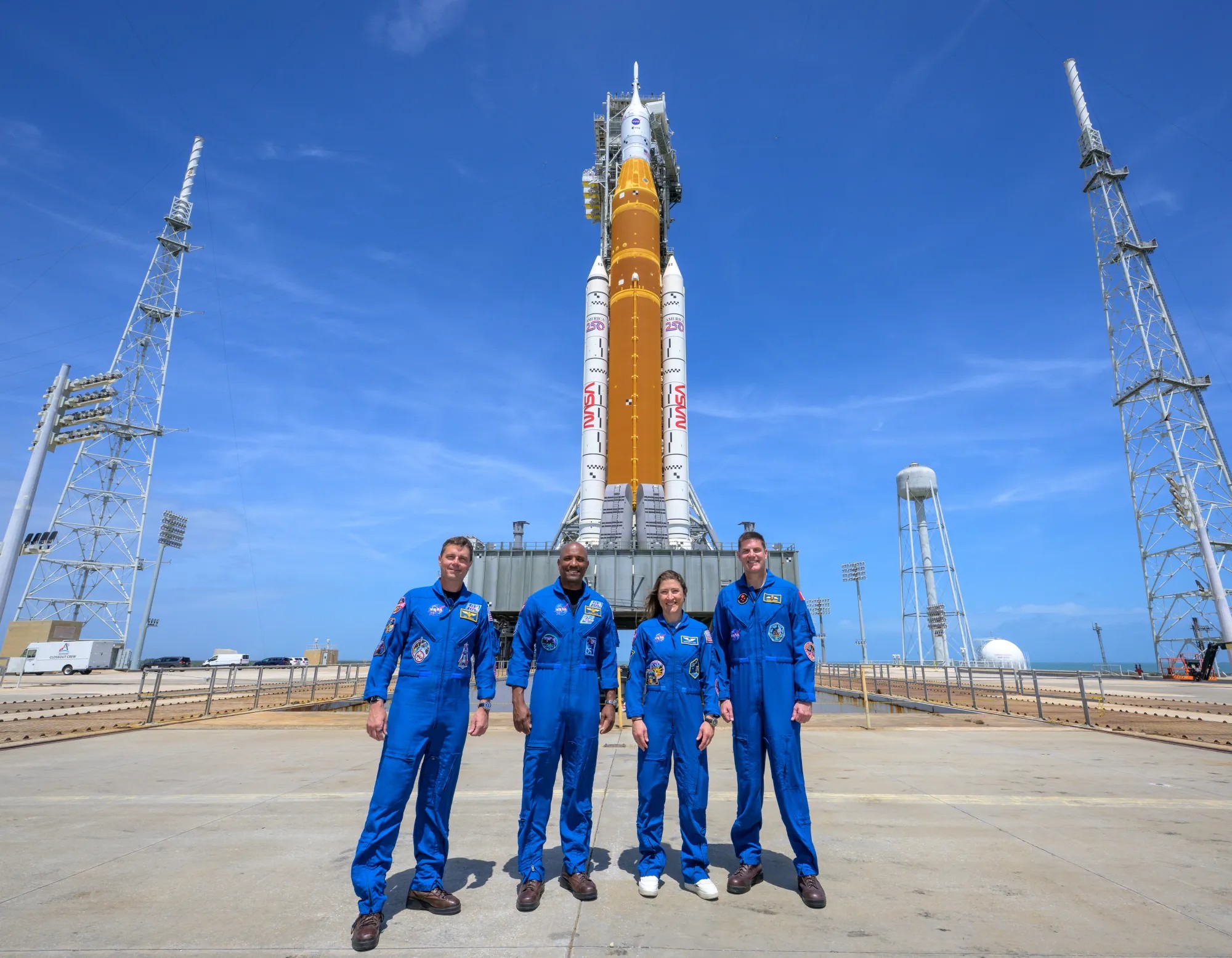
CAPE CANAVERAL, Fla. — The long-awaited return of humanity to the lunar vicinity is now a “go.” On Wednesday, NASA launch directors officially cleared the Artemis II mission for liftoff after resolving a series of last-minute technical glitches that briefly threatened to stall the historic 10-day odyssey.
With the Space Launch System (SLS) megarocket fueled and stable on Launch Pad 39B, the four-person crew has been successfully sealed inside the Orion spacecraft, named Integrity. The hatch closure marks the final physical bridge between Earth and the deep-space vacuum they are about to traverse.
A Morning of High-Stakes Troubleshooting
The path to the launch window, which opens at 6:24 PM ET, was not without drama. Earlier today, engineers scrambled to address two distinct technical concerns:
- Flight Termination System (FTS): A communication interruption was identified within the FTS—the critical safety system designed to self-destruct the rocket if it veers off course. After a tense hour of analysis, NASA commentator Derrol Nail confirmed the issue was resolved and is no longer a constraint.
- Battery Out-of-Range: Teams also monitored a battery temperature issue related to the launch abort system. However, after further review, the system was cleared for flight.
The Crew of Firsts
As the countdown ticks into its final hours, the four astronauts inside Integrity are reportedly in high spirits, having completed “loud and clear” communication checks with Mission Control. The crew includes:
- Commander Reid Wiseman (NASA)
- Pilot Victor Glover (NASA) – Set to be the first Black person to travel beyond Earth orbit.
- Mission Specialist Christina Koch (NASA) – Set to be the first woman on a lunar mission.
- Mission Specialist Jeremy Hansen (CSA) – The first non-American to journey toward the Moon.
A Legacy 50 Years in the Making
This mission represents the first crewed flight to the Moon since Apollo 17 in 1972. While Artemis II will not land on the lunar surface, the crew will travel approximately 4,700 miles beyond the lunar far side, reaching the farthest point from Earth any human has ever traveled.
The successful resolution of today’s issues follows a turbulent development cycle, including a rollback to the Vehicle Assembly Building in February to fix a helium flow problem. With weather conditions currently 80–90% favorable, NASA is poised to turn the page from the Apollo era to the Artemis generation.