
The fall of Nicolás Maduro was supposed to herald a “new political moment” for Venezuela, but the harrowing reality inside the nation’s prisons remains stubbornly unchanged.
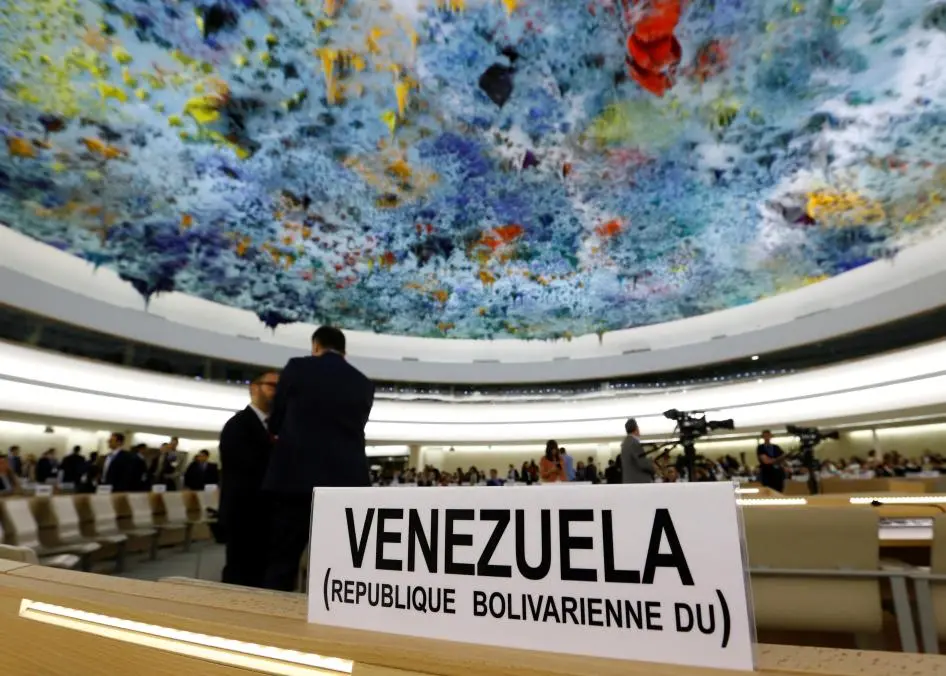
On Monday, March 16, 2026, UN Human Rights Chief Volker Türk delivered a sobering update to the Human Rights Council, revealing that reports of systematic torture and arbitrary detention continue to surface. Despite a high-profile US military raid that captured Maduro in January and the subsequent passage of a sweeping amnesty law, Türk warned that the “repressive apparatus” of the state remains fundamentally intact.
“My office has received information about the continued torture and mistreatment of detainees, including in the Rodeo 1 and Fuerte Guaicaipuro centres,” Türk told the council. “This is deeply concerning.”
A ‘Cosmetic’ Change?
While the interim government led by Delcy Rodríguez has released approximately 950 political prisoners since February, independent investigators say the “revolving door” of Venezuelan justice is still spinning.
- The Intact Machinery: UN investigators noted that the military and police units responsible for past crimes against humanity have not been dismantled.
- The New Detainees: Since January 3, the UN has documented 87 new political detentions, including 14 journalists and 15 children. Many were reportedly arrested for the simple act of “celebrating” the transition or expressing political dissent.
- The Amnesty Gap: Türk criticized the February 20 “Amnesty Law for Democratic Coexistence,” noting it was drafted without public consultation and fails to address the state’s responsibility for years of systematic abuse.
Inside the ‘Secure Houses’
The UN’s Independent Fact-Finding Mission detailed a chilling continuity in the methods of control used by security forces and colectivos (armed civilian groups).
“Although the official line tells us there is a new political moment… the sector of the government related to repression remains intact,” said Alí Daniels, director of the NGO Acceso a la Justicia. “There hasn’t been a single change there, not even a cosmetic one.”
Reported Methods of Mistreatment:
- Isolation: Continued use of incommunicado detention, where families are denied information on a prisoner’s whereabouts for weeks.
- Neglect: The UN recorded at least three deaths in custody since January, suspected to be the result of untreated medical conditions.
- Intrusive Measures: Under the declared state of emergency, security forces have reportedly used “phone inspections” and house searches to maintain a climate of fear.
A Crucial Milestone for Victims
For the 8.7 million Venezuelans living in exile, the UN report is a cold shower of reality. While some high-profile figures—including Javier Tarazona and Rocío San Miguel—have finally tasted freedom, hundreds of others remain behind bars.
| Metric | Status as of March 2026 |
| Verified Releases | ~950 (per UN) |
| Remaining Political Prisoners | ~500+ (per Foro Penal) |
| New Detentions | 87 since Jan 3, 2026 |
| Foreign/Dual Nationals Held | 76 |
The Path Forward
The UN High Commissioner urged the interim authorities to allow “unfettered access” to all detention centers—a request that has so far been ignored. He also called for a comprehensive transitional justice strategy to hold command structures accountable, rather than just low-ranking guards.
As Venezuela navigates its most volatile period in decades, the message from Geneva is clear: the arrest of a dictator is not the same as the end of a dictatorship. Until the basement cells of Rodeo 1 are truly empty and the torturers are in the dock, the Venezuelan people remain caught between a dark past and an uncertain future.