
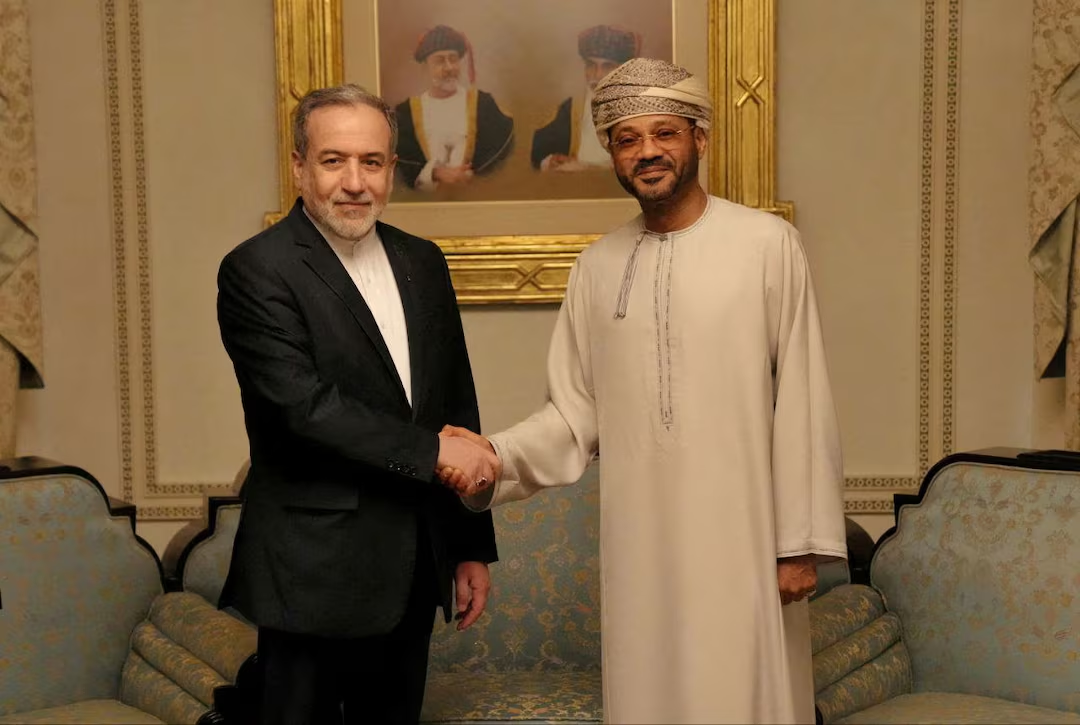
MUSCAT, OMAN — In the gilded silence of a royal palace in Muscat, the first high-stakes diplomatic contact between the United States and Iran in nearly a year has concluded with a rare, if fragile, glimmer of optimism.
On Friday, Iranian Foreign Minister Abbas Araghchi described eight hours of indirect talks with a senior U.S. delegation as a “very good start,” signaling that both Tehran and Washington are prepared to maintain a diplomatic path despite a “wall of mistrust” and a backdrop of looming military threats.
The talks, mediated by Omani Foreign Minister Sayyid Badr Albusaidi, mark the most significant engagement since the collapse of negotiations last year and a subsequent June military escalation that saw U.S. and Israeli strikes on Iranian nuclear facilities.
Negotiating Under the Gun
The atmosphere in Muscat was described as “positive but professional,” yet the stakes could not have been higher. While diplomats exchanged arguments through Omani intermediaries, the U.S. military maintained a massive “armada” in the Arabian Sea, including the nuclear-powered USS Abraham Lincoln.
The presence of Admiral Brad Cooper, commander of U.S. Central Command, alongside the American diplomatic team—led by Trump envoys Steve Witkoff and Jared Kushner—served as a pointed reminder that the White House is coupling its “Maximum Pressure” diplomacy with the explicit threat of force.
“We did note that nuclear talks must take place in a calm atmosphere, without tension and without threats,” Araghchi told Iranian state television. “The prerequisite for any dialogue is refraining from pressure.”
The Nuclear-Only Narrowing
A critical breakthrough in this round appears to be the scope of the agenda. Despite earlier demands from U.S. Secretary of State Marco Rubio to include Iran’s ballistic missile program and its support for regional proxies, the Muscat sessions remained “exclusively focused” on the nuclear issue.
Tehran has remained adamant that its missile defense and regional alliances are non-negotiable. According to regional reports, the U.S. side agreed to this narrow focus—at least for the initial framework—following interventions from Qatar and Saudi Arabia, who fear a broader collapse could trigger a regional war.
The ‘Wall of Mistrust’ Remains
While Araghchi’s tone was cautiously optimistic, he was quick to temper expectations. The Foreign Minister noted that “deep mistrust” remains the primary obstacle, exacerbated by recent U.S. sanctions targeting 14 vessels and 15 entities involved in Iran’s oil trade—announced just moments after the talks concluded.
Key Outcomes of the Muscat Round:
- Consultation Phase: Both delegations have returned to their respective capitals—Tehran and Washington—to brief leadership on the proposed framework.
- Nuclear Guardrails: Discussions centered on creating “suitable conditions” for technical negotiations and potentially pausing further uranium enrichment in exchange for targeted sanctions relief.
- Averted Escalation: The mere fact that both sides agreed to “proceed with negotiations” has provided a temporary reprieve from the “Operation Midnight Hammer” style rhetoric that dominated the week.
The Omani Bridge
The Sultanate of Oman once again proved its status as the “Switzerland of the Middle East.” Foreign Minister Albusaidi described the talks as “useful to clarify both Iranian and American thinking,” emphasizing that the goal is not yet a deal, but the “requisite foundations” for a diplomatic process.
As the negotiators brief their capitals, the world watches the Arabian Sea. For the first time in 2026, the language of “good starts” has replaced the language of “total victory,” if only for a moment. But in a region where mistrust is the only abundant resource, the “good start” in Muscat must now survive the hard realities of Washington and Tehran.