
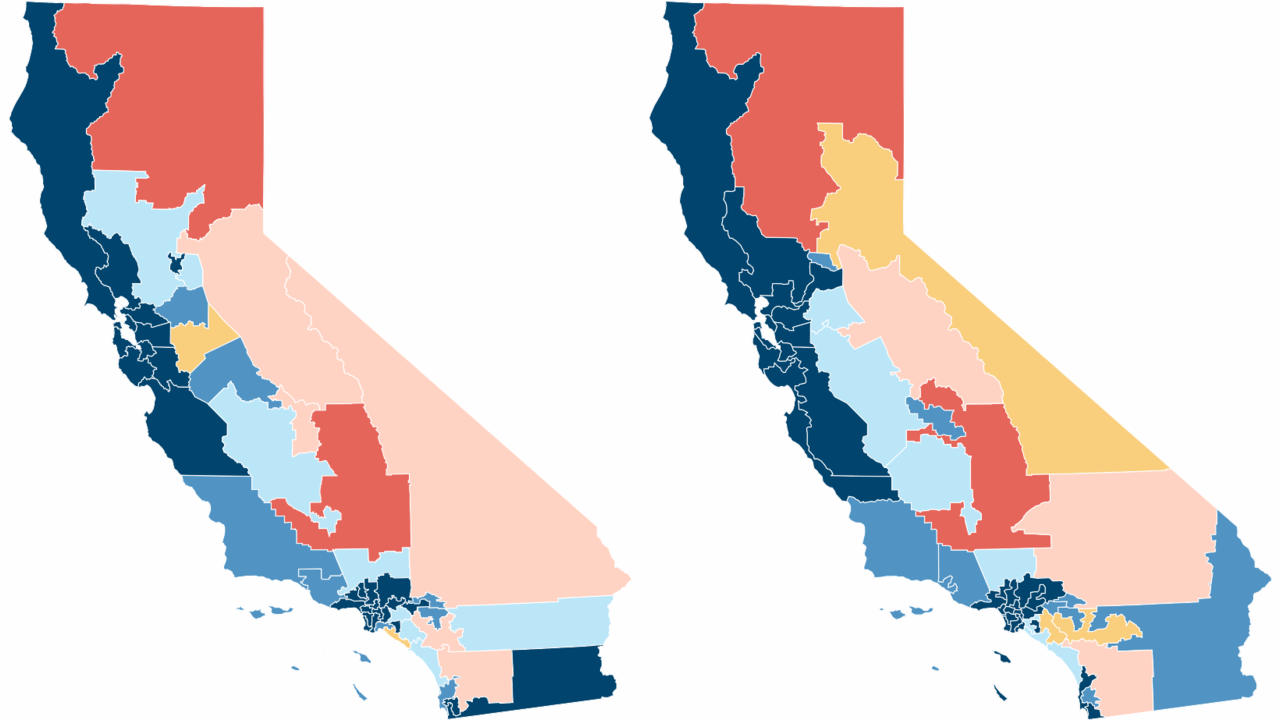
In a move that cements a new era of “tit-for-tat” redistricting, the U.S. Supreme Court on Wednesday cleared the way for California to use a redrawn congressional map specifically designed to flip five seats to the Democratic Party.
In a brief, unsigned order with no noted dissents, the high court rejected an emergency request from California Republicans and the Trump administration to block the map. The decision ensures that the nation’s most populous state will head into the 2026 midterms with boundaries that Governor Gavin Newsom openly admits were drawn to “neutralize” a similar Republican gerrymander in Texas.
“Donald Trump said he was ‘entitled’ to five more Congressional seats in Texas,” Newsom said in a statement following the ruling. “He started this redistricting war. He lost, and he’ll lose again in November.”
A ‘Partisan Advantage, Pure and Simple’
The ruling follows a landmark December decision in which the same conservative-majority court allowed Texas to implement a mid-decade map favoring Republicans. By refusing to block California’s response, the justices have signaled that while racial gerrymandering remains unconstitutional, partisan gerrymandering—no matter how brazen—is a “political thicket” the federal courts will not enter.
Justice Samuel Alito, in a concurring opinion joined by Justices Clarence Thomas and Neil Gorsuch, noted that the impetus for the new lines in both states was “partisan advantage pure and simple.” He argued that because the court had already cleared the Texas map, it would be “contrary to fundamental principles of democracy” to deny California the same right to respond in kind.
The California Strategy: Proposition 50
Unlike Texas, where the legislature simply passed new lines, California’s path was more complex. To bypass the state’s independent redistricting commission, Newsom and Democratic leaders put the new map directly to voters via Proposition 50 in November.
Voters overwhelmingly approved the measure, which amends the state constitution to allow these specific “temporary” lines to remain in place through 2030. Republicans had argued the map was a “racial gerrymander in disguise,” claiming it used Latino voting blocs as a proxy to shore up Democratic incumbents. However, a lower federal court disagreed, finding the motivation was purely political.
The National Seesaw
With both maps now standing, the 2026 battlefield has effectively been reset:
- Texas: Predicted to net Republicans 5 additional seats.
- California: Predicted to net Democrats 5 additional seats.
- Net Result: A wash for the national balance of power, but a tectonic shift for the voters within those 10 districts whose representation has been fundamentally altered.
The ruling comes just days before the February 9 deadline for congressional candidates to file their paperwork in California. Strategists on both sides say the decision provides the “clarity of the cage,” as incumbents and challengers now know exactly which voters they must court in what is shaping up to be the most expensive midterm cycle in American history.
As the “redistricting war” moves from the courtrooms to the ballot boxes, the Supreme Court has made one thing clear: in the modern political arena, the best defense is a aggressive offense.
In a move that cements a new era of “tit-for-tat” redistricting, the U.S. Supreme Court on Wednesday cleared the way for California to use a redrawn congressional map specifically designed to flip five seats to the Democratic Party.
In a brief, unsigned order with no noted dissents, the high court rejected an emergency request from California Republicans and the Trump administration to block the map. The decision ensures that the nation’s most populous state will head into the 2026 midterms with boundaries that Governor Gavin Newsom openly admits were drawn to “neutralize” a similar Republican gerrymander in Texas.
“Donald Trump said he was ‘entitled’ to five more Congressional seats in Texas,” Newsom said in a statement following the ruling. “He started this redistricting war. He lost, and he’ll lose again in November.”
A ‘Partisan Advantage, Pure and Simple’
The ruling follows a landmark December decision in which the same conservative-majority court allowed Texas to implement a mid-decade map favoring Republicans. By refusing to block California’s response, the justices have signaled that while racial gerrymandering remains unconstitutional, partisan gerrymandering—no matter how brazen—is a “political thicket” the federal courts will not enter.
Justice Samuel Alito, in a concurring opinion joined by Justices Clarence Thomas and Neil Gorsuch, noted that the impetus for the new lines in both states was “partisan advantage pure and simple.” He argued that because the court had already cleared the Texas map, it would be “contrary to fundamental principles of democracy” to deny California the same right to respond in kind.
The California Strategy: Proposition 50
Unlike Texas, where the legislature simply passed new lines, California’s path was more complex. To bypass the state’s independent redistricting commission, Newsom and Democratic leaders put the new map directly to voters via Proposition 50 in November.
Voters overwhelmingly approved the measure, which amends the state constitution to allow these specific “temporary” lines to remain in place through 2030. Republicans had argued the map was a “racial gerrymander in disguise,” claiming it used Latino voting blocs as a proxy to shore up Democratic incumbents. However, a lower federal court disagreed, finding the motivation was purely political.
The National Seesaw
With both maps now standing, the 2026 battlefield has effectively been reset:
- Texas: Predicted to net Republicans 5 additional seats.
- California: Predicted to net Democrats 5 additional seats.
- Net Result: A wash for the national balance of power, but a tectonic shift for the voters within those 10 districts whose representation has been fundamentally altered.
The ruling comes just days before the February 9 deadline for congressional candidates to file their paperwork in California. Strategists on both sides say the decision provides the “clarity of the cage,” as incumbents and challengers now know exactly which voters they must court in what is shaping up to be the most expensive midterm cycle in American history.
As the “redistricting war” moves from the courtrooms to the ballot boxes, the Supreme Court has made one thing clear: in the modern political arena, the best defense is a aggressive offense.