
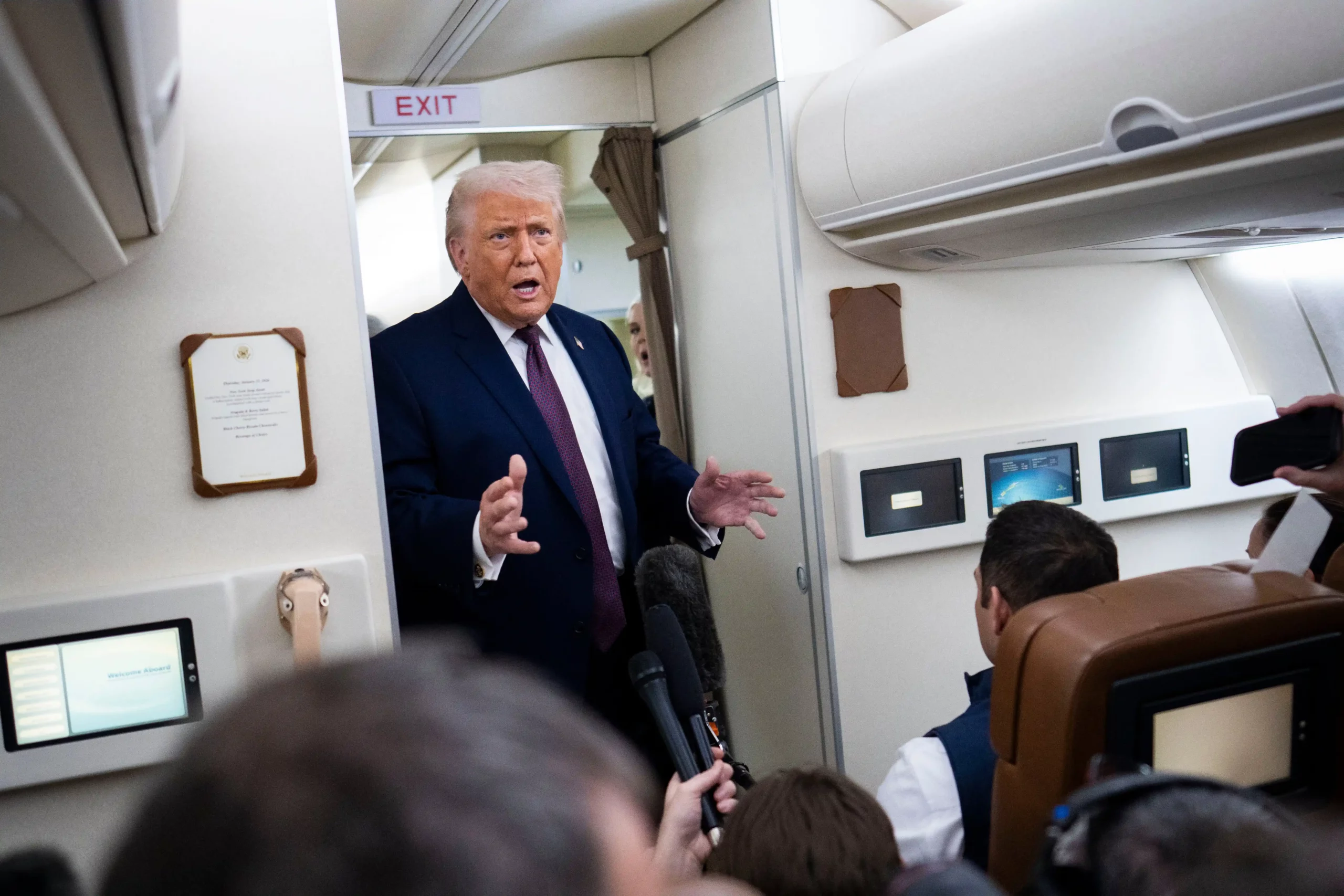
In his most significant military escalation since returning to the Oval Office, President Donald Trump warned Tehran on Wednesday that “time is running out” for a new nuclear deal, revealing that a massive U.S. naval “armada” is now moving into position in the Persian Gulf.
The warning, delivered via a series of high-decibel posts on Truth Social, marks a perilous new phase in the administration’s “Maximum Pressure 2.0” campaign. Trump’s ultimatum comes as the USS Abraham Lincoln Carrier Strike Group arrived in the region, ending a months-long carrier gap and bringing the total U.S. troop strength in the Middle East to approximately 50,000 personnel.
“A massive Armada is heading to Iran. It is moving quickly, with great power, enthusiasm, and purpose,” Trump wrote. “Hopefully Iran will quickly ‘Come to the Table’ and negotiate a fair and equitable deal—NO NUCLEAR WEAPONS—one that is good for all parties. Time is running out, it is truly of the essence!”
‘Operation Midnight Hammer’ and the Threat of ‘Far Worse’
The President explicitly invoked “Operation Midnight Hammer,” the June 2025 joint U.S.-Israeli strike that targeted three major Iranian nuclear facilities with bunker-busting bombs. While Trump previously claimed those sites were “obliterated,” intelligence reports suggest Iran has attempted to reconstitute its enrichment capabilities in the months since.
“As I told Iran once before, MAKE A DEAL! They didn’t, and there was ‘Operation Midnight Hammer,’ a major destruction of Iran,” Trump warned. “The next attack will be far worse! Don’t make that happen again.”
The U.S. Demands:
- Zero Enrichment: A total ban on domestic uranium enrichment on Iranian soil.
- Missile Limits: Strict caps on Tehran’s ballistic and cruise missile stockpiles.
- Regional Proxy Exit: An end to funding for groups like Hezbollah and the Houthis.
- Recognition of Israel: New reports suggest this has been added as a core precondition for any permanent peace.
Tehran’s Response: ‘Fingers on the Trigger’
The reaction from Tehran was immediate and defiant. Iranian Foreign Minister Abbas Araghchi rejected the prospect of negotiations “under the shadow of a gun,” stating that diplomacy cannot take place in an atmosphere of threats and “excessive demands.”
“Our brave Armed Forces are prepared—with their fingers on the trigger,” Araghchi said in a televised address. Meanwhile, Iran’s mission to the UN issued a chilling reminder of past conflicts, warning that while Iran is open to dialogue, it would respond to an attack “like never before.”
“Last time the U.S. blundered into wars in Afghanistan and Iraq, it squandered over $7 trillion… Iran stands ready for dialogue based on mutual respect—but if pushed, it will defend itself.”
The Protest Shadow
The military buildup coincides with a brutal domestic crisis in Iran. Human rights organizations, including HRANA, confirmed this week that more than 6,200 people have been killed in the anti-regime protests that have gripped the country since late December.
Trump has leveraged the unrest, telling protesters “help is on the way” and using the regime’s crackdown as a justification for the fleet’s deployment. Critics in Washington, however, suggested the escalation might also serve as a distraction from the President’s own domestic controversies, including the fallout from the fatal federal shooting in Minneapolis.
| Strategic Asset | Status | Location |
| USS Abraham Lincoln | Active / On Station | Persian Gulf |
| F-15E Strike Eagles | Deployed | Regional Air Bases |
| THAAD & Patriot Units | Active | Allied Gulf States |
| B-2 Spirit Stealth Bombers | On Standby | Diego Garcia |
The Brink of Conflict
The arrival of the carrier group effectively closes the “readiness gap” that reportedly delayed U.S. action earlier this month. With Secretary of State Marco Rubio confirming that 30,000 U.S. troops are currently within range of Iranian missiles, the margin for error in the Gulf has narrowed to zero.
Special Envoy Steve Witkoff hinted at the World Economic Forum in Davos that a deal “ought to happen,” but with both sides dug in, the “Armada” in the Gulf now represents the most significant threat of a full-scale Middle East war in a generation.