
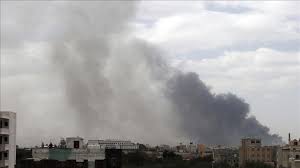
In a massive display of aerial reach, the United States military launched a coordinated, large-scale strike across Syria on Saturday, deploying more than 20 aircraft to dismantle the infrastructure of a resurgent Islamic State.
The operation, codenamed Operation Hawkeye Strike, saw U.S. and coalition jets release over 90 precision-guided munitions on at least 35 locations simultaneously. According to U.S. Central Command (CENTCOM), the strikes are a direct “declaration of vengeance” for a December 13 ambush in Palmyra that claimed the lives of two Iowa National Guard soldiers and a civilian interpreter.
“Our message remains strong: if you harm our warfighters, we will find you and kill you anywhere in the world,” CENTCOM said in a statement Saturday. “No matter how hard you try to evade justice.”
Retaliation in the Desert
The strikes, which began around 12:30 p.m. local time, targeted a sophisticated network of weapons storage facilities, command headquarters, and training camps. It marks the second major wave of retaliation ordered by President Trump since the Palmyra attack.
The arsenal utilized in the raid included:
- F-15E Strike Eagles and A-10 Thunderbolts for precision ground strikes.
- AC-130J Ghostrider gunships for sustained fire on extremist hubs.
- MQ-9 Reaper drones for real-time reconnaissance and target tracking.
- Jordanian F-16s, signaling a deepening regional alliance against the terror group.
Defense Secretary Pete Hegseth echoed the administration’s hardline stance, posting on social media shortly after the mission: “We will never forget, and never relent.”
The Palmyra Catalyst
The current escalation stems from the first deadly attack on American personnel in Syria since the December 2024 overthrow of Bashar al-Assad.
In that incident, a lone ISIS gunman—who had reportedly infiltrated Syrian internal security forces—opened fire on a joint U.S.-Syrian patrol near the UNESCO-listed ruins of Palmyra. The fallen have since become a rallying cry for the Trump administration: Sgt. Edgar Brian Torres-Tovar, 25; Sgt. William Nathaniel Howard, 29; and interpreter Ayad Mansoor Sakat.
While ISIS was officially declared “territorially defeated” in 2019, the group has exploited the political vacuum following the collapse of the Assad regime to regroup in Syria’s vast central desert.
A New Syrian Alignment
The strikes highlight a dramatic shift in Washington’s Middle East strategy. For years, the U.S. relied almost exclusively on Kurdish-led forces in the northeast. However, since the rise of Syrian President Ahmed al-Sharaa, the U.S. has increasingly coordinated with the central government in Damascus, which recently joined the global anti-ISIS coalition.
Just 24 hours prior to the airstrikes, Syrian authorities announced the capture of a high-ranking ISIS military leader in the Levant, suggesting an unprecedented level of intelligence sharing between the Pentagon and the new Syrian administration.
Despite the intensity of Saturday’s raids, officials in Washington warned that Operation Hawkeye Strike is far from over. As ISIS attempts to brand the Sharaa government as “apostates,” the U.S. appears committed to a sustained campaign to ensure the “caliphate” never finds a second home in the post-Assad era.